
Giles Tremlett
Author of Ghosts of Spain: Travels Through Spain and Its Silent Past
About the Author
Works by Giles Tremlett
Tagged
Common Knowledge
- Legal name
- Tremlett, Giles E. H.
- Birthdate
- 1962
- Gender
- male
- Education
- University of Oxford (Human Sciences) (1984)
University of Barcelona
University of Lisbon - Occupations
- journalist
- Short biography
- Giles Tremlett is a prize-winning historian, author and journalist based in Madrid, Spain. He has lived in, and written extensively about, Spain almost continuously since graduating from Oxford University thirty years ago.
He is Fellow of the Cañada Blanch Centre at the London School of Economics and Contributing Editor at The Guardian and . He previously wrote for The Economist magazine. - Nationality
- UK
- Birthplace
- Plymouth, Devon, England, UK
- Places of residence
- South Africa
Tanzania
Kenya
Turkey
Germany
Barcelona, Catalonia, Spain (show all 9)
Lisbon, Portugal
London, England, UK
Madrid, Spain
Members
Reviews
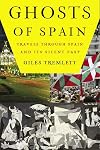
4.5 stars actually. I can’t give it 5 because couple of chapters were quite difficult to wade through. I finished the book in several takes, first two being botched by these unfortunate chapters. I mean I’m not interested in flamenco or construction boom and ensuing machinations. However even in these cases I learned something curious, for example about larger than life cult singer I’ve never heard of - Camarón de la Isla. I persevered and was ultimately rewarded with excellent show more insights which only keen eye of a totally submersed observer could detect and relay to reader. Chapter on Basque country provides enough information and narrative to save you from reading a whole book on this matter (in my case it was Mark Kurlansky’s one). Galicia and Catalonia chapters are really good too.
It is a good example of being rewarded for the effort of reading: you trudge through 1-2-3 chapters, wavering to give up and then “BANG”: half a page of valuable and absolutely fascinating information few of your friends ever heard of. show less
It is a good example of being rewarded for the effort of reading: you trudge through 1-2-3 chapters, wavering to give up and then “BANG”: half a page of valuable and absolutely fascinating information few of your friends ever heard of. show less
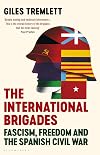
This tome has been something I've intended to read since it was published, when I could find the time. Well, the time finally came and I'm very impressed with Tremlett's work, with a few caveats. While political and military issues are dealt with, this is really a social history of the brigades, as Tremlett writes in short, crisp, chapters, and he usually has a good collection of anecdotes upon which to gild each way station of the path of the brigades, from glorious defenders of Madrid, to show more the sweepings of a broken force abandoning the wreck of the Spanish Republic.
If nothing else, the author wants to emphasize that this force was not really a "Comintern army," but a band of anti-fascists who were anything but "premature" in taking up arms against the looming menace; even if they somewhat fell into the nets of the Stalinist menace. One of the most interesting points of Tremlett's narrative is the varied ways the survivors kept on fighting, and were actually a future elite in many countries, such as the DDR and Tito's Yugoslavia. That enough survivors lived long enough to be honored by the modern Spanish republic is testament to their legacy.
So, as for my caveats, one would hope with as long as a book as this is, you could read it as a history of the Spanish Civil War in total, but the story of the war, and Tremlett's history of the brigades aren't congruent enough for that. Also, though Tremlett is a good military historian, a little more nuts-and-bolts history might be necessary for the casual reader to appreciate what's going on. In the first case, one might want to have first read Anthony Beevor's second edition of "The Battle for Spain." In the second case, Osprey Publishing has brought out a number of relevant booklets on this conflict over the years, and I think that, in particular, Ken Bradley's "International Brigades in Spain 1936-39" holds up quite well; even though it was published in 1994. show less
If nothing else, the author wants to emphasize that this force was not really a "Comintern army," but a band of anti-fascists who were anything but "premature" in taking up arms against the looming menace; even if they somewhat fell into the nets of the Stalinist menace. One of the most interesting points of Tremlett's narrative is the varied ways the survivors kept on fighting, and were actually a future elite in many countries, such as the DDR and Tito's Yugoslavia. That enough survivors lived long enough to be honored by the modern Spanish republic is testament to their legacy.
So, as for my caveats, one would hope with as long as a book as this is, you could read it as a history of the Spanish Civil War in total, but the story of the war, and Tremlett's history of the brigades aren't congruent enough for that. Also, though Tremlett is a good military historian, a little more nuts-and-bolts history might be necessary for the casual reader to appreciate what's going on. In the first case, one might want to have first read Anthony Beevor's second edition of "The Battle for Spain." In the second case, Osprey Publishing has brought out a number of relevant booklets on this conflict over the years, and I think that, in particular, Ken Bradley's "International Brigades in Spain 1936-39" holds up quite well; even though it was published in 1994. show less
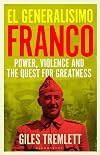
The bloody victor of the Spanish Civil War continues to evoke controversy. When, in 2011, Spain’s Royal Academy of History, under the supervision of a former Franco loyalist, published a dictionary describing Franco as ‘authoritarian, but not a dictator’, the backlash raged for years. The past quarter-century of Spanish public life has been shaped by so-called ‘memory wars’ in which both the intransigent left and right have politicised attempts to identify the mass graves of show more republican dead and unveil the convenient silence (‘pact of oblivion’) which overlay the latter two-thirds of Spain’s 20th century. Franco’s regime has been presented as authoritarian (Juan Linz), genocidal (Helen Graham), and fascistic in inception (Paul Preston). The regime’s apologists presented the personal rule of Western Europe’s last dictator as developmentalist, providential, even as an ‘organic democracy’. In this biography, Giles Tremlett describes Franco as ‘a giant dam, determined to control the flow of Spanish history’. However, 50 years after his death in November 1975, ‘what surprises is not the size of the dam that was opened after he died, but the ideological emptiness that lay behind it’.
Mediocre, incurious, and obsequious towards his Axis patrons, Franco had none of the charisma of Mussolini or Mao, nor any of the avuncular qualities of the sister regime of Salazar in Portugal. It is faint praise to rate him less fanatically murderous than Adolf Hitler, or less tyrannically ruthless than Joseph Stalin (even though Franco possessed as much internal power as Europe’s bloodiest totalitarians). Tremlett’s Franco is a cautious, ambitious, and unthinkingly authoritarian man, youthfully brave in Spanish Morocco, callously attritional in middle age leading the rebels to victory in the Spanish Civil War (1936-39), and vindictive and shifty in the grey areas of politics thereafter. Unrivalled at dividing and ruling allies and enemies alike, he was also prone to delusions which only his peculiar luck prevented from unravelling his regime at home and abroad.
Read the rest of the review at https://www.historytoday.com/archive/review/el-generalisimo-giles-tremlett-book-...
Mark Lawrence is Senior Lecturer in Military History at the University of Kent. show less
Mediocre, incurious, and obsequious towards his Axis patrons, Franco had none of the charisma of Mussolini or Mao, nor any of the avuncular qualities of the sister regime of Salazar in Portugal. It is faint praise to rate him less fanatically murderous than Adolf Hitler, or less tyrannically ruthless than Joseph Stalin (even though Franco possessed as much internal power as Europe’s bloodiest totalitarians). Tremlett’s Franco is a cautious, ambitious, and unthinkingly authoritarian man, youthfully brave in Spanish Morocco, callously attritional in middle age leading the rebels to victory in the Spanish Civil War (1936-39), and vindictive and shifty in the grey areas of politics thereafter. Unrivalled at dividing and ruling allies and enemies alike, he was also prone to delusions which only his peculiar luck prevented from unravelling his regime at home and abroad.
Read the rest of the review at https://www.historytoday.com/archive/review/el-generalisimo-giles-tremlett-book-...
Mark Lawrence is Senior Lecturer in Military History at the University of Kent. show less
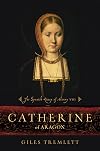
This book may be unique in English-language historical literature; at least, I can't think of another like it. There are many, many books about Henry VIII, or the six wives of Henry VIII, or Anne Boleyn (Catherine of Aragon's successor/usurper), but I can't think of a single full-length biography of Catherine herself. Most of the books about Henry's wives act as if she only stepped onto the scene when Henry fell in love with Anne Boleyn. This covers her entire life, beginning with the show more background stories of her parents, in particular her mother, Isabella of Spain.
The author doesn't waste a lot of time in pointless speculation of "did she or didn't she?" regarding the consummation or otherwise of Catherine's marriage to Henry's brother Arthur; nor does he talk about Anne Boleyn any more than is necessary. Catherine steals the show here. You get to see her here as an intelligent, incredibly strong and tenacious woman in her own right, and you understand better why she acted as she did in opposing the divorce even to the bitter end. Contrary to some accounts, she was not poisoned to death; when they autopsied her body they found a tumor attached to her heart, which had turned black. She died of something very close to a broken heart.
This is a very valuable, downright necessary, addition to the canon of Tudor history. Well worth a read. show less
The author doesn't waste a lot of time in pointless speculation of "did she or didn't she?" regarding the consummation or otherwise of Catherine's marriage to Henry's brother Arthur; nor does he talk about Anne Boleyn any more than is necessary. Catherine steals the show here. You get to see her here as an intelligent, incredibly strong and tenacious woman in her own right, and you understand better why she acted as she did in opposing the divorce even to the bitter end. Contrary to some accounts, she was not poisoned to death; when they autopsied her body they found a tumor attached to her heart, which had turned black. She died of something very close to a broken heart.
This is a very valuable, downright necessary, addition to the canon of Tudor history. Well worth a read. show less
Lists
Awards


You May Also Like


Statistics
- Works
- 9
- Members
- 1,526
- Popularity
- #16,855
- Rating
- 4.0
- Reviews
- 54
- ISBNs
- 51
- Languages
- 4