

Milo Winter (1888–1956)
Author of Aesop's Favorite Fables: More Than 130 Classic Fables for Children! (Children's Classic Collections)
About the Author
Works by Milo Winter
Aesop's Favorite Fables: More Than 130 Classic Fables for Children! (Children's Classic Collections) (2017) 112 copies
The Aesop for Children 31 copies
Stories We Like 1 copy
mother goose 1 copy
The Three Little Kittens 1 copy
Treasure Island 1 copy
The Wonderful ABC Book 1 copy
Associated Works
Alice's Adventures in Wonderland / Through the Looking-Glass (1865) — Illustrator, some editions — 29,397 copies, 315 reviews
Twenty Thousand Leagues Under the Sea (1869) — Illustrator, some editions — 21,337 copies, 283 reviews
Greek Myths: A Wonder Book for Girls and Boys (1851) — Illustrator, some editions — 2,164 copies, 16 reviews
Nights With Uncle Remus: Myths and Legends of the Old Plantation (1883) — Illustrator, some editions — 134 copies
Hans Andersen's Fairy Tales (Windermere Series) (transl. by Valdemar Paulsen) (1995) — Illustrator — 78 copies
The Swiss Family Robinson, or The Adventures on a Desert Island (Windermere Series) (1922) — Illustrator — 59 copies
Alice Illustrated: 120 Images from the Classic Tales of Lewis Carroll (Dover Fine Art, History of Art) (2012) — Illustrator — 22 copies
Man in His world; Essential Elementary Geography The American Continents (1946) — Illustrator — 6 copies
Nuova, or, the New Bee: A Story for Children of Five to Fifty [ 1920 ] (1920) — Illustrator — 5 copies
A Journey to the Garden Gate — Illustrator, some editions — 1 copy
Tagged
Common Knowledge
- Canonical name
- Winter, Milo
- Birthdate
- 1888-08-07
- Date of death
- 1956-08-15
- Gender
- male
- Education
- Art Institute of Chicago
- Occupations
- book illustrator
- Nationality
- USA
- Birthplace
- Princeton, Illinois, USA
- Places of residence
- Chicago, Illinois, USA
New York, New York, USA - Place of death
- New York, New York, USA
- Associated Place (for map)
- USA
Members
Reviews

This is a compilation of tales of jinn and sorcerers and bold adventures come from India, Persia, Arabia, Egypt and Mesopotamia. They're framed as being told by Scheherazade, the newest bride of Shahryār, a ruler who after finding his first wife committed adultery had been killing a succession of wives after their wedding night. Scheherazade tells her husband a new tale every night, breaking off at dawn unfinished and thus postponing her execution another day. The entertainment continues show more for 1,001 nights, by the end of which Shahryār decides to spare her life. I remember as a child considering that frame tale romantic, of course as an adult I can only find Shahryār monstrous. But the tales themselves still enchant.
From what I can gather from the introduction and online sources, the genesis of this work is complex. The earliest versions with a small core of perhaps 200 stories derived from a collection of Persian fairy tales is thought to have first appeared in the early 8th century, with the earliest extant fragments of manuscript from the 9th century. Over the centuries stories were added to the core until they reached that number of 1,001. ("Complete" versions such as that by Sir Richard Francis Burton run to 10 volumes). But different editions have different stories included, different versions. The first European translation (into French) was in 1704, but it's thought the tales might have spread through Muslim Spain and influenced earlier works such as Boccaccio's Decameron and Chaucer's Canterbury Tales, both of which feature collections of tales within a frame.
This ebook edition from Project Gutenberg with illustrations by Milo Winter is just a small selection of the most famous tales: "The Story of the Merchant and the Genie," "The Three Calenders, Sons of Kings, and the Five Ladies of Bagdad," "The Story of the Three Sisters," "The Historic Fart" (Yes, really), "The Story of Aladdin, or, the Wonderful Lamp," "The History of Ali Baba, and oth the Forty Robbers Killed by One Slave." "The Story of Sinbad the Sailor," Alas missing was the favorite tale of my childhood: "Abu Kir the Dyer and Abu Sir the Barber." Still, magical, in a readable translation, with a chance to see the source of the iconic Sindbad and Aladdin. If I had a djinn at my service, I could wish for more stories and better formatting, but you can't beat the price! show less
From what I can gather from the introduction and online sources, the genesis of this work is complex. The earliest versions with a small core of perhaps 200 stories derived from a collection of Persian fairy tales is thought to have first appeared in the early 8th century, with the earliest extant fragments of manuscript from the 9th century. Over the centuries stories were added to the core until they reached that number of 1,001. ("Complete" versions such as that by Sir Richard Francis Burton run to 10 volumes). But different editions have different stories included, different versions. The first European translation (into French) was in 1704, but it's thought the tales might have spread through Muslim Spain and influenced earlier works such as Boccaccio's Decameron and Chaucer's Canterbury Tales, both of which feature collections of tales within a frame.
This ebook edition from Project Gutenberg with illustrations by Milo Winter is just a small selection of the most famous tales: "The Story of the Merchant and the Genie," "The Three Calenders, Sons of Kings, and the Five Ladies of Bagdad," "The Story of the Three Sisters," "The Historic Fart" (Yes, really), "The Story of Aladdin, or, the Wonderful Lamp," "The History of Ali Baba, and oth the Forty Robbers Killed by One Slave." "The Story of Sinbad the Sailor," Alas missing was the favorite tale of my childhood: "Abu Kir the Dyer and Abu Sir the Barber." Still, magical, in a readable translation, with a chance to see the source of the iconic Sindbad and Aladdin. If I had a djinn at my service, I could wish for more stories and better formatting, but you can't beat the price! show less

The classic comes to life in this Windermere Series edition, which has illustrations by Milo Winter and is geared toward the young adult. Dumas's greatest work is certainly my all-time favorite, a masterpiece that still catches the reader's breath even in our fast-paced century.
Villains and heroes and swashbuckling and intrigue...I can barely keep up. Athos, that so-cool Dude. And Milady de Winter with ice in her veins and treachery in her heart. Richelieu, taking France into his gloved show more hands. On my Top Ten books of all time. Wow.
Books Season = Year Round (classic) show less
Villains and heroes and swashbuckling and intrigue...I can barely keep up. Athos, that so-cool Dude. And Milady de Winter with ice in her veins and treachery in her heart. Richelieu, taking France into his gloved show more hands. On my Top Ten books of all time. Wow.
Books Season = Year Round (classic) show less

Very Cute book with the bowtie cut out and becoming a different part of each pages' illustration. Milo Winter both author and illustrator.
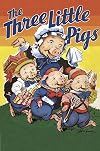
This is a popular folktale. It teaches decision making and that hard work helps to get to success. Although the illustraions are cartoonized, it has attention to detail and looks realistic.
You May Also Like


Associated Authors
Statistics
- Works
- 31
- Also by
- 33
- Members
- 454
- Popularity
- #54,063
- Rating
- 3.9
- Reviews
- 5
- ISBNs
- 10
- Favorited
- 1