
Kevin Randle
Author of UFO Crash at Roswell
About the Author
Kevin D. Randle is a retired Army lieutenant colonel who served in Vietnam as a helicopter pilot and aircraft commander. He was deployed to Iraq as an intelligence officer and served on active duty with the Army and later the Air Force. He retired from the military with more than twenty-two years show more of service. He now hosts A Different Perspective on the X-Zone Broadcast Network, Visit him at wwwM.evinrandie.biogspot.com. show less
Disambiguation Notice:
Also writes as Eric Helm, James Butler Bonham, B.R. Strong, and Cat Brannigan.
Series
Works by Kevin Randle
Scientific Ufology: How the Application of Scientific Methodology Can Analyze, Illuminate, and Prove the Reality of Ufos (1999) 27 copies
Project Moon Dust:: Beyond Roswell--exposing The Government's Covert Investigations And Cover-ups (1998) 26 copies
Spitfire - the Anzacs: The Raf Through Colonial Eyes (Classic Warbirds): RAF Through Colonial Eyes (Classic Warbirds) (1997) 13 copies, 1 review
Crash: When UFOs Fall From the Sky: A History of Famous Incidents, Conspiracies, and Cover-Ups (2010) 13 copies
Lost Gold & Buried Treasure: A Treasure Hunter's Guide to 250 Fortunes Waiting to Be Found (1995) 8 copies
UFOs and the Deep State: A History of the Military and Shadow Government's War Against the Truth (2021) 4 copies
Katastrofy UFO 1 copy
Associated Works
Tagged
Common Knowledge
- Legal name
- Randle, Kevin Douglas
- Other names
- Helm, Eric
Brannigan, Cat
Strong, B. R.
Bonham, James Butler
MacKenzie, Steve - Birthdate
- 1949-06-04
- Gender
- male
- Education
- University of Iowa
- Occupations
- ufologist
- Organizations
- United States Army
- Nationality
- USA
- Birthplace
- Cheyenne, Wyoming, USA
- Places of residence
- Cheyenne, Wyoming, USA (birth)
- Disambiguation notice
- Also writes as Eric Helm, James Butler Bonham, B.R. Strong, and Cat Brannigan.
- Associated Place (for map)
- Cheyenne, Wyoming, USA
Members
Reviews

Kevin D. Randle is known primarily for his non-fiction books dealing with the U.F.O. phenomena (The Crash at Roswell, The Abduction Enigma), but has also written series of science fiction (Jefferson’s War and The Exploration Chronicles).
When I saw that he had written a novel based on the purported U.F.O. crash at Roswell I had to pick it up. Though I tend to think that what crashed was an experimental weather balloon, I still have an interest in flying saucers. I figured since Kevin had show more both the background research from his non-fiction work and he had a number of fiction books under his belt, the combo in Operation Roswell should really be something.
On that, I was disappointed. The story is inherently fascinating. A craft not of this earth crashes outside of a tiny New Mexican town that just happens to be the home of the world’s only nuclear bomber group. And though it is fiction, there is the tantalizing prospect that what you are reading might be true!
Unfortunately Kevin Randle is not a competent fiction writer. In fact, he's awful. The writing tended to be simplistic and repetitive. For example: On almost any other base, it would have been impossible to find drivers, that is privates or corporals, who had top secret clearances. But at the home of the only nuclear strike force in the world, many people, because of the 509th’s mission, had top secret clearances. It made it easy to find drivers with the necessary clearances. See what I mean? The entire book follows this pattern. Information is given, then over explained and repeated... usually within one paragraph. As a result, the book felt overly long and plodding.
What's worse is that while certain things were repeated, details were almost always left out. All those little touches that would have given the book the flavor of the 1940's (things like what kind of car they were driving or what their clothes looked like, what song was on the radio or what have you) were always skipped. As a result, though the story takes place in 1947, you wouldn’t be able to tell that if it weren’t for the chapter headings and references to World War II. All of the little touches, slang of the time or references to what was then current pop culture that can give the best historical fiction a feeling of verisimilitude with the time they are presenting were missing.
Some folks don't like the too much description, but here there was almost none. It was especially unforgivable for the scene of the visit to the crash site itself. This should have been the centerpiece of the book. But even here detail was pretty light. Reading this, I wasn't sure: Were the aliens naked? If not, what were they wearing? These details are important. After all, we are being asked to accept and understand something not of this Earth. We should at least understand what they looked like. Description of the ship was handled a little better.
I had this book on my TBR stack for a while and was really looking forward to reading it. But as I got down to less than a hundred pages from the end I was so frustrated with it I considered tossing it aside unfinished.
I would consider reading Mr. Randle's non-fiction. I don't doubt he knows more about U.F.O.s and Roswell than I do. But if you are looking for a fictionalized account of that famous U.F.O. crash, I'd recommend Whitley Streiber's Majestic (and that one's no masterpiece either). show less
When I saw that he had written a novel based on the purported U.F.O. crash at Roswell I had to pick it up. Though I tend to think that what crashed was an experimental weather balloon, I still have an interest in flying saucers. I figured since Kevin had show more both the background research from his non-fiction work and he had a number of fiction books under his belt, the combo in Operation Roswell should really be something.
On that, I was disappointed. The story is inherently fascinating. A craft not of this earth crashes outside of a tiny New Mexican town that just happens to be the home of the world’s only nuclear bomber group. And though it is fiction, there is the tantalizing prospect that what you are reading might be true!
Unfortunately Kevin Randle is not a competent fiction writer. In fact, he's awful. The writing tended to be simplistic and repetitive. For example: On almost any other base, it would have been impossible to find drivers, that is privates or corporals, who had top secret clearances. But at the home of the only nuclear strike force in the world, many people, because of the 509th’s mission, had top secret clearances. It made it easy to find drivers with the necessary clearances. See what I mean? The entire book follows this pattern. Information is given, then over explained and repeated... usually within one paragraph. As a result, the book felt overly long and plodding.
What's worse is that while certain things were repeated, details were almost always left out. All those little touches that would have given the book the flavor of the 1940's (things like what kind of car they were driving or what their clothes looked like, what song was on the radio or what have you) were always skipped. As a result, though the story takes place in 1947, you wouldn’t be able to tell that if it weren’t for the chapter headings and references to World War II. All of the little touches, slang of the time or references to what was then current pop culture that can give the best historical fiction a feeling of verisimilitude with the time they are presenting were missing.
Some folks don't like the too much description, but here there was almost none. It was especially unforgivable for the scene of the visit to the crash site itself. This should have been the centerpiece of the book. But even here detail was pretty light. Reading this, I wasn't sure: Were the aliens naked? If not, what were they wearing? These details are important. After all, we are being asked to accept and understand something not of this Earth. We should at least understand what they looked like. Description of the ship was handled a little better.
I had this book on my TBR stack for a while and was really looking forward to reading it. But as I got down to less than a hundred pages from the end I was so frustrated with it I considered tossing it aside unfinished.
I would consider reading Mr. Randle's non-fiction. I don't doubt he knows more about U.F.O.s and Roswell than I do. But if you are looking for a fictionalized account of that famous U.F.O. crash, I'd recommend Whitley Streiber's Majestic (and that one's no masterpiece either). show less
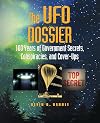
An encyclopedic volume about the history of encounters with UFOs from the last one hundred years. A dry tone. It was basically a compendium of research, digging through source notes on reported encounters. This book put me to sleep more times than I care to say, and I felt like I got stuck on this book - which is a real rarity for me. I had a hard time pushing through.
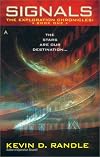
As other science-fiction novels that deal with first-contact scenarios, Randle's book presents the constant friction between the eager to find and the eager to battle (scientists vs. military), and space travel as the best sign of intelligence a species could possess:
I don’t think we have anything to fear. They recognize us as an artificial ship and know that it means we are intelligent. Otherwise, we couldn’t be here.” Pg. 235
I don’t think we have anything to fear. They recognize us as an artificial ship and know that it means we are intelligent. Otherwise, we couldn’t be here.” Pg. 235

I wanted a quick, relaxing book to read and this was one. Moved right along and was quite satisfactory.
Lists
el (1)
You May Also Like


Associated Authors
Statistics
- Works
- 77
- Also by
- 6
- Members
- 1,356
- Popularity
- #18,965
- Rating
- 3.3
- Reviews
- 9
- ISBNs
- 105
- Languages
- 1