
Ivan T. Sanderson (1911–1973)
Author of Invisible Residents: The Reality of Underwater UFOs
About the Author
Works by Ivan T. Sanderson
Investigating the Unexplained: A Compendium of Disquieting Mysteries of the Natural World (1972) 34 copies
The dynasty of Abu; a history and natural history of the elephants and their relatives, past and present (1962) 20 copies, 1 review
The Natural Wonders of North America 5 copies
Animals nobody knows 3 copies
HOW TO KNOW THE AMERICAN MAMMALS What Mammals Are, Where They Live, How to Recoginze Them (1957) 2 copies
Los mamíferos IX 2 copies
The Continent We Live On 1 copy
Los mamíferos 1 copy
Sisari 1 copy
The Flatwoods Monster 1 copy
Animal treasure 1 copy
Associated Works
Psychic Discoveries Behind the Iron Curtain (1970) — Introduction, some editions — 312 copies, 2 reviews
Sauria Monstra: Dinosaurs, Pterosaurs, and Other Fossil Saurians in Classic Science Fiction and Fantasy (2009) — Contributor — 3 copies
Tagged
Common Knowledge
- Legal name
- Sanderson, Ivan Terence
- Other names
- Roberts, Terence
- Birthdate
- 1911-01-30
- Date of death
- 1973-02-19
- Gender
- male
- Education
- Eton College
University of Cambridge - Occupations
- biologist
cryptozoologist - Organizations
- American Geographical Society
- Cause of death
- brain cancer
- Nationality
- UK (born)
USA (naturalized) - Birthplace
- Edinburgh, Scotland, UK
- Places of residence
- New York, New York, USA
Knowlton Township, New Jersey, USA
Manhattan, New York, USA - Place of death
- New Jersey, USA
- Associated Place (for map)
- USA
Members
Reviews
Scoffers and unbelievers need not read further - but if you are open to the vast possibilities in the world, please, come on in.
While the Sasquatch/Yeti/Big Foot is relegated to the confines of disapproving discussions about little green men and things that go bump in the night, Sanderson looks at the possibility of their existence in multiple locations from an extremely scientific perspective. The data contained in the book is dated, as the first edition came out about 50 years ago, but it show more is eye-opening. He sets out to collect every account he can lay his hands or ears upon. The dates of the accounts collected themselves speak to the larger credibility of the phenomenon, as much of the available material exists before wide dissemination was possible. The accounts also debunk some of the myth surrounding the phenomenon, as the accounts make it clear that the creatures wouldn't exist in some of the climes associated with them. Sanderson also weaves in ecological information to describe the likelihood of the creatures existence, and their likely locations.
For some, the detailed ecological treatises in the middle of the book could become somewhat tiring, but he brings the necessity of the scientific effort home in the end, tying the accounts to the ecology of the locations and to the world-wide ecologies.
Sanderson is also not afraid to speak on the 'debunking' of the phenomenon and all the 'scientific' minds who've waxed poetic in an effort to forestall belief. And his treatment of these 'scientists' will leave you wary of blind acceptance without thought in any context.
If you're wondering, I believe - I don't want to believe - I do believe.
I dare you to read any edition of this book.
Highly Recommended!!!!!
5 bones!!!! show less
While the Sasquatch/Yeti/Big Foot is relegated to the confines of disapproving discussions about little green men and things that go bump in the night, Sanderson looks at the possibility of their existence in multiple locations from an extremely scientific perspective. The data contained in the book is dated, as the first edition came out about 50 years ago, but it show more is eye-opening. He sets out to collect every account he can lay his hands or ears upon. The dates of the accounts collected themselves speak to the larger credibility of the phenomenon, as much of the available material exists before wide dissemination was possible. The accounts also debunk some of the myth surrounding the phenomenon, as the accounts make it clear that the creatures wouldn't exist in some of the climes associated with them. Sanderson also weaves in ecological information to describe the likelihood of the creatures existence, and their likely locations.
For some, the detailed ecological treatises in the middle of the book could become somewhat tiring, but he brings the necessity of the scientific effort home in the end, tying the accounts to the ecology of the locations and to the world-wide ecologies.
Sanderson is also not afraid to speak on the 'debunking' of the phenomenon and all the 'scientific' minds who've waxed poetic in an effort to forestall belief. And his treatment of these 'scientists' will leave you wary of blind acceptance without thought in any context.
If you're wondering, I believe - I don't want to believe - I do believe.
I dare you to read any edition of this book.
Highly Recommended!!!!!
5 bones!!!! show less
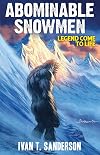
Leaning on his training in botany and zoology, Ivan T. Sanderson examined the reports and data available on the topic of abominable snowmen from around the world in the early 1960s and later in that decade and the result is one of the classics of cryptozoology and sasquatch literature. Abominable Snowmen: Legend Come to Life examines reports of unknown hominoids on five continents and if there is anything to them.
Sanderson begins by chronicling how the Abominable Snowman got its name in show more popular culture in 1921 then explored of reports of incidents and sightings in the Himalayas before that. Then over much of the book Sanderson covers vast stretches of the globe in which similar hominoid reports and stories are told before concluding that there were four man-like species with humans on the planet as of his writing. The rest of the book covered various geographical and biological elements that Sanderson believed helped explain why reports that he covered happened where they did. While the reports, stories, and local folklore were invaluable and Sanderson’s explanation of physical characteristics of the earth were insightful, there were several issues that made this book a tad painful to read. The first issue was Sanderson’s sometimes over-the-top snark filled comments on everything from both sides of the cold war being idiots to the sensationists in the press, but the biggest target and frankly where it got the past the point of “I get it, move on” was on scientists who professed skepticism of things in the outside world while they kept their pasty white butts in their comfy offices—if he had just put all of that in one chapter of his book it would have been more impactful but he just kept on with it. The second was Sanderson’s terminology for different types of humans—actual homo sapiens—that honestly today wouldn’t be allowed but some of the stuff he used was nearly crossing the line even in the 1960s. Another thing that isn’t a critique but is something that must be stated is the scientific names of early human ancestors used in the book, which a lot are not used today because they’ve changed a lot with various discoveries by paleoanthropologists in the 60+ years since the book was first published.
Abominable Snowmen: Legend Come to Life is a look at worldwide reports of what today would be called relic hominins, it’s one of cryptozoology’s most famous books by one of the field’s founders, Ivan T. Sanderson. show less
Sanderson begins by chronicling how the Abominable Snowman got its name in show more popular culture in 1921 then explored of reports of incidents and sightings in the Himalayas before that. Then over much of the book Sanderson covers vast stretches of the globe in which similar hominoid reports and stories are told before concluding that there were four man-like species with humans on the planet as of his writing. The rest of the book covered various geographical and biological elements that Sanderson believed helped explain why reports that he covered happened where they did. While the reports, stories, and local folklore were invaluable and Sanderson’s explanation of physical characteristics of the earth were insightful, there were several issues that made this book a tad painful to read. The first issue was Sanderson’s sometimes over-the-top snark filled comments on everything from both sides of the cold war being idiots to the sensationists in the press, but the biggest target and frankly where it got the past the point of “I get it, move on” was on scientists who professed skepticism of things in the outside world while they kept their pasty white butts in their comfy offices—if he had just put all of that in one chapter of his book it would have been more impactful but he just kept on with it. The second was Sanderson’s terminology for different types of humans—actual homo sapiens—that honestly today wouldn’t be allowed but some of the stuff he used was nearly crossing the line even in the 1960s. Another thing that isn’t a critique but is something that must be stated is the scientific names of early human ancestors used in the book, which a lot are not used today because they’ve changed a lot with various discoveries by paleoanthropologists in the 60+ years since the book was first published.
Abominable Snowmen: Legend Come to Life is a look at worldwide reports of what today would be called relic hominins, it’s one of cryptozoology’s most famous books by one of the field’s founders, Ivan T. Sanderson. show less

It's Ivan T. Sanderson, writing about the Abominable Snowman: what more need be said, really?
This is probably the seminal book on the topic of anthropoid cryptids, still. He covers the whole world, with evidence of all kinds, and intriguing theories that never get in the way of asking the questions. And there are some tid-bits in this book that still remain entirely uninvestigated: why the "little red men of the trees" still gets no Google hints is beyond me.
While his prose is far from show more deathless, his lively storytelling skill is undeniable; while I could wish he'd put more of the scientist and less of the reporter into the book, it is fairly solid reporting. Both the most interesting and worst bit of this book is its age: some books are simply so tied to the time when they were written that it's impossible to see them as other than dated. The good thing about this is that it came out just as the world began to be seen as fully explored, when rugged men who wandered into an unknown forest for days with just a gun and a canteen were still alive and corresponded; just as cryptozoology was beginning to be what it is today, and before Bigfoot had become a pop-cultural phenomenon; so the evidence he presents here is almost all of it up-close and personal, and (compared to much modern Bigfoot research, at least) untainted by the romance of what has become a modern myth.
On the other hand, much of the modern evidence is simply not there yet, even with edits to bring the book up to date to 1968, and so it's only the beginning of the story. And it's quite inescapable that his attitude toward race is still very much that of the early 20th century explorer, secure in the knowledge that white people aren't *like* other people; it's not as horrid as it could be, and very much in tune with the time in which he wrote - he generally finds the "natives" superior to the whites, in a noble-savage sort of way - but it's inescapable, and makes him much harder to respect: particularly in a book that's meant explore the meaning of the category of "human".
This book is now freely available online at sacred-texts.org . show less
This is probably the seminal book on the topic of anthropoid cryptids, still. He covers the whole world, with evidence of all kinds, and intriguing theories that never get in the way of asking the questions. And there are some tid-bits in this book that still remain entirely uninvestigated: why the "little red men of the trees" still gets no Google hints is beyond me.
While his prose is far from show more deathless, his lively storytelling skill is undeniable; while I could wish he'd put more of the scientist and less of the reporter into the book, it is fairly solid reporting. Both the most interesting and worst bit of this book is its age: some books are simply so tied to the time when they were written that it's impossible to see them as other than dated. The good thing about this is that it came out just as the world began to be seen as fully explored, when rugged men who wandered into an unknown forest for days with just a gun and a canteen were still alive and corresponded; just as cryptozoology was beginning to be what it is today, and before Bigfoot had become a pop-cultural phenomenon; so the evidence he presents here is almost all of it up-close and personal, and (compared to much modern Bigfoot research, at least) untainted by the romance of what has become a modern myth.
On the other hand, much of the modern evidence is simply not there yet, even with edits to bring the book up to date to 1968, and so it's only the beginning of the story. And it's quite inescapable that his attitude toward race is still very much that of the early 20th century explorer, secure in the knowledge that white people aren't *like* other people; it's not as horrid as it could be, and very much in tune with the time in which he wrote - he generally finds the "natives" superior to the whites, in a noble-savage sort of way - but it's inescapable, and makes him much harder to respect: particularly in a book that's meant explore the meaning of the category of "human".
This book is now freely available online at sacred-texts.org . show less

A biologist speculates about UFO's, oceanic light wheels and other anomalistic phenomenon.
Lists
Awards


You May Also Like


Associated Authors
Statistics
- Works
- 47
- Also by
- 4
- Members
- 843
- Popularity
- #30,326
- Rating
- 3.4
- Reviews
- 14
- ISBNs
- 42
- Languages
- 2
- Favorited
- 3