
John A. Keel (1930–2009)
Author of The Mothman Prophecies
About the Author
Image credit: From his younger days
Works by John A. Keel
The Perspicacious Percipient: How to Investigate UFOs and Other Insane Urges - Selected Writings of John A. Keel (2015) 3 copies
The Big Breakthrough: Confronting UFOs, Men in Black, Mothman, and Mysterious Humanoids - Trojan Horses of a Breakaway Civilization? (2017) 3 copies
La octava torre 2 copies
The Passionate Percipient: Illusions I Have Known And Loved - Selected Writings of John A. Keel (2015) 1 copy
JADOO The Astounding Story of One Man's Search Into the Mysteres of Black Magic in the Orient. 1 copy
Satyr-Man 1 copy
UFO, Mothman, Alien Encounters & Fortean Phenomena: The John A. Keel Anthology of Selected Writings For The Years: 1970-92 (2020) 1 copy
l'ottava torre 1 copy
Associated Works
Tagged
Common Knowledge
- Legal name
- Keel, John Alva
- Other names
- Kiehle, Alva John (birth)
- Birthdate
- 1930-03-25
- Date of death
- 2009-07-03
- Gender
- male
- Occupations
- journalist
parapsychologist
ufologist - Organizations
- United States Army (Korean War)
- Nationality
- USA
- Birthplace
- Hornell, New York, USA
- Places of residence
- Hornell, New York, USA
New York, New York, USA - Place of death
- New York, New York, USA
- Associated Place (for map)
- New York, USA
Members
Reviews
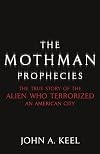
This is a mixed bag, in terms of its reading value. Keel calls himself a Fortean writer and one can see that in this book. Forteanism purports to be anti-theory. It presents itself as an even more objective account of facts than Big Science, and certainly more so than the various competing paranormalist factions. The basic worldview, to degree that it owns up to one, is that the world is a strange place that, for some reason, is populated both by all the “normal” stuff we experience, but show more also by UFOs, monsters, psychic phenomena, etc. etc.
Thing is, I found Keel to be all-too-willing to conclude something like “this person’s report illustrates the existence of another oddball entity or phenomena.” Nearly everyone's dotty beliefs and "unexplained" experiences are taken at face value, with little attempt to think about them critically. There’s objectivity and then there’s naiveté. Or, then again, perhaps one could see a willingness to posit monsters as having less innocent origins, there being the temptation of filthy lucre and all...
The positive side of it involves the horror movie value of it all. I still consider Strieber’s "Communion" to be the masterstroke of a horror writer, with its claims to nonfictionhood. With "Mothman," too, I found myself looking at the sky more often, peering at shadows more closely in the middle of the night, and so on. A nice helping of creep-out value, here. Plus, it helped me come up with an idea for a novel, so it will always have THAT going for it. show less
Thing is, I found Keel to be all-too-willing to conclude something like “this person’s report illustrates the existence of another oddball entity or phenomena.” Nearly everyone's dotty beliefs and "unexplained" experiences are taken at face value, with little attempt to think about them critically. There’s objectivity and then there’s naiveté. Or, then again, perhaps one could see a willingness to posit monsters as having less innocent origins, there being the temptation of filthy lucre and all...
The positive side of it involves the horror movie value of it all. I still consider Strieber’s "Communion" to be the masterstroke of a horror writer, with its claims to nonfictionhood. With "Mothman," too, I found myself looking at the sky more often, peering at shadows more closely in the middle of the night, and so on. A nice helping of creep-out value, here. Plus, it helped me come up with an idea for a novel, so it will always have THAT going for it. show less

Originally published in 1971, John Keel's Our Haunted Planet is, quite probably, a more hilarious read than the author intended, especially when dealing with planet formation, outdated scientific knowledge, and unexplored areas of Earth and other planets.
All I could think while listening to this actually enjoyable book was how Keel would write such a book now with NASA having sent probes to Venus, Jupiter, and Mars, how the Hubble Telescope has given us visual evidence of pulsars and show more neutron stars (sources of radio signals) and the number of satellites which have given everyone access to the inaccessible parts of our own planet. All the guesses, based on dodgy science of an earlier era, made in this book, like the idea that Venus was actually a comet originally and that it was torn out of Jupiter's atmosphere (the source of the Red Spot) have been overturned by new, better theories about planet formation in recent years and that the realization that the Red Spot is actually a storm in Jupiter's atmosphere.
The rest of the book is a mix of ufology, MIBs and ultrahumans (paranormal), a conspiracy of world domination (called WoW - and I couldn't help but laugh at the initials because the narrator is very careful to say W-O-W and never "wow", but let's face it World of Warcraft is a more fun version of world domination) a bit like the Illuminati, and lots of rather random anecdotal information about alien abductions, etc.
All in all, a fun read. show less
All I could think while listening to this actually enjoyable book was how Keel would write such a book now with NASA having sent probes to Venus, Jupiter, and Mars, how the Hubble Telescope has given us visual evidence of pulsars and show more neutron stars (sources of radio signals) and the number of satellites which have given everyone access to the inaccessible parts of our own planet. All the guesses, based on dodgy science of an earlier era, made in this book, like the idea that Venus was actually a comet originally and that it was torn out of Jupiter's atmosphere (the source of the Red Spot) have been overturned by new, better theories about planet formation in recent years and that the realization that the Red Spot is actually a storm in Jupiter's atmosphere.
The rest of the book is a mix of ufology, MIBs and ultrahumans (paranormal), a conspiracy of world domination (called WoW - and I couldn't help but laugh at the initials because the narrator is very careful to say W-O-W and never "wow", but let's face it World of Warcraft is a more fun version of world domination) a bit like the Illuminati, and lots of rather random anecdotal information about alien abductions, etc.
All in all, a fun read. show less
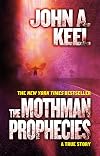
Not really sure what I expected with this one. My daughter and I had become entertained by the idea of West Virginia's "Mothman" (neither of us is a believer in such things, but we really enjoy these kind of tales) and so I thought I would go as close to the "source" as I could on this one and read a book by a man who was in Point Pleasant, West Virginia around the time of many of the Mothman sightings. I was also intrigued because this is thought of in some quarters as a seminal work in the show more field. One of those foundational "paranormal" books that birthed a thousand more. Keel, in fact, is credited with coining the term "Men in Black," and talks at length about them in this book.
The book is really well-written on a literature level--Keel knows how to write good sentences and paragraphs. What he's less adept at--or doesn't even attempt--is to write a thorough narrative with a beginning, middle, and end. Worked in among his tales of his visits to Point Pleasant are all the OTHER weird things he took note of happening toward the end of the 1960s, both in the United States and around the world. What's left is a real jumble of events that don't really seem to add up to anything--or at least nothing that Keel even attempts to put together.
As another review here on LT said, he considered himself a Fortean, and Forteans are apparently less concerned with explanations as with documentation. In that regard, it's a fascinating book filled with collected documents--for as much as you can believe any of them. As noted before, he recounts MANY stories of "Men in Black" following up on UFO and cryptid sightings...but never once tries to explain (or even guess) who they really are and why they are here. There are plenty of times he tells us what they AREN'T (real officers from the US Air Force, for example), but not once does he even suggest who or what they might really be--other than a menace.
What's more mysterious to me is that I could never tell what side of the fence Keel really fell on. In one breath, he will talk about how you can definitely, without a doubt, tell someone's experience with a UFO is real because of the effect on their eyes and skin (the "actinic rays" cause mild sunburn and red, swollen eyes...). Then, in the next breath, he will refute the account of an alien visitation by another "contactee." How he deems one story to be legit and the next to be hokum is never truly explained. Is his doubt of SOME stories supposed to prove his belief in the others is scientific and genuine? But then, later, he expresses his disbelief in the idea that the universe is filled with habitable planets and alien life--just about the one thing modern science HAS put its faith in among all the other wild claims he makes in the book!
And his descriptions of the "Mothman" of West Virginia--at times, the evidence in the BOOK seems pretty clear that it was nothing supernatural, but instead a large bird (some people suggest a wayward Sandhill Crane, or something similar) or a flock of birds that surprised and scared a small mountain town not used to seeing such creatures. In the last chapter he even refers to the "Mothman" as a large bird, as though that's what he believes it is--yet he also presents the accounts of those who saw the mythical "Mothman" as though they saw something genuinely chthonic.
At one point early on, Keel proposes the idea that all of these strange phenomena--West Virginia's Mothman, UFOs, spacemen, ancient visitations from angels and demons--are not EXTRAterrestrial, but instead ULTRAterrestrial, a term he defines along the lines of energy from outside of space and time that manifests itself in the form of whatever things people of the contemporary era are able to interpret as. So ancients see angels, and we modern folks in the space race era saw spaceships and aliens. It's an interesting idea, and definitely not your run-of-the-mill explanation of UFOs and cryptids...but it's as unsubstantiated as the rest of it. So while the book might make an interesting film or an episode of the X-Files, as a treatise on Mothman, or UFOs, or ultraterrestrials, or anything else he presents here, "The Mothman Prophecies" ultimately reads like the rambling notes of a man who spent his adult life writing down every strange story he heard. show less
The book is really well-written on a literature level--Keel knows how to write good sentences and paragraphs. What he's less adept at--or doesn't even attempt--is to write a thorough narrative with a beginning, middle, and end. Worked in among his tales of his visits to Point Pleasant are all the OTHER weird things he took note of happening toward the end of the 1960s, both in the United States and around the world. What's left is a real jumble of events that don't really seem to add up to anything--or at least nothing that Keel even attempts to put together.
As another review here on LT said, he considered himself a Fortean, and Forteans are apparently less concerned with explanations as with documentation. In that regard, it's a fascinating book filled with collected documents--for as much as you can believe any of them. As noted before, he recounts MANY stories of "Men in Black" following up on UFO and cryptid sightings...but never once tries to explain (or even guess) who they really are and why they are here. There are plenty of times he tells us what they AREN'T (real officers from the US Air Force, for example), but not once does he even suggest who or what they might really be--other than a menace.
What's more mysterious to me is that I could never tell what side of the fence Keel really fell on. In one breath, he will talk about how you can definitely, without a doubt, tell someone's experience with a UFO is real because of the effect on their eyes and skin (the "actinic rays" cause mild sunburn and red, swollen eyes...). Then, in the next breath, he will refute the account of an alien visitation by another "contactee." How he deems one story to be legit and the next to be hokum is never truly explained. Is his doubt of SOME stories supposed to prove his belief in the others is scientific and genuine? But then, later, he expresses his disbelief in the idea that the universe is filled with habitable planets and alien life--just about the one thing modern science HAS put its faith in among all the other wild claims he makes in the book!
And his descriptions of the "Mothman" of West Virginia--at times, the evidence in the BOOK seems pretty clear that it was nothing supernatural, but instead a large bird (some people suggest a wayward Sandhill Crane, or something similar) or a flock of birds that surprised and scared a small mountain town not used to seeing such creatures. In the last chapter he even refers to the "Mothman" as a large bird, as though that's what he believes it is--yet he also presents the accounts of those who saw the mythical "Mothman" as though they saw something genuinely chthonic.
At one point early on, Keel proposes the idea that all of these strange phenomena--West Virginia's Mothman, UFOs, spacemen, ancient visitations from angels and demons--are not EXTRAterrestrial, but instead ULTRAterrestrial, a term he defines along the lines of energy from outside of space and time that manifests itself in the form of whatever things people of the contemporary era are able to interpret as. So ancients see angels, and we modern folks in the space race era saw spaceships and aliens. It's an interesting idea, and definitely not your run-of-the-mill explanation of UFOs and cryptids...but it's as unsubstantiated as the rest of it. So while the book might make an interesting film or an episode of the X-Files, as a treatise on Mothman, or UFOs, or ultraterrestrials, or anything else he presents here, "The Mothman Prophecies" ultimately reads like the rambling notes of a man who spent his adult life writing down every strange story he heard. show less
When writing the Mothman prophecies, John Keel was definitely scared and he handled the fear with anger and contempt for the 'enemy'. This contempt colors the text with an arrogance toward all who are against him - including various UFO investigators. Some readers will find this provoking - I found it refreshing and understandable as I devoured this creepy, entertaining and very interesting book. Let us look at these two aspects of this story:
Entertainment
The Mothman Prophecies is excellent show more thrilling entertainment. I found the movie (2002) scarier than the book, but it's still creepy enough, and it's slowly dragging you into a world where consensus reality is gradually replaced by a grim place where we all can become victims to the forces who act behind the guise of the UFO phenomena (according to Keels hypothesis) and be dragged into a nightmare world. The story covers the thirteen months (1966-67) of UFO activity and monster sightings (mainly the Mothman) leading up to the collapse of the Silver Bridge in Point Pleasant. Keel investigates the UFOs and the Mothman and his only weapons are his intelligence and sarcasm. As he reports the weird events he connects them to similar weirdness in ancient as well as then recent history. Keel builds an hypothesis of what's really going on while giving you even more paranormal events to process. Depending on how sensitive you are, this book could make it a bit hard to fall asleep.
Keel's hypothesis
The world seems to be a place not so far from H.P. Lovecraft's Cthulhu Mythos universe. It's a cold and uncaring universe, but instead of the menace of the Great Old Ones, mankind has been harassed since its beginnings by a malevolent force that has in different guises toyed with humanity. The guise seems to be determined by the age and culture the human interacting with these forces belong to. Once they were little people or dragons, since the late 1940s they have appeared as UFOs, aliens, and of course the Mothman. More specifically, Keel labels the winged creatures 'the Garudas' (after Hindu legends I believe) and tells us they're associated with 'luminous phenomena'. He also connects them and the other manifestations to occult phenomena.
Other interesting findings are Keel's observation (based on UFO reports) that you're likelier to see a UFO on an Wednesday at 10 P.M. Alarmingly, children between ages of seven to eighteen are likelier to witness paranormal activity and that the events are often concentrated around schools. Also a majority of those who find their car chased by UFOs or winged horrors are said to be schoolteachers. Especially dangerous is being a teacher of abnormal children - bright or mentally deficient. One can only speculate what the reason for this could be.
It's refreshing that Keel is convinced that USAF and other government agencies are not guilty of being in an unholy alliance with the UFO-entities, nor are their agents the creepy Men in Black (term coined by Keel). The government seems as confused as the rest of the investigators.
I recommend the Mothman Prophecies to all readers who are interested in the UFO phenomena, the paranormal in general, or just want to to read an entertaining creepy story. It's a quick read if you like the subject, but as said before, beware if you're the sensitive type. This stuff gets under your skin to an extent. show less
Entertainment
The Mothman Prophecies is excellent show more thrilling entertainment. I found the movie (2002) scarier than the book, but it's still creepy enough, and it's slowly dragging you into a world where consensus reality is gradually replaced by a grim place where we all can become victims to the forces who act behind the guise of the UFO phenomena (according to Keels hypothesis) and be dragged into a nightmare world. The story covers the thirteen months (1966-67) of UFO activity and monster sightings (mainly the Mothman) leading up to the collapse of the Silver Bridge in Point Pleasant. Keel investigates the UFOs and the Mothman and his only weapons are his intelligence and sarcasm. As he reports the weird events he connects them to similar weirdness in ancient as well as then recent history. Keel builds an hypothesis of what's really going on while giving you even more paranormal events to process. Depending on how sensitive you are, this book could make it a bit hard to fall asleep.
Keel's hypothesis
The world seems to be a place not so far from H.P. Lovecraft's Cthulhu Mythos universe. It's a cold and uncaring universe, but instead of the menace of the Great Old Ones, mankind has been harassed since its beginnings by a malevolent force that has in different guises toyed with humanity. The guise seems to be determined by the age and culture the human interacting with these forces belong to. Once they were little people or dragons, since the late 1940s they have appeared as UFOs, aliens, and of course the Mothman. More specifically, Keel labels the winged creatures 'the Garudas' (after Hindu legends I believe) and tells us they're associated with 'luminous phenomena'. He also connects them and the other manifestations to occult phenomena.
Other interesting findings are Keel's observation (based on UFO reports) that you're likelier to see a UFO on an Wednesday at 10 P.M. Alarmingly, children between ages of seven to eighteen are likelier to witness paranormal activity and that the events are often concentrated around schools. Also a majority of those who find their car chased by UFOs or winged horrors are said to be schoolteachers. Especially dangerous is being a teacher of abnormal children - bright or mentally deficient. One can only speculate what the reason for this could be.
It's refreshing that Keel is convinced that USAF and other government agencies are not guilty of being in an unholy alliance with the UFO-entities, nor are their agents the creepy Men in Black (term coined by Keel). The government seems as confused as the rest of the investigators.
I recommend the Mothman Prophecies to all readers who are interested in the UFO phenomena, the paranormal in general, or just want to to read an entertaining creepy story. It's a quick read if you like the subject, but as said before, beware if you're the sensitive type. This stuff gets under your skin to an extent. show less
Lists
You May Also Like


Associated Authors
Statistics
- Works
- 42
- Also by
- 2
- Members
- 2,096
- Popularity
- #12,281
- Rating
- 3.5
- Reviews
- 32
- ISBNs
- 83
- Languages
- 7
- Favorited
- 4