
Patrick Harpur
Author of Daimonic Reality: A Field Guide to the Otherworld
About the Author
Patrick Harpur is the best-selling author of Daimonic Reality and The Philosophers' Secret Fire. He has taught philosophy to graduate students at Schumacher College, Dartington, and lectured in the United States. Harpur lives in Dorset, England.
Works by Patrick Harpur
The rapture 1 copy
Associated Works
Fortean Times 87 — Contributor — 2 copies
Fortean Times 90 — Contributor — 2 copies
Fortean Times 94 — Contributor — 2 copies
Tagged
Common Knowledge
- Canonical name
- Harpur, Patrick
- Birthdate
- 1950-07-14
- Gender
- male
- Education
- University of Cambridge (St Catharine's College)
- Agent
- June Hall Literary Agency
- Nationality
- UK
- Birthplace
- Old Windsor, Berkshire, England, UK
- Associated Place (for map)
- England, UK
Members
Reviews
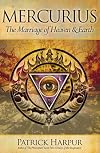
I would call this book a magnificent failure and yet it has many fine qualities, not least genuine learning and some exceptional novelistic writing. So why is it a failure?
Harpur (as perhaps only those who read to the very end, and I mean to the very end but no cheating please or there really is no point in starting the book) has a little bit of the Loki in him.
That trickster element is, I think, the thing that redeems the work. He certainly 'seems' (who knows) to want to engage the reader show more with alchemical thought and its Jungian analogue as sincere attempts at self-individuation.
Failing to resolve the issues raised by analogical thinking in any way, perhaps because he does not want to and perhaps because he cannot, he then falls into the double trap of obscurity and didacticism in style.
That seems harsh but a full half of the book, perhaps more, is made up of material about alchemical theory and practice that you would expect to find on the non-fiction shelves - with foot notes.
In producing this material in this way and then offsetting it against not merely one narrative but two, with layers of narrative within the narrative in the 'best' tradition of the 'modern' novel, he creates something that will certainly appeal to some.
I find it overly manipulative for my taste. There is something deeply conservative and priestly, almost obscurantist about the tone of this book.
However, that 'spiritual' position is constantly being subverted by the evident lies, half-truths and delusions peppered through the fictional element and, as I will argue, nothing can be taken at face value when it comes to the values expressed in the work.
Is it all one fiction masquerading as truth, a game worthy of Calvino (who we do not admire)? After all, Calvino famously used the Tarot to similar effect. As a literary game, it is a remarkable achievement.
But as a trick played on the lonely reader, it may be cruel. The alchemical element is not merely obscure but holds out the promise of some hidden meaning of spiritual value that cannot be honoured.
This is dangled like a fishermen dangles his bait on a rod, only to make spirituality, actually obscurantism, the cloak for a degree of literary manipulation that may help no one.
So let us move on to the fiction which is tricksy and a suitable offset to the two embedded interpretations of the alchemical - the traditional and the psychological.
The difference is that we expect manipulation in fiction so we can be far more relaxed when it is out in the open by being hidden in a story.
Harpur is extremely good at creating credible characters in the Reverend Smith and Eileen, from different generations but interlinked by their role in other unreliable narratives, most notably that of Bradley and Nora.
Forget the detail (read the book). He draws us persuasive pictures of two types of over-intellualised, sexually repressed and confused English - the mid-century middle class male and the rising bluestocking of the generation that followed.
They are, in fact, archetypes. You would not imediately think so from this tale told of English country life but this is a mildly decadent Ambridge riddled with symbolism, sinking into the water table, with pagan fertility stones on the high hills and sacred woods that aren't.
The novel refers back to the long tradition of literary intellectuals observing the ways of the country folk and that contains Hardy and folk horror within it.
At times, I was reminded of John Cowper Powys, another writer who mixes magical thinking with close attention to character detail. There is even the violent country mob which so terrifies the urban bourgeoisie and is found as a recurrent image in the horror genre.
It is true that when he has his two main characters speak in their non-fiction voice, he manages to de-nature them and nearly turn them into one and the same authorial voice with different angles on alchemy but when they are back 'in the world', the world that they live in appears very real and finely observed indeed.
There are significant minor characters - a suicidal artist, a catholic woman of passion trapped in a loveless marriage, Eileen's father who clearly has secret sexual vice and an inability to analyse his own condition.
Whether these are avatars of the author I do not know but he builds up a set of archetypes of traditional English twentieth century culture which slyly gives us a full picture of sexual repression, well meaning self-destructive stupidity and finely tuned cultural evasion.
The intellectual engagements of the neurotic Smith and Eileen provide a clever (though is it wholly intended?) dissection of a race of people forced to dance in a conformist socially directed ballet that is just 'not enough' for them at heart.
Perhaps all peoples in all cultures find in their souls that what is before them is not enough but the literary English middle classes are peculiarly adept at a sort of spiritual mending and making do expressed in their country Anglicanism and Oxbridge academicism.
I take the book as an attempt to unpack this culture and this class and its search for meaning (and its lack of courage to be direct about that search, seeking it in acceptable analogical thinking) that may or may not be an unfolding in the author himself - who can possibly know except the author!
The book is a significant achievement in destabilising the assumptions of a whole culture and it does so in ways that are not cruel at all unless you take content at face value. If you do, it is cruel.
The fictional persons are considered with compassion and there is a desire to love within this book that rises above the trickery. There does not appear to be the cynicism that purely formal literary writers tend to offer us.
I will not go much further because this is a book that has to be judged through reading rather than through the sort of intellectualism that acts as a carapace for Eileen who may or may not be as nutty as a fruit cake.
Any cruelty only lies in the unfulfilled expectation for the spiritual searcher who expects omething consoling in this novel, the sort of vulnerable searcher to be found in every nook and cranny of the educated middle classes.
I think such people need a bit more brutal honesty in their lives and to be shaken out of their cocoon. What they do not need is to be is to be led into a maze. This book and its literary brothers and sisters tend to discomfit a little but leave people in their hole.
Perhaps losing yourself in analogical speculation and theory - whether alchemical or Jungian - might get you out of that spiritual hole but I don't think so.
In the end, it just gives you a better 'ole. Still a better 'ole may be all that you really want, like moving up the spiritual property ladder.
The book's message (for me) is that, in fact, such thinking is likely to be merely palliative, an evasion as likely to end in madness, failure and fantasy as it is to find a workable way to some sort of wholeness by removing the detritus of what our history and culture has left us with. It is a way of coping, not overcoming.
Still, it is a stimulating and valuable book, frustrating perhaps because you really do not know what the author intends but perhaps that is the point. You should not really expect any writer of texts to solve your problems for you. show less
Harpur (as perhaps only those who read to the very end, and I mean to the very end but no cheating please or there really is no point in starting the book) has a little bit of the Loki in him.
That trickster element is, I think, the thing that redeems the work. He certainly 'seems' (who knows) to want to engage the reader show more with alchemical thought and its Jungian analogue as sincere attempts at self-individuation.
Failing to resolve the issues raised by analogical thinking in any way, perhaps because he does not want to and perhaps because he cannot, he then falls into the double trap of obscurity and didacticism in style.
That seems harsh but a full half of the book, perhaps more, is made up of material about alchemical theory and practice that you would expect to find on the non-fiction shelves - with foot notes.
In producing this material in this way and then offsetting it against not merely one narrative but two, with layers of narrative within the narrative in the 'best' tradition of the 'modern' novel, he creates something that will certainly appeal to some.
I find it overly manipulative for my taste. There is something deeply conservative and priestly, almost obscurantist about the tone of this book.
However, that 'spiritual' position is constantly being subverted by the evident lies, half-truths and delusions peppered through the fictional element and, as I will argue, nothing can be taken at face value when it comes to the values expressed in the work.
Is it all one fiction masquerading as truth, a game worthy of Calvino (who we do not admire)? After all, Calvino famously used the Tarot to similar effect. As a literary game, it is a remarkable achievement.
But as a trick played on the lonely reader, it may be cruel. The alchemical element is not merely obscure but holds out the promise of some hidden meaning of spiritual value that cannot be honoured.
This is dangled like a fishermen dangles his bait on a rod, only to make spirituality, actually obscurantism, the cloak for a degree of literary manipulation that may help no one.
So let us move on to the fiction which is tricksy and a suitable offset to the two embedded interpretations of the alchemical - the traditional and the psychological.
The difference is that we expect manipulation in fiction so we can be far more relaxed when it is out in the open by being hidden in a story.
Harpur is extremely good at creating credible characters in the Reverend Smith and Eileen, from different generations but interlinked by their role in other unreliable narratives, most notably that of Bradley and Nora.
Forget the detail (read the book). He draws us persuasive pictures of two types of over-intellualised, sexually repressed and confused English - the mid-century middle class male and the rising bluestocking of the generation that followed.
They are, in fact, archetypes. You would not imediately think so from this tale told of English country life but this is a mildly decadent Ambridge riddled with symbolism, sinking into the water table, with pagan fertility stones on the high hills and sacred woods that aren't.
The novel refers back to the long tradition of literary intellectuals observing the ways of the country folk and that contains Hardy and folk horror within it.
At times, I was reminded of John Cowper Powys, another writer who mixes magical thinking with close attention to character detail. There is even the violent country mob which so terrifies the urban bourgeoisie and is found as a recurrent image in the horror genre.
It is true that when he has his two main characters speak in their non-fiction voice, he manages to de-nature them and nearly turn them into one and the same authorial voice with different angles on alchemy but when they are back 'in the world', the world that they live in appears very real and finely observed indeed.
There are significant minor characters - a suicidal artist, a catholic woman of passion trapped in a loveless marriage, Eileen's father who clearly has secret sexual vice and an inability to analyse his own condition.
Whether these are avatars of the author I do not know but he builds up a set of archetypes of traditional English twentieth century culture which slyly gives us a full picture of sexual repression, well meaning self-destructive stupidity and finely tuned cultural evasion.
The intellectual engagements of the neurotic Smith and Eileen provide a clever (though is it wholly intended?) dissection of a race of people forced to dance in a conformist socially directed ballet that is just 'not enough' for them at heart.
Perhaps all peoples in all cultures find in their souls that what is before them is not enough but the literary English middle classes are peculiarly adept at a sort of spiritual mending and making do expressed in their country Anglicanism and Oxbridge academicism.
I take the book as an attempt to unpack this culture and this class and its search for meaning (and its lack of courage to be direct about that search, seeking it in acceptable analogical thinking) that may or may not be an unfolding in the author himself - who can possibly know except the author!
The book is a significant achievement in destabilising the assumptions of a whole culture and it does so in ways that are not cruel at all unless you take content at face value. If you do, it is cruel.
The fictional persons are considered with compassion and there is a desire to love within this book that rises above the trickery. There does not appear to be the cynicism that purely formal literary writers tend to offer us.
I will not go much further because this is a book that has to be judged through reading rather than through the sort of intellectualism that acts as a carapace for Eileen who may or may not be as nutty as a fruit cake.
Any cruelty only lies in the unfulfilled expectation for the spiritual searcher who expects omething consoling in this novel, the sort of vulnerable searcher to be found in every nook and cranny of the educated middle classes.
I think such people need a bit more brutal honesty in their lives and to be shaken out of their cocoon. What they do not need is to be is to be led into a maze. This book and its literary brothers and sisters tend to discomfit a little but leave people in their hole.
Perhaps losing yourself in analogical speculation and theory - whether alchemical or Jungian - might get you out of that spiritual hole but I don't think so.
In the end, it just gives you a better 'ole. Still a better 'ole may be all that you really want, like moving up the spiritual property ladder.
The book's message (for me) is that, in fact, such thinking is likely to be merely palliative, an evasion as likely to end in madness, failure and fantasy as it is to find a workable way to some sort of wholeness by removing the detritus of what our history and culture has left us with. It is a way of coping, not overcoming.
Still, it is a stimulating and valuable book, frustrating perhaps because you really do not know what the author intends but perhaps that is the point. You should not really expect any writer of texts to solve your problems for you. show less

This book raises the idea that for the last 300 years, westerners have been cut off from the daimons, archetypes and myths, that everyone else in the history of the human race, from tribal shamans to Greek philosophers and Rennaissance mages, has tapped into. We are trapped in a two-dimensional world by the belief that the only reality is 'literal reality'.
Patrick Harpur has packed a lot into this book, but it is split into short sections and it is easy to follow his arguments. I was show more fascinated by the idea that however much we try to suppress them, daimons will always break through, via the Romantic poets, Victorian spiritualism, and Jungian psychology, via UFO abductions and quantum physics.
One of the most telling images in the book is the description of Charles Darwin, so overcome with terror by his encounter with the burgeoning power of Mother Nature in the South American rainforests that he shuts himself away in his study and "begins to armour himself against her with labelling and facts", while in later life the sight of a peacock feather in all its complexity and beauty makes him nauseous. show less
Patrick Harpur has packed a lot into this book, but it is split into short sections and it is easy to follow his arguments. I was show more fascinated by the idea that however much we try to suppress them, daimons will always break through, via the Romantic poets, Victorian spiritualism, and Jungian psychology, via UFO abductions and quantum physics.
One of the most telling images in the book is the description of Charles Darwin, so overcome with terror by his encounter with the burgeoning power of Mother Nature in the South American rainforests that he shuts himself away in his study and "begins to armour himself against her with labelling and facts", while in later life the sight of a peacock feather in all its complexity and beauty makes him nauseous. show less

A sincere and sometimes interesting effort to make sense of ghost/Bigfoot/UFO sightings, religious visions, et sic porro. However, it should give the reader pause when the wordy, rambling synopsis on the back cover isn't actually a synopsis: when it avoids a clear description of the book's content in favor of gobbledygook about "venerable traditions" and "neglected worldviews." Such is the case here.
To get down to the nitty-gritty, Harpur applies psychologist Carl Jung's interpretation of show more unidentified flying objects to a broader range of supernatural sightings. Jung noted that many UFO sightings "seemed to be of solid objects--which, moreover, registered on radar screens," writes Harpur. "(Jung) thought it possible that projections from the collective unconscious might have a physical aspect; or else, although UFOs might be physical, they were not necessarily extraterrestrial spacecraft." See what he did there? It's okay to talk about flying saucers (and ghosts, and Bigfoot) as long as you proceed from the premise that they simply can't be what the average goofball thinks they are. Coat the subject with an academic gloss (unidentified flying objects "symbolize the disintegration of psychic unity by arriving in numbers and in a multitude of shapes") and suddenly it's respectable. Whew! Problem solved.
Sheer intellectual snobbery. It may not be deliberate, but it stinks as unmistakably as any form of snobbery does. And it reaches absurd depths when, after describing a fascinating series of unexplained big cat sightings, the author concludes that it is "tempting" to see them as "a return of wild instinctual life" to the commuterized suburbs--a "fanged unconscious force which menaces the bland surface of stockbroker-belt consciousness." Tempting it may be, at least to an academic ninny; convincing it is not. In 2005, a spate of big cat sightings occurred in my hometown; interestingly, they were confined to a single neighborhood not far from where I was living at the time. This was an area of nineteenth- and early twentieth-century houses on quiet, tree-lined streets, a setting which surely would have put a damper on Harpur's fantasies about archetypal forces bursting forth from the collective unconscious to menace complacent stockbrokers. (Or whatever.)
I don't want to judge the author too harshly. As I've said, he appears to be sincerely interested in the subject (see his description of Roy Fulton's eerie 1979 encounter with a vanishing hitchhiker), and there's room for multiple theories about the paranormal. I just think that he's essentially barking up the wrong tree. Paul Devereux's Haunted Land: Investigations into Ancient Mysteries is a better, more clearly stated book in this vein. show less
To get down to the nitty-gritty, Harpur applies psychologist Carl Jung's interpretation of show more unidentified flying objects to a broader range of supernatural sightings. Jung noted that many UFO sightings "seemed to be of solid objects--which, moreover, registered on radar screens," writes Harpur. "(Jung) thought it possible that projections from the collective unconscious might have a physical aspect; or else, although UFOs might be physical, they were not necessarily extraterrestrial spacecraft." See what he did there? It's okay to talk about flying saucers (and ghosts, and Bigfoot) as long as you proceed from the premise that they simply can't be what the average goofball thinks they are. Coat the subject with an academic gloss (unidentified flying objects "symbolize the disintegration of psychic unity by arriving in numbers and in a multitude of shapes") and suddenly it's respectable. Whew! Problem solved.
Sheer intellectual snobbery. It may not be deliberate, but it stinks as unmistakably as any form of snobbery does. And it reaches absurd depths when, after describing a fascinating series of unexplained big cat sightings, the author concludes that it is "tempting" to see them as "a return of wild instinctual life" to the commuterized suburbs--a "fanged unconscious force which menaces the bland surface of stockbroker-belt consciousness." Tempting it may be, at least to an academic ninny; convincing it is not. In 2005, a spate of big cat sightings occurred in my hometown; interestingly, they were confined to a single neighborhood not far from where I was living at the time. This was an area of nineteenth- and early twentieth-century houses on quiet, tree-lined streets, a setting which surely would have put a damper on Harpur's fantasies about archetypal forces bursting forth from the collective unconscious to menace complacent stockbrokers. (Or whatever.)
I don't want to judge the author too harshly. As I've said, he appears to be sincerely interested in the subject (see his description of Roy Fulton's eerie 1979 encounter with a vanishing hitchhiker), and there's room for multiple theories about the paranormal. I just think that he's essentially barking up the wrong tree. Paul Devereux's Haunted Land: Investigations into Ancient Mysteries is a better, more clearly stated book in this vein. show less
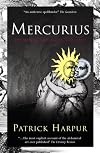
Mercurius weaves 1950s English village life seen through the eyes of the recently arrived young vicar, the same village seen years later by a young woman living in the now defunct vicarage and a detailed discussion of the Great Work, the search for alchemical perfection and its relationship to Jungian thought. Not to be approached as an easy or comforting read, Mercurius works at many levels revealing almost uniformly tragic and unfulfilled lives - is this the point, that endeavour in show more whatever field or direction, personal or professional, public or private, is doomed to failure? The detailed and deep discussions of alchemy passed mostly over my head. The village tales revealed, as they always do, lives being lived and relationships sputtering along. The vicar, Smith, seems to grab the wrong end of every stick thrust at him whether the attempt be to help or harm.
This book is too clever for me by a long way and I think I would have got more from it if only I had tried harder... show less
This book is too clever for me by a long way and I think I would have got more from it if only I had tried harder... show less
Lists
You May Also Like


Associated Authors
Statistics
- Works
- 12
- Also by
- 3
- Members
- 684
- Popularity
- #36,990
- Rating
- 4.3
- Reviews
- 12
- ISBNs
- 36
- Languages
- 1
- Favorited
- 4