
Gary Lachman
Author of Turn Off Your Mind: The Mystic Sixties and the Dark Side of the Age of Aquarius
About the Author
Gary Lachman is a well-known author, lecturer and philosopher. His many books about the links between consciousness, culture, and the western esoteric tradition include Lost Knowledge of the Imagination, The Quest for Hermes Trismegistus and Caretakers of the Cosmos.
Image credit: Flickr user Jean-Luc
Works by Gary Lachman
Turn Off Your Mind: The Mystic Sixties and the Dark Side of the Age of Aquarius (2001) 194 copies, 3 reviews
Aleister Crowley: Magick, Rock and Roll, and the Wickedest Man in the World (2014) 144 copies, 2 reviews
Jung the Mystic: The Esoteric Dimensions of Carl Jung's Life and Teachings (2010) 136 copies, 1 review
New York Rocker: My Life in the Blank Generation with Blondie, Iggy Pop, and Others, 1974-1981 (2002) 60 copies
Revolutionaries of the Soul: Reflections on Magicians, Philosophers, and Occultists (2014) 32 copies, 1 review
The Return of Holy Russia: Apocalyptic History, Mystical Awakening, and the Struggle for the Soul of the World (2020) 28 copies
Dreaming Ahead of Time: Experiences with Precognitive Dreams, Synchronicity and Coincidence (2022) 12 copies
Aleister Crowley: The Beast in Britain (Herb Lester Associates Guides to the Unexpected) (2023) 9 copies
Touched by the Presence: From Blondie's Bowery and Rock and Roll to Magic and the Occult (2025) 7 copies
Facts Concerning H. P. Lovecraft and His Environs (Herb Lester Associates Guides to the Unexpected) (2024) 4 copies
Associated Works
Tagged
Common Knowledge
- Legal name
- Lachman, Gary Valentine
- Birthdate
- 1955-12-24
- Gender
- male
- Occupations
- author
bassist (Blondie)
lyricist - Awards and honors
- Rock and Roll Hall of Fame
- Nationality
- USA
- Birthplace
- Bayonne, New Jersey, USA
- Places of residence
- Bayonne, New Jersey, USA (birth)
Los Angeles, California, USA
London, England, UK - Associated Place (for map)
- USA
Members
Reviews
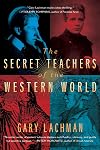
This epic study unveils the esoteric masters who have covertly impacted the intellectual development of the West, from Pythagoras and Zoroaster to the little-known modern icons Jean Gebser and Schwaller de Lubicz. Running alongside the mainstream of Western intellectual history there is another current which, in a very real sense, should take pride of place, but which for the last few centuries has occupied a shadowy, inferior position, somewhere underground. This "other" stream forms the show more subject of Gary Lachman’s epic history and analysis, The Secret Teachers of the Western World. In this clarifying, accessible, and fascinating study, the acclaimed historian explores the Western esoteric tradition – a thought movement with ancient roots and modern expressions, which, in a broad sense, regards the cosmos as a living, spiritual, meaningful being and humankind as having a unique obligation and responsibility in it. The historical roots of our “counter tradition,” as Lachman explores, have their beginning in Alexandria around the time of Christ. It was then that we find the first written accounts of the ancient tradition, which had earlier been passed on orally. Here, in this remarkable city, filled with teachers, philosophers, and mystics from Egypt, Greece, Asia, and other parts of the world, in a multi-cultural, multi-faith, and pluralistic society, a synthesis took place, a creative blending of different ideas and visions, which gave the hidden tradition the eclectic character it retains today. The history of our esoteric tradition roughly forms three parts: Part One: After looking back at the earliest roots of the esoteric tradition in ancient Egypt and Greece, the historical narrative opens in Alexandria in the first centuries of the Christian era. Over the following centuries, it traces our “other” tradition through such agents as the Hermeticists; Kabbalists; Gnostics; Neoplatonists; and early Church fathers, among many others. We examine the reemergence of the lost Hermetic books in the Renaissance and their influence on the emerging modern mind. Part Two begins with the fall of Hermeticism in the late Renaissance and the beginning of “the esoteric counterculture.” In 1614, the same year that the Hermetic teachings fell from grace, a strange document appeared in Kassel, Germany announcing the existence of a mysterious fraternity: the Rosicrucians. Part two charts the impact of the Rosicrucians and the esoteric currents that followed, such as the Romance movement and the European occult revival of the late nineteenth century, including Madame Blavatsky and the opening of the western mind to the wisdom of the East, and the fin-de-siècle occultism of the Hermetic Order of the Golden Dawn. Part Three chronicles the rise of “modern esotericism,” as seen in the influence of Rudolf Steiner, Gurdjieff, Annie Besant, Krishnamurti, Aleister Crowley, R. A Schwaller de Lubicz, and many others. Central is the life and work of C.G. Jung, perhaps the most important figure in the development of modern spirituality. The book looks at the occult revival of the “mystic sixties” and our own New Age, and how this itself has given birth to a more critical, rigorous investigation of the ancient wisdom. With many detours and dead ends, we now seem to be slowly moving into a watershed. It has become clear that the dominant, left-brain, reductionist view, once so liberating and exciting, has run out of steam, and the promise of that much-sought-after “paradigm change” seems possible. We may be on the brink of a culminating moment of the esoteric intellectual tradition of the West. show less
Gary Lachman has carved himself a niche as popular historian of counter-culture. In his 'Turn Off Your Mind', a critical view of Sixties counter-culture, he was not afraid to remind us of the dark and even silly side of the Age of Aquarius. His general stance is liberal, steering a fine line between genuine sympathy for the search for meaning in the irrational and an urbane anxiety about where the irrational may lead once it leaves the commune and enters the wider culture.
In his books, show more Lachman has placed counter cultural thinking in a much wider historical context. We can now see it as a more normal response to the world than we have assumed. He has, with perhaps only very occasional slips into credulity, set the gold standard for sympathetic yet critical rational description of these cultures. And he has brought the conclusions of a wide range of more academic investigators and thinkers to a much wider audience.
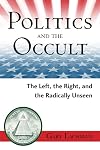
'Politics & The Occult' looks at those who believe in 'occult' forces at work in society and who then seek to act on society in accordance with them. Lachman has decided wisely not to look into secret societies. There are many other interesting books on such societies and on the mythology of secret government. We recommend David V. Barrett's fair minded (perhaps excessively so) 'A Brief History of Secret Societies' which we reviewed in Oracle magazine earlier this year (2008).
Some very serious academic historians have been looking into the history of the occult as a cultural phenomenon in recent years, notably the incomparable Nicholas Goodrick-Clarke. They have been uncovering more and more about specific groups at nodal points of history and society who have held occult views. Awareness of these movements has been limited by one great truth of history - the winners write it. The pragmatic and materialist view of history, indeed of existence as a whole, is always the winner because it works.
This is not to say that there are not major triumphs by irrationalist or half-rationalist movements - the triumph of Christianity was that of one mystery religion over many, Communism had many occult aspects in organisation and belief system despite its avowed scientific materialism. Yet most occult interventions in politics are literally against reason, attempts to mould reality through will or in accordance with some dream-state, even if it is shared by many others.
Lachman owes a big debt to other writers and acknowledges that debt throughout. He has clearly read deeply in the occultist tradition himself - whether Swedenborg, Guenon or Evola. But the total picture he gives has to be a little unsatisfactory to the reader through no fault of Lachman's. A narrative of a nation may have discontinuities (we may call them 'revolutions') but there is still a continuous recorded tale - history is 'one damn thing after another'.
With occultists there is rarely a proven connection between one set of occult interventions and another. This either looks like the same phenomenon of resistance to the prevailing current repeating itself in a parody of the 'eternal return' or history degenerates into one of those stories where every occult intervention is linked to its predecessor until the whole process becomes a conspiracy theory in which the Hidden Masters can be traced back to the dawn of time.
Lachman's book implies something different (though he does not state this) - a series of genuine occult interventions waxing and waning during key periods in history, rather marginal in most cases but occasionally, like Zelig in the Woody Allen film of that time, appearing at key points in history as more or less important bit-players.
Are there links between one intervention and another? Sometimes, sometimes not? What provides the link is not a 'Hidden Master' or a secret society but the literature that is left behind by one generation to be rediscovered and used by another. Let us take just three stories ...
* There is the Rosicrucian experience which appears to be a reformation within the Reformation. It represented an ideological faction that attempted (much like modern neo-conservatives) to bend pragmatic politicians to idealist ends. They may have persuaded the Elector of the Palatinate to undertake a pre-emptive strike against the Vatican and the Habsburgs that was doomed to fail on fundamentals.
* There is the obscure Masonic experience that was not merely linked to the Jacobite cause (this time oddly in the Catholic cause) but resulted in the association of continental Masonic activity with conspiratorial dissidence. This would lead, amongst other things, to the destruction of 'working class' hero Cagliostro and widespread fear and loathing of the Illuminati as well as the now-proven if exaggerated Masonic link to the founding of the USA.
* There is the antinomianism of the Moravian Brethren and of Swedenborg which, within the general Christian rhetoric of the day, anticipated the sexual revolution.
Yet these are all only minor parts of a much bigger story. The Rosicrucians were only an incident in the struggles between the Habsburgs and their enemies. The Jacobites were soon marginalised, most Masons were thoroughly respectable and Masonic influence was influential in the form the American Revolution took but it did not cause it. As for sexuality, matters got more rather than less repressed in the hundred and fifty years after Blake.
If we see the occult as a back drop to revolt by those excluded and passionate for change, then we see a shift somewhere between the blood-letting of the French Revolution and the pessimism about the world of the second half of the Nineteenth Century. One symbolic figure might be the socialist Alphone Louis Constant who became Eliphas Levy as he discovered magic and made his own disillusioned turn to the right.
Before this time, occultists had represented light and liberation - typical figures would be William Blake or Cagliostro who gave free health treatment to the poor. Something happened at that turn. Occultists became not merely conservative but reactionary. Jews increasingly became a problem whereas, before, they were allies in the general emancipation.
Lachman has pushed his agenda too far to ensure that he can refer to Campbell (in passing), Jung and Eliade in this context. None of these were truly occultists but Guenon's traditionalism, the Martinists and Synarchists (no, these are not a myth) and Evola are more than on the boundary of the occult. The most interesting figure - at the polar opposite of enlightened humanist reformers like the Rosicrucian Andreae - is indoubtedly Julius Evola. You can taste Lachman's grudging respect for the most intelligent and dangerous thinker of the European radical Right.
But perhaps it is not Constant-Levy but the manipulative social-psychopath Weisshaupt who is the key figure in the turn. The scare about the Illuminati, capable of over-turning all things for a dream, not only affected the dynasts of Europe but, as modernisation and industrialisation took hold, it scared the living daylights of the educated middle class. Revolt against the feudal and the clerical, the natural mode of political discourse for intelligent minor aristocrats and rising middle class intellectuals, suddenly became a defence of their status as priestly class against the collective.
Over and over again, the common denominator in occult political action is an attempted seizure of influence or power by a small group of the educated from people perceived to be less bright than they are. This is the arrogance of the frustrated middle. We have a political syndrome here. Lachman's book gives us the raw material and references for further research
Exceptions do not contradict the thrust of my argument. The harum-scarum Theosophist movement with its passionate interest in anti-imperialism and the 'progressive' counter-cultural movements of Steiner, Ouspensky and others (where basic decency overwhelmed the tight-arsed neurosis of the pessimists) took place in relatively free, open and fluid societies. The latter thinkers would make their way West as Europe closed up into various forms of authoritarianism.
Today we have two competing 'occultisms' - a liberal individualist, almost anarchist, dissent against the 'Man' (the machinery of government and commerce) and a traditionalist and anti-Western tribal approach, based on struggle, that owes a great deal not just to Evola but to Benoist and, latterly, Southgate. Both claim paganism but these two models of the political universe could not be more different. I am sorry that Lachman does not go more deeply into this.
I have only one major disagreement with Lachman's analysis. I think he has got it very wrong on where the 'next threat' comes from. He thinks that the 'occultist' Christian Right represents the greatest coming threat to civilised values. The threat may rather come from the undergrowth of Europe as the economic recession bites. It is a Continent divided within itself, caught between a friend it does not like (USA) and an enemy it needs (Russia). It contains the seeds of nationalism and regionalist revolt in every corner. Racism remains a hidden reality in most parts, certainly compared to the United Kingdom, and populism is on the rise. There is a race against time by the New Right to establish its agenda before migrants become a bloc vote.
How this will play out over the coming years is impossible to predict but it is a safe bet that, in a Europe where Berlusconi is modelling himself on Evola's 'uomo differenziato', the next 'occult' strike will be from a revived Right because only the revived Right has the appropriate cadre or elite mentality and sense of a reality greater than the one the rest of us live in. And only the Radical Right wants to insert the world of Spirit into the very heart of practical politics. show less
In his books, show more Lachman has placed counter cultural thinking in a much wider historical context. We can now see it as a more normal response to the world than we have assumed. He has, with perhaps only very occasional slips into credulity, set the gold standard for sympathetic yet critical rational description of these cultures. And he has brought the conclusions of a wide range of more academic investigators and thinkers to a much wider audience.
'Politics & The Occult' looks at those who believe in 'occult' forces at work in society and who then seek to act on society in accordance with them. Lachman has decided wisely not to look into secret societies. There are many other interesting books on such societies and on the mythology of secret government. We recommend David V. Barrett's fair minded (perhaps excessively so) 'A Brief History of Secret Societies' which we reviewed in Oracle magazine earlier this year (2008).
Some very serious academic historians have been looking into the history of the occult as a cultural phenomenon in recent years, notably the incomparable Nicholas Goodrick-Clarke. They have been uncovering more and more about specific groups at nodal points of history and society who have held occult views. Awareness of these movements has been limited by one great truth of history - the winners write it. The pragmatic and materialist view of history, indeed of existence as a whole, is always the winner because it works.
This is not to say that there are not major triumphs by irrationalist or half-rationalist movements - the triumph of Christianity was that of one mystery religion over many, Communism had many occult aspects in organisation and belief system despite its avowed scientific materialism. Yet most occult interventions in politics are literally against reason, attempts to mould reality through will or in accordance with some dream-state, even if it is shared by many others.
Lachman owes a big debt to other writers and acknowledges that debt throughout. He has clearly read deeply in the occultist tradition himself - whether Swedenborg, Guenon or Evola. But the total picture he gives has to be a little unsatisfactory to the reader through no fault of Lachman's. A narrative of a nation may have discontinuities (we may call them 'revolutions') but there is still a continuous recorded tale - history is 'one damn thing after another'.
With occultists there is rarely a proven connection between one set of occult interventions and another. This either looks like the same phenomenon of resistance to the prevailing current repeating itself in a parody of the 'eternal return' or history degenerates into one of those stories where every occult intervention is linked to its predecessor until the whole process becomes a conspiracy theory in which the Hidden Masters can be traced back to the dawn of time.
Lachman's book implies something different (though he does not state this) - a series of genuine occult interventions waxing and waning during key periods in history, rather marginal in most cases but occasionally, like Zelig in the Woody Allen film of that time, appearing at key points in history as more or less important bit-players.
Are there links between one intervention and another? Sometimes, sometimes not? What provides the link is not a 'Hidden Master' or a secret society but the literature that is left behind by one generation to be rediscovered and used by another. Let us take just three stories ...
* There is the Rosicrucian experience which appears to be a reformation within the Reformation. It represented an ideological faction that attempted (much like modern neo-conservatives) to bend pragmatic politicians to idealist ends. They may have persuaded the Elector of the Palatinate to undertake a pre-emptive strike against the Vatican and the Habsburgs that was doomed to fail on fundamentals.
* There is the obscure Masonic experience that was not merely linked to the Jacobite cause (this time oddly in the Catholic cause) but resulted in the association of continental Masonic activity with conspiratorial dissidence. This would lead, amongst other things, to the destruction of 'working class' hero Cagliostro and widespread fear and loathing of the Illuminati as well as the now-proven if exaggerated Masonic link to the founding of the USA.
* There is the antinomianism of the Moravian Brethren and of Swedenborg which, within the general Christian rhetoric of the day, anticipated the sexual revolution.
Yet these are all only minor parts of a much bigger story. The Rosicrucians were only an incident in the struggles between the Habsburgs and their enemies. The Jacobites were soon marginalised, most Masons were thoroughly respectable and Masonic influence was influential in the form the American Revolution took but it did not cause it. As for sexuality, matters got more rather than less repressed in the hundred and fifty years after Blake.
If we see the occult as a back drop to revolt by those excluded and passionate for change, then we see a shift somewhere between the blood-letting of the French Revolution and the pessimism about the world of the second half of the Nineteenth Century. One symbolic figure might be the socialist Alphone Louis Constant who became Eliphas Levy as he discovered magic and made his own disillusioned turn to the right.
Before this time, occultists had represented light and liberation - typical figures would be William Blake or Cagliostro who gave free health treatment to the poor. Something happened at that turn. Occultists became not merely conservative but reactionary. Jews increasingly became a problem whereas, before, they were allies in the general emancipation.
Lachman has pushed his agenda too far to ensure that he can refer to Campbell (in passing), Jung and Eliade in this context. None of these were truly occultists but Guenon's traditionalism, the Martinists and Synarchists (no, these are not a myth) and Evola are more than on the boundary of the occult. The most interesting figure - at the polar opposite of enlightened humanist reformers like the Rosicrucian Andreae - is indoubtedly Julius Evola. You can taste Lachman's grudging respect for the most intelligent and dangerous thinker of the European radical Right.
But perhaps it is not Constant-Levy but the manipulative social-psychopath Weisshaupt who is the key figure in the turn. The scare about the Illuminati, capable of over-turning all things for a dream, not only affected the dynasts of Europe but, as modernisation and industrialisation took hold, it scared the living daylights of the educated middle class. Revolt against the feudal and the clerical, the natural mode of political discourse for intelligent minor aristocrats and rising middle class intellectuals, suddenly became a defence of their status as priestly class against the collective.
Over and over again, the common denominator in occult political action is an attempted seizure of influence or power by a small group of the educated from people perceived to be less bright than they are. This is the arrogance of the frustrated middle. We have a political syndrome here. Lachman's book gives us the raw material and references for further research
Exceptions do not contradict the thrust of my argument. The harum-scarum Theosophist movement with its passionate interest in anti-imperialism and the 'progressive' counter-cultural movements of Steiner, Ouspensky and others (where basic decency overwhelmed the tight-arsed neurosis of the pessimists) took place in relatively free, open and fluid societies. The latter thinkers would make their way West as Europe closed up into various forms of authoritarianism.
Today we have two competing 'occultisms' - a liberal individualist, almost anarchist, dissent against the 'Man' (the machinery of government and commerce) and a traditionalist and anti-Western tribal approach, based on struggle, that owes a great deal not just to Evola but to Benoist and, latterly, Southgate. Both claim paganism but these two models of the political universe could not be more different. I am sorry that Lachman does not go more deeply into this.
I have only one major disagreement with Lachman's analysis. I think he has got it very wrong on where the 'next threat' comes from. He thinks that the 'occultist' Christian Right represents the greatest coming threat to civilised values. The threat may rather come from the undergrowth of Europe as the economic recession bites. It is a Continent divided within itself, caught between a friend it does not like (USA) and an enemy it needs (Russia). It contains the seeds of nationalism and regionalist revolt in every corner. Racism remains a hidden reality in most parts, certainly compared to the United Kingdom, and populism is on the rise. There is a race against time by the New Right to establish its agenda before migrants become a bloc vote.
How this will play out over the coming years is impossible to predict but it is a safe bet that, in a Europe where Berlusconi is modelling himself on Evola's 'uomo differenziato', the next 'occult' strike will be from a revived Right because only the revived Right has the appropriate cadre or elite mentality and sense of a reality greater than the one the rest of us live in. And only the Radical Right wants to insert the world of Spirit into the very heart of practical politics. show less
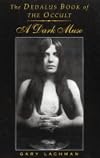
This is one of Gary Lachman's lighter weight excursions into the history of the esoteric but it is well worth having in the Library.
In effect, it is a series of suggestive and rather entertaining biographies from the Enlightenment world of Swedenborg, Mesmer and Cagliostro to the modernist occultism of the much less well known Daumal, Milosz and Lowry.
There are just over 40 of these pen portraits under five occultist headings (Enlightenment, Romantic, Satanic, Fin de Siecle and Modernist), show more with good short introductions to each section. It is a book that can be usefully 'dipped into' whenever one of the 40 pops up somewhere else.
The last quarter or so is a smattering of original texts, perhaps somewhat hard to fathom out of their full context and in an order that may have its own occult meaning but which passed me by, but useful to have available nonetheless.
Certainly, for all its lack of depth, this is well recommended as an enjoyable reference source and the starting point for further study into a cultural phenomenon that still acts as a strong undercurrent in European life and literature. show less
In effect, it is a series of suggestive and rather entertaining biographies from the Enlightenment world of Swedenborg, Mesmer and Cagliostro to the modernist occultism of the much less well known Daumal, Milosz and Lowry.
There are just over 40 of these pen portraits under five occultist headings (Enlightenment, Romantic, Satanic, Fin de Siecle and Modernist), show more with good short introductions to each section. It is a book that can be usefully 'dipped into' whenever one of the 40 pops up somewhere else.
The last quarter or so is a smattering of original texts, perhaps somewhat hard to fathom out of their full context and in an order that may have its own occult meaning but which passed me by, but useful to have available nonetheless.
Certainly, for all its lack of depth, this is well recommended as an enjoyable reference source and the starting point for further study into a cultural phenomenon that still acts as a strong undercurrent in European life and literature. show less
The gritty business of politics is not something we usually associate with the occult. But esoteric beliefs have influenced the destiny of nations since the time of ancient Egypt and China, when decisions of state were based on portents and astrology, to today, when presidents and prime ministers privately consult self-proclaimed seers. Politics and the Occult offers a lively history of this enduring phenomenon. Author and cultural pundit Gary Lachman provocativly questions whether the show more separation of church and state so dear to modern political philosophy should be maintained. A few of his fascinating topics include the fate of the Knights Templar and the medieval Gnostic Cathars, the occult roots of America and the French Revolution in Freemasonry, Gurdjieff and the swastika, Soviet interest in UFOs, the CIA and LSD, the Age of Aquarius, the millenarian politics that inform the struggle with Islamic terrorism, fundamentalism, and more. show less
Lists
You May Also Like


Associated Authors
Statistics
- Works
- 34
- Also by
- 7
- Members
- 1,859
- Popularity
- #13,846
- Rating
- 3.7
- Reviews
- 29
- ISBNs
- 94
- Languages
- 9
- Favorited
- 4