
Barbara Silberdick Feinberg
Author of Welcome to Lizard Motel: Children, Stories, and the Mystery of Making Things Up, A Memoir
About the Author
Series
Works by Barbara Silberdick Feinberg
Welcome to Lizard Motel: Children, Stories, and the Mystery of Making Things Up, A Memoir (2004) 64 copies, 2 reviews
Tagged
Common Knowledge
- Birthdate
- 1938-06-01
- Gender
- female
- Education
- Wellesley College (BA|Political Science)
Yale University (PhD|Political Science) - Occupations
- professor
- Awards and honors
- Phi Beta Kappa
Durant Scholar - Places of residence
- New York, New York, USA
- Associated Place (for map)
- New York, USA
Members
Reviews
Welcome to Lizard Motel: Children, Stories, and the Mystery of Making Things Up, A Memoir by Barbara Feinberg
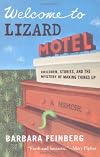
I have to remember that this is a memoir first rather than an informative nonfiction book because I would have loved more analysis on the YA and children's books that she discusses. Feinberg's basis for this book is her 12-year-old son's school reading requirements of "problem" novels and how they're too upsetting/depressing for kids to read. She makes a good point, and I would love to hear about solutions/alternatives to these types of books. But this is really a memoir, so she doesn't show more actually have to come up with any solutions herself. This should be read by the people choosing these books for kids to read though, and they should all take a note out of Feinberg's Story Shop and find out what works for kids by just letting them express themselves. show less
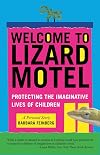
Feinberg became interested in children's literature when she realized that her middle-school son didn't want to read any of the books that he was assigned for school. Many of them were Newberry Award Winners, but he complained that they were all too sad. That's what Feinberg finds when she reads some herself. The protagonists deal with hell, all of them without the help of adults. None of them imagine or play. It seems to Feinberg like a misguided attempt to force children out of childhood show more instead of just letting them have fun. She also discusses how writing is taught in schools; one particular program does not allow children to write fiction, but only to write about their real lives. She relates the heartbreaking story of a friend's first-grader who wrote a story about lizard brothers who fly to the sun, only to have their tails catch fire. The class writing consultant tells him he needs to "seriously re-think his material," and should write about his real brother. The little boy who once said he loved writing now claimed to hate it.
Ultimately, though, it's a book long on introspection, digression, and problem identification, and short on solutions. The digressions are always thought-provoking and entertaining, but I wanted more substance—a more in-depth analysis of the literature, a proposal for what kind of literature should be taught, and how. Feinberg more than once describes something that contradicts what she earlier described, without pausing to notice that she has done so, much less to resolve the contradiction. For instance, she doesn't pause to ask why some kids love these "problem novels." I had a friend in middle school who couldn't get enough of those Lurlene McDaniels books about teenagers that die. show less
Ultimately, though, it's a book long on introspection, digression, and problem identification, and short on solutions. The digressions are always thought-provoking and entertaining, but I wanted more substance—a more in-depth analysis of the literature, a proposal for what kind of literature should be taught, and how. Feinberg more than once describes something that contradicts what she earlier described, without pausing to notice that she has done so, much less to resolve the contradiction. For instance, she doesn't pause to ask why some kids love these "problem novels." I had a friend in middle school who couldn't get enough of those Lurlene McDaniels books about teenagers that die. show less
Edith Kermit Carow Roosevelt: 1861-1948 (Encyclopedia of First Ladies) by Barbara Silberdick Feinberg

This is an excellent resource. Well-researched and with great illustrations. My first encounter with this series, I will definitely look for others.
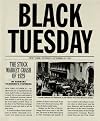
This book highlighted the events of the Stock Market Crash of 1929. It showed how the stock market reacted, and also how the citizens reacted. When I teach my main focus will be in Social Studies and history classes. I would use this book in an American History class. This will teach my students about the events that took place during this crisis.
Lists
You May Also Like


Statistics
- Works
- 35
- Members
- 417
- Popularity
- #58,442
- Rating
- 3.4
- Reviews
- 4
- ISBNs
- 42
- Favorited
- 1