
Elaine Landau (1948–2013)
Author of Ellis Island (True Books: American History)
About the Author
Elaine Landau Elaine Landau has received her Bachelor's in English and Journalism and her Master's in Library and Information Sciences. She has written over 185 books, most of them non-fiction children's books on subjects such as earth science, planets, the supernatural, dinosaurs, ancient show more civilizations, ecology and contemporary issues. Landau's books have won the American Association for the Advancement of Science: "Science Books and Film" Best Children's Science Booklist, as well as The New York Public Library Books for the Teenage, the New Jersey Institute of Technology Award and VOYA's Nonfiction Honor List. (Bowker Author Biography) show less
Series
Works by Elaine Landau
Rachel Carson and the Environmental Movement (Cornerstones of Freedom. Second Series) (2004) 25 copies
Fleeing to Freedom on the Underground Railroad: The Courageous Slaves, Agents, And Conductors (People's History) (2006) 24 copies
George Washington Crosses the Delaware: Would You Risk the Revolution? (What Would You Do?) (2009) 17 copies
The President, Vice President, and Cabinet: A Look at the Executive Branch (Searchlight Books How Does Government Work?) (2012) 17 copies
St. Patrick's Day: Parades, Shamrocks, and Leprechauns (Finding Out About Holidays) (2002) 16 copies
Independence Day: Birthday of the United States (Finding Out About Holidays) (2001) 15 copies, 1 review
The Revolutionary War Begins: Would You Join the Fight? (What Would You Do?) (2009) 14 copies, 1 review
Witness the Boston Tea Party With Elaine Landau (Explore Colonial America With Elaine Landau) (2006) 11 copies, 1 review
Explore Colonial Jamestown with Elaine Landau (Explore Colonial America With Elaine Landau) (2006) 8 copies
Celebrate the First Thanksgiving With Elaine Landau (Explore Colonial America With Elaine Landau) (2006) 6 copies
Volcanoes (A True Book) — Author — 6 copies
Food Poisoning and Foodborne Diseases (USA Today Health Reports: Diseases and Disorders) (2010) 5 copies
Celebrate the Founding of America With Elaine Landau (Explore Colonial America With Elaine Landau) (2006) 4 copies
Lincoln's Emancipation Proclamation: Would You Sign the Great Document? (What Would You Do?) (2014) 3 copies
Why Are They Starving Themselves? Understanding Anorexia Nervosa and Bulimia (Teen Survival Library) 3 copies
Witness the Salem Witchcraft Trials With Elaine Landau (Explore Colonial America With Elaine Landau) (2006) 3 copies
Jefferson's Louisiana Purchase: Would You Make the Deal of the Century? (What Would You Do?) (2015) 2 copies
Your Legal Rights: From Custody Battles to School Searches, the Headline-Making Cases That Affect Your Life (1995) 2 copies
The Start of the Revolutionary War: Would You Fight for Independence? (What Would You Do?) (2015) 2 copies
The presidency 1 copy
A true book Uranus 1 copy
A True book Mars 1 copy
Uranus A True Book 1 copy
Saturn 1 copy
Neptune A True Book 1 copy
A true book Beyond Pluto. 1 copy
A true book The Moon 1 copy
Jupiter 1 copy
Mars 1 copy
Uranus 1 copy
Tagged
Common Knowledge
- Birthdate
- 1948-02-15
- Date of death
- 2013-06-29
- Gender
- female
- Nationality
- USA
- Birthplace
- New Jersey, USA
- Place of death
- Miami, Florida, USA
- Associated Place (for map)
- USA
Members
Reviews
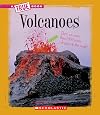
I thought this was a great informational text. I liked this book because of the writing and language of the information given. The information on volcanoes was provided in a clear and concise way. Readers left this book with a good understanding of what volcanoes were. I also liked this book because of the good pictures that went along with the text. I thought that the pictures enhanced the text and help demonstrate and clarify facts within the book. I think readers will also enjoy looking show more at the beautiful images of the volcanoes. The big message of this book is information about volcanoes. show less
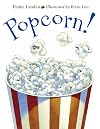
POPCORN is chock-full of tidbits about one of America's favorite snack foods. Learn what makes popcorn pop, how Native Americans liked their popcorn, and how television almost wiped out popcorn's future. Cooking tips, recipes, and resources included. Each topic is covered in 2-3 pages with large illustrations. This is a fun book that tickles curiosity.
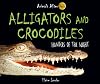
The photographs and format of this book are very compelling- my three-year-old can't put it down! Divided into mini chapters addressing different aspects of crocodiles and alligators, this little book is informative, sophisticated, and yet also child-friendly in its approach. The focus of this book is how the reptiles hunt-- there is less comparing and contrasting alligators and crocodiles here than in Gail Gibbons' book. A short, age-appropriate bibliography and index appears in the back. I show more am very impressed by this series ("Animals After Dark") and would gladly order it for any library. show less
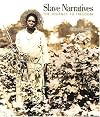
Landau has selected excerpts from four published narratives by slaves who experience life as slaves in the American South in the 19th Century. As these examples were prepared for reading by young adults, they do not contain instances of the extreme violence that are usually present in such narratives. These stories do illustrated the perseverance of some of these people who were driven to take great risks in order become free and the callowness of many slave owners and dealers.
This is a good show more introduction to the literature on this subject. A good followup would be reading some of the slave narratives collected during the Great Depression by unemployed writers who were tasked with getting these stories from former slaves before they died. show less
This is a good show more introduction to the literature on this subject. A good followup would be reading some of the slave narratives collected during the Great Depression by unemployed writers who were tasked with getting these stories from former slaves before they died. show less
Lists
Awards


You May Also Like


Statistics
- Works
- 378
- Members
- 6,280
- Popularity
- #3,905
- Rating
- 3.8
- Reviews
- 55
- ISBNs
- 846
- Languages
- 5
- Favorited
- 1