

Larry Dane Brimner
Author of Black and White: The Confrontation between Reverend Fred L. Shuttlesworth and Eugene "Bull" Connor
About the Author
Larry Dane Brimner was born in St. Petersburg, Florida, and spent his early childhood exploring Alaska's Kodiak Island. He earned a Bachelor of Arts degree in British Literature from San Diego State University, where he graduated cum laude, and later received advanced degrees in writing and show more curriculum development. During his twenty-year teaching career, he began to write for publication. Brimner made his debut in children's books with the publication of BMX Freestyle in 1987. It was named an International Reading Association Children's Choice book for 1988. This title was followed by Country Bear's Good Neighbor, which the American Booksellers Association named their "Pick of the List." Brimner wrote A Migrant Family, which was named a Notable Trade Book in the Field of Social Studies (NCSS/CBC); Max and Felix , a nominee for the Kentucky Bluegrass Award; Voices From the Camps, cited as a Best Book for the Teen Age by New York Public Library; Snowboarding, an IRA Children's Choice for 1998; and the Official M&M's® Book of the Millennium, an IRA Children's Choice for 2000. Brimner is the author of more than 110 books for young people. He also speaks to school children about the writing process or to teachers at conferences. In 2014 his title, Strike: The Farm Workers Fight for Their Rights, made the Civil Rights Hot Title's List. (Bowker Author Biography) show less
Image credit: via Amazon.com
Series
Works by Larry Dane Brimner
Black and White: The Confrontation between Reverend Fred L. Shuttlesworth and Eugene "Bull" Connor (2011) 148 copies, 9 reviews
Accused!: The Trials of the Scottsboro Boys: Lies, Prejudice, and the Fourteenth Amendment (2019) 60 copies, 2 reviews
Without Separation: Prejudice, Segregation, and the Case of Roberto Alvarez (2021) 30 copies, 3 reviews
The Rain Wizard: The Amazing, Mysterious, True Life of Charles Mallory Hatfield (2015) 28 copies, 1 review
Rookie Reader Pack(the Big Tee Ball Game,a Flag for All ,The Pet Show , Unsinkable). (rookie choices (2002) 3 copies
The Big Tee Ball Game 2 copies
Slower Than a Slug (Rookie Reader: Opposites) by Brimner, Larry Dane (September 1, 2007) Paperback (1605) 2 copies
Unsinkable! 1 copy
Noodle Game, The 1 copy
Money Trouble 1 copy
The Pet Show 1 copy
Cowboy 1 copy
Black and White 1 copy
The Littlest Wolf 1 copy
Tagged
Common Knowledge
- Gender
- male
- Occupations
- teacher
- Nationality
- USA
- Birthplace
- Florida, USA
- Places of residence
- Colorado, USA
- Associated Place (for map)
- USA
Members
Reviews

This book about school segregation in Lemon Grove, California - just east of San Diego - begins on January 5, 1931, with 12-year-old Roberto Alvarez walking to school. That morning, the principal stood at the door and told Mexican children they did not belong in the school, and they would have to attend a different school for Mexicans that had been built for them.
Lemon Grove Grammar School trustees believed (erroneously in all counts) that the Mexican children didn’t understand English, show more were unclean, and endangered the health of every other student in the school. It was the trustees who decided to construct a separate school, without telling Mexican parents about their plans.
After the principal excluded the Mexican kids, Roberto returned home:
“It was what his parents had instructed him to do if he was told to go to la caballeriza - the barnyard - which is what the grown-ups called the new wooden school building.”
The author reports that 74 other children also refused to go to the new school.
Roberto, it should be noted, not only spoke English as well as any white student, but had been born in California; he was as American as the non-Hispanic students were.
Roberto’s parents joined a group of other Mexican parents to discuss what to do. They met with the Mexican consul, who arranged for two local lawyers to help them. A lawsuit in Roberto’s name was filed in the California Superior Court. The case went to trial on March 10, 1931, and Roberto and the plaintiffs won. The judge ordered the school board “to immediately admit and receive . . . Roberto Alvarez, and all other pupils of Mexican parentage” into the Lemon Grove Grammar School “without separation or segregation.”
The author concludes:
“Sometimes a person has to stand up for what is right - to fight for justice, to confront discrimination. Roberto and his friends returned to Lemon Grove Grammar School, and this time all were welcomed.”
Back matter includes an extensive Author’s Note, historic pictures, and sources.
Lovely acrylic illustrations in vivid colors by Maya Gonzalez evoke Mexican murals and folk art.
Evaluation: This case, Roberto Alvarez v. the Board of Trustees of the Lemon Grove School District, was the first successful school desegregation court decision in the history of the United States. Roberto’s son later wrote:
“It is important in San Diego and U.S. history, not solely because it occurred but because the community took court action and won the case they established the rights of their children to equal education, despite local, regional and national sentiment that favored not only segregation, but the actual deportation of the Mexican population in the United States.”
There will be a lot to discuss with intended readers age 7 and up about prejudice, fairness, and paths to equal treatment. show less
Lemon Grove Grammar School trustees believed (erroneously in all counts) that the Mexican children didn’t understand English, show more were unclean, and endangered the health of every other student in the school. It was the trustees who decided to construct a separate school, without telling Mexican parents about their plans.
After the principal excluded the Mexican kids, Roberto returned home:
“It was what his parents had instructed him to do if he was told to go to la caballeriza - the barnyard - which is what the grown-ups called the new wooden school building.”
The author reports that 74 other children also refused to go to the new school.
Roberto, it should be noted, not only spoke English as well as any white student, but had been born in California; he was as American as the non-Hispanic students were.
Roberto’s parents joined a group of other Mexican parents to discuss what to do. They met with the Mexican consul, who arranged for two local lawyers to help them. A lawsuit in Roberto’s name was filed in the California Superior Court. The case went to trial on March 10, 1931, and Roberto and the plaintiffs won. The judge ordered the school board “to immediately admit and receive . . . Roberto Alvarez, and all other pupils of Mexican parentage” into the Lemon Grove Grammar School “without separation or segregation.”
The author concludes:
“Sometimes a person has to stand up for what is right - to fight for justice, to confront discrimination. Roberto and his friends returned to Lemon Grove Grammar School, and this time all were welcomed.”
Back matter includes an extensive Author’s Note, historic pictures, and sources.
Lovely acrylic illustrations in vivid colors by Maya Gonzalez evoke Mexican murals and folk art.
Evaluation: This case, Roberto Alvarez v. the Board of Trustees of the Lemon Grove School District, was the first successful school desegregation court decision in the history of the United States. Roberto’s son later wrote:
“It is important in San Diego and U.S. history, not solely because it occurred but because the community took court action and won the case they established the rights of their children to equal education, despite local, regional and national sentiment that favored not only segregation, but the actual deportation of the Mexican population in the United States.”
There will be a lot to discuss with intended readers age 7 and up about prejudice, fairness, and paths to equal treatment. show less
Birmingham Sunday (Orbis Pictus Honor for Outstanding Nonfiction for Children (Awards)) by Larry Dane Brimner

September 15, 1963 was a turning point for Civil Rights. At the 16th Street Baptist Church, Denise McNair, Addie Mae Collins, Carole Robertson, and Cynthia Wesley were in the church basement. Primping their hair and smiling in the mirrors, the girls wanted to look nice because they were to be a part of the children's service that morning.
As a car outside the church drove away, a bomb, approximately 19-25 sticks of dynamite placed under the stairwell, near the bathrooms, exploded thereby show more ending the lives of four innocent little girls, harming 23 others, and maiming another whose swollen bandaged face showed that one of her eyes would never again have sight. Two young boys were also killed that day, one shot by a policeman who claimed he thought the boy had "something in his hands."
The walls of the church were 30 inches thick. Known as a meeting place for Civil Rights activists, this particular church was targeted as a statement by a sub group of the KKK. It took years to finally find justice. But, in the meantime, this brutal act by cowards, became a turning point, and on that day children who died, did not perish in vain.
Finally, Birmingham, Alabama, also known as "Bombingham" led people who were normally complacent, to stand up for all that was wrong in the hope that all that was good could shine through.
This is a well-written, documented book that also outlines the racist events leading up to the September event. The children's broken bodies were a testimony to all that was wrong with Jim Crow. This act was so horrid that it could not be overlooked. show less
As a car outside the church drove away, a bomb, approximately 19-25 sticks of dynamite placed under the stairwell, near the bathrooms, exploded thereby show more ending the lives of four innocent little girls, harming 23 others, and maiming another whose swollen bandaged face showed that one of her eyes would never again have sight. Two young boys were also killed that day, one shot by a policeman who claimed he thought the boy had "something in his hands."
The walls of the church were 30 inches thick. Known as a meeting place for Civil Rights activists, this particular church was targeted as a statement by a sub group of the KKK. It took years to finally find justice. But, in the meantime, this brutal act by cowards, became a turning point, and on that day children who died, did not perish in vain.
Finally, Birmingham, Alabama, also known as "Bombingham" led people who were normally complacent, to stand up for all that was wrong in the hope that all that was good could shine through.
This is a well-written, documented book that also outlines the racist events leading up to the September event. The children's broken bodies were a testimony to all that was wrong with Jim Crow. This act was so horrid that it could not be overlooked. show less
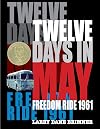
Very powerful. I really enjoyed this book though it punched me in the gut repeatedly. Very inspiring, sometimes I feel like we are just not on the same level of protesting as our ancestors were. We are changing our facebook filters and lobbing angry tweets while they were being arrested, beaten up and risking their lives (without ever getting violent, btw) for the rights we enjoy today. This shouldn't be controversial but F*ck the KKK and F*ck racists. While we're at it, F*ck Nazis too! show more Since that is necessary in 2019. Jeez. I wish I could see how books like this depict the 2000s in a hundred years.
It's crazy to realize this happened barely 59 years ago. A short enough time ago for the horrible animals (Racists, KKK) to not only still be alive but to have passed on their sick beliefs to their children. (Peep the photo of the kids in the KKK outfits about 50% of the way through the book). There were cops, fbi agents, politicians, etc in this book harassing these protesters and watching the KKK set their bus on fire and beat them to a pulp! How easy we forget that the people sworn to protect, govern and lead us can be some of the most corrupt, angry and abusive. Their horrible beliefs and ideas didn't go away just because they clocked into work nor because of the law changing. To think that still can't be an issue 50 years later is laughable.
Obviously, this book, though short, gave me a lot of feelings and I thank it for that. I would suggest this book to EVERYONE. Even if you usually get bored reading about history, trust me, this book will keep you engaged. show less
It's crazy to realize this happened barely 59 years ago. A short enough time ago for the horrible animals (Racists, KKK) to not only still be alive but to have passed on their sick beliefs to their children. (Peep the photo of the kids in the KKK outfits about 50% of the way through the book). There were cops, fbi agents, politicians, etc in this book harassing these protesters and watching the KKK set their bus on fire and beat them to a pulp! How easy we forget that the people sworn to protect, govern and lead us can be some of the most corrupt, angry and abusive. Their horrible beliefs and ideas didn't go away just because they clocked into work nor because of the law changing. To think that still can't be an issue 50 years later is laughable.
Obviously, this book, though short, gave me a lot of feelings and I thank it for that. I would suggest this book to EVERYONE. Even if you usually get bored reading about history, trust me, this book will keep you engaged. show less
Black & White: The Confrontation between Reverend Fred L. Shuttlesworth and Eugene "Bull" Connor by Larry Dane Brimner
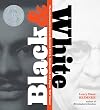
Outstanding non-fiction book about the 2 key figures in the civil rights movement that are often overlooked. Great conversation starters about different perspectives, violent vs. non-violent protests, power struggles, use of the media an religion, to name just a few. Brimner did a great job of frontloading the plot of the story with background information that readers may not be familiar with. This is a non-fiction book that is a page turner, that reads like fiction. Don't overlook the first show more page (instruction on proper non-violent behavior on buses). The photographs are wonderful and add significant perspective to the text - especially those at the end of the book.
At the center of the fight for civil rights in Birmingham AL were Reverend Fred L. Shuttlesworth and Eugene "Bull" Connor. From his pulpit, Shuttlesworth fought for racial equality, while Commissioner Connor fought for the status quo. show less
At the center of the fight for civil rights in Birmingham AL were Reverend Fred L. Shuttlesworth and Eugene "Bull" Connor. From his pulpit, Shuttlesworth fought for racial equality, while Commissioner Connor fought for the status quo. show less
Lists
Awards


You May Also Like


Associated Authors
Statistics
- Works
- 152
- Members
- 4,247
- Popularity
- #5,921
- Rating
- 3.9
- Reviews
- 70
- ISBNs
- 431
- Languages
- 2
- Favorited
- 1