
Salvatore Tocci
Author of Oxygen (True Books: Elements (Paperback))
About the Author
Salvatore Tocci is an American science teacher and author. He taught chemistry and biology at East Hampton High School on Long Island, New York, and organized many science fairs while there. After teaching, he continued to judge local, regional, and national contests, and has also given workshops show more for science teachers at meetings throughout the country. He has published numerous children's and young adult books in a number of series including: Holt Chemistry, True Books: Science Experiments, True Books: Elements, Great Minds of Science, Out of this World, and Scientific American Winning Science Fair Projects. (Bowker Author Biography) show less
Series
Works by Salvatore Tocci
Tagged
Common Knowledge
- Gender
- male
- Education
- Cornell University (BA)
- Occupations
- teacher
- Organizations
- National Association of Science Writers
National Science Teachers Association
National Association of Biology Teachers
Members
Reviews
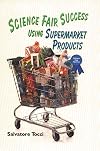
Salvatore Tocci’s Science Fair Success Using Supermarket Products is a clever twist on the traditional “science experiment” genre of non-fiction. Obviously, the novelty factor for this book is the use of everyday objects in science experiments, most of which we would not normally associate with science. In fact, Tocci divides the book into five sections: “Beverages,” “Dairy Products,” “Fruits and Vegetables,” “Meat Products,” and “Snacks, Desserts, and Candies.” show more While the premise might seem a tad contrived at times, Tocci keeps the prose academic and scientific, but also (more importantly) very accessible for his readers.
The book begins with a brief explanation of scientific analysis and terminology (“control,” “variable,” etc.), then progresses into the five aforementioned sections. Each section includes a variety of experiments, all covered in roughly two to four pages worth of text; within each section, Tocci includes the following (where applicable):
*Materials used
*Diagrams
*Explanations
*Mathematical formulas
*Charts
All of these “textbook organizers” help to convey the concepts and ideas in an easy-to-use manner. Because science can often seem like an intimidating area of study, it is refreshing to see science experiments presented in such an accessible fashion. My favorite chapter: “Why Is Making a Pineapple Gelatin Dessert Not a Good Idea?” The sheer absurdity of the juxtaposed items helps bring a sense of humor to the text, and actually (*gasp*) makes science seem fun!
The author, Salvatore Tocci, has almost three decades of teaching experience under his belt; clearly, he has learned a thing or two about conveying abstract scientific ideas to younger audiences. While I may not be trying out any of these experiments in the near future, I have enjoyed looking at Science Fair Success Using Supermarket Products, and I respect the fact that Tocci has actually brought joy and fun to the subject area of science.
Citation:
Tocci, Salvatore. Science Fair Success Using Supermarket Products. Berkeley Heights, NJ: Enslow, 2000. Print. show less
The book begins with a brief explanation of scientific analysis and terminology (“control,” “variable,” etc.), then progresses into the five aforementioned sections. Each section includes a variety of experiments, all covered in roughly two to four pages worth of text; within each section, Tocci includes the following (where applicable):
*Materials used
*Diagrams
*Explanations
*Mathematical formulas
*Charts
All of these “textbook organizers” help to convey the concepts and ideas in an easy-to-use manner. Because science can often seem like an intimidating area of study, it is refreshing to see science experiments presented in such an accessible fashion. My favorite chapter: “Why Is Making a Pineapple Gelatin Dessert Not a Good Idea?” The sheer absurdity of the juxtaposed items helps bring a sense of humor to the text, and actually (*gasp*) makes science seem fun!
The author, Salvatore Tocci, has almost three decades of teaching experience under his belt; clearly, he has learned a thing or two about conveying abstract scientific ideas to younger audiences. While I may not be trying out any of these experiments in the near future, I have enjoyed looking at Science Fair Success Using Supermarket Products, and I respect the fact that Tocci has actually brought joy and fun to the subject area of science.
Citation:
Tocci, Salvatore. Science Fair Success Using Supermarket Products. Berkeley Heights, NJ: Enslow, 2000. Print. show less
I liked this book. I'm a little biased, because I used to teach Physics, and the book teaches the reader a little bit about the Physics concepts laid out by Issac Newton, for example, and even goes so far as to give his laws of motion. The laws of motion can be said in a complicated way and can also be summarized in a simple way. A good physics teacher can take the most complicated concept and mathematical equation, and explain it with simple words that a young person would understand. This show more book does just that, and does it well. I think the reader will have a great time trying the experiments, and reading about why they work. This should motivate some students to advance their science interests. show less
What an appropriate simply way of explaining why we use soap! Not only does the book tell us about soap, but tells us how to demonstrate to children wind direction and a few more experiments. The simplicity of the book is very nice for ages 3-6 years.
This book starts by explaining silver's role in creating one-way mirrors. It then moves on to explain what exactly silver is, how it's made, and what it's used for. At the end are bulleted fun facts about silver, links readers can go to to learn more, and the author's resource page.
Awards


You May Also Like


Statistics
- Works
- 73
- Members
- 1,491
- Popularity
- #17,229
- Rating
- 3.3
- Reviews
- 10
- ISBNs
- 181
- Languages
- 1
- Favorited
- 1