
Darlene R. Stille
Author of Motion: Push and Pull, Fast and Slow (Amazing Science)
About the Author
Darlene R. Stille was educated at the University of Illinois. She is a science writer and author of more than 80 books for children including collections of biographies. (Bowker Author Biography)
Series
Works by Darlene R. Stille
Erosion: How Land Forms, How It Changes (Exploring Science: Earth Science) (2005) 61 copies, 1 review
Manipulating Light: Reflection, Refraction, and Absorption (Exploring Science: Physical Science) (2006) 22 copies
Natural Resources: Using and Protecting Earth's Supplies (Exploring Science: Earth Science) (2005) 22 copies
Chemical Change: From Fireworks to Rust (Exploring Science: Physical Science) (2005) 21 copies, 1 review
Plant Cells: The Building Blocks of Plants (Exploring Science: Life Science) (2006) 18 copies, 1 review
Atoms and Molecules: Building Blocks of the Universe (Exploring Science: Physical Science) (2007) 12 copies
Nature Interrupted: The Science of Environmental Chain Reactions (Headline Science) (2008) 10 copies
The Science of Gym Class: More Than Just Dodgeball and Sweatpants (Everyday Science) (2011) 10 copies
Lunch Lady Science: Understanding the Food That Goes in Your Body (Everyday Science) (2011) 9 copies
Eleanor Roosevelt: First Lady and Civil Rights Activist (Beginner Biographies) (2013) 7 copies, 3 reviews
The Case of the Soda Explosion and Other True Science Mysteries for You to Solve (Fact Finders: Seriously True Mysteries) (2012) 6 copies, 1 review
Madam C. J. Walker: The Inspiring Life Story of the Hair Care Entrepreneur (Inspiring Stories) (2016) 3 copies
Matter 1 copy
Volume Library Yearbook 2001 1 copy
Student Handbook 2001 Annual 1 copy
The True Helicopters 1 copy
By Darlene R. Stille Air: Outside, Inside, and All Around (Amazing Science) [Library Binding] (2003) 1 copy
Oil Spills (New True Book) 1 copy
Associated Works
Tagged
Common Knowledge
- Gender
- female
Members
Reviews
Plant Cells: The Building Blocks of Plants (Exploring Science: Life Science series) (Exploring Science (Compass Point)) by Darlene R. Stille
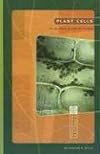
Plant cells present a plethora of interesting photographs of the small structures of plants that few ever see. I fear that the mindless presentation is reminiscent of the pathetic textbooks that are churned out every year to please everyone, but pleasing no one and solely functioning to keep students entertained instead of encouraging them to explore their world. The photos and diagrams are fine. However, the information and 'know how' in examining these small structures is not is not show more imparted to the audience. I hoped it would at least detail the various stains in viewing plant cells. If so, it could function as an enticing collection of photos to gather a younger generation to appreciate these things. Not many appreciate plants these days for any reason other than what the plants do for them. Botanists are becoming more rare. Perhaps the author felt that such content would not be appreciated by the audience, but I disagree. There are those among us who look for things in the smallest of places, on an earth that has been well explored save for the darkest caves and deepest oceans.
In the end, I really can't recommend this book. We can draw students into science by presenting science in a manner tantamount to exploration of the new world long ago. No, really , we can. This book does not do that. Pretty pictures are great, but they need more context and barbed hooks to draw the reader in. We want them to take their own pictures and to search for more pictures where no one else has looked. show less
In the end, I really can't recommend this book. We can draw students into science by presenting science in a manner tantamount to exploration of the new world long ago. No, really , we can. This book does not do that. Pretty pictures are great, but they need more context and barbed hooks to draw the reader in. We want them to take their own pictures and to search for more pictures where no one else has looked. show less
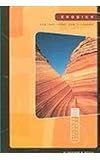
The message of Erosion is to teach students about erosion and its effect on land forms. I thought the book was a decent book to read. It provides information on many different subjects related to erosion including the types of erosion, the effects of erosion, and the negative consequences associated with erosion. However, the book is not very engaging. The author provides a plethora of information, but it is presented in the form of large paragraphs that fill up multiple pages. In addition show more to the bulk of the main text being presented in large paragraphs, the extra textual information is also presented in paragraph form. An example being the fast facts which are presented below the main text on select pages. these sections which are filled with interesting facts are presented as 3-4 sentence paragraphs. Even if the reader is interested in the facts the reader is locked out because of the density of the text provided by each fast fact paragraph. The book does have a few benefits like its use of images to represent the text. The book provides photographs instead of illustration to show the reader real life examples of erosion. one photo in particular does a good job at showing the dangers of beach erosion by displaying a house by the beach on stilts being battered by waves with the hope that the stilts will save home from being washed away. Overall the book is okay and provides descent information, but its presentation is rather boring. show less
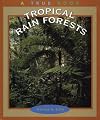
This book was better suited for my daughter's needs for studying rain forests than some others. It was shorter snippets with more general information than specific, to give an overall view of rain forests rather than a detailed explanation. As is true of most of the books I've come across, I'm not overly fond of the heavily political motivation in the last chapters explaining about deforestation, but that may just be because I'm not as thoroughly indoctrinated in that line of though as the show more books would prefer me to be and don't think it's necessary for young children to be indoctrinated in this young age either.
Other than that, it was a pretty good book for our unit study on rain forests. show less
Other than that, it was a pretty good book for our unit study on rain forests. show less
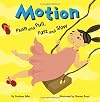
This book introduces the concept of movement, speed, force, inertia. It also does a great job introducing students to the concepts of science and STEM. I loved reading through this book because the author did a great job break things down into the basics as well as embedding fun facts to deepen and broaden the understanding. Even though this book introduces big topics, the author does a wonderful job breaking them down into kid friendly language and concepts. I would read this book to 1st show more grade probably to introduce the same concepts and conduct motion experiments in class. An experiment that would be possible to do and understand would be falling paper or testing friction. show less
Awards


You May Also Like


Statistics
- Works
- 156
- Also by
- 3
- Members
- 2,748
- Popularity
- #9,332
- Rating
- 3.8
- Reviews
- 42
- ISBNs
- 397
- Languages
- 2
- Favorited
- 1