
Philip Schaff (1819–1893)
Author of History of the Christian Church, 8 vols.
About the Author
Image credit: Courtesy of the NYPL Digital Gallery
(image use requires permission from the New York Public Library)
(image use requires permission from the New York Public Library)
Series
Works by Philip Schaff
Nicene and Post-Nicene Fathers, First Series, Volume 05: St. Augustine: Anti-Pelagian Writings (1956) — Editor — 382 copies, 2 reviews
Nicene and Post-Nicene Fathers, First Series, Volume 02: St. Augustine: City of God, Christian Doctrine (1956) — Editor — 379 copies, 3 reviews
Nicene and Post-Nicene Fathers, Second Series, Volume 05: Gregory of Nyssa: Dogmatic Treatises (1980) 367 copies, 2 reviews
Nicene and Post-Nicene Fathers, Second Series, Volume 14: The Seven Ecumenical Councils (1980) 360 copies, 1 review
Nicene and Post-Nicene Fathers, Second Series, Volume 08: Basil: Letters and Select Works (1955) 355 copies, 1 review
Nicene and Post-Nicene Fathers, First Series, Volume 08: St. Augustine: Expositions on the Psalms (1956) — Editor — 343 copies, 1 review
Nicene and Post-Nicene Fathers, First Series, Volume 03: St. Augustine: On the Holy Trinity, Doctrinal Treatises, Moral Treatises (1956) 343 copies, 3 reviews
History of the Christian Church: Apostolic Christianity, A.D. 1-100 (Vol. 1) (1960) 341 copies, 2 reviews
Nicene and Post-Nicene Fathers, Second Series, Volume 09: Hilary of Poitiers, John of Damascus (1980) 338 copies, 2 reviews
Nicene and Post-Nicene Fathers, First Series, Volume 12: Chrysostom: Homilies on the Epistles of Paul to the Corinthians (1956) — Editor, some editions — 337 copies, 1 review
Nicene and Post-Nicene Fathers, First Series, Volume 01: St. Augustine: Prolegomena, Life and Work, Confessions, Letters (1956) — Editor; Author — 333 copies, 2 reviews
History of the Christian Church: Ante-Nicene Christianity, A.D. 100-325 (Vol. 2) (1960) 332 copies, 3 reviews
Nicene and Post-Nicene Fathers, First Series, Volume 10: Chrysostom: Homilies on the Gospel of St. Matthew (1956) 331 copies, 2 reviews
Nicene and Post-Nicene Fathers, First Series, Volume 14: Chrystostom: Homilies on the Gospel of St. John and the Epistle to the Hebrews (1956) — Editor — 328 copies, 1 review
Nicene and Post-Nicene Fathers, First Series, Volume 11: Chrysostom: Homilies of the Acts of the Apostles and the Epistle to the Romans (1956) 325 copies, 2 reviews
Nicene and Post-Nicene Fathers, First Series, Volume 13: Chrysostom: Homilies on Galatians, Ephesians, Philippians, Colossians, Thessalonians, Timothy, Titus, and Philemon (1956) — Editor, some editions — 325 copies, 1 review
History of the Christian Church: Nicene and Post-Nicene Christianity, A.D. 311-600 (Vol. 3) (1960) 324 copies, 2 reviews
Nicene and Post-Nicene Fathers, Second Series, Volume 06: St. Jerome: Letters and Select Works (1954) 319 copies, 2 reviews
Nicene and Post-Nicene Fathers, Second Series, Volume 02: Socrates, Sozomenus: Church Histories (1952) 315 copies, 2 reviews
Nicene and Post-Nicene Fathers, Second Series, Volume 01: Eusebius: Church History, Life of Constantine the Great, Oration in Praise of Constantine (1980) 315 copies, 4 reviews
Nicene and Post-Nicene Fathers, Second Series, Volume 10: Ambrose: Select Works and Letters (1955) 314 copies, 2 reviews
Nicene and Post-Nicene Fathers, First Series, Volume 04: St. Augustine: The Writings against the Manichaeans and against the Donatists (1956) 314 copies, 1 review
Nicene and Post-Nicene Fathers, Second Series, Volume 03: Theodoret, Jerome, Gennadius, Rufinus: Historical Writings (1953) 312 copies, 3 reviews
Nicene and Post-Nicene Fathers, Second Series, Volume 12: Leo the Great, Gregory the Great (1980) 310 copies, 2 reviews
Nicene and Post-Nicene Fathers, First Series, Volume 09: Chrysostom: On the Priesthood, Ascetic Treatises, Select Homilies and Letters, Homilies on the Statues (1956) 309 copies, 2 reviews
Nicene and Post-Nicene Fathers, First Series, Volume 07: St. Augustine: Gospel of John, First Epistle of John, Soliliquies (1956) — Editor, some editions — 308 copies, 2 reviews
Nicene and Post-Nicene Fathers, Second Series, Volume 13: Gregory the Great, Ephraim Syrus, Aphrahat (1956) 297 copies, 1 review
History of the Christian Church: Medieval Christianity, A.D. 590-1073 (Vol. 4) (1960) 297 copies, 2 reviews
History of the Christian Church: Modern Christianity: The German Reformation (Vol. 7) (1960) 292 copies, 1 review
History of the Christian Church: The Middle Ages, A.D. 1294-1517 (Vol. 6) (1960) 290 copies, 2 reviews
History of the Christian Church: The Middle Ages, A.D. 1049-1294 (Vol. 5) (1960) 282 copies, 2 reviews
History of the Christian Church: Modern Christianity: The Swiss Reformation (Vol. 8) (1960) 280 copies, 1 review
The Creeds of Christendom, with a History and Critical Notes, Volume II: The Greek and Latin Creeds, with Translations (2006) 181 copies, 1 review
The Creeds of Christendom, with a History and Critical Notes, Volume I: The History of Creeds (2010) 159 copies, 2 reviews
The Creeds of Christendom, with a History and Critical Notes, Volume III: The Evangelical Protestant Creeds, with Translations (2018) 152 copies, 1 review
Theological Propaedeutic: A General Introduction to the Study of Theology (1904) 26 copies, 1 review
The Development of the Church: "The Principle of Protestantism" and other Historical Writings of Philip Schaff (Mercersburg Theology Study) (2017) 10 copies
Deutsches Gesangbuch : eine Auswahl geistlicher Lieder aus allen Zeiten der christlichen Kirche (1860) 8 copies
Church and state in the United States : or, The American idea of religious liberty and its practical effects, with official documents (2008) 7 copies
The Lord's Day 7 copies
The American church history series 6 copies
The Harmony of the Reformed Confessions, as Related to the Present State of Evangelical Theology: An Essay Delivered Bef (1877) 5 copies
A Religious Encyclopaedia:Or Dictionary of Biblical, Historical, Doctrinal, and Practical Theology. vol. i (1891) 4 copies, 1 review
The Holy Bible v1 /American committee of revision of the authorized English version of the Bible 4 copies
A Religious Encyclopedia or Dictionary of Biblical, Historical, Doctrinal, and Practical Theology. vol. iii (1891) 4 copies, 1 review
A Select Library of the Nicene and Post-Nicene Fathers of the Christian Church: [first Series Volume 13 (2015) 3 copies
The international revision commentary on the New Testament : based upon the Revised version of 1881 (2016) 3 copies
The Living God 3 copies
A Popular Commentary on the New Testament, Vol. 3 of 4: The Epistles of Paul (Classic Reprint) (2016) 2 copies
The Life and Labors of St. Augustine 2 copies
Das Princip des Protestantismus 2 copies
The Renaissance: The Revival of Learning and Art in the Fourteenth and Fifteenth Centuries (2010) 2 copies
The Epistles of St. Paul, Vol. 3 2 copies
What Is Church History? A Vindication of the Idea of Historical Development (Notable American Authors) (2013) 2 copies
Saint Chrysostom and Saint Augustin 2 copies
The Christ of the Gospels 2 copies
Saint Chrysostom 1 copy
Nicene and Post-Nicene Fathers, Vol. X: Saint Chrysostom: Homilies on the Gospel of St. Matthew 1 copy
A Select Library of Nicene and Post-Nicene Fathers of the Christian Church. Second Series; Volume 2 (2016) 1 copy
Der Deutsche Kirchenfreund : Organ für die gemeinsamen Interessen der amerikanisch deutschen kirchen 1 copy
On Grace and Free Will 1 copy
On Holy Virginity 1 copy
Library of Religious Poetry With Biographical and Literary Notes — Editor — 1 copy
Forgiveness (Articles) 1 copy
The Topical Reference Bible a Complete Analytical Study Bible Containing Four Valuable Aids to the Student of the Word of God (1985) 1 copy
The Works of Saint Augustine — Editor — 1 copy
James, Peter, John, Jude 1 copy
On The Merits And Forgiveness Of Sins, And On The Baptism Of Infants (With Active Table of Contents) 1 copy
Lang's Commentary 1 copy
The Anglo-American sabbath : an essay read before the National Sabbath Convention, Saratoga, August 11, 1863 (1863) 1 copy
The History Of The Christian Church According To Eusebius & Philip Schaff (Volume 1-8) (2019) 1 copy
Gesangbuch für deutsche Sonntags-Schulen : Sammt einem Anhang ausgewählter englischer Lieder 1 copy
Christ's testimony to Christianity : an apologetic lecture, delivered in Philadelphia, January, 1871 1 copy
Il rinascimento e la riforma 1 copy
Die Christusfrage 1 copy
Associated Works
Nicene and Post-Nicene Fathers, Second Series, Volume 04: Athanasius: Select Works and Letters (1953) — Series editor — 394 copies, 1 review
Nicene and Post-Nicene Fathers, First Series, Volume 06: St. Augustine: Commentary on the Sermon on the Mount, Harmony of the Gospels, Homilies on the Gospels (1980) — some editions — 330 copies, 2 reviews
Lange's Commentary on -Galatians,Ephesians, Philippians,Colossians (1871) — Editor, some editions — 24 copies
Tagged
Common Knowledge
- Birthdate
- 1819-01-01
- Date of death
- 1893-10-20
- Gender
- male
- Education
- University of Berlin (B.Div|1841)
- Occupations
- theologian
church historian - Organizations
- Union Theological Seminary
German Reformed Theological Seminary
University of Berlin - Relationships
- Schaff, David S. (son)
- Nationality
- Switzerland (birth)
- Birthplace
- Chur, Switzerland
- Places of residence
- Switzerland
Germany
USA - Place of death
- New York, New York, USA
- Burial location
- Woodlawn Cemetery Bronx, Bronx County, New York, USA
- Associated Place (for map)
- New York City, New York, USA
Members
Reviews
NICENE AND POST-NICENE FATHERS: First Series, Volume X St.Chrysostom: Homilies on the Gospel of St. Matthew by Philip Schaff
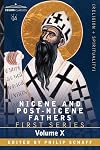
This book, filled with the moving spirituality and deep insights of one of the greatest of the Church Fathers and certainly the greatest orator that the Church has ever possessed, was the best Lenten reading that I've had the privilege of spending time with yet. I was right on schedule throughout, as I read his homilies on the last several days of Christ's earthly life throughout Holy Week and finally read the final homily, on the Resurrection, on Pascha afternoon. There is a good reason show more that St. John is remembered by the Church as "Chrysostom," meaning "Gold-tongued." On every page he is eloquent, touching, beautiful, insightful, inspiring, edifying all at once. He opens up the Gospel of St. Matthew in so many ways and in such a manner that I would not have thought it possible without reading it for myself. If you want deeper insights into the Scriptures and into living the Christian life, read the homilies of St. John Chrysostom -- beginning with this collection of homilies. show less

I read the Church History by Eusebius in this volume (of the Church Fathers set), which covers about 3/5 of the book. I'll read The Life of Constantine (also by Eusebius in this volume) later.
The notes in this volume are prodigious. It would have taken me much longer to finish had I read all the notes. What notes I did read were very informative, I thought.
The translation and notes are old, however. They come from about 1890. I was surprised at how modern-sounding they were however - siding show more with the gnostics, for instance, or discrediting some of the more naive claims of Eusebius for Constantine. Very well done.
This is a good book to read if you want to know about the history of the persecutions of the church in the first three centuries after Christ. It's very graphic and in some places sounds like a modern journalistic expose of the many events. Heresy is the other subject that gets some attention in the book. show less
The notes in this volume are prodigious. It would have taken me much longer to finish had I read all the notes. What notes I did read were very informative, I thought.
The translation and notes are old, however. They come from about 1890. I was surprised at how modern-sounding they were however - siding show more with the gnostics, for instance, or discrediting some of the more naive claims of Eusebius for Constantine. Very well done.
This is a good book to read if you want to know about the history of the persecutions of the church in the first three centuries after Christ. It's very graphic and in some places sounds like a modern journalistic expose of the many events. Heresy is the other subject that gets some attention in the book. show less

Why I ever purchased this in 2012, I have no idea! Upon finally opening it up on my Kindle, I can tell you that most of the 980 pages were a slog. I did NOT read all 980 pages. I read about 400 pages written by Constantine the Great that deal with self-praise for his successes and his explanation on why he accepted Christianity, why he made it the national religion, and how men and women in the empire would reap the benefits of his conversion. This also included Eusebius' Oration of Praise show more in Honor of Constantine. In the scholarly historical sense, it wasn't "bad." In the enjoyment sense, pffft! There were as many notes as script and often they were more interesting. Off it goes into Kindle space! (The "original" is 32,400 pages, 38 volumes) show less
St. Augustin's City of God and Christian Doctrine [A Select Library of the Nicene and Post-Nicene Fathers of the Christian Church - Volume II] by Philip Schaff

Notwithstanding St. Augustine's failure to fully escape gnostic thought and his decision to address the arguments of the pagans via logical argumentation versus a prepositional assessment of Roman philosophy in light of the Word of God, St. Augustine's grasp of the antithesis of the two cities as well his description regarding what constitutes the City of God make this book an excellent resource.
Lists
You May Also Like


Associated Authors
Statistics
- Works
- 255
- Also by
- 4
- Members
- 15,537
- Popularity
- #1,460
- Rating
- 3.9
- Reviews
- 118
- ISBNs
- 492
- Languages
- 2
- Favorited
- 2