
Feng Jicai
Author of The Three-Inch Golden Lotus
About the Author
Works by Feng Jicai
A Looking-Glass World 1 copy
Associated Works
Die Kultur der Kulturrevolution. Personenkult und politisches Design im China von Mao Zedong (2012) — Contributor — 3 copies
Tagged
Common Knowledge
- Birthdate
- 1942
- Gender
- male
- Nationality
- China
- Birthplace
- Tianjin, China
- Associated Place (for map)
- Tianjin, China
Members
Reviews
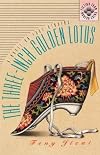
This is not the first book I've read on footbinding, but the first to take place in the 20th century as anti-footbinding sentiments take hold in early 20th-century China. it really is amazing how some men could be so obsessed with footbinding, to almost the exclusion of everything else. Fragrant Lotus' own husband basically LOSES it when his wife comes in second place in a foot contest of the household and spirals off into insanity until he dies a few months later when Lotus is show more pregnant.
Lotus' father in law had chosen her for his son after seeing her work one day, since her grandmother bound her feet so well. The women of the household are often pitted against one another simply because of their feet. Not for cooking, or embroidery, or any other hobby/pursuit. No, it all comes down to the feet. Lotus prides herself on her feet and uses them against her sister in law who was constantly trying to put her down/demean her especially after Lotus's husband's death.
In the meantime, China is changing, with women being encouraged/pushed to unbind their feet, as well as leave their young daughters out of this practice. There was a surprise twist at the end of the book that answers the question of something that had happened earlier in the book, which made you realize that despite Lotus' pride over her own feet and the superiority it gave her in the household, deep in the back of her mind, she knew that for all the value of the practice and status it may have offered her, it was still a fucked-up practice. show less
Lotus' father in law had chosen her for his son after seeing her work one day, since her grandmother bound her feet so well. The women of the household are often pitted against one another simply because of their feet. Not for cooking, or embroidery, or any other hobby/pursuit. No, it all comes down to the feet. Lotus prides herself on her feet and uses them against her sister in law who was constantly trying to put her down/demean her especially after Lotus's husband's death.
In the meantime, China is changing, with women being encouraged/pushed to unbind their feet, as well as leave their young daughters out of this practice. There was a surprise twist at the end of the book that answers the question of something that had happened earlier in the book, which made you realize that despite Lotus' pride over her own feet and the superiority it gave her in the household, deep in the back of her mind, she knew that for all the value of the practice and status it may have offered her, it was still a fucked-up practice. show less
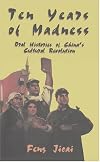
Anecdotes from the Cultural Revolution
"Ten Years of Madness" is a collection of good anecdotes by various people who witnessed the Cultural Revolution. Most are stories about people and families who have been wronged, although there are a few stories about active participants in the Cultural Revolution. "The Story of a Smile" was particularly interesting. It is a tragedy that caused me to chuckle. The author's commentaries at the ends of each anecdote are trivial and unnecessary. show more Nevertheless, this is a good read. show less
"Ten Years of Madness" is a collection of good anecdotes by various people who witnessed the Cultural Revolution. Most are stories about people and families who have been wronged, although there are a few stories about active participants in the Cultural Revolution. "The Story of a Smile" was particularly interesting. It is a tragedy that caused me to chuckle. The author's commentaries at the ends of each anecdote are trivial and unnecessary. show more Nevertheless, this is a good read. show less

There is a vast wealth of books written about China, and among these have appeared numerous travelogues by visitors to China. While there has been a constant stream of publication ever since the earliest visits of starting with Marco Polo, followed by books and journals from both illustrious and obscure travelers to China, through virtually all ages particularly during the past 150 years. Even at times of great turmoil and civil war, including the most recent episode of the Cultural show more Revolution, foreign authors travelled to China and recorded their observations.
This plethora of travel writing about China is met with a paucity of reciprocal visits and publications on the Chinese side. The Chinese adhere to a strong notion that turning away from the motherland or looking too insistently over its borders constitutes a form of betrayal, and particularly during the first recent period of intense engagement between China and the West, the Chinese were loth to travel, and showed little interest in the West.
The past 100 years saw two moments when China opened up and looked for inspiration across its borders. The first time was during the first quarter of the Twentieth Century, which saw a period of modernization. Under the influence of the "May Fourth Movement", now also often referred to as the "New Culture Movement" (1915 -1923), Chinese intellectuals looked at Japan for inspiration to modernize China. However, this period was soon followed by World War II, a de-facto civil war and after the victory of the new Communist leadership the country was once more closed down for many decades, with Chinese people being virtually completely banned from overseas travel. Only since the early 1980s, and the beginning of China's "Opening Up" policies, Chinese people have increasingly been able to travel overseas.
Land der Kunst und Musik – Chinesische Traumsuche in Österreich spans this 100-year period, exploring the engagement of Chinese authors with Austria in nine essays and travelogues written by Chinese writers who spent time in Vienna and Salzburg. The first contribution, also the longest, comes from Liu Simu (1904~1985). In his youth, Liu Simu actively joined the New Culture Movement. In 1932, he studied at the Department of Economics, University of Vienna (Austria). In his essay he describes the political atmosphere in Vienna looming under the rise of the Austrian Nazis. Although the essays was written in 1933 /4 it was not published in China until 1937.
All other contributions in this volume date from after the Opening Up of China in 1978, with the largest number written and published during the first decade of the Twenty-First Century. Some of the contributions, such as that by Shi Jian are shockingly pragmatic: the spirit of the early years of the opening up was that public funds should be spent to the benefit of the motherland, and thus the essay is a descriptive catalog of differences between Austria and China, citing practical examples of how China could learn from Austria. Later contributions are much more relaxed, but do not rise above the level of ordinary tourism, with the authors describing the sights of Vienna, and a sampling of its food, wine and culture. As a result, there is also a lot of overlap between the essays, as they all describe the same touristic hot-spots and share in the same, standard tourist experiences. The essay by Zhang Jie is noticeably the most literary. it is well-written and engaging, focusing less on the cliche sight-seeing aspect of the trip, but rather on remarkable people she encountered and their interaction with the Chinese people in the delegation. This makes the essay of interest to both Chinese and Western readers.
All essays and contributions in Land der Kunst und Musik – Chinesische Traumsuche in Österreich were originally written and published in Chinese. Their significance is mainly that they form a part of Chinese travel writing, and may be of specific interest to Chinese readers. However, it is not very clear of what interest these essays might be to Western readers. Apart from the contribution by Liu Simu, which is of historical interest, and Zhang Jie who is well-known as an author in the West, and whose contribution has clear literary value, the other essays and contributions appear dull and of little interest to Western audiences. By Western standards the writing of these contributions id of a low quality, and rather boring, giving readers hardly anything to think about. They are descriptions of travel itineraries and offer no insight into their author's minds. The only surprising point is possibly that all travelers seem to enjoy Austria's coffee and wine culture, which particularly before 2008 was barely sampled in China.
Land der Kunst und Musik – Chinesische Traumsuche in Österreich has appeared in a bi-lingual edition, at the instigation of the Düsseldorf University Press, in cooperation with the Chinese Foreign Language Teaching and Research Press (FLTRP). The book has appeared as the first volume in a series "Schriften des Konfuzius-Instituts Düsseldorf - Belletristische und Künstlerische Reihe". This series is proposed as the academic leg of the activities of the German Confucius Institute, the cultural representative organization to spread the knowledge of Chinese language and culture.
The first two volumes in this series have appeared under the general editorship of Li Xuetao, with an introduction by the German sinologist Wolfgang Kubin. show less
This plethora of travel writing about China is met with a paucity of reciprocal visits and publications on the Chinese side. The Chinese adhere to a strong notion that turning away from the motherland or looking too insistently over its borders constitutes a form of betrayal, and particularly during the first recent period of intense engagement between China and the West, the Chinese were loth to travel, and showed little interest in the West.
The past 100 years saw two moments when China opened up and looked for inspiration across its borders. The first time was during the first quarter of the Twentieth Century, which saw a period of modernization. Under the influence of the "May Fourth Movement", now also often referred to as the "New Culture Movement" (1915 -1923), Chinese intellectuals looked at Japan for inspiration to modernize China. However, this period was soon followed by World War II, a de-facto civil war and after the victory of the new Communist leadership the country was once more closed down for many decades, with Chinese people being virtually completely banned from overseas travel. Only since the early 1980s, and the beginning of China's "Opening Up" policies, Chinese people have increasingly been able to travel overseas.
Land der Kunst und Musik – Chinesische Traumsuche in Österreich spans this 100-year period, exploring the engagement of Chinese authors with Austria in nine essays and travelogues written by Chinese writers who spent time in Vienna and Salzburg. The first contribution, also the longest, comes from Liu Simu (1904~1985). In his youth, Liu Simu actively joined the New Culture Movement. In 1932, he studied at the Department of Economics, University of Vienna (Austria). In his essay he describes the political atmosphere in Vienna looming under the rise of the Austrian Nazis. Although the essays was written in 1933 /4 it was not published in China until 1937.
All other contributions in this volume date from after the Opening Up of China in 1978, with the largest number written and published during the first decade of the Twenty-First Century. Some of the contributions, such as that by Shi Jian are shockingly pragmatic: the spirit of the early years of the opening up was that public funds should be spent to the benefit of the motherland, and thus the essay is a descriptive catalog of differences between Austria and China, citing practical examples of how China could learn from Austria. Later contributions are much more relaxed, but do not rise above the level of ordinary tourism, with the authors describing the sights of Vienna, and a sampling of its food, wine and culture. As a result, there is also a lot of overlap between the essays, as they all describe the same touristic hot-spots and share in the same, standard tourist experiences. The essay by Zhang Jie is noticeably the most literary. it is well-written and engaging, focusing less on the cliche sight-seeing aspect of the trip, but rather on remarkable people she encountered and their interaction with the Chinese people in the delegation. This makes the essay of interest to both Chinese and Western readers.
All essays and contributions in Land der Kunst und Musik – Chinesische Traumsuche in Österreich were originally written and published in Chinese. Their significance is mainly that they form a part of Chinese travel writing, and may be of specific interest to Chinese readers. However, it is not very clear of what interest these essays might be to Western readers. Apart from the contribution by Liu Simu, which is of historical interest, and Zhang Jie who is well-known as an author in the West, and whose contribution has clear literary value, the other essays and contributions appear dull and of little interest to Western audiences. By Western standards the writing of these contributions id of a low quality, and rather boring, giving readers hardly anything to think about. They are descriptions of travel itineraries and offer no insight into their author's minds. The only surprising point is possibly that all travelers seem to enjoy Austria's coffee and wine culture, which particularly before 2008 was barely sampled in China.
Land der Kunst und Musik – Chinesische Traumsuche in Österreich has appeared in a bi-lingual edition, at the instigation of the Düsseldorf University Press, in cooperation with the Chinese Foreign Language Teaching and Research Press (FLTRP). The book has appeared as the first volume in a series "Schriften des Konfuzius-Instituts Düsseldorf - Belletristische und Künstlerische Reihe". This series is proposed as the academic leg of the activities of the German Confucius Institute, the cultural representative organization to spread the knowledge of Chinese language and culture.
The first two volumes in this series have appeared under the general editorship of Li Xuetao, with an introduction by the German sinologist Wolfgang Kubin. show less
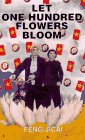
Reviewed by: Tolando (Class of 2013)
In the book "Let One Hundred Flowers Bloom" it talks about a man being forced to crush his life. He thought he had it made until he was falsely accused of Hua, and had to take some big embarassment and humiliation. He even lost his beautiful wife to this situation and ended up with only one friend after this, this was a dog named Jet. Jet was an old dog that has been through a lot of stuff, like being abandoned and left for dead. Jet and Huo built a show more relationship with each other and they are very strong because they have that connection with each other. He was left for dead and the dog was left for dead, so they feel that they can reason with each other and comfort each other. To me that was the main theme of the book.
I would suggest you not to read this book unless you like Chinese culture and would like to endure an experience that may make you cry. It's a good book but it needs a strong reader to finish the entire thing. show less
In the book "Let One Hundred Flowers Bloom" it talks about a man being forced to crush his life. He thought he had it made until he was falsely accused of Hua, and had to take some big embarassment and humiliation. He even lost his beautiful wife to this situation and ended up with only one friend after this, this was a dog named Jet. Jet was an old dog that has been through a lot of stuff, like being abandoned and left for dead. Jet and Huo built a show more relationship with each other and they are very strong because they have that connection with each other. He was left for dead and the dog was left for dead, so they feel that they can reason with each other and comfort each other. To me that was the main theme of the book.
I would suggest you not to read this book unless you like Chinese culture and would like to endure an experience that may make you cry. It's a good book but it needs a strong reader to finish the entire thing. show less
Lists
Sonlight Books (1)
Awards


You May Also Like


Associated Authors
Statistics
- Works
- 26
- Also by
- 3
- Members
- 256
- Popularity
- #89,546
- Rating
- 3.8
- Reviews
- 11
- ISBNs
- 38
- Languages
- 6