

Asha Bandele
Author of When They Call You a Terrorist: A Black Lives Matter Memoir
About the Author
Works by Asha Bandele
Associated Works
Maybe Baby: 28 Writers Tell the Truth About Skepticism, Infertility, Baby Lust, Childlessness, Ambivalence, and How They Made the Biggest Decision of Their Lives (2006) — Contributor — 132 copies, 4 reviews
One Big Happy Family: 18 Writers Talk About Open Adoption, Mixed Marriage, Polyamory, Househusbandry, Single Motherhood, and Other Realities of Truly Modern Love (2009) — Contributor — 116 copies, 6 reviews
Shaking the Tree: A Collection of Fiction and Memoir by Black Women (2003) — Contributor — 54 copies
Catch the Fire!!!: A Cross-Generational Anthology of Contemporary African-American Poetry (1998) — Contributor — 35 copies, 1 review
Brown Sugar 4: Secret Desires: A Collection of Erotic Black Fiction (2005) — Contributor — 16 copies
Tagged
Common Knowledge
- Canonical name
- Bandele, Asha
- Birthdate
- 1970
- Gender
- female
- Occupations
- journalist
Sr editor, Essence magazine
Sr director, Drug Policy Alliance
Revson Fellow, Columbia University - Nationality
- USA
- Places of residence
- Brooklyn, New York, USA
- Associated Place (for map)
- New York, USA
Members
Reviews
This was a tough read. Cullors is one of the co-founders of the Black Lives Matters movement. She describes in stark and graphic detail how she came to that point, what happened to her brother, as she was growing up, and to her father. And to so many others in her community in California. How the police could and would target young Black boys and men, for the mere fact that they were black and therefore, vulnerable. How can people live in such a constant state of anxiety and fear, and hope show more to be healthy? It reminded me of what we read about during the Civil Rights era and before; the brutality, and the hatred and discrimination. It reminds me of what refugees fleeing horrific conditions in their former homelands must feel every day they are on the run, and sometimes, maybe often, when they arrive in a new place and try to begin again. It reminds me of what the lives of Jews and other minorities must have been in the time of Nazi Germany. That kind of hatred and discrimination was the law of the land then. It isn't, now, but it is very much an unwritten law, in some places. Many places, as it turns out.
The treatment of the mentally ill, the imprisonment of men and boys and their treatment in the jail system, for seemingly minor infractions (treatment that would never be tolerated for whites), made me sick to read about. I applaud Cullors for exposing the truth and for being brave enough to devote her life to trying to remedy what to me just sees so hopeless a situation. It's so much larger than one person or even a group of people, can *fix*. Sadly, Canada is not exempt from this problem. I hope and believe that it is not as rampant here as it is in the States, but we can't pat ourselves on the backs at all, as this is a very current problem here, as well.
I would be in a constant state of fear and anxiety and tension if I had to live like that. It makes me feel so hopeless that things will change, despite the best intentions of a few. It also fills me with rage that humans treat one another this way. Why??
Edited to add a quote by Cullors, talking about "the anxiety that is there while waiting for the next crisis to unfold". It is ALWAYS there.
This is such an important book. I think it ought to be compulsory reading for so many: social workers, social justice workers, police, lawyers, educators, politicians, and just so many more show less
The treatment of the mentally ill, the imprisonment of men and boys and their treatment in the jail system, for seemingly minor infractions (treatment that would never be tolerated for whites), made me sick to read about. I applaud Cullors for exposing the truth and for being brave enough to devote her life to trying to remedy what to me just sees so hopeless a situation. It's so much larger than one person or even a group of people, can *fix*. Sadly, Canada is not exempt from this problem. I hope and believe that it is not as rampant here as it is in the States, but we can't pat ourselves on the backs at all, as this is a very current problem here, as well.
I would be in a constant state of fear and anxiety and tension if I had to live like that. It makes me feel so hopeless that things will change, despite the best intentions of a few. It also fills me with rage that humans treat one another this way. Why??
Edited to add a quote by Cullors, talking about "the anxiety that is there while waiting for the next crisis to unfold". It is ALWAYS there.
This is such an important book. I think it ought to be compulsory reading for so many: social workers, social justice workers, police, lawyers, educators, politicians, and just so many more show less
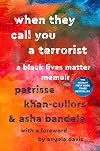
There's a lot of misinformation floating around about the Black Lives Matter movement, some of it clearly intended to discredit their push to hold law enforcement accountable and to draw attention to serious issues, but also some based on inadequate reporting and system bias. When They Call You a Terrorist is a memoir by one of the three women who founded Black Lives Matters and her account of her own life, as well as of the beginning months of Black Lives Matter is a good start to learning show more about what is really happening.
Patrisse Khan-Cullors grew up in Van Nuys, California, a part of greater Los Angeles inhabited by low income and middle class Hispanic and black people. The father who was around during her childhood had had a good job at an auto manufacturing plant, a job which gave him both a solid paycheck and a sense of pride. When the plant closed, the only work he could find was intermittent and badly paid, which put strain on his family and he eventually left. When They Call You a Terrorist is both starkly honest and clear in depicting how policies and events had direct impact on her family -- here showing how changes in manufacturing hurt not just white people, but also other members of the working class. Throughout the book, Khan-Cullors shows through incidents that shaped her own life, how mental illness is treated when the person suffering is a young black man of limited means, how the policing of young black boys is harmful, how housing policy hurts families, how hard it is to navigate life as both a black woman and as a queer woman and how a person raised in this environment can nonetheless rise into becoming a community activist and how important that role is.
I learned quite a bit from this book, but I also enjoyed reading about Khan-Cullors herself and how her life shaped who she is today. show less
Patrisse Khan-Cullors grew up in Van Nuys, California, a part of greater Los Angeles inhabited by low income and middle class Hispanic and black people. The father who was around during her childhood had had a good job at an auto manufacturing plant, a job which gave him both a solid paycheck and a sense of pride. When the plant closed, the only work he could find was intermittent and badly paid, which put strain on his family and he eventually left. When They Call You a Terrorist is both starkly honest and clear in depicting how policies and events had direct impact on her family -- here showing how changes in manufacturing hurt not just white people, but also other members of the working class. Throughout the book, Khan-Cullors shows through incidents that shaped her own life, how mental illness is treated when the person suffering is a young black man of limited means, how the policing of young black boys is harmful, how housing policy hurts families, how hard it is to navigate life as both a black woman and as a queer woman and how a person raised in this environment can nonetheless rise into becoming a community activist and how important that role is.
I learned quite a bit from this book, but I also enjoyed reading about Khan-Cullors herself and how her life shaped who she is today. show less
Part memoir, part social science, part history, and part activism, When They Call You A Terrorist is personal, informative, and galvanizing - certainly a must-read for our time.
Quotes
"We knew we couldn't make it illegal to be...black, but by getting the public to associate the...blacks with heroin...and then criminalizing [them] heavily, we could disrupt [their] communities...Did we know we were lying? Of course we did." -John Ehrlichman, Nixon's National Domestic Policy Chief (9) [See quote show more source: https://www.cnn.com/2016/03/23/politics/john-ehrlichman-richard-nixon-drug-war-b...
[Re: police presence in the neighborhood] I do not understand...what role they play in the neighborhood. They do not speak to us or help guide us across streets. They are never friendly. It is clear not only that they are not our friends, but that they do not like us very much. [Describing an incident where her brothers and their friends are roughed up by police for standing and talking in an alleyway.] ...there are no green spaces, no community centers to shoot hoops in, no playgrounds with handball courts, no parks for children to build castles in, so they make the alleyway their secret place and go there to discuss things...
[Afterward] They will be silent in the way we often hear of the silence of rape victims. (14-15)
For us, law enforcement had nothing to do with protecting and serving, but controlling and containing the movement of children who had been labeled super-predators simply by virtue of who they were born to and where they were born, not because they were actually doing anything predatory. (26)
...having attended schools with both Black and white girls, one thing I learned quickly is that while we can behave in the same or very similar ways, we are almost never punished similarly. (26-27)
We suspect that things are not supposed to be this way but we aren't sure what the other way is. (53)
Surges in Americans' preferred drugs of choice seem to always align with what is available in the region our nation is invading. (92)
We sit with that for a time. What it means to not have the ability to love yourself. How do you honor something you do not love?
That night we speak of prisons and the drug war and how it feels to not seem to matter as a person in the world. (97)
We have conversation after conversation about how racism makes us hate ourselves and misdirects our anger toward one another rather than focusing it on where the sources of the problem lie. We talk about how dangerous media and pop culture can be, how complicit they are in shaping how we move in the world. (140)
Where we could see that other laws were raced-based and aimed at disrupting Black life, we had - we still have - a hard time accepting drug policy as race policy and the war on drugs as the legal response to the gains of the Civil Rights and Black Power Movements....Instead of doubling down on how to repair the harm, [America] made us the harm. (144)
[Example of captions on two Getty images post-Katrina: white people "finding" food, black people "looting"] (144)
Deaths with a common root: the hatred that tells a person daily that their life and the life of those they love ain't worth shit, a truth made ever more real when the people who harm you are never held accountable. (187)
...how many white Americans are dragged out of their beds in the middle of the night because they might fit a vague description offered up by God knows who. How many skinny, short, blond men were rounded up when Dylann Roof massacred people in prayer? (194)
Black people are the only humans in this nation ever legally designated, after all, as not human. (Re: Black Lives Matter, 205)
[In Ferguson] All this money put in to suppress a community. We'd need far less to ensure it thrived. Where are the politicians who are doing that? (213)
See also: Pushout (Morris), The New Jim Crow (Alexander), I Can't Breathe (Taibbi) show less
Quotes
"We knew we couldn't make it illegal to be...black, but by getting the public to associate the...blacks with heroin...and then criminalizing [them] heavily, we could disrupt [their] communities...Did we know we were lying? Of course we did." -John Ehrlichman, Nixon's National Domestic Policy Chief (9) [See quote show more source: https://www.cnn.com/2016/03/23/politics/john-ehrlichman-richard-nixon-drug-war-b...
[Re: police presence in the neighborhood] I do not understand...what role they play in the neighborhood. They do not speak to us or help guide us across streets. They are never friendly. It is clear not only that they are not our friends, but that they do not like us very much. [Describing an incident where her brothers and their friends are roughed up by police for standing and talking in an alleyway.] ...there are no green spaces, no community centers to shoot hoops in, no playgrounds with handball courts, no parks for children to build castles in, so they make the alleyway their secret place and go there to discuss things...
[Afterward] They will be silent in the way we often hear of the silence of rape victims. (14-15)
For us, law enforcement had nothing to do with protecting and serving, but controlling and containing the movement of children who had been labeled super-predators simply by virtue of who they were born to and where they were born, not because they were actually doing anything predatory. (26)
...having attended schools with both Black and white girls, one thing I learned quickly is that while we can behave in the same or very similar ways, we are almost never punished similarly. (26-27)
We suspect that things are not supposed to be this way but we aren't sure what the other way is. (53)
Surges in Americans' preferred drugs of choice seem to always align with what is available in the region our nation is invading. (92)
We sit with that for a time. What it means to not have the ability to love yourself. How do you honor something you do not love?
That night we speak of prisons and the drug war and how it feels to not seem to matter as a person in the world. (97)
We have conversation after conversation about how racism makes us hate ourselves and misdirects our anger toward one another rather than focusing it on where the sources of the problem lie. We talk about how dangerous media and pop culture can be, how complicit they are in shaping how we move in the world. (140)
Where we could see that other laws were raced-based and aimed at disrupting Black life, we had - we still have - a hard time accepting drug policy as race policy and the war on drugs as the legal response to the gains of the Civil Rights and Black Power Movements....Instead of doubling down on how to repair the harm, [America] made us the harm. (144)
[Example of captions on two Getty images post-Katrina: white people "finding" food, black people "looting"] (144)
Deaths with a common root: the hatred that tells a person daily that their life and the life of those they love ain't worth shit, a truth made ever more real when the people who harm you are never held accountable. (187)
...how many white Americans are dragged out of their beds in the middle of the night because they might fit a vague description offered up by God knows who. How many skinny, short, blond men were rounded up when Dylann Roof massacred people in prayer? (194)
Black people are the only humans in this nation ever legally designated, after all, as not human. (Re: Black Lives Matter, 205)
[In Ferguson] All this money put in to suppress a community. We'd need far less to ensure it thrived. Where are the politicians who are doing that? (213)
See also: Pushout (Morris), The New Jim Crow (Alexander), I Can't Breathe (Taibbi) show less
Here's an unusual political memoir - there's much more about the childhood of author Khan-Cullors than there is about the essential group she co-founded: Black Lives Matter. Patrisse grew up in Van Nuys, CA, a predominantly black and Mexican community. Her heroic mother worked double shifts constantly to care for her four children (one of whom suffers from mental illness and is tortured in jail), without financial support from the fathers of the children. Patrisse becomes aware of her own show more father Gabriel, who was not the dad she grew up knowing, not the same dad of her brothers and sister. She is happily enveloped by Gabriel and the warmth and acceptance of her Louisiana-rooted relatives. Lucky enough to attend a progressive school out of her neighborhood, Patrisse broadens her life experience, meeting and aligning herself with fellow social justice warriors. She moves into St. Elmo's Village, an artist's colony in Central LA, but has to leave when the police conduct constant incursions based on "fitting the description" raids. Even before Black Lives Matter, Patrisse helps to found organizations such as The Strategy Center, Dignity and Power Now, and Dream Defenders, recognizing the role of incarceration in the lives of all the males in her ambit. She's the quintessential community organizer whose brush broadens to encompass the world. Patrisse tells a blunt, heartening story that's just getting started.
Quotes: "How many skinny, short, blond men were rounded up when Dylan Roof massacred people in prayer? How many brown-haired white men were snatched out of bed when Ted Bundy was killing women for sport? How many gawky white teens were stopped and frisked after Columbine?"
"[Re:Ferguson, post Michael Brown's murder] All the money put in to suppress a community. We'd need far less to ensure it thrived." show less
Quotes: "How many skinny, short, blond men were rounded up when Dylan Roof massacred people in prayer? How many brown-haired white men were snatched out of bed when Ted Bundy was killing women for sport? How many gawky white teens were stopped and frisked after Columbine?"
"[Re:Ferguson, post Michael Brown's murder] All the money put in to suppress a community. We'd need far less to ensure it thrived." show less
Lists
Awards


You May Also Like


Associated Authors
Statistics
- Works
- 7
- Also by
- 7
- Members
- 1,646
- Popularity
- #15,604
- Rating
- 4.1
- Reviews
- 63
- ISBNs
- 44
- Languages
- 3
- Favorited
- 1