

Sheila Jeffreys
Author of The Spinster and Her Enemies: Feminism and Sexuality, 1880-1930
About the Author
Sheila Jeffreys is a Professorial Fellow in the School of Social and Political Sciences at the University of Melbourne, Australia. In 1973, in the UK, she became involved in the Women's Liberation Movement and became a lesbian in 1977. She moved to Australia in 1991, where she became a Professor of show more Feminist Politics at the University of Melbourne, and has authored numerous books on the history and politics of sexuality, the global sex industry, lesbian feminism, harmful beauty practices, religion and women's rights and the politics of transgenderism. She moved back to the UK in 2015. show less
Works by Sheila Jeffreys
Associated Works
Not for Sale: Feminists Resisting Prostitution and Pornography (2005) — Contributor, some editions — 70 copies, 1 review
Big Porn Inc: Exposing the Harms of the Global Pornography Industry (2011) — Contributor — 56 copies
Tagged
Common Knowledge
- Canonical name
- Jeffreys, Sheila
- Other names
- JEFFREYS, Sheila
Sheila JEFFREYS, - Birthdate
- 1948
- Gender
- female
- Occupations
- professor
activist - Organizations
- University of Melbourne
Coalition Against Trafficking in Women - Nationality
- UK (birth)
Australia - Map Location
- Australia
Members
Discussions
Rape Culture in Feminist Theory (August 2016)
Reviews
Beauty and Misogyny: Harmful Cultural Practices in the West (Women and Psychology) by Sheila Jeffreys
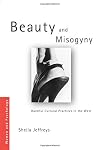
Although there is a certain amount to recommend in this thorough critique of beauty practises, it also contains some significantly problematic elements. I found it deeply thought-provoking, though, so much so that I started writing my review before I’d even finished reading. For that, it deserves three stars.
‘Beauty and Misogyny’ links neatly to Gail Dines’ [b:Pornland: How Porn Has Hijacked Our Sexuality|7621071|Pornland How Porn Has Hijacked Our Sexuality|Gail show more Dines|https://images.gr-assets.com/books/1320477253s/7621071.jpg|10096253], which provides quite a bit of practise to back up Jeffreys’ theory in chapter four. It also addresses the theme of Natasha Walter’s [b:Living Dolls: The Return of Sexism|6378897|Living Dolls The Return of Sexism|Natasha Walter|https://images.gr-assets.com/books/1415589903s/6378897.jpg|6566695]; the commoditisation of stereotypical femininity and its rebranding as empowerment. The overall framing device of the book is the UN’s concept of ‘harmful traditional/cultural practises’. This provides an interesting perspective on how the Western-dominated UN only admits the existence of cultural practises that are harmful to women in the developing world. Although the term is generally applied to female genital mutilation and forced marriage, it could apply to elements of Western beauty practises.
The strength of this book is its emphasis on how requirements for women’s appearance are reinforced and internalised. In particular, I would pick out the commentary on how a community of women discussing and enforcing beauty rules (be it for foot-binding or dieting) does not mean that these beauty rules are generated by women themselves. Such communities arise from the oppression that obliges women to bind their feet or diet in order to be culturally acceptable. Moreover, Jeffreys comments in chapter eight on plastic surgery discussion fora that, 'they demonstrate how forms of interaction that women have developed to deal with oppression - that is, gossip, sharing of experiences, encouragement and support - have been exploited to increase the profits of the industry'.
There are major elements of the book that trouble me, however. Chapter three is especially problematic, as it discounts any biological basis for being trans and elides trans issues with sexual fetishisation of gender roles. This seems to me (a cis person) pretty offensive to trans people and their struggles to achieve recognition of their gender. To her credit, Jeffreys identifies why this problematisation occurs; she wishes gender to be destroyed. This she contrasts with Judith Butler and postmodern/queer theorists, who (I simplify) consider the strict gender binary and gender roles to be a problem, rather than the notion of gender itself. I’m unsure of my personal opinion about whether gender should exist, but the debate seems pretty theoretical anyway. At heart I am a pragmatist and object to picking on an oppressed group for no apparent reason.
I am somewhat ambivalent about the chapter on fashion. It raises some important points that I agree with. Firstly, Jeffreys highlights the increasing use of pornographic imagery in fashion editorials and fashion advertising. Secondly, she comments on the use of nudity in fashion shows, seemingly for shock value. Thirdly, she articulates very neatly a gender divide in clothing that constantly annoys me:
I was reminded of this just today, when I went into a department store menswear area (which was very carefully delineated from womenswear) for Christmas shopping. I saw all these lovely tweed coats, woolly jumpers, tailored shirts, and waistcoats... I would gladly have worn them, as they looked warm, practical, and smart. But as I am short and have hips and breasts, not a one was available in my size. What rankles most to me, and Jeffreys also picks this up, is that men get the choice to wear suits. It is so difficult to find a well-fitting trouser suit in womenswear! What’s more, tailored suits used to be more readily available for women, but not in recent decades. That’s a particular bugbear of mine and I’ve never come across mention of it in a book before.
The reason why I am ambivalent about the fashion chapter, though, is Jeffreys’ critique of several fashion designers, including two of my favourites, Alexander McQueen and Thierry Mugler. I consider both of them to have created some truly beautiful pieces of clothing. However Jeffreys rightly points out that their fashion shows include a lot of misogyny (for instance, McQueen’s collection titled ‘Highland Rape’). To me this ambivalence is much as if I were looking at a beautiful painting depicting some misogynistic scene. Some part of me finds beauty in the craft on display, even if that craft is being used to purvey messages that I dislike. It is tempting to ignore the misogyny in order to appreciate the beauty. I feel similarly about high heels - they can sometimes be lovely to look at as objects, so long as I ignore how painful they are to actually wear. Of course, my cultural perceptions of what is beautiful are unavoidably shaped by the society I’ve grown up in, as everyone’s are.
In the latter chapters, I find that this book spends excessive time and places excessive importance on male sexual fetishism and sadomasochism. Again the assumption that the vast majority of fetishists are male gets an airing. This has always seemed to me like an odd quirk of sexuality research - how can you be sure that women aren’t fetishists? Maybe they have been socialised not to consider their fetishes as such. Perhaps the whole concept is deliberately defined in masculine terms. I am reminded of the section in [b:Understanding Asexuality|14365970|Understanding Asexuality|Anthony F. Bogaert|https://images.gr-assets.com/books/1360974357s/14365970.jpg|20007921] when female sexuality is painted as terribly mysterious and complex. If that’s the current state of sexuality research, how is it possible to make sweeping generalisations about whether women have fetishes (sexual or otherwise).
Despite Jeffreys’ disparagement of psychoanalytic theory at several points, this book cannot seem to stray far from psychological speculation. There seems to me to be a great irony in this. Jeffreys repeatedly mentions that the growth of current ‘harmful cultural practises’ coincides with the rise of neoliberal free market economic ideology, yet this ideology and its institutionalisation of sexism for the purposes of profit is not addressed. Instead, she seemingly internalises the individualism of this ideology by focussing her critique on individual male psyches. This seems to me ultimately unhelpful as it does not lend itself to useful responses or potential solutions. Jeffreys suggests giving up beauty practises and campaigning for government regulation. These proscriptions do not seem to me new, nor sufficient. Thus I am still searching hopefully for a critique of sexist capitalism - where is the feminist economic theory? show less
‘Beauty and Misogyny’ links neatly to Gail Dines’ [b:Pornland: How Porn Has Hijacked Our Sexuality|7621071|Pornland How Porn Has Hijacked Our Sexuality|Gail show more Dines|https://images.gr-assets.com/books/1320477253s/7621071.jpg|10096253], which provides quite a bit of practise to back up Jeffreys’ theory in chapter four. It also addresses the theme of Natasha Walter’s [b:Living Dolls: The Return of Sexism|6378897|Living Dolls The Return of Sexism|Natasha Walter|https://images.gr-assets.com/books/1415589903s/6378897.jpg|6566695]; the commoditisation of stereotypical femininity and its rebranding as empowerment. The overall framing device of the book is the UN’s concept of ‘harmful traditional/cultural practises’. This provides an interesting perspective on how the Western-dominated UN only admits the existence of cultural practises that are harmful to women in the developing world. Although the term is generally applied to female genital mutilation and forced marriage, it could apply to elements of Western beauty practises.
The strength of this book is its emphasis on how requirements for women’s appearance are reinforced and internalised. In particular, I would pick out the commentary on how a community of women discussing and enforcing beauty rules (be it for foot-binding or dieting) does not mean that these beauty rules are generated by women themselves. Such communities arise from the oppression that obliges women to bind their feet or diet in order to be culturally acceptable. Moreover, Jeffreys comments in chapter eight on plastic surgery discussion fora that, 'they demonstrate how forms of interaction that women have developed to deal with oppression - that is, gossip, sharing of experiences, encouragement and support - have been exploited to increase the profits of the industry'.
There are major elements of the book that trouble me, however. Chapter three is especially problematic, as it discounts any biological basis for being trans and elides trans issues with sexual fetishisation of gender roles. This seems to me (a cis person) pretty offensive to trans people and their struggles to achieve recognition of their gender. To her credit, Jeffreys identifies why this problematisation occurs; she wishes gender to be destroyed. This she contrasts with Judith Butler and postmodern/queer theorists, who (I simplify) consider the strict gender binary and gender roles to be a problem, rather than the notion of gender itself. I’m unsure of my personal opinion about whether gender should exist, but the debate seems pretty theoretical anyway. At heart I am a pragmatist and object to picking on an oppressed group for no apparent reason.
I am somewhat ambivalent about the chapter on fashion. It raises some important points that I agree with. Firstly, Jeffreys highlights the increasing use of pornographic imagery in fashion editorials and fashion advertising. Secondly, she comments on the use of nudity in fashion shows, seemingly for shock value. Thirdly, she articulates very neatly a gender divide in clothing that constantly annoys me:
’The casual observer wandering through the areas devoted to male and female fashion in a department store will notice that all fashion is overwhelmingly, and before all else, gendered… It hardly needs to be said that the men’s department generally offers clothes that are not full of holes to show the body, there are no skirts or dresses, clothes are not skintight, they tend to be functional and look as if they are well-suited to a number of activities. They are not devoted to revealing the male body as a sex object to the female viewer.’
I was reminded of this just today, when I went into a department store menswear area (which was very carefully delineated from womenswear) for Christmas shopping. I saw all these lovely tweed coats, woolly jumpers, tailored shirts, and waistcoats... I would gladly have worn them, as they looked warm, practical, and smart. But as I am short and have hips and breasts, not a one was available in my size. What rankles most to me, and Jeffreys also picks this up, is that men get the choice to wear suits. It is so difficult to find a well-fitting trouser suit in womenswear! What’s more, tailored suits used to be more readily available for women, but not in recent decades. That’s a particular bugbear of mine and I’ve never come across mention of it in a book before.
The reason why I am ambivalent about the fashion chapter, though, is Jeffreys’ critique of several fashion designers, including two of my favourites, Alexander McQueen and Thierry Mugler. I consider both of them to have created some truly beautiful pieces of clothing. However Jeffreys rightly points out that their fashion shows include a lot of misogyny (for instance, McQueen’s collection titled ‘Highland Rape’). To me this ambivalence is much as if I were looking at a beautiful painting depicting some misogynistic scene. Some part of me finds beauty in the craft on display, even if that craft is being used to purvey messages that I dislike. It is tempting to ignore the misogyny in order to appreciate the beauty. I feel similarly about high heels - they can sometimes be lovely to look at as objects, so long as I ignore how painful they are to actually wear. Of course, my cultural perceptions of what is beautiful are unavoidably shaped by the society I’ve grown up in, as everyone’s are.
In the latter chapters, I find that this book spends excessive time and places excessive importance on male sexual fetishism and sadomasochism. Again the assumption that the vast majority of fetishists are male gets an airing. This has always seemed to me like an odd quirk of sexuality research - how can you be sure that women aren’t fetishists? Maybe they have been socialised not to consider their fetishes as such. Perhaps the whole concept is deliberately defined in masculine terms. I am reminded of the section in [b:Understanding Asexuality|14365970|Understanding Asexuality|Anthony F. Bogaert|https://images.gr-assets.com/books/1360974357s/14365970.jpg|20007921] when female sexuality is painted as terribly mysterious and complex. If that’s the current state of sexuality research, how is it possible to make sweeping generalisations about whether women have fetishes (sexual or otherwise).
Despite Jeffreys’ disparagement of psychoanalytic theory at several points, this book cannot seem to stray far from psychological speculation. There seems to me to be a great irony in this. Jeffreys repeatedly mentions that the growth of current ‘harmful cultural practises’ coincides with the rise of neoliberal free market economic ideology, yet this ideology and its institutionalisation of sexism for the purposes of profit is not addressed. Instead, she seemingly internalises the individualism of this ideology by focussing her critique on individual male psyches. This seems to me ultimately unhelpful as it does not lend itself to useful responses or potential solutions. Jeffreys suggests giving up beauty practises and campaigning for government regulation. These proscriptions do not seem to me new, nor sufficient. Thus I am still searching hopefully for a critique of sexist capitalism - where is the feminist economic theory? show less
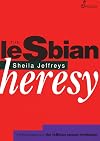
Wow, what a book. Sheila Jeffreys takes on a broad spectrum of issues and pulls no punches. She tackles sexological essentialism, detailing its developments from the late 19th century through 1920s and the publication of The Well of Loneliness up until '90s; sadomachosism, its numerous manifestations and defenses; lesbian sex therapy and its relationship to heterosexuality; the lesbian sex industry, including pornography, prostitution, and sex toys; butch–femme roleplaying and its show more discourse ranging from Joan Nestle to Bev Jo; postmodern understandings of gender à la Judith Butler — and that's just the first half of the book. Her prose is clear, exact, and uncompromising, and her arguments are supported by an impressive wealth of examples and quotations such as magazines, novels, lesbian-feminist theory, and historical texts. Written in 1993, The Lesbian Heresy offers an accurate depiction and analysis of the direction of lesbian culture and feminist activism that still rings true today (although the picture now is notably bleaker). The book offers a cogent analysis of how sexuality under patriarchy is constructed, through the eroticization of male domination of women, to serve male interests and that this holds true even when enacted by lesbians. Despite this depressing state of affairs, Jeffreys ultimately presents a lesbian-affirming alternative, in which women turn away from male definitions of sexuality and create a powerful culture of love and respect.
Useful terms and concepts: heterosexual desire is the eroticization of inequality; "lesbianandgay" to describe the subsuming of lesbian interests into a male framework. show less
Useful terms and concepts: heterosexual desire is the eroticization of inequality; "lesbianandgay" to describe the subsuming of lesbian interests into a male framework. show less

This book is definitely on the extremes of radical feminism. That said, it will definitely make you think. Almost every page had an epiphany-inducing statement. While I didn't agree with everything she said, everything she said was well-backed and extremely well written and had real ties to what is going on in the world. This book is very dense, so it's not the kind of feminist theory book I would recommend to someone just starting to discover the field of women's studies. However, anyone show more who considers themselves a radical feminist or has an interest in that spectrum should consider this required reading. It challenges just about every social norm and sexual norm you can think of, and since radical feminism is about changing the roots (radical=root) of society and norms, this book is pretty much the definition of radical feminism. Some of the book can be a bit hard to get through and choke down, but it's well worth reading. show less
Beauty and Misogyny: Harmful Cultural Practices in the West (Women and Psychology) by Sheila Jeffreys
An interesting thesis that would have been more effectively presented if the author had kept her personal preferences out of the way. While I would cite to the book only with extreme caution, lest it be inferred that you endorse her anti-gay male attitudes, or her conviction that anyone who wants to dress in anything more than flannel shirts and ill-fitting jeans is a "masochist" (among an extensive list of questionable positions), the text can provide some helpful references to other show more literature that is less dogmatic and more objective.
The argument suffers from a lack of awareness of psychology--evolutionary psychology particularly--or sociology, instead treating politics as offering a complete frame from which to consider the dynamics of beauty standards. The author paints a picture of a cabal of male fetishists who conspire to inflict the whole suite of wretched practices upon women, who are uniformly described as passive, lacking agency or motivations of their own to either reject the pressures or explain why they in fact not only fail to reject the practices but appear to adopt them wholeheartedly. False consciousness fails as a persuasive explanatory model, but it seems to be the best this author can muster.
Despite flaws in both theory and method, the text nonetheless can be helpful to anyone looking for a point of entry to the discussion. Just don't stop with this. show less
The argument suffers from a lack of awareness of psychology--evolutionary psychology particularly--or sociology, instead treating politics as offering a complete frame from which to consider the dynamics of beauty standards. The author paints a picture of a cabal of male fetishists who conspire to inflict the whole suite of wretched practices upon women, who are uniformly described as passive, lacking agency or motivations of their own to either reject the pressures or explain why they in fact not only fail to reject the practices but appear to adopt them wholeheartedly. False consciousness fails as a persuasive explanatory model, but it seems to be the best this author can muster.
Despite flaws in both theory and method, the text nonetheless can be helpful to anyone looking for a point of entry to the discussion. Just don't stop with this. show less
Lists
You May Also Like


Associated Authors
Statistics
- Works
- 13
- Also by
- 4
- Members
- 582
- Popularity
- #43,089
- Rating
- 3.7
- Reviews
- 13
- ISBNs
- 63
- Languages
- 2
- Favorited
- 4