
Gilles Lipovetsky
Author of L'ère du vide : Essais sur l'individualisme contemporain
About the Author
Gilles Lipovetsky is Professor of Philosophy and member of the Conseil National des Programmes and member of the Conseil National desk editors Programmes (Education Nationale) in France
Works by Gilles Lipovetsky
A Era do Vazio Livro 1 2 copies
L' Ere Du Vide 1 copy
O Império do Efêmero 1 copy
L'empire de l'éphémère 1 copy
Da Leveza - eBook 1 copy
Associated Works
Tagged
Common Knowledge
- Birthdate
- 1944-09-24
- Gender
- male
- Occupations
- philosopher
- Awards and honors
- Légion d'Honneur (Chevalier)
- Short biography
- Gilles Lipovetsky teaches philosophy in Grenoble.
- Nationality
- France
- Places of residence
- Millau, France
- Associated Place (for map)
- Millau, France
Members
Reviews
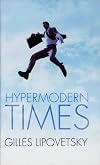
This is a very well-balanced book on the 'post-postmodern era' - what the author refers to as hypermodernity, a period that is equal parts individualism, consumerism, technocratic revolution, a time filled with paradox. This hypermodernity is characterized, says he, by paradox: We are preoccupied with the present but also with memory. We are owned by the things we buy but also buy these things with the deliberate intention of using them to achieve our own pleasure.
What he describes show more resonates as recognizable, which is in part why it is so likable a read. Sometimes he makes sweeping generalizations to which he provides no foundation, but most of the time he provides examples that make this book a mirror to hypermodern society.
The book is separated in three parts: the first is an introduction by Sebastien Charles, the second is the words of Lipovetsky himself, and the third is an interview with Lipovetsky. The three parts together make for one cohesive package. Charles' introductory essay prepare the reader for some of Lipovetsky's basic arguments and beliefs, and then his own essay that follows expands upon these and then adds his own observations. The interview, conducted by Charles, crystallizes the previous pages by compelling Lipovetsky to boil his ideas down to concise but insightful paragraphs, while also revealing some interesting and sometimes amusing views into the author's own background and education.
Altogether Lipovetsky manages to create a commentary on today's society while mostly withholding judgment. Surprisingly he also manages to create a balanced picture (though his suggestion of paradox almost lends itself to this). He is neither overly positive nor excessively gloomy. The three parts together open a window into the mind of one of today's most interesting thinkers. show less
What he describes show more resonates as recognizable, which is in part why it is so likable a read. Sometimes he makes sweeping generalizations to which he provides no foundation, but most of the time he provides examples that make this book a mirror to hypermodern society.
The book is separated in three parts: the first is an introduction by Sebastien Charles, the second is the words of Lipovetsky himself, and the third is an interview with Lipovetsky. The three parts together make for one cohesive package. Charles' introductory essay prepare the reader for some of Lipovetsky's basic arguments and beliefs, and then his own essay that follows expands upon these and then adds his own observations. The interview, conducted by Charles, crystallizes the previous pages by compelling Lipovetsky to boil his ideas down to concise but insightful paragraphs, while also revealing some interesting and sometimes amusing views into the author's own background and education.
Altogether Lipovetsky manages to create a commentary on today's society while mostly withholding judgment. Surprisingly he also manages to create a balanced picture (though his suggestion of paradox almost lends itself to this). He is neither overly positive nor excessively gloomy. The three parts together open a window into the mind of one of today's most interesting thinkers. show less

La moda se inserta en el centro mismo de la modernidad occidental. El objetivo primero de este libro es el de reinterpretar este problema en su totalidad. ¿Cómo entender la aparición de la moda en occidente? ¿Cómo explicar la versatilidad de la elegancia? ¿Cuáles son los grandes momentos históricos, las grandes estructuras que han determinado la organización social de las apariencias?


Awards

You May Also Like


Associated Authors
Statistics
- Works
- 42
- Also by
- 3
- Members
- 968
- Popularity
- #26,596
- Rating
- 3.8
- Reviews
- 18
- ISBNs
- 121
- Languages
- 8
- Favorited
- 2
