
Milton Mayer (1908–1986)
Author of They Thought They Were Free: The Germans, 1933-45
About the Author
Image credit: via Gatopardo Ediciones
Works by Milton Mayer
Young Man in a Hurry: The Story of William Rainey Harper, First President of the University of Chicago (1941) 5 copies, 1 review
The Tradition of Freedom 3 copies
If men were angels 1 copy
Associated Works
Tagged
Common Knowledge
- Canonical name
- Mayer, Milton
- Legal name
- Mayer, Milton Sanford
- Birthdate
- 1908-08-24
- Date of death
- 1986-04-20
- Gender
- male
- Education
- University of Chicago
- Occupations
- journalist
teacher
author
columnist - Organizations
- Associated Press
The Progressive
University of Chicago
University of Massachusetts
University of Louisville
Chicago Evening American - Short biography
- Milton Mayer was born in Chicago, Illinois, to a Jewish American family, the son of Morris Samuel and Louise Gerson Mayer. He graduated from Englewood High School, where he received a classical education with an emphasis on Latin and languages. He attended the University of Chicago in 1925–1928, but but did not earn a degree. He became a reporter for the Associated Press, the Chicago Evening Post, and the Chicago American. He wrote a monthly column in the Progressive magazine for more than 40 years. During his stint at the Post, he married his first wife Bertha Tepper, with whom he had two daughters. In 1945, they divorced, and two years later, he remarried to Jane Scully, who had two sons from a previous marriage.
Mayer is probably best remembered for his influential book They Thought They Were Free: The Germans, 1933-45, first published in 1955. It was a study of the lives of a group of 10 ordinary Germans from the town of Marburg under the Third Reich, based on extensive interviews Mayer did with them, and his research. Other books included What Can a Man Do? (1964) and The Revolution in Education (1944, with co-author Mortimer Adler). He also taught at the University of Chicago, the University of Massachusetts, and the University of Louisville, as well as universities abroad. In the mid-1950s, along with Bayard Rustin, he served on the committee that wrote the Quaker pamphlet, Speak Truth to Power (1955); Mayer is credited with suggesting the title of this seminal work. During the 1960s, he challenged the State Department's refusal to grant him a passport after he would not sign the loyalty oath then required. Following the Supreme Court's 1964 decision in Aptheker v. Secretary of State that the relevant portion of the McCarran Act was unconstitutional, he got his passport. - Cause of death
- cancer
- Nationality
- USA
- Birthplace
- Chicago, Illinois, USA
- Places of residence
- Carmel, California, USA
- Place of death
- Carmel, California, USA
- Associated Place (for map)
- California, USA
Members
Reviews

From the original forward: “As an American, I was repelled by the rise of National Socialism in Germany. As an American of Jewish descent, I was ashamed. As a Jew, I was stricken. As a newspaperman, I was fascinated.” It was the fascination that led him to spend time in Germany after the war, getting to know the ordinary German men who had been Nazis.
When our book group read Mein Kampf, I had hoped to gain a better understanding of how Hitler rose to power and caused so much devastation. show more Our general conclusion was that few Germans had actually read the book. Meyer’s book went much farther in helping me understand how a nation could follow the path that Nazi Germany followed.
Part I, the first two thirds of the book, introduces us to his Ten Men, and I found this part to be most informative. Parts II (The Germans) and III (Their Cause and Cure) spent more time on speculation and generalization. Some of this was also helpful, although—for the sake of context—this book was published six years before the Berlin Wall was built. The generalizations I found least helpful, because I think that many readers will be lulled into a sense of “ah, but we are different and that will never happen here.” Certainly cultures and traditions differ, but human nature is human nature and so (at the risk of being a bit silly) I end with a quote from Mad-Eye Moody: “Constant vigilance!” show less
When our book group read Mein Kampf, I had hoped to gain a better understanding of how Hitler rose to power and caused so much devastation. show more Our general conclusion was that few Germans had actually read the book. Meyer’s book went much farther in helping me understand how a nation could follow the path that Nazi Germany followed.
Part I, the first two thirds of the book, introduces us to his Ten Men, and I found this part to be most informative. Parts II (The Germans) and III (Their Cause and Cure) spent more time on speculation and generalization. Some of this was also helpful, although—for the sake of context—this book was published six years before the Berlin Wall was built. The generalizations I found least helpful, because I think that many readers will be lulled into a sense of “ah, but we are different and that will never happen here.” Certainly cultures and traditions differ, but human nature is human nature and so (at the risk of being a bit silly) I end with a quote from Mad-Eye Moody: “Constant vigilance!” show less
Causes one to ask some hard questions about my willingness "to not interfere" if it would jeopardize my rather comfortable position in this society. Especially relevant as we inch (if not leap) our way toward a totalitarian state. If nothing else, just read Part 1 and hear these ten men tell (and sometimes lie about) their own stories. Hopefully, it's not too late.
A profound experience. Opens up the experience of being a citizen and should be read by everyone. Who is responsible? How? If they aren't just exactly like us then what are they like? As much a book about America as it is about Germany. I would say it is critically important to read especially at this time so near to trump's presidency and the obvious split between what seems rational and what half the country professes to believe. If you haven't seen the red in the eyes of the people show more gathering in hate then perhaps this will help you to understand how little it seems to take to captivate a population. show less
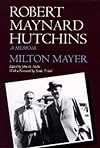
A friend recommended to me this most fascinating biography of Robert Maynard Hutchins by Milton Mayer I, in turn, recommend it to anyone interested in the meaning and definition of education.
Hutchins was off to a galloping start. At age 24 he was Secretary of Yale, a position that was a virtual training ground for university presidencies. But law school turned him around - not the turgid law books, nor the trade school purpose of teaching, but the law itself - because it was "an show more introduction to the liberal arts and the life of the mind." It was the Dean of the Law School who "recognized the educator beneath the disdain for a career in education."
Hutchins believed the business of universities was understanding, not vocational training, which until his appointment as Dean of the Yale Law School (at age 28) had been the practice. He deplored the fragmentation of learning in the university (university means the uniting of disciplines) which was breaking apart into more and more specialized units. He related it all to the law. "To understand the law was to understand the nature of reason, right and justice... to understand the nature of society." Law was ultimately inseparable from the humanities, which went to the true nature of man, from the social sciences, which went to the nature of society, and even inseparable from the natural sciences and medicine. Hutchins was attempting to answer the question posed 2500 years earlier, "Can you tell me, Socrates, whether virtue is acquired by teaching or by practice, or in some other way?"
He was a great fund-raiser and quite well off himself. He used to say, "The rich have a short attention span. When you have that kind of money you don't have to listen." He, too, was bored easily. The longer he stayed at the University of Chicago, where he had been appointed a very young president, the more bored he got. His speeches, which had been known for their pithiness and succinctness, "generally laced with irony, began to be increasingly laden with pronunciamentos of the snore-inducing kind, which in our own day, university presidents have come to specialize: education for democracy, education for leisure, education for freedom." [From "The Sad Story of the Boy Wonder," a review of another Hutchins biography, by Harry S. Ashmore, [book:Unseasonable Truths: The Life and Times of Robert Maynard Hutchins] in Commentary, March 1990.
The Depression hit the University of Chicago quite hard, but Hutchins used it as an opportunity to define the institution. He had the option of cutting everything across the board, or deciding what the priorities were: faculty salaries or cutting the grass. The salaries won. [If we:] "had cut everything across the board we could have gone through the Depression just as thoughtlessly as we went through periods of prosperity... the Depression required it [the University:] to define itself, reorient itself, reorganize itself, to think about everything once more, to try to act intelligently in the light of its resources. Hutchins was not afraid to take on the glorified traditions. Interscholastic football and other sports had to go. It was obvious to him that athleticism (note he was referring to athleticism not athletics) was inimical to education. He gradually persuaded the board. When asked by one diehard fan what would replace football, his response was "education."
There is an absolutely classic chapter entitled "The Red Room," which recounts the infamous attack upon the university's patriotism by Charles Walgreen (owner of the drugstore chain and inventor of the tunafish marble cake) in cahoots with Robert McCormick and the Hearst Empire. The outcome? Hutchins got a $500,000 donation to the university from his nemesis. show less
Hutchins was off to a galloping start. At age 24 he was Secretary of Yale, a position that was a virtual training ground for university presidencies. But law school turned him around - not the turgid law books, nor the trade school purpose of teaching, but the law itself - because it was "an show more introduction to the liberal arts and the life of the mind." It was the Dean of the Law School who "recognized the educator beneath the disdain for a career in education."
Hutchins believed the business of universities was understanding, not vocational training, which until his appointment as Dean of the Yale Law School (at age 28) had been the practice. He deplored the fragmentation of learning in the university (university means the uniting of disciplines) which was breaking apart into more and more specialized units. He related it all to the law. "To understand the law was to understand the nature of reason, right and justice... to understand the nature of society." Law was ultimately inseparable from the humanities, which went to the true nature of man, from the social sciences, which went to the nature of society, and even inseparable from the natural sciences and medicine. Hutchins was attempting to answer the question posed 2500 years earlier, "Can you tell me, Socrates, whether virtue is acquired by teaching or by practice, or in some other way?"
He was a great fund-raiser and quite well off himself. He used to say, "The rich have a short attention span. When you have that kind of money you don't have to listen." He, too, was bored easily. The longer he stayed at the University of Chicago, where he had been appointed a very young president, the more bored he got. His speeches, which had been known for their pithiness and succinctness, "generally laced with irony, began to be increasingly laden with pronunciamentos of the snore-inducing kind, which in our own day, university presidents have come to specialize: education for democracy, education for leisure, education for freedom." [From "The Sad Story of the Boy Wonder," a review of another Hutchins biography, by Harry S. Ashmore, [book:Unseasonable Truths: The Life and Times of Robert Maynard Hutchins] in Commentary, March 1990.
The Depression hit the University of Chicago quite hard, but Hutchins used it as an opportunity to define the institution. He had the option of cutting everything across the board, or deciding what the priorities were: faculty salaries or cutting the grass. The salaries won. [If we:] "had cut everything across the board we could have gone through the Depression just as thoughtlessly as we went through periods of prosperity... the Depression required it [the University:] to define itself, reorient itself, reorganize itself, to think about everything once more, to try to act intelligently in the light of its resources. Hutchins was not afraid to take on the glorified traditions. Interscholastic football and other sports had to go. It was obvious to him that athleticism (note he was referring to athleticism not athletics) was inimical to education. He gradually persuaded the board. When asked by one diehard fan what would replace football, his response was "education."
There is an absolutely classic chapter entitled "The Red Room," which recounts the infamous attack upon the university's patriotism by Charles Walgreen (owner of the drugstore chain and inventor of the tunafish marble cake) in cahoots with Robert McCormick and the Hearst Empire. The outcome? Hutchins got a $500,000 donation to the university from his nemesis. show less
Lists
Awards


You May Also Like


Associated Authors
Statistics
- Works
- 9
- Also by
- 4
- Members
- 890
- Popularity
- #28,790
- Rating
- 4.0
- Reviews
- 21
- ISBNs
- 18
- Languages
- 2