
Scott Ciencin (1962–2014)
Author of Shadowdale
About the Author
Series
Works by Scott Ciencin
Spider-man and the Menace of Mysterio (Marvel Super Heroes Collector's Club) (1656) — Author — 16 copies
Iron Man and the Fantastic Four Duel of the Iron Knights (Marvel Super Heroes Collector Club) (2007) 4 copies
The Guardian at the Gate 3 copies
THE HARPERS 1: Parched Sea; 2: Elfshadow; 3: Red Magic; 4: Night Parade; 5: Ring of Winter; 6: Crypt of the Shadowking; — Author — 2 copies
Hunter's Blues 1 copy
Tantras, Part 1/2 1 copy
Batman: Gothan City Verde 1 copy
SHADOWDALE, TANTRAS, WATERDEEP, PRINCE OF LIES, CRUCIBLE (Forgotten Realms: The Avatar Series) (2003) 1 copy
Windchaser - Dinotopia 1 copy
Associated Works
Tagged
Common Knowledge
- Canonical name
- Ciencin, Scott
- Legal name
- Ciencin, Malcolm Scott
- Other names
- Awlinson, Richard (house psuedonym) - wrote the first 2 books in the Avatar trilogy. (house psuedonym)
Baron, Nick - Birthdate
- 1962-09-01
- Date of death
- 2014-08-05
- Gender
- male
- Occupations
- writer
TV Producer - Relationships
- Ciencin, Denise (wife)
- Cause of death
- a blood clot to the brain
- Nationality
- USA
- Places of residence
- Sarasota, Florida, USA
Fort Myers, Florida, USA - Place of death
- Sarasota, Florida, USA
- Associated Place (for map)
- Florida, USA
Members
Reviews
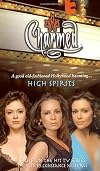
“Well, no cats, at least,” Paige muttered. “Can’t explain why, but if there were cats, too, I’d find this downright creepy. Hundred-year-old witch sitting us down with pie and a story. Add in some cats? I’d be out of here. It’d just be too much.”
When I read a Charmed entry, it’s usually to relax between more substantial reads, and/or I’m working on something of my own which drains me. These books associated with the show are meant as pure escapism, so I rate them on how show more well they fare as light and enjoyable entertainment for fans, and how well it recreates the feel of the show. The previous entry I read was one of the most enjoyable yet, and this one isn’t that far behind it. In fact, I might have enjoyed it even more than Hurricane Hex. There’s a lighter spirit — no pun intended — in High Spirits than in some entries to the series. While we get some danger, and a rather nasty demon or two get vanquished, this is mostly about an old Hollywood mansion haunted by a ghost who is quite the ham, and has a sense of humor.
The prolog is set in 1926, giving us background and context that the sisters don’t initially have. It’s nicely done, setting the tone for the story. Cut to the three sisters at the Moon Festival in San Francisco’s Chinatown. Phoebe is enthusiastic about the festival but is quickly reminded by Piper that they’re there to battle the Demon of Illusions. There is a rooftop battle the sisters win, of course, but Phoebe finds the demon’s nearly unworried promise that he’ll be avenged, a tad more disturbing than Piper and Paige, who shrug it off as typical of those being vanquished.
Paige’s very good writer/director friend — for a moment she thinks he’s going to propose to her — has just bought silent film star Robert Maxwell’s old mansion, and he is throwing a party. Kevin needs Paige’s help at the party because he actually loves Cassie — ouch! — but Cassie doesn’t know how he feels. When the sisters all attend the party, Cassie’s heartbreaking news that she’s going to marry Ryan is the least of their problems. A rather mischievous ghost is putting on some spectacular shows for his new audience. No one has really gotten hurt, and everyone thinks some new film magic is being used and premiered at the party. But then Piper is chased by a very large and menacing cat, and Phoebe begins getting impressions from the mansion itself. A diary written by someone in the prolog clues the Charmed Ones in on the fact that Maxwell isn’t a ghost at all. A sweet but klutzy witch named Emily may have been responsible for what’s happened.
An enchanted mansion, a rather sweet romance, some nefarious goings on which are non-magic related, and an engaging reason for what’s happening in the present make this very enjoyable. And don’t forget about that promise the illusion demon made. This would have made a wonderful episode, even though we had no Cole or Darryl, and really only an off-stage Leo. I loved the easy flowing narrative, and the breeziness to it. It has only one minor continuity issue regarding some early dialog, where Paige wants to address someone’s mention of hearing things; in fact that person had not said anything of the kind. Edited out, perhaps?
For fans of the show, this is a breezy and fun entry with a very nice ending. Highly recommended. show less
When I read a Charmed entry, it’s usually to relax between more substantial reads, and/or I’m working on something of my own which drains me. These books associated with the show are meant as pure escapism, so I rate them on how show more well they fare as light and enjoyable entertainment for fans, and how well it recreates the feel of the show. The previous entry I read was one of the most enjoyable yet, and this one isn’t that far behind it. In fact, I might have enjoyed it even more than Hurricane Hex. There’s a lighter spirit — no pun intended — in High Spirits than in some entries to the series. While we get some danger, and a rather nasty demon or two get vanquished, this is mostly about an old Hollywood mansion haunted by a ghost who is quite the ham, and has a sense of humor.
The prolog is set in 1926, giving us background and context that the sisters don’t initially have. It’s nicely done, setting the tone for the story. Cut to the three sisters at the Moon Festival in San Francisco’s Chinatown. Phoebe is enthusiastic about the festival but is quickly reminded by Piper that they’re there to battle the Demon of Illusions. There is a rooftop battle the sisters win, of course, but Phoebe finds the demon’s nearly unworried promise that he’ll be avenged, a tad more disturbing than Piper and Paige, who shrug it off as typical of those being vanquished.
Paige’s very good writer/director friend — for a moment she thinks he’s going to propose to her — has just bought silent film star Robert Maxwell’s old mansion, and he is throwing a party. Kevin needs Paige’s help at the party because he actually loves Cassie — ouch! — but Cassie doesn’t know how he feels. When the sisters all attend the party, Cassie’s heartbreaking news that she’s going to marry Ryan is the least of their problems. A rather mischievous ghost is putting on some spectacular shows for his new audience. No one has really gotten hurt, and everyone thinks some new film magic is being used and premiered at the party. But then Piper is chased by a very large and menacing cat, and Phoebe begins getting impressions from the mansion itself. A diary written by someone in the prolog clues the Charmed Ones in on the fact that Maxwell isn’t a ghost at all. A sweet but klutzy witch named Emily may have been responsible for what’s happened.
An enchanted mansion, a rather sweet romance, some nefarious goings on which are non-magic related, and an engaging reason for what’s happening in the present make this very enjoyable. And don’t forget about that promise the illusion demon made. This would have made a wonderful episode, even though we had no Cole or Darryl, and really only an off-stage Leo. I loved the easy flowing narrative, and the breeziness to it. It has only one minor continuity issue regarding some early dialog, where Paige wants to address someone’s mention of hearing things; in fact that person had not said anything of the kind. Edited out, perhaps?
For fans of the show, this is a breezy and fun entry with a very nice ending. Highly recommended. show less

I got this "Star Trek Classics" collection from Hoopla; it contains three Star Trek: The Next Generation comic stories from the early 2000s, originally published by Wildstorm. The first is Perchance to Dream, a four-issue miniseries; this is set shortly before Star Trek Generations (it even features the film's mismatched uniforms), with the Enterprise-D coming to a Federation member planet where the aliens have three genders—but the new governor is being attacked by terrorists show more because she only has one partner, not the traditional two. It's a good premise for a TNG episode, but it's not a great comic: way too much dialogue and narration, plus art and coloring that makes the aliens largely indistinguishable from one another. Too many side characters on the Enterprise as well. There's a clever conceit here, in that Picard is sort of like a victim of multiple personality disorder (he also has the minds of Sarek, Locutus, and Kamin in his head), but this feels a bit tacked on as the resolution to the central maguffin, as opposed to being the central conception of the story.
The second story, "Embrace the Wolf," is set during season seven of TNG, and has the Enterprise encountering Redjac, the incorporeal alien from the original series's "Wolf in the Fold" which was supposedly Jack the Ripper. The story's best part is that it has Data battling Redjac in a holodeck simulation of Victorian London, with Data as Sherlock Holmes... but it just doesn't do very much with this idea, which really ought to have been the crux of the whole plot! The art is hit or miss; the artist seems to do particularly poorly with Troi and Crusher.
Lastly, there's The Killing Shadows, where the Enterprise-E (in the year before First Contact) battle evil alien ninjas. It's kind of incoherent and ridiculous, but I sort of admired that about it; it felt like a comic book in some ways, not just an attempt to render an episode on the page. But unfortunately it got dumber as it went on; I found it hard to believe that Riker could defeat a bunch of alien superninjas just because he stole their outfit. The inclusion of Sela is totally random. And I didn't really follow the climax at all.
So, yeah, "classics" may be a bit of an exaggeration, but as a Hoopla borrow this was fine. Glad I didn't pay for the print edition, though. show less
The second story, "Embrace the Wolf," is set during season seven of TNG, and has the Enterprise encountering Redjac, the incorporeal alien from the original series's "Wolf in the Fold" which was supposedly Jack the Ripper. The story's best part is that it has Data battling Redjac in a holodeck simulation of Victorian London, with Data as Sherlock Holmes... but it just doesn't do very much with this idea, which really ought to have been the crux of the whole plot! The art is hit or miss; the artist seems to do particularly poorly with Troi and Crusher.
Lastly, there's The Killing Shadows, where the Enterprise-E (in the year before First Contact) battle evil alien ninjas. It's kind of incoherent and ridiculous, but I sort of admired that about it; it felt like a comic book in some ways, not just an attempt to render an episode on the page. But unfortunately it got dumber as it went on; I found it hard to believe that Riker could defeat a bunch of alien superninjas just because he stole their outfit. The inclusion of Sela is totally random. And I didn't really follow the climax at all.
So, yeah, "classics" may be a bit of an exaggeration, but as a Hoopla borrow this was fine. Glad I didn't pay for the print edition, though. show less
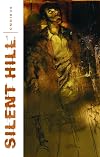
Cathartic Reading: As a longtime Silent Hill fan (since the original) I needed a fix to overcome the disappointing issues plaguing game publisher Konami: Silent Hills for PS4 promised to be awesome (involvement with Guillermo del Toro and Norman Reedus-walking dead actor). Then it got abruptly cancelled. I turned to Silent Hill Omnibus and Silent Hill Omnibus, Volume 2 to satiate my need to roam thru a ghost town.
The Silent Hill Omnibus omnibus comprises 5 installments of the comic show more adaptions for the Silent Hill game franchise from Konami. The survival horror games are known for their Lovecraftian style of horror (weird, nondescript nightmares emphasized over sudden shock); typically a visitor goes to the town with serious emotional baggage, explores a ghost town, and comes face to face with realized version of their nightmares....that is the safe part of the workflow. Then visitors (gameplayers/readers) are taken to deeper levels of hell in which they yearn to revisit the haunting ghost town for safety. What is "real", "imagined", or "remembered" is never clear.
The comics are generally true to the ambiance. They introduce new characters, some of which mirror those in the games (i.e., police officers, a young girl). A few stories stretch the mood to include shoot-zombies-up gameplay vibes (ala Resident Evil) or B-rated horror (gratituous cheerleaders).
The art is likewise ambiguous; like the game's notorious fog that hides details, the art is not always clear. For Dying Inside (the fist chapter) this worked okay; by the end of the omnibus the art & story became confusing (too many characters that looked liked one another). The idea of intermixing various characters' memories, haunts, and stories was nice at first... but the story complexity diverged so much that the final story (which aims to bring closure to it all) remains confusing.
On the whole, the omnibus was satisfying and true enough for me to launch into Vol 2.. It's recommended to other Silent Hill fans needing a fix between games. show less
The Silent Hill Omnibus omnibus comprises 5 installments of the comic show more adaptions for the Silent Hill game franchise from Konami. The survival horror games are known for their Lovecraftian style of horror (weird, nondescript nightmares emphasized over sudden shock); typically a visitor goes to the town with serious emotional baggage, explores a ghost town, and comes face to face with realized version of their nightmares....that is the safe part of the workflow. Then visitors (gameplayers/readers) are taken to deeper levels of hell in which they yearn to revisit the haunting ghost town for safety. What is "real", "imagined", or "remembered" is never clear.
The comics are generally true to the ambiance. They introduce new characters, some of which mirror those in the games (i.e., police officers, a young girl). A few stories stretch the mood to include shoot-zombies-up gameplay vibes (ala Resident Evil) or B-rated horror (gratituous cheerleaders).
The art is likewise ambiguous; like the game's notorious fog that hides details, the art is not always clear. For Dying Inside (the fist chapter) this worked okay; by the end of the omnibus the art & story became confusing (too many characters that looked liked one another). The idea of intermixing various characters' memories, haunts, and stories was nice at first... but the story complexity diverged so much that the final story (which aims to bring closure to it all) remains confusing.
On the whole, the omnibus was satisfying and true enough for me to launch into Vol 2.. It's recommended to other Silent Hill fans needing a fix between games. show less
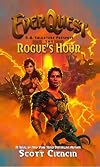
The magic of Rogue's Hour starts within a few words of R. A. Salvatore's forward, in which he recounts his first experience playing the online game upon which the novel is based. As one of the legions of players of the original Everquest, Salvatore encapsulated the novelty of one's experience in Norrath. Unfortunately, the novel started a few pages later and ruined everything.
Given incomprehensible mess that this book is, it's hard to believe that Ciencin has written 60 novels. The show more stuttering, ornate plot defies description. Roughly speaking, it deals with the attempts of the titular rogue's attempt to regain his memory. Threads and characters are shuffled rapidly, as if the author is trying to disorient the reader and hide the shoddy workmanship. Characterization is horrible as every single character fails to behave consistently, especially the token woman, Bronwynn. The copious fight sequences are incoherent. Characters repeatedly are killed, only to pop up again when necessary. Even the basic art of description fails Ciencin repeatedly, as he repeats stock cliches and lazily peppers Everquest lore into the story instead of drawing a complete picture. I fear readers unfamiliar with Everquest will be completely lost.
I suppose if one digs through those Everquest forums which are still existent, plenty of fan fiction could be found. Back in the heyday, the best ten or five percent of it would put this novel to shame. show less
Given incomprehensible mess that this book is, it's hard to believe that Ciencin has written 60 novels. The show more stuttering, ornate plot defies description. Roughly speaking, it deals with the attempts of the titular rogue's attempt to regain his memory. Threads and characters are shuffled rapidly, as if the author is trying to disorient the reader and hide the shoddy workmanship. Characterization is horrible as every single character fails to behave consistently, especially the token woman, Bronwynn. The copious fight sequences are incoherent. Characters repeatedly are killed, only to pop up again when necessary. Even the basic art of description fails Ciencin repeatedly, as he repeats stock cliches and lazily peppers Everquest lore into the story instead of drawing a complete picture. I fear readers unfamiliar with Everquest will be completely lost.
I suppose if one digs through those Everquest forums which are still existent, plenty of fan fiction could be found. Back in the heyday, the best ten or five percent of it would put this novel to shame. show less
Lists
Awards

You May Also Like


Associated Authors
Statistics
- Works
- 117
- Also by
- 8
- Members
- 6,875
- Popularity
- #3,558
- Rating
- 3.3
- Reviews
- 63
- ISBNs
- 261
- Languages
- 14
- Favorited
- 2