
Christopher Bonanos
Author of Instant: The Story of Polaroid
Works by Christopher Bonanos
Associated Works
Tagged
Common Knowledge
- Canonical name
- Bonanos, Christopher
- Birthdate
- 1969
- Gender
- male
- Nationality
- USA
- Associated Place (for map)
- USA
Members
Reviews
Interesting, but is it art?
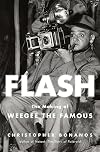
Questions of that sort, often asked about the work of Norman Rockwell, were also asked about that of his contemporary, photographer Arthur Fellig, better known as Weegee. The question is answered in the affirmative in the excellent biography “Flash: The Making of Weegee the Famous” by Christopher Bonanos.
Usher Fellig was a 10-year-old Jewish immigrant when he came through Ellis Island in 1909. He soon changed his name to Arthur, but later he called himself show more Weegee, his spelling of Ouija, because of his apparent clairvoyance in arriving at the scene of murders and fires so soon after they happened. He worked as a freelance news photographer, selling his photos, most of them taken at night with flashbulbs, to whichever of New York’s many newspapers at the time would buy them. He insisted that his name be placed in the credit line, helping to establish his fame, as well doing a favor for generations of newspaper photographers to follow.
Weegee’s photos were stark and stunning, often oddly humorous. He had a knack for including signs in the background as if in commentary on the scene. Some of best photos showed not a murder victim nor a fire but the faces of those looking at the murder victim or the fire. He was not always the most honest of news photographers, as when he placed a manikin among a crowd of onlookers at a fire.
As his fame grew and as he got older, Weegee sought easier ways to make a living. He took assignments for Life and Look magazines, he published collections of his photographs, he spent time in Hollywood trying to get into films (you might spot him in “Every Girl Should Be Married,” among other movies) and took distorted portraits of famous people. He even had a few shows in art galleries, but the art world never really accepted him. He was too coarse, too common, too vulgar.
Only after his death, as with Norman Rockwell, did the artistry in his best work become apparent. show less
Questions of that sort, often asked about the work of Norman Rockwell, were also asked about that of his contemporary, photographer Arthur Fellig, better known as Weegee. The question is answered in the affirmative in the excellent biography “Flash: The Making of Weegee the Famous” by Christopher Bonanos.
Usher Fellig was a 10-year-old Jewish immigrant when he came through Ellis Island in 1909. He soon changed his name to Arthur, but later he called himself show more Weegee, his spelling of Ouija, because of his apparent clairvoyance in arriving at the scene of murders and fires so soon after they happened. He worked as a freelance news photographer, selling his photos, most of them taken at night with flashbulbs, to whichever of New York’s many newspapers at the time would buy them. He insisted that his name be placed in the credit line, helping to establish his fame, as well doing a favor for generations of newspaper photographers to follow.
Weegee’s photos were stark and stunning, often oddly humorous. He had a knack for including signs in the background as if in commentary on the scene. Some of best photos showed not a murder victim nor a fire but the faces of those looking at the murder victim or the fire. He was not always the most honest of news photographers, as when he placed a manikin among a crowd of onlookers at a fire.
As his fame grew and as he got older, Weegee sought easier ways to make a living. He took assignments for Life and Look magazines, he published collections of his photographs, he spent time in Hollywood trying to get into films (you might spot him in “Every Girl Should Be Married,” among other movies) and took distorted portraits of famous people. He even had a few shows in art galleries, but the art world never really accepted him. He was too coarse, too common, too vulgar.
Only after his death, as with Norman Rockwell, did the artistry in his best work become apparent. show less
 This review was written for LibraryThing Early Reviewers.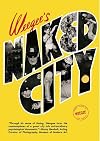
Weegee’s noir classic on the secret life of New York, now in a beautifully printed new edition
Weegee wandered the streets of 1940s New York at night looking for lovers, corpses and criminals to shoot for tabloid readers who “had to have their daily blood bath and sex potion to go with their breakfast” (as Weegee put it with characteristic flair). His images crackle with visual puns, blinding flashes and complex compositions; they display the bawdy sensationalism of the tabloids they show more were shot for and the stylishness of the film noir cinema that took inspiration from them.
With Naked City, his first publication, Weegee gave his images the photobook treatment. Weegee’s eye for surprising juxtapositions and the minutiae of city life is in full force in the images chosen and their inventive, playful sequencing, all narrated in the photographer’s own distinctive voice. Naked City is Weegee at his wisecracking best, and it is here republished in a beautifully printed new edition. Including texts by New York Magazine City Editor Christopher Bonanos and International Center of Photography Weegee specialist Christopher George, Naked City refreshes a photo classic.
Weegee, born Usher Fellig (1899–1968), started working in 1935 as a freelance news photographer specializing in nighttime scenes. He lived opposite police headquarters, installed a police radio in his car and had a knack for being the first on the scene (supposedly earning his nickname for this nearly psychic tendency). In addition to selling photos to local and national publications, Weegee published them in several books, including Naked City (1945), Weegee’s People (1946) and Naked Hollywood (1953). show less
Weegee wandered the streets of 1940s New York at night looking for lovers, corpses and criminals to shoot for tabloid readers who “had to have their daily blood bath and sex potion to go with their breakfast” (as Weegee put it with characteristic flair). His images crackle with visual puns, blinding flashes and complex compositions; they display the bawdy sensationalism of the tabloids they show more were shot for and the stylishness of the film noir cinema that took inspiration from them.
With Naked City, his first publication, Weegee gave his images the photobook treatment. Weegee’s eye for surprising juxtapositions and the minutiae of city life is in full force in the images chosen and their inventive, playful sequencing, all narrated in the photographer’s own distinctive voice. Naked City is Weegee at his wisecracking best, and it is here republished in a beautifully printed new edition. Including texts by New York Magazine City Editor Christopher Bonanos and International Center of Photography Weegee specialist Christopher George, Naked City refreshes a photo classic.
Weegee, born Usher Fellig (1899–1968), started working in 1935 as a freelance news photographer specializing in nighttime scenes. He lived opposite police headquarters, installed a police radio in his car and had a knack for being the first on the scene (supposedly earning his nickname for this nearly psychic tendency). In addition to selling photos to local and national publications, Weegee published them in several books, including Naked City (1945), Weegee’s People (1946) and Naked Hollywood (1953). show less
Arthur Fellig a.k.a. “Weegee the Famous” was a freelance photographer who made his inimitable mark during the 1930s and 1940s heyday of New York City newspaper journalism. Christopher Bonanos’s Flash: The Making of Weegee the Famous is an excellent biography of Fellig’s life and career, evoking the grittiness of the urban crime beat he covered through the author’s atmospheric “film noir” aesthetic. Organized crime, murders, rapes, car crashes, hit-and-runs, fires, arrests, and show more other assorted scenes of Gotham’s lurid underbelly - Weegee had a knack for being there at the scene and getting the best shot.
An innovator in the techniques of early flash photography and unabashed self-promoter, he sought ways to get his name into the story and reinforce his stature as the city’s go-to photojournalist. With more experience, Weegee sought pictures the went beyond the standard fare, some attributable to his keen photographer’s eye, and occasionally some the result of some creative repositioning of murder victims or smashed vehicles with the aid of complicit police officers or tow truck operators; and sometimes the fabricated scene is only a very subtle adjustment, such as the fedora of the deceased tilted just so. And his evocative perp shots always seemed to capture the person under the utmost stress. His fire photos focused less on the flames and more on the anguish and human drama of the victims: those displaced by the blaze or those who lost loved ones. Weegee gradually focused less on crime scenes and more on “slice of life” photos and reaction shots - or “watching the watchers” as he put it.
By the 1950’s, after the publication of two books of his photos, both well received by the public and critics alike, his modest celebrity status began to wane. There was an unsuccessful foray to Hollywood, where he failed to make any meaningful inroads into a desired film career. And then an odd devotion of his efforts into distortion photography wherein his subjects’ faces and torsos were comically or bizarrely distorted or multiplied; though these photo-caricatures achieved mild success at first, there was little commercial or lasting artistic value, and the novelty quickly wore off. Weegee’s career puttered along with some odd shoots and movie projects. And his last major contribution comes inadvertently, as the inspiration for Peter Sellers weird high-pitched voice in the classic film Dr. Strangelove is none other than Weegee himself.
The final chapter recounts the handful of posthumous gallery retrospectives that occurred in the years following Weegee’s death in 1969, but Bonanos offers no grandiose appreciation of his contribution. Rather, in a single paragraph, the author fittingly notes that Weegee’s early groundbreaking photographic output, like other things once considered disposable, such as comic books, is in retrospect indeed substantive, powerful, and evocative. Through this insightful bio, Bonanos gives his subject due credit, elevating him from a mere footnote or afterthought to rightful status as a worthy contributor in the history of photojournalism. show less
An innovator in the techniques of early flash photography and unabashed self-promoter, he sought ways to get his name into the story and reinforce his stature as the city’s go-to photojournalist. With more experience, Weegee sought pictures the went beyond the standard fare, some attributable to his keen photographer’s eye, and occasionally some the result of some creative repositioning of murder victims or smashed vehicles with the aid of complicit police officers or tow truck operators; and sometimes the fabricated scene is only a very subtle adjustment, such as the fedora of the deceased tilted just so. And his evocative perp shots always seemed to capture the person under the utmost stress. His fire photos focused less on the flames and more on the anguish and human drama of the victims: those displaced by the blaze or those who lost loved ones. Weegee gradually focused less on crime scenes and more on “slice of life” photos and reaction shots - or “watching the watchers” as he put it.
By the 1950’s, after the publication of two books of his photos, both well received by the public and critics alike, his modest celebrity status began to wane. There was an unsuccessful foray to Hollywood, where he failed to make any meaningful inroads into a desired film career. And then an odd devotion of his efforts into distortion photography wherein his subjects’ faces and torsos were comically or bizarrely distorted or multiplied; though these photo-caricatures achieved mild success at first, there was little commercial or lasting artistic value, and the novelty quickly wore off. Weegee’s career puttered along with some odd shoots and movie projects. And his last major contribution comes inadvertently, as the inspiration for Peter Sellers weird high-pitched voice in the classic film Dr. Strangelove is none other than Weegee himself.
The final chapter recounts the handful of posthumous gallery retrospectives that occurred in the years following Weegee’s death in 1969, but Bonanos offers no grandiose appreciation of his contribution. Rather, in a single paragraph, the author fittingly notes that Weegee’s early groundbreaking photographic output, like other things once considered disposable, such as comic books, is in retrospect indeed substantive, powerful, and evocative. Through this insightful bio, Bonanos gives his subject due credit, elevating him from a mere footnote or afterthought to rightful status as a worthy contributor in the history of photojournalism. show less
This review was written for LibraryThing Early Reviewers.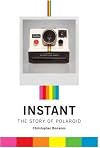
Before Apple, before Google, there was Edwin Land's Polaroid. Christopher Bonanos tells the story of the rise and fall of this fascinating company in a beautifully-designed and profusely-illustrated account, Instant: The Story of Polaroid (Princeton Architectural Press, 2012). Bonanos explores Land's vision for his company, his somewhat, shall we say, unconventional philosophies and methods for getting his products into the hands of consumers, and then what became of Polaroid as digital show more photography largely pulled the rug out from under the analog instant-photography market.
Bonanos also provides a glimpse at the full Polaroid picture, which didn't involve just consumer-based instant photography but all sorts of other projects over the years as well: a room-sized camera for taking photographs of artworks, polarized sunglasses and goggles, a sort of motion-picture camera called Polavision ... and he recounts some of the many ways in which professional photographers and artists made us of and experimented with Polaroid cameras and film to create beautiful, iconic images.
Finally, the book closes with the sad chapter of Polaroid's collapse and bankruptcy, followed by the erstwhile efforts of many enthusiasts to continue the production and distribution of film that will create those distinctive Polaroid pictures.
Not at all a dry, corporate history: this is a lively biography of a company, its people, and its products. Highly enjoyable. show less
Bonanos also provides a glimpse at the full Polaroid picture, which didn't involve just consumer-based instant photography but all sorts of other projects over the years as well: a room-sized camera for taking photographs of artworks, polarized sunglasses and goggles, a sort of motion-picture camera called Polavision ... and he recounts some of the many ways in which professional photographers and artists made us of and experimented with Polaroid cameras and film to create beautiful, iconic images.
Finally, the book closes with the sad chapter of Polaroid's collapse and bankruptcy, followed by the erstwhile efforts of many enthusiasts to continue the production and distribution of film that will create those distinctive Polaroid pictures.
Not at all a dry, corporate history: this is a lively biography of a company, its people, and its products. Highly enjoyable. show less
Awards

You May Also Like


Associated Authors
Statistics
- Works
- 9
- Also by
- 1
- Members
- 337
- Popularity
- #70,619
- Rating
- 4.1
- Reviews
- 15
- ISBNs
- 13
- Languages
- 1
