
Sally Benson (1897–1972)
Author of Shadow of a Doubt [1943 film]
About the Author
Image credit: Robert McAfee
Courtesy of the NYPL Digital Gallery (image use requires permission from the New York Public Library)
Courtesy of the NYPL Digital Gallery (image use requires permission from the New York Public Library)
Works by Sally Benson
The Overcoat 2 copies
Little Woman {short story} 2 copies
Profession: Housewife {short story} 2 copies
Home Atmosphere {short story} 2 copies
New Leaf 1 copy
I tvilens skygge 1 copy
Love thy neighbour 1 copy
People Are Fascinating 1 copy
Associated Works
The Illustrated Treasury of Children's Literature, Volumes 1-2 (1955) — Contributor — 523 copies, 4 reviews
Alfred Hitchcock: The Masterpiece Collection [14 films 1942-1976] (1942) — Writer — 116 copies, 2 reviews
Modern Short Stories — Contributor — 3 copies
The Best Short Stories of 1935 and the Yearbook of the American Short Story (1935) — Contributor — 2 copies
Tagged
Common Knowledge
- Legal name
- Smith, Sara (birth)
- Other names
- Evarts, Esther
- Birthdate
- 1897-09-03
- Date of death
- 1972-07-19
- Gender
- female
- Occupations
- journalist
screenwriter
short story writer - Organizations
- The New Yorker
- Short biography
- Sally Benson was born Sara Smith in St. Louis, Missouri. Her family moved to New York, where she grew up and attended the Horace Mann School. She studied dance and started working at age 17. Two years later, she married Reynolds Benson, with whom she had a daughter; the couple then divorced. She began her literary career writing articles and film reviews for newspapers and magazines, including interviews with the rich and famous. Between 1929 and 1941, she wrote for The New Yorker, sometimes using the pen name Esther Evarts. Her short stories "The Overcoat" (1935) and "Suite 2049" (1936) won O. Henry Awards. In 1936, she published her first collection of stories, People Are Fascinating, followed by a further collection, Emily (1938). She also wrote a popular series of stories about Judy Graves, a gauche adolescent girl, which were collected in book form under the title Junior Miss (1941). Junior Miss was adapted by Jerome Chodorov and Joseph Fields into a comedic play for Broadway. A movie version was released in 1945, followed by a television musical and a radio series.
Benson's most famous work was Meet Me in St. Louis (1942), derived from a series of vignettes first published in The New Yorker under the title 5135 Kensington Avenue, the address of her birth and early childhood. Benson worked on the screenplay for the film adaptation starring Judy Garland made by MGM in 1944, but her draft was never used; however, she was credited as the original author. Her more successful script writing efforts included Shadow of a Doubt (1943), Anna and the King of Siam (1946), No Man of Her Own (1950), Viva Las Vegas (1964), and The Singing Nun (1966). Benson also adapted the novel Seventeen by Booth Tarkington into a successful Broadway musical in 1951. - Nationality
- USA
- Birthplace
- St. Louis, Missouri, USA
- Places of residence
- St. Louis, Missouri, USA
New York, New York, USA
Los Angeles, California, USA - Place of death
- Woodland Hills, California, USA
- Associated Place (for map)
- USA
Members
Reviews
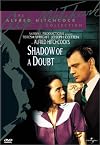
Lovely Teresa Wright shines in Alfred Hitchcock’s tale of darkness and evil coming to stay in Santa Rosa, California. A story by Gordon McDonnell was adapted for the screen by Thorton Wilder, Alma Reville, and Sally Benson, and this slice of Americana is played out perfectly by a wonderful cast.
Teresa Wright is the bored young daughter of Emma (Patricia Collinge) and Joseph (Henry Travers) Newton. Life for her in the small town of Santa Rosa has become boring for the wholesome American show more girl looking to stretch her wings. Wright’s “Charlie” is the very picture of small town innocence. When her Uncle and namesake (Joseph Cotten) blows into town, it is the catalyst for the change she desires. Hitchcock has already shown the audience by this time that something is not quite right about the charming Uncle Charlie, so the viewer already knows from the get-go what’s going on in this film. The special bond between Charlie and her uncle and their unusual connection is fully explored by the director in the happy and charming early moments that follow Cotten's arrival in Santa Rosa.
Hitchcock quickly begins shading this portrait in grey, however. Charlie’s adoration of her uncle borders on a crush, leaving her open and vulnerable to anything Charlie wants. Here the famous director creates some almost uncomfortable scenes, giving the viewer the impression that at any moment Cotton might just take the smiling and adoring Charlie in his arms and kiss her. And for her part, Charlie might remain passive, so unsure is she of her own feelings. But strange behavior in her uncle and the attention of a government agent after him who falls in love with young Charlie will change everything, as Uncle Charlie’s spell is broken when his warped and twisted view of the world is finally revealed. The tune he whistles might be the key to his long absence.
Hume Cronyn steals every scene he is in as Herbie. Long talks on the porch, attempting to devise the perfect murder plan for amusement is ironic and darkly humorous considering the real evil right under their noses. Charlie can’t risk destroying her weak mother, but luckily she has Agent Jack Graham’s (Macdonald Carey) number. Uncle Charlie, however, has no intention of going to the gallows…
This is both a beautiful portrait of small-town America and a suspenseful thriller. Cotten, always solid yet often underrated, underplays his role to marvelous effect. Teresa Wright is simply wonderful in this Hitchcock masterpiece, the very picture of confused innocence. A film that must be seen by all, especially Hitchcock devotees. show less
Teresa Wright is the bored young daughter of Emma (Patricia Collinge) and Joseph (Henry Travers) Newton. Life for her in the small town of Santa Rosa has become boring for the wholesome American show more girl looking to stretch her wings. Wright’s “Charlie” is the very picture of small town innocence. When her Uncle and namesake (Joseph Cotten) blows into town, it is the catalyst for the change she desires. Hitchcock has already shown the audience by this time that something is not quite right about the charming Uncle Charlie, so the viewer already knows from the get-go what’s going on in this film. The special bond between Charlie and her uncle and their unusual connection is fully explored by the director in the happy and charming early moments that follow Cotten's arrival in Santa Rosa.
Hitchcock quickly begins shading this portrait in grey, however. Charlie’s adoration of her uncle borders on a crush, leaving her open and vulnerable to anything Charlie wants. Here the famous director creates some almost uncomfortable scenes, giving the viewer the impression that at any moment Cotton might just take the smiling and adoring Charlie in his arms and kiss her. And for her part, Charlie might remain passive, so unsure is she of her own feelings. But strange behavior in her uncle and the attention of a government agent after him who falls in love with young Charlie will change everything, as Uncle Charlie’s spell is broken when his warped and twisted view of the world is finally revealed. The tune he whistles might be the key to his long absence.
Hume Cronyn steals every scene he is in as Herbie. Long talks on the porch, attempting to devise the perfect murder plan for amusement is ironic and darkly humorous considering the real evil right under their noses. Charlie can’t risk destroying her weak mother, but luckily she has Agent Jack Graham’s (Macdonald Carey) number. Uncle Charlie, however, has no intention of going to the gallows…
This is both a beautiful portrait of small-town America and a suspenseful thriller. Cotten, always solid yet often underrated, underplays his role to marvelous effect. Teresa Wright is simply wonderful in this Hitchcock masterpiece, the very picture of confused innocence. A film that must be seen by all, especially Hitchcock devotees. show less
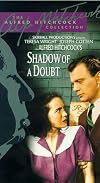
Made when the world was at war, I find it especially disturbing to realize that evil could and can be anywhere. Even sitting around your own dining room table. I wonder, was there an incestuous connection between the two Charlies? You definitely know that Joseph Cotten harbors very inappropriate feelings towards young Charlie. I think that this was more than just implied. There was definitely a lot wrong in that family below the surface. Anyway -- splendid solid flick, extremely well done.
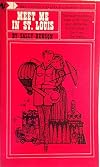
Love this book, which is nothing like the movie. Reading it again for the nth time and still charmed by it. Amusing family stories but occasionally there's something that gives it a little more edge - I know when I first read it in junior high, I didn't notice the paragraph where the grandfather remembers his time in Andersonville prison. Which makes you see him as more than the quirky grandpa who enjoys teasing his granddaughters.

Those stories were originally published in the New Yorker, and subsequently turned into a Broadway play which ran for two years and then was transformed into a movie, radio series and tv show, as well as being the inspiration for Junior Mints candy. All this would lead one to believe that Junior MIss will be a light, cheerful book all about the magic of being a young lady. This illusion is destroyed 4 pages in, when Judy, the heroine, is described as "tall for her age and heavily show more built...entirely shapeless...her face had a ghastly yellow tinge...her dress was supposed to hang gracefully but instead looked as if she had been stuffed into it."
I'm not saying I couldn't identify with Judy on the basis of her appearance. But when a writer goes out of her way to point out that her main character is unattractive, and then has the main character constantly obsess about nail polish, facials, beauty tips from magazines, and growing up as quickly as possible so she can wear stockings, perfume and "perfectly stunning" cruise clothes, the effect is a little depressing.
Did sophisticated New Yorker readers in 1940 find this soothing? Did they think Judy and Lois amusing creations just like their own daughters? Did the irritatingly mournful comedy of the stories make them chuckle? I can't really answer that, any more than I can decide if this is a book you're supposed to enjoy or one to send a chill up your spine.
Reviewed on my blog The Paris Hat: http://theparishat.blogspot.com/2010/06/little-monsters.html show less
I'm not saying I couldn't identify with Judy on the basis of her appearance. But when a writer goes out of her way to point out that her main character is unattractive, and then has the main character constantly obsess about nail polish, facials, beauty tips from magazines, and growing up as quickly as possible so she can wear stockings, perfume and "perfectly stunning" cruise clothes, the effect is a little depressing.
Did sophisticated New Yorker readers in 1940 find this soothing? Did they think Judy and Lois amusing creations just like their own daughters? Did the irritatingly mournful comedy of the stories make them chuckle? I can't really answer that, any more than I can decide if this is a book you're supposed to enjoy or one to send a chill up your spine.
Reviewed on my blog The Paris Hat: http://theparishat.blogspot.com/2010/06/little-monsters.html show less
Lists
Awards


You May Also Like


Associated Authors
Statistics
- Works
- 22
- Also by
- 22
- Members
- 742
- Popularity
- #34,227
- Rating
- 3.9
- Reviews
- 14
- ISBNs
- 35
- Languages
- 1
- Favorited
- 1
