
Barry Forshaw
Author of The Rough Guide to Crime Fiction
About the Author
Barry Forshaw is the UK's principal expert on crime fiction and writes extensively on film. His Death in a Cold Climate: A Guide to Scandinavian Crime Fiction was praised by such writers as Val McDermid, Mark Lawson an d Hkan Nesser; his other work includes British Crime Writing: An Encyclopedia show more and The Rough Guide to Crime Fiction, along with books on Italian cinema, a study of Thomas Harris and The Silence of the Lambs and the first biography of Stieg Larsson. He has written for various national newspapers, edits Crime Time, and is a talking head for ITV and BBC TV documentaries. He has been Vice Chair of the Crime Writer's Association. show less
Series
Works by Barry Forshaw
Death in a Cold Climate: A Guide to Scandinavian Crime Fiction (Crime Files) (2012) 30 copies, 3 reviews
Brit Noir: The Pocket Essential Guide to British Crime Fiction, Film & TV (Pocket Essential series) (2016) 21 copies, 1 review
Historical Noir: The Pocket Essential Guide to Fiction, Film & TV (Pocket Essential series) (2018) 10 copies
Associated Works
The Dark Side 248 — Contributor — 1 copy
The Dark Side 240 — Contributor — 1 copy
The Age Of Thrills No. 04 — Contributor — 1 copy
The Fantastic Fifties No. 18 — Contributor — 1 copy
The Dark Side 247 — Contributor — 1 copy
The Fantastic Fifties No. 17 — Contributor — 1 copy
The Sensational Sixties #07 — Contributor — 1 copy
The Age Of Thrills No. 03 — Contributor — 1 copy
Tagged
Common Knowledge
- Birthdate
- 1947-05-27
- Gender
- male
- Occupations
- broadcaster
journalist
author - Nationality
- UK
- Associated Place (for map)
- UK
Members
Reviews
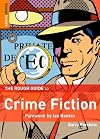
This is certainly a very comprehensive book. It was reviewed by Margaret at the blog "BooksPlease", and I thought it would be a good source for some new mystery reads, even if I am already suffering under the weight of a massive TBR list already. And since I'd like to think I'm fairly knowledgeable about the genre, I thought it would be neat to see what recommended books I'd already read, and what the book had to say about my favourite authors (not to mention what books would be recommended show more for said authors).
There are a total of 15 chapters, ranging from the origins of crime fiction to crime in translation, with chapters chronicling gangsters, police procedurals, amateurs, the world of espionage, the golden age and more. Along the way the big names receive their own separate sidebars and a "top five" list of best books, with mentions of noteworthy film and TV adaptations (or ones to steer clear of).
Interestingly, the top five for a given author would sometimes not include the book being showcased for a particular author (for example, the "showcase book" for the Falco series by Lindsey Davis was The Body in the Bathhouse, but the top five were The Silver Pigs, The Iron Hand of Mars, Time to Depart, The Accusers, and Saturnalia). This was part of a rather odd trend in some of the blurbs where the guide would be highlighting a book by someone, for example Peter Robinson, and say "While this book is not as assured as In a Dry Season, it does X and Y well." If the book you're recommending is not as good as another book by that author, why not just recommend that book? I can understand not wanting to hype a book to death for fear of artificially raising expectations, but if you're going to recommend a book as a starting point for an author, stand behind it completely.
And speaking of the recommendations, some of them were kind of off-kilter for me. Perhaps there is something wrong with me, but I would not necessarily have recommended these titles for these authors:
- A Surfeit of Lampreys, by Ngaio Marsh: This one dragged a bit for me. Not sure what I would have recommended in its place -- Marsh is one of those authors where personal plot preference is paramount -- but I seem to recall enjoying Photo Finish.
- Voices, by Arnaldur Indridason: Good, yes, but Silence of the Grave is better, in my mind.
- The Man Who Went Up in Smoke, by Maj Sjowall and Per Wahloo: Perhaps I was in the wrong mood for this one, but Martin Beck couldn't do very much with the investigation in this one. The Laughing Policeman had a more interesting plot.
- Firewall, by Henning Mankell: I would have thought Sidetracked would be a more obvious choice (and indeed is my go-to recommendation for Wallander).
Of course, the point of such guides is to be a starting point for discussion...
Another thing that kind of rubbed me the wrong way was the writing style. Breathless superlatives, lit-crit jargon littered with borrowed foreign words and expressions (sine qua non, fin de siècle, zeitgeist, métier), and lots of big words and overused adjectives (how many detectives can be considered "doughty"?). Perhaps this book is not meant to be read in a marathon session or three for that reason. Yes, there is some element of hyping with all of these books, but it wears on you after a while.
But overall, I enjoyed seeing what the author put forward as the best examples of the genre, and while this book hasn't really added too many new authors to my list, it's reminded me of old ones I used to read more often: Minette Walters, James Lee Burke, Tom Clancy, John le Carré... and it's also sparked an interest in revisiting Dostoevsky. And I have a couple of new series/authors to check out but haven't settled on a particular title yet (Lindsey Davis, Edward Marston's Domesday series).
In short, if you're looking for new recommendations on the mystery front, this is a good place to start. Just take your time with it. show less
There are a total of 15 chapters, ranging from the origins of crime fiction to crime in translation, with chapters chronicling gangsters, police procedurals, amateurs, the world of espionage, the golden age and more. Along the way the big names receive their own separate sidebars and a "top five" list of best books, with mentions of noteworthy film and TV adaptations (or ones to steer clear of).
Interestingly, the top five for a given author would sometimes not include the book being showcased for a particular author (for example, the "showcase book" for the Falco series by Lindsey Davis was The Body in the Bathhouse, but the top five were The Silver Pigs, The Iron Hand of Mars, Time to Depart, The Accusers, and Saturnalia). This was part of a rather odd trend in some of the blurbs where the guide would be highlighting a book by someone, for example Peter Robinson, and say "While this book is not as assured as In a Dry Season, it does X and Y well." If the book you're recommending is not as good as another book by that author, why not just recommend that book? I can understand not wanting to hype a book to death for fear of artificially raising expectations, but if you're going to recommend a book as a starting point for an author, stand behind it completely.
And speaking of the recommendations, some of them were kind of off-kilter for me. Perhaps there is something wrong with me, but I would not necessarily have recommended these titles for these authors:
- A Surfeit of Lampreys, by Ngaio Marsh: This one dragged a bit for me. Not sure what I would have recommended in its place -- Marsh is one of those authors where personal plot preference is paramount -- but I seem to recall enjoying Photo Finish.
- Voices, by Arnaldur Indridason: Good, yes, but Silence of the Grave is better, in my mind.
- The Man Who Went Up in Smoke, by Maj Sjowall and Per Wahloo: Perhaps I was in the wrong mood for this one, but Martin Beck couldn't do very much with the investigation in this one. The Laughing Policeman had a more interesting plot.
- Firewall, by Henning Mankell: I would have thought Sidetracked would be a more obvious choice (and indeed is my go-to recommendation for Wallander).
Of course, the point of such guides is to be a starting point for discussion...
Another thing that kind of rubbed me the wrong way was the writing style. Breathless superlatives, lit-crit jargon littered with borrowed foreign words and expressions (sine qua non, fin de siècle, zeitgeist, métier), and lots of big words and overused adjectives (how many detectives can be considered "doughty"?). Perhaps this book is not meant to be read in a marathon session or three for that reason. Yes, there is some element of hyping with all of these books, but it wears on you after a while.
But overall, I enjoyed seeing what the author put forward as the best examples of the genre, and while this book hasn't really added too many new authors to my list, it's reminded me of old ones I used to read more often: Minette Walters, James Lee Burke, Tom Clancy, John le Carré... and it's also sparked an interest in revisiting Dostoevsky. And I have a couple of new series/authors to check out but haven't settled on a particular title yet (Lindsey Davis, Edward Marston's Domesday series).
In short, if you're looking for new recommendations on the mystery front, this is a good place to start. Just take your time with it. show less
A very uneven collection, mostly of essays which don't seem to have much consistency in terms of content; some of the "case studies" are incisive and enlightening, some are barely more than summaries of the source material, others are bordering on puff pieces trying to sell that material to us. The editor's own contributions are among the weakest and his set of largely vacuous interviews seem self indulgent and out of place. The "reports" that form the last section are the most insightful show more and challenging efforts and salvage the book somewhat although it still mostly feels like it was put together so the editor could (I imagine) make it recommended reading on his MA crime fiction courses. show less
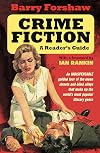
Excellent guide for crime fiction. I’m sure there are some omissions, but that would be like saying ’if you’re not here put your hand up’.
Nicely organised by subject matter with alphabetical indices of authors and titles mentioned at the end.
Small sections on movies made from books-not really necessary, but of some interest.
Definitely weighted to 21st century offerings, but does have some of the 20th century key works.
The only disadvantage is the long list of titles and authors I show more now have to add to my WTR list!
Not a book that you necessarily read from cover to cover…but I guess you could if you wanted. show less
Nicely organised by subject matter with alphabetical indices of authors and titles mentioned at the end.
Small sections on movies made from books-not really necessary, but of some interest.
Definitely weighted to 21st century offerings, but does have some of the 20th century key works.
The only disadvantage is the long list of titles and authors I show more now have to add to my WTR list!
Not a book that you necessarily read from cover to cover…but I guess you could if you wanted. show less
Brit noir : the pocket essential guide to crime fiction, film & TV of the British Isles by Barry Forshaw
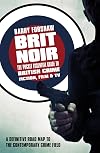
This book was written by the author who put together the Rough Guide to Crime Fiction. I did find a few new books to try as a result of reading this book, but the writing style of the descriptions was off-putting. It felt like it was trying to be academic and matey at the same time, but erring on the side of too formal (especially when using terms like "sine qua non"). Worth flipping through, perhaps.
Lists
Awards

You May Also Like


Associated Authors
Statistics
- Works
- 64
- Also by
- 24
- Members
- 538
- Popularity
- #46,305
- Rating
- 3.6
- Reviews
- 12
- ISBNs
- 107
- Languages
- 1