
William Garrett Piston
Author of Lee's Tarnished Lieutenant: James Longstreet and His Place in Southern History
About the Author
Image credit: Missouri State University
Works by William Garrett Piston
Lee's Tarnished Lieutenant: James Longstreet and His Place in Southern History (1987) 189 copies, 2 reviews
Wilson's Creek: The Second Battle of the Civil War and the Men Who Fought It (2000) 117 copies, 2 reviews
Associated Works
Tagged
Common Knowledge
- Legal name
- Piston, William Garrett
- Birthdate
- 1953-02-14
- Gender
- male
- Education
- University of South Carolina (Ph.D|History)
Vanderbilt University (MA|History) - Occupations
- historian
university professor - Organizations
- Missouri State University
- Nationality
- USA
- Birthplace
- Johnson City, Tennessee, USA
- Associated Place (for map)
- Tennessee, USA
Members
Reviews
Wilson's Creek: The Second Battle of the Civil War and the Men Who Fought It (Civil War America) by William Garrett Piston
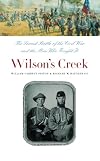
The battle of Wilson's Creek was one of the first US civil war battles I heard about and it remains one of my favourites with its flavour of generals and soldiers of variable capability and high-minded battle plans that end in a free-for-all. So I was exited to learn about this battle study. Unfortunately, the authors base their narrative on an extensive reading of newspaper accounts and show a peculiar need to inform us repeatedly about trivial non-events such as that the homefolk were glad show more to see their returning warriors. A more accomplished and juicy use of their large source material could not, however, compensate for their lack of military knowledge and reasoning. It starts with small mistakes such as "the full battery opened, possibly with canister, as the closest enemy was no more than five hundred yards away" (p.230). Highly unlikely, as canister fire beyond 200 yards is ineffective and beyond 400 yards futile.
More gravely is the authors' lack of understanding of Lyons' strategy, position and logistics: His army of ninty-days recruits was on the verge of melting away. Just like McDowell in Virginia, he had to force the issue or relinquish Missouri to the more numerous local Southerners and a pro-South governor. Lyons' drive and charisma and a nucleus of professional soldiers allowed him to knock the Southerners (nearly) out of Missouri - at a high cost in casualties and his own personal life. While the Confederates repeatedly reentered Missouri, they never achieved command over any population centers. This resolves the authors' puzzle why the North considered the tactically lost battle a victory. The battle kept Missouri in the Union.
The authors do not appreciate how Lyons was sandwiched between the war's worst political generals: Above him, "pathfinder" John C. Frémont, below/beside him, "I fights mit" Franz Sigel - both of which were to hand further victories to the South in their careers. Sigel's incompetent idea and leadership of the flank attack cost the Federals the chance of victory - although this is hardly discussed in the book. The book's maps lack elevation and forest markings and the unit positions are not to scale.
Overall, the authors are to be commended for their effort in tracking the source material. The ultimate battle study of Wilson's Creek remains to be written. show less
More gravely is the authors' lack of understanding of Lyons' strategy, position and logistics: His army of ninty-days recruits was on the verge of melting away. Just like McDowell in Virginia, he had to force the issue or relinquish Missouri to the more numerous local Southerners and a pro-South governor. Lyons' drive and charisma and a nucleus of professional soldiers allowed him to knock the Southerners (nearly) out of Missouri - at a high cost in casualties and his own personal life. While the Confederates repeatedly reentered Missouri, they never achieved command over any population centers. This resolves the authors' puzzle why the North considered the tactically lost battle a victory. The battle kept Missouri in the Union.
The authors do not appreciate how Lyons was sandwiched between the war's worst political generals: Above him, "pathfinder" John C. Frémont, below/beside him, "I fights mit" Franz Sigel - both of which were to hand further victories to the South in their careers. Sigel's incompetent idea and leadership of the flank attack cost the Federals the chance of victory - although this is hardly discussed in the book. The book's maps lack elevation and forest markings and the unit positions are not to scale.
Overall, the authors are to be commended for their effort in tracking the source material. The ultimate battle study of Wilson's Creek remains to be written. show less
Lee's Tarnished Lieutenant: James Longstreet and His Place in Southern History by William Garrett Piston
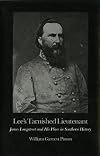
I thought this was a very satisfying examination of portions of James Longstreet's military career and post-Civil War politics and repercussions. As the author notes in his prologue this is not a biography, and the author does assume the reader has more than a simple knowledge of events of the Civil War. In fact, if I have one complaint about this book it is that the author presupposes too much knowledge about less well known individuals and events in places where he is making arguments. The show more book was published about 30 years ago in late 1987 and the intent was for it to clear away some of the misinformation about Longstreet and restore a more balanced view of him.
Since the time of the publication more readers have read books like Michael Shaara's The Killer Angels or seen films like Gettysburg and other books have brought fresh eyes to the subject and people have come to realize that blaming Longstreet for Robert E Lee's mistakes at Gettysburg and elsewhere (as well as many of the "Lost Cause" movement blaming Longstreet for the South's defeat in the Civil War in their attempts to elevate Robert E Lee to godhood) is simply wrong. Longstreet certainly was not a perfect man and had his failings as any man does, but he also became a superb defensive tactician and one of the best leaders the southern forces had. His post-war politics would make him a scapegoat for the South's loss in the war.
This is a good book for those interested in the Civil War who might want to dig a little deeper. This is certainly not a starter book. The analysis is highly footnoted and documented for those who might want to go even further. Really an outstanding piece of scholarship here. Recommended show less
Since the time of the publication more readers have read books like Michael Shaara's The Killer Angels or seen films like Gettysburg and other books have brought fresh eyes to the subject and people have come to realize that blaming Longstreet for Robert E Lee's mistakes at Gettysburg and elsewhere (as well as many of the "Lost Cause" movement blaming Longstreet for the South's defeat in the Civil War in their attempts to elevate Robert E Lee to godhood) is simply wrong. Longstreet certainly was not a perfect man and had his failings as any man does, but he also became a superb defensive tactician and one of the best leaders the southern forces had. His post-war politics would make him a scapegoat for the South's loss in the war.
This is a good book for those interested in the Civil War who might want to dig a little deeper. This is certainly not a starter book. The analysis is highly footnoted and documented for those who might want to go even further. Really an outstanding piece of scholarship here. Recommended show less
Lee's Tarnished Lieutenant: James Longstreet and His Place in Southern History (Brown Thrasher Books Ser.) by William Garrett Piston
Extremely interesting story of Gen. Longstreet of the Confederacy. He was shunned by promoters of the "lost cause" theory (who are pretty deluded). He became a Republican after the war which was considered horrible by most Southerners. Worth reading.
Wilson's Creek: The second battle of the Civil War and the men who fought it by William Garrett Piston
This is a battle history in which the history of the battle takes up considerably less than half the book (chapters 13 through 17, pages 192-286). The rest of the book tells the story of “the men who fought it,” with particular emphasis on the fact that the primary identification of those men was not with their regiment, but with their community, usually recruited by company. Nevertheless, the description of the fighting is good. The maps are also good; although they don’t show show more differences in elevation, and are in black-and-white, they do show where the various units were at various times during the battle. show less
You May Also Like


Associated Authors
Statistics
- Works
- 5
- Also by
- 1
- Members
- 328
- Popularity
- #72,310
- Rating
- 3.8
- Reviews
- 5
- ISBNs
- 11