
Therese Anne Fowler
Author of Z: A Novel of Zelda Fitzgerald
About the Author
In 2005, author Therese Fowler received a Master in Fine Arts degree in creative writing from North Carolina State University (NCSU). Before becoming a full-time author, she was a graduate teaching assistant and creative writing instructor for NCSU. Her debut novel, Souvenir, was published in 2008; show more followed by Reunion in 2009. She currently lives in Raleigh, North Carolina with her family. (Bowker Author Biography) show less
Works by Therese Anne Fowler
Associated Works
A Paris All Your Own: Bestselling Women Writers on the City of Light (2017) — Contributor — 85 copies, 5 reviews
A Southern Girl: A Novel (Story River Books) (2014) — Foreword, some editions — 44 copies, 3 reviews
Tagged
Common Knowledge
- Canonical name
- Fowler, Therese Anne
- Birthdate
- 1967-04-22
- Gender
- female
- Occupations
- author
- Awards and honors
- Goodreads Choice Awards Best Historical Fiction
- Relationships
- Kessel, John (husband)
- Short biography
- Therese Anne Fowler is a contemporary American author. She is best known for Z: A Novel of Zelda Fitzgerald, published in 2013.
- Nationality
- USA (birth)
- Birthplace
- Milan, Illinois
- Associated Place (for map)
- USA
Members
Reviews

This story is set in Oak Knoll, a fictional gentrifying neighborhood in North Carolina. The Whitmans, a white family of some renown (Brad Whitman heavily advertises his HVAC company), bought a “tear-down” and had a large house and pool built on the site. Neither Brad nor the builders gave a thought to the destruction of all the trees on the property, nor how the construction might damage old trees with extensive roots in adjacent lots. Brad, in fact, doesn’t let much of anything get in show more his way when he wants something.
The Whitman’s next-door neighbor, Valerie Alston-Holt, an African-American woman with a dual Ph.D. in forestry and ecology, cared very much about the trees. The eighty-foot oak in her yard - the very reason she bought the house so many years ago - was indeed damaged by the construction and was beginning to show signs of distress.
This wasn’t the only source of tension between the two neighbors. The Whitman’s 17-year-old daughter Juniper (who had taken a “Purity Vow”) and Valerie’s 18-year-old mixed-race son Xavier were attracted to one another.
As the story progresses, the strains intensify as racism, class privilege, and sexual attraction all combine to create a horrifying denouement.
Evaluation: This is a compelling and tragic story that would be excellent for book clubs because there is so much to discuss. My only objection was the use of the first-person plural narrator (representing the other neighbors in Oak Knoll). This omniscient “we” knew all about the innermost thoughts and private moments of the members of the two families dominating the story. That seemed very unlikely. show less
The Whitman’s next-door neighbor, Valerie Alston-Holt, an African-American woman with a dual Ph.D. in forestry and ecology, cared very much about the trees. The eighty-foot oak in her yard - the very reason she bought the house so many years ago - was indeed damaged by the construction and was beginning to show signs of distress.
This wasn’t the only source of tension between the two neighbors. The Whitman’s 17-year-old daughter Juniper (who had taken a “Purity Vow”) and Valerie’s 18-year-old mixed-race son Xavier were attracted to one another.
As the story progresses, the strains intensify as racism, class privilege, and sexual attraction all combine to create a horrifying denouement.
Evaluation: This is a compelling and tragic story that would be excellent for book clubs because there is so much to discuss. My only objection was the use of the first-person plural narrator (representing the other neighbors in Oak Knoll). This omniscient “we” knew all about the innermost thoughts and private moments of the members of the two families dominating the story. That seemed very unlikely. show less
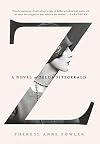
When my husband took English lit. in college, he did a paper on F Scott Fitzgerald; and over the years he has talked about Zelda being this mad woman who was insanely jealous of Scott’s success, etc. Thus I really looked forward to reading this book, my first foray into Zelda’s world. Although not entirely factual, it is based on letters and known events researched by Therese Anne Fowler. I just loved Fowler’s rendering of the couple’s courtship and early years together. They both show more were intelligent, adventurous, interesting, clever (also reckless and self-centered), living in all the best places and socializing with the elite. Lots of name dropping and lots of drinking here. Their marriage seemed to be a genuine partnership, both having Scott’s writing career their main focus. But then Zelda grew restless and bored when Scott was either holed up writing or off partying. It was the 1920’s and a wife was meant to be a “wife” in the truest sense. The fact that Zelda had a remarkable brain and creativity of her own was something she wanted others to know, not just that she was the woman behind the famous man. When Zelda developed colitis or whatever that was, and had to stop drinking, the proverbial camel’s back began to break. No more drinking on her part led her to dabble in writing her own stories and studying ballet again, which became an unhealthy obsession. Scott had to find other drinking partners, one of which was Ernest Hemingway, who Zelda hated and blamed for the further break in the marriage.
History tells that she had schizophrenia and spent years in and out of institutions. This book may make one wonder if it really was schizophrenia, or just the fact that she didn’t fit the norm of what a wife should be, and even if Scott just didn’t feel better about himself with her confined and out of way. This book led to quite a discussion (all right, argument) with my husband on that subject, I of course being on the side of the oppressed Zelda (Team Zelda) and he of course on Team Scott. It also prompted me to go watch the movie Midnight in Paris. All in all fascinating and I am so glad to have read it! Fowler’s writing was superb. show less
History tells that she had schizophrenia and spent years in and out of institutions. This book may make one wonder if it really was schizophrenia, or just the fact that she didn’t fit the norm of what a wife should be, and even if Scott just didn’t feel better about himself with her confined and out of way. This book led to quite a discussion (all right, argument) with my husband on that subject, I of course being on the side of the oppressed Zelda (Team Zelda) and he of course on Team Scott. It also prompted me to go watch the movie Midnight in Paris. All in all fascinating and I am so glad to have read it! Fowler’s writing was superb. show less
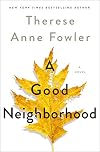
Like any proper tragedy, this one is told with a Greek chorus, narrated in second person by the neighborhood of Oak Knoll, North Carolina. We know it's a tragedy from the first page, which alludes to the funeral to come - but whose?
On one side of the fence, Valerie Alston-Holt and her 18-year-old biracial son Xavier, who is finishing his senior year and preparing to go to San Francisco to study classical guitar. On the other side of the fence is a new family, the Whitmans: Brad and Julia, show more their daughter Lily, and Julia's daughter Juniper, a junior at a private high school.
Xavier and Juniper are attracted to each other, and find ways to meet and talk, despite the fact that Juniper has taken a purity pledge and her mom and stepdad control and monitor her every move, and that Valerie is about to sue Brad Whitman for killing the massive, beloved oak tree in her backyard.
Brad is a true villain: a succeed-at-all-costs snake who owns an HVAC company, deluded into believing that his stepdaughter Juniper has a crush on him and that he can take her virginity. Brad is furious when served with Valerie's civil suit, and even more furious when he finds Juniper and Xavier together; he presses rape charges, which he later tries to have dropped in exchange for Valerie dropping the civil suit, but the damage has already been done (black 18-year-old, white 17-year-old in the South, etc.).
A ferocious and tragic story of injustice.
See also: An American Marriage by Tayari Jones, Flight Behavior by Barbara Kingsolver, Not So Pure and Simple by Lamar Giles, The Great Gatsby by F. Scott Fitzgerald, Romeo & Juliet
Quotes
...a neighborhood that had come to think of itself as progressive yet was not doing much to demonstrate that character. (15)
...finches and cardinals and chickadees and mockingbirds singing the sun down. (53)
What, [Juniper] wondered, made a neighborhood good? (54)
"Here's adulthood lesson number one: You want something, ask for it....Find out how to get whatever it is you want, and then do whatever it takes to get it." (Brad to Juniper, 100)
She'd tried to hard to be what she thought she ought to be, and where had it gotten her? (Julia, 196)
How unfair that the past was irretrievable and yet impossible to leave behind. (Valerie, 202)
Here's what we wonder: How does a man like Brad become a man like Brad - that is, so assured of his authority and viewpoint that he never bothers to interrogate himself? (212)
They wouldn't say, Here was a young man who was pushed to the wall, a product of our institutional and cultural injustice who sought only to enact real justice where otherwise there would never be any. (Xavier, 301) show less
On one side of the fence, Valerie Alston-Holt and her 18-year-old biracial son Xavier, who is finishing his senior year and preparing to go to San Francisco to study classical guitar. On the other side of the fence is a new family, the Whitmans: Brad and Julia, show more their daughter Lily, and Julia's daughter Juniper, a junior at a private high school.
Xavier and Juniper are attracted to each other, and find ways to meet and talk, despite the fact that Juniper has taken a purity pledge and her mom and stepdad control and monitor her every move, and that Valerie is about to sue Brad Whitman for killing the massive, beloved oak tree in her backyard.
Brad is a true villain: a succeed-at-all-costs snake who owns an HVAC company, deluded into believing that his stepdaughter Juniper has a crush on him and that he can take her virginity. Brad is furious when served with Valerie's civil suit, and even more furious when he finds Juniper and Xavier together; he presses rape charges, which he later tries to have dropped in exchange for Valerie dropping the civil suit, but the damage has already been done (black 18-year-old, white 17-year-old in the South, etc.).
A ferocious and tragic story of injustice.
See also: An American Marriage by Tayari Jones, Flight Behavior by Barbara Kingsolver, Not So Pure and Simple by Lamar Giles, The Great Gatsby by F. Scott Fitzgerald, Romeo & Juliet
Quotes
...a neighborhood that had come to think of itself as progressive yet was not doing much to demonstrate that character. (15)
...finches and cardinals and chickadees and mockingbirds singing the sun down. (53)
What, [Juniper] wondered, made a neighborhood good? (54)
"Here's adulthood lesson number one: You want something, ask for it....Find out how to get whatever it is you want, and then do whatever it takes to get it." (Brad to Juniper, 100)
She'd tried to hard to be what she thought she ought to be, and where had it gotten her? (Julia, 196)
How unfair that the past was irretrievable and yet impossible to leave behind. (Valerie, 202)
Here's what we wonder: How does a man like Brad become a man like Brad - that is, so assured of his authority and viewpoint that he never bothers to interrogate himself? (212)
They wouldn't say, Here was a young man who was pushed to the wall, a product of our institutional and cultural injustice who sought only to enact real justice where otherwise there would never be any. (Xavier, 301) show less
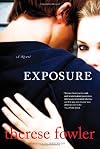
This book packs in a lot--several different versions of parental dilemmas, teenage love, lust, social media, cell phone cameras and texting, the law, and more. Much more. It's about society changing faster than the laws that bind it do, faster than most parents and school counselors can keep up with. It's about broad definitions and narrow minds. It's about what we want for ourselves, and what we want for our children. It's about what we expect of ourselves, and what our family expects of show more us. It's about brilliance and stupidity. But that's all simmering below the surface. The basic story is a about a teenage boy and a teenage girl who have fallen in love. They make a simple decision, a private decision, that gets exposed to the public in a damaging, life destroying way. This is a riveting story, made more so when you know that the author went through a similar situation in her own life with her teenage son. She is brave in writing it, and I believe that the reader will be richer for the reading of it. This is going to be a HUGE book for bookclubs--there is so much to talk about within it's covers. Fans of Jodi Picoult will embrace it completely. Fans of Therese Fowler will be blown away by how far she has come in her writing and in her grip upon her reader. This is a story no one will forget. show less
Lists
Awards


You May Also Like


Associated Authors
Statistics
- Works
- 11
- Also by
- 3
- Members
- 4,782
- Popularity
- #5,254
- Rating
- 3.8
- Reviews
- 253
- ISBNs
- 103
- Languages
- 9
- Favorited
- 3

