
Emily Fragos
Author of The Great Cat: Poems About Cats
About the Author
Emily Fragos is the recipient of The Witter Bynner Poetry Prize from the Library of Congress, the Guggenheim Fellowship in Poetry, and the Literature Award from the American Academy of Arts Letters. She is the author of two acclaimed books of poetry, Hostage and Little Savage, and the editor of six show more poetry anthologies for The Everyman's Pocket Library: Music's Spell, Art Artists, The Great Cat, The Dance, The Letters of Emily Dickinson, and Poems of Gratitude. She has also written numerous articles on music and dance, and served as guest poetry editor for Guernica. Emily Fragos currently teaches at Columbia University and NYU, and lives in Manhattan. show less
Image credit: 92nd Street Young Men's and Young Women's Hebrew Association
Works by Emily Fragos
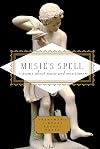
Music's Spell: Poems About Music and Musicians (Everyman's Library Pocket Poets Series) (2009) 56 copies, 1 review
Associated Works
Tagged
Common Knowledge
- Canonical name
- Fragos, Emily
- Gender
- female
- Occupations
- dichter
docent - Organizations
- Columbia University
New York University - Nationality
- USA
- Places of residence
- New York, New York, USA
Members
Reviews
I’ve read a good handful of the Everyman’s Pocket Poets series and this was a fairly standard installment. There’s a good selection of verse, with a lot of lovely selections, but some of the poetry felt like a bit of a stretch and I found myself noticing that it wasn’t as moving or diverse as I think it could have been.
It’s always hard to really review anthologies, because there are so many authors and tones and I want to give everyone their due but I can’t and really, a good show more collection’s about the collection and the layout of the poems as much as anything else. Suffice to say, there are some profoundly moving poems in this book, from poets who clearly understood the power of music and musical imagery, who were rhapsodic about pop groups and classical composers and the sound of singing on the breeze. There are also excerpts of longer poems, which left me wishing the whole piece, or even a longer excerpt, had been included because I felt a lot was missing, and other poems that didn’t seem to have much place in the book except that they had a word like “violin” in them.
As for diversity, there’s a good range of topics, verse types, and eras. You’ll find a poem or two you like, no matter your taste! But it’s fairly heavily weighted to the Western canon and musical styles, to Anglo authors, and to white people. I count a solid handful of Black poets, but only two from the Middle East and one from China. I know there’s a stronger musical tradition in Asia than that! Surely more than one poet has written about it! Not to mention Africa, Latin America, Indigenous peoples….
So my real criticism is that this book, like most of the others I’ve read, suffered from narrow thinking and a lack of imagination. For all it’s a solid collection, it could’ve had more punch and a wider scope, and I think it will probably appeal more to the casual poetry reader and listener to music than it will to people solidly steeped in either. (Music is my second love after words and like I said, some poems hit home and others … I’ve felt more listening to symphonies and rock songs than those poems evoked.)
I did discover a few new poets, though, and there were a few poems I had to double back on not because I didn’t get them the first time but because the writing was so good. It’s a good collection for what it is, I was delighted every handful of pages, and I’m not going to stop picking up this series anytime soon, for all I often wish they were slightly better.
To bear in mind: Not really applicable this time round, except for the rather Western selection.
7/10 show less
It’s always hard to really review anthologies, because there are so many authors and tones and I want to give everyone their due but I can’t and really, a good show more collection’s about the collection and the layout of the poems as much as anything else. Suffice to say, there are some profoundly moving poems in this book, from poets who clearly understood the power of music and musical imagery, who were rhapsodic about pop groups and classical composers and the sound of singing on the breeze. There are also excerpts of longer poems, which left me wishing the whole piece, or even a longer excerpt, had been included because I felt a lot was missing, and other poems that didn’t seem to have much place in the book except that they had a word like “violin” in them.
As for diversity, there’s a good range of topics, verse types, and eras. You’ll find a poem or two you like, no matter your taste! But it’s fairly heavily weighted to the Western canon and musical styles, to Anglo authors, and to white people. I count a solid handful of Black poets, but only two from the Middle East and one from China. I know there’s a stronger musical tradition in Asia than that! Surely more than one poet has written about it! Not to mention Africa, Latin America, Indigenous peoples….
So my real criticism is that this book, like most of the others I’ve read, suffered from narrow thinking and a lack of imagination. For all it’s a solid collection, it could’ve had more punch and a wider scope, and I think it will probably appeal more to the casual poetry reader and listener to music than it will to people solidly steeped in either. (Music is my second love after words and like I said, some poems hit home and others … I’ve felt more listening to symphonies and rock songs than those poems evoked.)
I did discover a few new poets, though, and there were a few poems I had to double back on not because I didn’t get them the first time but because the writing was so good. It’s a good collection for what it is, I was delighted every handful of pages, and I’m not going to stop picking up this series anytime soon, for all I often wish they were slightly better.
To bear in mind: Not really applicable this time round, except for the rather Western selection.
7/10 show less
You May Also Like


Associated Authors
Statistics
- Works
- 9
- Also by
- 2
- Members
- 437
- Popularity
- #55,994
- Rating
- 4.0
- Reviews
- 1
- ISBNs
- 15