
Kevin Young (1) (1970–)
Author of Bunk: The Rise of Hoaxes, Humbug, Plagiarists, Phonies, Post-Facts, and Fake News
For other authors named Kevin Young, see the disambiguation page.
About the Author
Kevin Young is the author of a previous book of nonfiction, The Grey Album: On the Blackness of Blackness, which won the PEN Open Book Award, was recognized as a New York Times Notable Book, and named a finalist for the National Book Critics Circle Award for criticism. He is the author of eleven show more books of poetry, including Brown and Blue Laws: Selected Uncollected Poems 1995-2015. Young is the director of the Schomburg Center for Research in Black Culture and poetry editor for the New Yorker. show less
Image credit: Author Kevin Young at the 2017 Texas Book Festival. By Larry D. Moore, CC BY-SA 4.0, https://commons.wikimedia.org/w/index.php?curid=63931377
Works by Kevin Young
Bunk: The Rise of Hoaxes, Humbug, Plagiarists, Phonies, Post-Facts, and Fake News (2017) 411 copies, 11 reviews
Books pf Hours 1 copy
Associated Works
The Fire This Time: A New Generation Speaks about Race (2016) — Contributor — 1,014 copies, 32 reviews
Tales of Two Americas: Stories of Inequality in a Divided Nation (2017) — Contributor — 227 copies, 7 reviews
In Search of Color Everywhere: A Collection of African-American Poetry (1994) — Contributor — 105 copies
This Is the Honey: An Anthology of Contemporary Black Poets (2024) — Contributor — 66 copies, 1 review
Buzz Words: Poems About Insects (Everyman's Library Pocket Poets Series) (2021) — Contributor — 56 copies
Angles of Ascent: A Norton Anthology of Contemporary African American Poetry (2013) — Contributor — 48 copies
Gathering Ground: A Reader Celebrating Cave Canem's First Decade (2006) — Contributor — 30 copies, 1 review
Oxford American: The Southern Magazine of Good Writing. No. 57 (2007): Best of the South (2007) — Contributor — 1 copy
Tagged
Common Knowledge
- Canonical name
- Young, Kevin
- Birthdate
- 1970-11-08
- Gender
- male
- Education
- Harvard College
Stanford University
Brown University - Occupations
- poet
teacher - Organizations
- University of Georgia
Indiana University
Emory University
Schomburg Center for Research in Black Culture - Nationality
- USA
- Birthplace
- Lincoln, Nebraska, USA
- Places of residence
- Boston, Massachusetts, USA
Providence, Rhode Island, USA - Associated Place (for map)
- USA
Members
Reviews

This book is an education, immersive in the way excellent fantasy novels often are. Inasmuch as it's possible to grok another culture, Brown has invited me into the experience of growing up black in America. The racism, yes, and the violence perpetrated against, but also sports and music, friendship and fatherhood, the rhythm of language and the claiming of heritage and history, heroes and tremulous, pained hope. I want to read more of Young's poetry...and once I have, I'm coming back to show more discover these again. show less
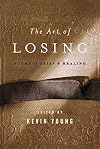
I was smitten with this collection as soon as I opened it. Sure, there were some obvious choices-Frost's "Nothing God Can Stay" will always make me think of The Outsiders-but there were also many new & unexpected pleasures-Lucille Clifton's "oh antic god", Philip Larkin's "Trees"-to even out the mix. This anthology had me at the opening line of Kevin Young's introduction: "I have begun to believe in, & even to preach, a poetry of necessity." I like to think of poetry as necessary, & I think show more it's time there was an anthology dedicated to losing in all its forms & stages. Like William Faulkner, "Between grief & nothing, I will take grief." I think this book will be one I turn to in times of turmoil to find, if not peace, then shelter in these words & images. show less
 This review was written for LibraryThing Early Reviewers.
African American Poetry: 250 Years of Struggle & Song (LOA #333): A Library of America Anthology (The Library of America) by Kevin Young
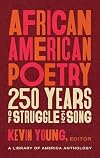
African American Poetry: 250 Years of Struggle and Song, edited by Kevin Young, is a sweeping anthology that doesn't simply present the poetry but presents a history of the poetry. His introduction does a great job of both presenting the chronology as well as explaining both what is excluded and included. As with any anthology decisions have to be made and Young makes a strong case for why he made the ones he made.
No doubt everyone comes to any anthology with some ideas about what they show more expect. Those expectations are rarely the goals set by the editor so there is going to be some disconnect. Such is the case for me with this collection, but after reading why the selections were made and, most important, reading any new works I might not have known, I came away quite satisfied.
This anthology is weighted toward the more recent, as in the past sixty years or so. I found this helpful since many of the older works are anthologized far more often. Those complaining about being too recent to be included, well, they have their own agendas. I recall studying Eliot, Frost, Sandburg, Cummings, Williams, and others when I was young and many of those works were well under sixty years old. So what other reason could these people have for complaining about this collection including newer work? Hmmmmm. I think I hear dog whistles.
I highly recommend this to readers of poetry who might recognize that their knowledge and appreciation of African American poetry is limited to the few included in most survey courses. Like any anthology you'll like some and not like some. But they all speak to the reader and the newer ones speak to us about the society we are still living in.
Reviewed from a copy made available by the publisher via NetGalley. show less
No doubt everyone comes to any anthology with some ideas about what they show more expect. Those expectations are rarely the goals set by the editor so there is going to be some disconnect. Such is the case for me with this collection, but after reading why the selections were made and, most important, reading any new works I might not have known, I came away quite satisfied.
This anthology is weighted toward the more recent, as in the past sixty years or so. I found this helpful since many of the older works are anthologized far more often. Those complaining about being too recent to be included, well, they have their own agendas. I recall studying Eliot, Frost, Sandburg, Cummings, Williams, and others when I was young and many of those works were well under sixty years old. So what other reason could these people have for complaining about this collection including newer work? Hmmmmm. I think I hear dog whistles.
I highly recommend this to readers of poetry who might recognize that their knowledge and appreciation of African American poetry is limited to the few included in most survey courses. Like any anthology you'll like some and not like some. But they all speak to the reader and the newer ones speak to us about the society we are still living in.
Reviewed from a copy made available by the publisher via NetGalley. show less
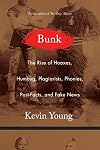
A fascinating and timely book that functions simultaenously as an entertaining history of American hoaxes, an academic examination of the meaning of hoaxes and plagiarism, and a personal account of how the narratives that drive them have affected the author and black Americans in general. In a sense, "Bunk" is entertaining for the same reason that Lawrence Wright's "Going Clear" is: the stories of American "humbugs" from P.T. Barnum to Donald Trump are astonishingly, endlessly strange and show more entertaining. And most of these stories are complex and bizarre enough to be worth revisiting in full: one comes off amazed at how complicated some hoaxes can be (they almost always involve more than one person) and how easy it can be to get people to fall for a likely story. But the author's also very good at highlighting what connects these stories through the years. The book functions as sort of a history of the development of the American hoax and how it's changed: while old-time carnival owners sought to amaze their audiences, modern hoaxers tend to want to horrify them. He digs into the political implications of hoaxes, which is something most people who write on scandal don't, as most reporting doesn't tend to go too far beyond psychological speculation about the person who perpetrated the hoax. He's got a very good eye -- and a deep understanding -- of the various ironies and contradictions that most hoaxes involve.
Young's other focus is race, and he argues that race is usually an essential component of American hoaxes. Honestly, it's sometimes difficult to tell whether Young wanted to write a book about the history of race in America or about notable American deceptions. While this gives the book a welcome personal tone -- as young tells us that he personally has experienced many of the strange situations in which both hoaxers and their marks have found themselves in -- some of this book's readers may feel that he's stretching his arguments a bit too thin and perhaps losing his focus. The book also loses some points for being a bit too long, and not as tightly organized as it could have been. Even so, even while providing an entertaining history of notable frauds, the author never loses sight of the damage that these frauds do. He argues that they not only hurt the people that are fooled, and the artists whose work is lifted, they also do injury to the truth and to our ability to relate to each other honestly. At a time when a lot of people seem to take it for granted that we live in a "post-truth" era where facts simply don't matter, this is an important reminder that ferreting out pernicious falsehoods is still a worthwhile endeavor. Recommended as a survival guide for our times. show less
Young's other focus is race, and he argues that race is usually an essential component of American hoaxes. Honestly, it's sometimes difficult to tell whether Young wanted to write a book about the history of race in America or about notable American deceptions. While this gives the book a welcome personal tone -- as young tells us that he personally has experienced many of the strange situations in which both hoaxers and their marks have found themselves in -- some of this book's readers may feel that he's stretching his arguments a bit too thin and perhaps losing his focus. The book also loses some points for being a bit too long, and not as tightly organized as it could have been. Even so, even while providing an entertaining history of notable frauds, the author never loses sight of the damage that these frauds do. He argues that they not only hurt the people that are fooled, and the artists whose work is lifted, they also do injury to the truth and to our ability to relate to each other honestly. At a time when a lot of people seem to take it for granted that we live in a "post-truth" era where facts simply don't matter, this is an important reminder that ferreting out pernicious falsehoods is still a worthwhile endeavor. Recommended as a survival guide for our times. show less
Lists
Awards


You May Also Like


Associated Authors
Statistics
- Works
- 28
- Also by
- 31
- Members
- 2,400
- Popularity
- #10,690
- Rating
- 4.1
- Reviews
- 64
- ISBNs
- 106
- Languages
- 2
- Favorited
- 2


