
Peter Washington
Author of Love Poems
About the Author
Peter Washington has edited several Pocket Poets, including Love Poems, Friendship Poems, Love Letters, and The Roman Poets. (Bowker Author Biography)
Works by Peter Washington
Madame Blavatsky's Baboon: A History of the Mystics, Mediums, and Misfits Who Brought Spiritualism to Ameri ca (1993) 285 copies, 1 review
Associated Works
Tagged
Common Knowledge
- Birthdate
- 1948-06-16
- Gender
- male
- Occupations
- General Editor, Everyman's Library
professor (English and European Literature|Middlesex University) - Organizations
- Middlesex University
Everyman's Library - Nationality
- UK
- Map Location
- UK
Members
Reviews
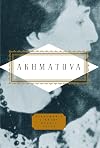
I first became aware of poet Anna Akhmatova from portraits of her in the Russian Museum in St. Petersburg, one painted by Nathan Altman in 1914, the other by Kuzma Petrov-Vodkin in 1922. At once fashionable and striking, the first captures her at 25 in her ascent, having travelled to Paris a few years earlier, famously meeting Modigliani and forming quite a relationship with him, and having already published two volume of poetry (‘Evening’ and ‘Rosary’). The second, three volumes of show more poetry and eight years later, was made a year after her first husband Nikolay Gumilev had been rounded up with 61 others and shot. It reflects the grim sobriety of an intellectual whose world is about to crumble, but even it doesn’t anticipate just how difficult it will be over the coming decades – her poetry banned by Stalin, watching friends sent off to the gulags and being executed, and standing outside a prison for hundreds of hours, pleading on her son’s behalf after he too was jailed. ‘Requiem’, a longer poem from 1957 about that experience, is a tour-de-force, reflecting a mother’s grief, an intellectual’s anger, and beautiful poetic moments:
“Gently flows the gentle Don,
Yellow moonlight leaps the sill,
Leaps the sill and stops aston-
ished as it sees the shade
Of a woman lying ill,
Of a woman stretched alone.
Son in irons and husband clay.
Pray. Pray.”
…and my understanding those last two lines are nearly impossible to translate from the original. Akhmatova would also live through the siege of Leningrad in WWII and great poverty. Her poetry being memorized in bits and pieces by close friends because she wasn’t allowed to write it is a real-life Fahrenheit 451, and her story of perseverance and strength through this oppression is truly inspiring.
This collection includes poems spanning her entire life, and while there are certainly common themes, her range is broad – from her direct, approachable style (most of which I quote below, out of practicality), to her elegies and avant-garde symbolic works (e.g. ‘Poem Without a Hero’). Through it all, while clearly haunted, she endures.
A few samples…
Untitled (1910)
I share my room with
A slow black snake;
It’s like me, just as lazy,
Just as cold.
In the evening I make up
Marvellous stories, on the rug
By the fire’s glow. Its emerald
Eyes gaze at me indifferently.
At night the dead, mute icons hear
Moans of resistance … It’s true
I’d take my desires elsewhere
Were it not for the serpent eyes.
In the morning I’m compliant again,
I melt like a slender candle;
Then from my bare shoulder
A black strap slides.
Untitled (1915)
There is a frontier-line in human closeness
That love and passion cannot violate –
Though in silence mouth to mouth be soldered
And passionate devotion cleave the heart.
Here friendship, too, is powerless, and years
Of that sublime and fiery happiness
When the free soul has broken clear
From the slow languor of voluptuousness.
Those striving towards it are demented, and
If the line seem close enough to broach –
Stricken with sadness … Now you understand
Why my heart does not beat beneath your touch.
Untitled (1940)
Some walk in a straight line,
Others in circles,
Waiting to return home, hoping
Their sweethearts have waited.
But I walk neither straight ahead
Nor aslant,
But to nowhere and never,
Like a derailed train.
In Dream (1946)
Black and enduring separation
I share equally with you.
Why weep? Give me your hand,
Promise me you will come again.
You and I are like high
Mountains and we can’t move closer.
Just send me word
At midnight sometime through the stars. show less
“Gently flows the gentle Don,
Yellow moonlight leaps the sill,
Leaps the sill and stops aston-
ished as it sees the shade
Of a woman lying ill,
Of a woman stretched alone.
Son in irons and husband clay.
Pray. Pray.”
…and my understanding those last two lines are nearly impossible to translate from the original. Akhmatova would also live through the siege of Leningrad in WWII and great poverty. Her poetry being memorized in bits and pieces by close friends because she wasn’t allowed to write it is a real-life Fahrenheit 451, and her story of perseverance and strength through this oppression is truly inspiring.
This collection includes poems spanning her entire life, and while there are certainly common themes, her range is broad – from her direct, approachable style (most of which I quote below, out of practicality), to her elegies and avant-garde symbolic works (e.g. ‘Poem Without a Hero’). Through it all, while clearly haunted, she endures.
A few samples…
Untitled (1910)
I share my room with
A slow black snake;
It’s like me, just as lazy,
Just as cold.
In the evening I make up
Marvellous stories, on the rug
By the fire’s glow. Its emerald
Eyes gaze at me indifferently.
At night the dead, mute icons hear
Moans of resistance … It’s true
I’d take my desires elsewhere
Were it not for the serpent eyes.
In the morning I’m compliant again,
I melt like a slender candle;
Then from my bare shoulder
A black strap slides.
Untitled (1915)
There is a frontier-line in human closeness
That love and passion cannot violate –
Though in silence mouth to mouth be soldered
And passionate devotion cleave the heart.
Here friendship, too, is powerless, and years
Of that sublime and fiery happiness
When the free soul has broken clear
From the slow languor of voluptuousness.
Those striving towards it are demented, and
If the line seem close enough to broach –
Stricken with sadness … Now you understand
Why my heart does not beat beneath your touch.
Untitled (1940)
Some walk in a straight line,
Others in circles,
Waiting to return home, hoping
Their sweethearts have waited.
But I walk neither straight ahead
Nor aslant,
But to nowhere and never,
Like a derailed train.
In Dream (1946)
Black and enduring separation
I share equally with you.
Why weep? Give me your hand,
Promise me you will come again.
You and I are like high
Mountains and we can’t move closer.
Just send me word
At midnight sometime through the stars. show less

From the jacket of the book: "It has often been said that love, both sacred and profane, is the only true subject of the lyric poem. Nothing better justifies this claim than the splendid poems in this volume, which range from the writings of ancient China to those of modern-day America and represent, at its most piercing, a universal experience of the human soul."
An ambitious aim that I'm not sure is fully achieved. The book has 163 poems from various writers. Most poems are well known, some show more of them even classic. And although most lovers of poetry are already familiar with them, it doesn't diminish their impact. There are verses from Shakespeare, W. B. Yeats, Emily Dickinson, John Donne and Christina Rossetti, just to name a few. Even if a collection like this cannot be anything but America and Britain centered, heavily focused on the 19th and 20th centuries, an effort has been made to include other writers and other eras. There are for example poems from Izumi Shikibu, Catullus, Pablo Neruda, Anna Akhmatova, Sappho, and Li Po.
The poems are arrenged into seven different categories: definitions and persuasions, love and poetry, praising the loved one, pleasures and paines, fidelity and inconstancy, absence and estrangement and parting, and love past. This demonstrates that love is a very broad subject that can cover numerous different emotions and situations. The poems therefore do not repeat the same thing over and over, but approach their subject from various different perspectives. This, with the wide range of different writers, is one of the book's major attractions. The other? It has some bloody good poetry. show less
An ambitious aim that I'm not sure is fully achieved. The book has 163 poems from various writers. Most poems are well known, some show more of them even classic. And although most lovers of poetry are already familiar with them, it doesn't diminish their impact. There are verses from Shakespeare, W. B. Yeats, Emily Dickinson, John Donne and Christina Rossetti, just to name a few. Even if a collection like this cannot be anything but America and Britain centered, heavily focused on the 19th and 20th centuries, an effort has been made to include other writers and other eras. There are for example poems from Izumi Shikibu, Catullus, Pablo Neruda, Anna Akhmatova, Sappho, and Li Po.
The poems are arrenged into seven different categories: definitions and persuasions, love and poetry, praising the loved one, pleasures and paines, fidelity and inconstancy, absence and estrangement and parting, and love past. This demonstrates that love is a very broad subject that can cover numerous different emotions and situations. The poems therefore do not repeat the same thing over and over, but approach their subject from various different perspectives. This, with the wide range of different writers, is one of the book's major attractions. The other? It has some bloody good poetry. show less

Poetry is translation is often not a winning proposition. While a few of these translations do scan as pretty good poetry, most of their effect is lost in translation--I suppose. Perhaps they read just like this in Russian. In any case, it's the best I can do to appreciate Akhmatova's ouevre. Reflecting her hard life struggle under Stalin, this is affecting work, even if I can't read much of it exactly as poetry. But the recollections and references to those who didn't survive Stalinism are show more stark reminders that poetry can be--must be--about life itself. show less
Madame Blavatsky's Baboon: A History of the Mystics, Mediums, and Misfits Who Brought Spiritualism to Ameri ca by Peter Washington
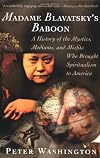
This book traces the origins of the modern New Age movement through examining the lives and philosophies of its charismatic founders. Theosophy founder Madame Blavatsky was just the first of many who garnered spiritual street cred by claiming to be in contact with a secret brotherhood of ascended masters. Though there is ample evidence that Blavatsky was nothing more than a highly creative fakir, her attempt to build a new spirituality based on the common thread within all religions struck show more such a chord with the world-weary sophisticates of her day that she succeeded in founding an enormous spiritual legacy.
Washington spends a great deal of time in this book detailing the various infights, outfights, scandals and shenanigans that plagued this movement from its beginnings, and there is plenty of comedy to had in this history. My enjoyment of the book was tempered, however, by the fact that this spiritual soap opera has a cast of characters that is so vast, it’s sometimes hard to keep track of them all. What Washington’s extensive coverage of the various players and their very human failings makes clear, however, is that the history of charismatic individuals abusing their self-proclaimed spiritual power is a very long one.
Though Washington does discuss in broad terms the spiritual philosophies behind Theosophy, Anthroposophy, the Work of Gurdjieff and the teachings of J. Krishnamurti, those who are looking for an in-depth analysis of these systems will likely be disappointed. Those who are interested in reviewing a fascinating portrait of human nature as it relates to spirituality and the development of new religions, however, will be amply rewarded by the expansive, clear-eyed perspective Washington brings to a subject that is usually shrouded in hazy myth. show less
Washington spends a great deal of time in this book detailing the various infights, outfights, scandals and shenanigans that plagued this movement from its beginnings, and there is plenty of comedy to had in this history. My enjoyment of the book was tempered, however, by the fact that this spiritual soap opera has a cast of characters that is so vast, it’s sometimes hard to keep track of them all. What Washington’s extensive coverage of the various players and their very human failings makes clear, however, is that the history of charismatic individuals abusing their self-proclaimed spiritual power is a very long one.
Though Washington does discuss in broad terms the spiritual philosophies behind Theosophy, Anthroposophy, the Work of Gurdjieff and the teachings of J. Krishnamurti, those who are looking for an in-depth analysis of these systems will likely be disappointed. Those who are interested in reviewing a fascinating portrait of human nature as it relates to spirituality and the development of new religions, however, will be amply rewarded by the expansive, clear-eyed perspective Washington brings to a subject that is usually shrouded in hazy myth. show less
Lists
You May Also Like


Associated Authors
Statistics
- Works
- 35
- Also by
- 18
- Members
- 2,788
- Popularity
- #9,218
- Rating
- 4.2
- Reviews
- 29
- ISBNs
- 53
- Languages
- 5
- Favorited
- 1