
Marisa Meltzer
Author of Girl Power: The Nineties Revolution in Music
About the Author
Marisa Meltzer is a journalist based in New York who contributed to the New York Times, The New Yorker, New York The Guardian, Vanity Fair, and Vogue. She was born in Northern California and is the author of two previous books, How Sassy Changed My Life and Girl Power.
Works by Marisa Meltzer
Glossy: Ambition, Beauty, and the Inside Story of Emily Weiss's Glossier (2023) 78 copies, 3 reviews
This Is Big: How the Founder of Weight Watchers Changed the World -- and Me (2020) 62 copies, 3 reviews
How Death Got Cool 1 copy
Associated Works
BITCHfest: Ten Years of Cultural Criticism from the Pages of Bitch Magazine (2006) — Contributor — 718 copies, 10 reviews
How Sassy Changed My Life: A Love Letter to the Greatest Teen Magazine of All Time (2007) — Author — 219 copies, 7 reviews
Tagged
Common Knowledge
- Gender
- female
Members
Reviews

Chapters that offer the biography of WW founder Jean Nidetch alternate with the author's own "My Year of Doing WW" and meditations on being fat and diet culture in general.
Nidetch was a self-described "Former Fat Housewife" from Queens who founded Weight Watchers International in the early 1960s. Meltzer doesn't have an awful lot of material to work with, but makes the best of what she has; after Nidetch stepped down from the presidency after a decade or two, the second half of her life show more seemed kind of sad coda. She divorced, gambled, lost a 49-year-old son (tumor? addiction? the jury seems to be out). She never gained back the fat; yet here's proof that thin is not sufficient to make for a happy life.
Meltzer's own life musings are a cut above those found in many other of the "My Year of" genre. I love the scathing attacks on 'wellness' culture - dieting by another name; "such a performance of loving yourself, of health, of fun, of flattering angles and good light and tight cropping." "Wellness has become an excuse for doing what was once considered superficial; under the banner of wellness, the same activities are important, necessary, maybe transformative."
Reminds me of points made in this newspaper clipping I still carry around:
https://www.nytimes.com/2019/06/08/opinion/sunday/women-dieting-wellness.html
My favorite line being, "Nobody is telling men they need to love their bodies to live full and meaningful lines." It was really a "I could have had a V-8" head-knocking moment for me to read that.
My own wellness goals entail being so busy pursuing my fulfilling life that I honestly no longer notice my tummy or butt size. Note this is still in the 'goal' stage. show less
Nidetch was a self-described "Former Fat Housewife" from Queens who founded Weight Watchers International in the early 1960s. Meltzer doesn't have an awful lot of material to work with, but makes the best of what she has; after Nidetch stepped down from the presidency after a decade or two, the second half of her life show more seemed kind of sad coda. She divorced, gambled, lost a 49-year-old son (tumor? addiction? the jury seems to be out). She never gained back the fat; yet here's proof that thin is not sufficient to make for a happy life.
Meltzer's own life musings are a cut above those found in many other of the "My Year of" genre. I love the scathing attacks on 'wellness' culture - dieting by another name; "such a performance of loving yourself, of health, of fun, of flattering angles and good light and tight cropping." "Wellness has become an excuse for doing what was once considered superficial; under the banner of wellness, the same activities are important, necessary, maybe transformative."
Reminds me of points made in this newspaper clipping I still carry around:
https://www.nytimes.com/2019/06/08/opinion/sunday/women-dieting-wellness.html
My favorite line being, "Nobody is telling men they need to love their bodies to live full and meaningful lines." It was really a "I could have had a V-8" head-knocking moment for me to read that.
My own wellness goals entail being so busy pursuing my fulfilling life that I honestly no longer notice my tummy or butt size. Note this is still in the 'goal' stage. show less
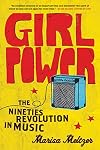
I am totally unqualified to review this book as I totally missed the Riot Grrrl moment. On the other hand, I totally dove into the Lilith Fair moment, so I think that I could write the rebuttal or sequel to Girl Power: The Nineties Revolution in Music by Marisa Meltzer, as Meltzer says she never attended Lilith Fair. But I don't hold that against her.
Girl Power is a quick read. In fact I dare say that it's a must have on your summer 2010 reading list. It's not fluffy, but at only 145 pages, show more it delves thru the 1990s women's music scene quickly and in fairly accessible language. In other words, Meltzer doesn't compare Avril to Courtney by using uber-academic jargon. Because of that, I'd also say that this would make an awesome book group selection. I can only imagine the music throw downs at the Women & Children First Feminist book group.
As someone who missed the Riot Grrrl moment, I really appreciated reading about how it came about, got popular and then essentially killed itself thru a media boycott. Meltzer ponders if that would have been conceivable in today's media soaked culture. I concur.
But what I found most intriguing about the book was how Meltzer outlines how a group of feminists grabbed guitars, drums and the mic and launched a very real music revolution and then how that revolution was so successful that it is quickly evolved into what we typically think of as "Girl Power" music.
From Alanis to the Spice Girls, few pop "Girl Power" acts are left un-examined as to how well they stay true to feminism and the benchmark of Riot Grrrl. Meltzer also looks at how some Riot Grrrl acts moved into the mainstream and how that impacted their music. One could use this book to examine just about any grassroots, indie movement to see how it evolves into something vastly different in a short amount of time.
I didn't agree with many of Meltzer's conclusions such as grouping P!nk with Avril as bullies. She points to "Stupid Girls" as being problematic by calling out specific "stupid girls" instead of calling out society. I think that's exactly what P!nk does by calling out "tiny dog" accessorizing celebs. Maybe I'm just still reeling from Meltzer making a great case as to why the Spice Girls were a good thing and not P!nk. And reeling in the sense that I think it's an excellent case and one we should all reexamine.
Girl Power also made me stop and consider how do we want girls to discover feminism. Or more to the point, how do we think we can get them to discover feminism?
My daughter has taken a liking to this book solely due to the title.
The kid has asked me how I have liked the book, what it's about and tried to read over my shoulder. This is a book I do plan to leave on a shelf for her to have easy access to when she's around 10. Maybe a bit sooner, but 6 is still too soon for me to discuss rape with her. But the thing is that she knows "girl power" and what it means to her. I asked her and she said, "That girls can play soccer, girls can play chess and girls can play guitars!" Then she laughed and confessed that she cribbed that response from the cover of Girl Studies. I tell ya, she's a smart cookie. But if even 75% of girls her age know "girl power" as a slogan that translated into "Of course, I can do X!" then isn't that a good thing?
I guess it can be a not-good thing if the girl in question doesn't have someone in her life to build upon that feeling and reinforce it.
Hopefully you get that the bottom line of this review is that it was a good read, a fast read and one that did make me ponder if it's feminist to "go down in a movie theater" or not.
Disclaimer: The only payment I received for this review was the copy of the book. I met Marisa years ago when she was with Bitch magazine, but I highly doubt that it is why when I asked for a review copy, her peeps sent one. show less
Girl Power is a quick read. In fact I dare say that it's a must have on your summer 2010 reading list. It's not fluffy, but at only 145 pages, show more it delves thru the 1990s women's music scene quickly and in fairly accessible language. In other words, Meltzer doesn't compare Avril to Courtney by using uber-academic jargon. Because of that, I'd also say that this would make an awesome book group selection. I can only imagine the music throw downs at the Women & Children First Feminist book group.
As someone who missed the Riot Grrrl moment, I really appreciated reading about how it came about, got popular and then essentially killed itself thru a media boycott. Meltzer ponders if that would have been conceivable in today's media soaked culture. I concur.
But what I found most intriguing about the book was how Meltzer outlines how a group of feminists grabbed guitars, drums and the mic and launched a very real music revolution and then how that revolution was so successful that it is quickly evolved into what we typically think of as "Girl Power" music.
From Alanis to the Spice Girls, few pop "Girl Power" acts are left un-examined as to how well they stay true to feminism and the benchmark of Riot Grrrl. Meltzer also looks at how some Riot Grrrl acts moved into the mainstream and how that impacted their music. One could use this book to examine just about any grassroots, indie movement to see how it evolves into something vastly different in a short amount of time.
I didn't agree with many of Meltzer's conclusions such as grouping P!nk with Avril as bullies. She points to "Stupid Girls" as being problematic by calling out specific "stupid girls" instead of calling out society. I think that's exactly what P!nk does by calling out "tiny dog" accessorizing celebs. Maybe I'm just still reeling from Meltzer making a great case as to why the Spice Girls were a good thing and not P!nk. And reeling in the sense that I think it's an excellent case and one we should all reexamine.
Girl Power also made me stop and consider how do we want girls to discover feminism. Or more to the point, how do we think we can get them to discover feminism?
My daughter has taken a liking to this book solely due to the title.
The kid has asked me how I have liked the book, what it's about and tried to read over my shoulder. This is a book I do plan to leave on a shelf for her to have easy access to when she's around 10. Maybe a bit sooner, but 6 is still too soon for me to discuss rape with her. But the thing is that she knows "girl power" and what it means to her. I asked her and she said, "That girls can play soccer, girls can play chess and girls can play guitars!" Then she laughed and confessed that she cribbed that response from the cover of Girl Studies. I tell ya, she's a smart cookie. But if even 75% of girls her age know "girl power" as a slogan that translated into "Of course, I can do X!" then isn't that a good thing?
I guess it can be a not-good thing if the girl in question doesn't have someone in her life to build upon that feeling and reinforce it.
Hopefully you get that the bottom line of this review is that it was a good read, a fast read and one that did make me ponder if it's feminist to "go down in a movie theater" or not.
Disclaimer: The only payment I received for this review was the copy of the book. I met Marisa years ago when she was with Bitch magazine, but I highly doubt that it is why when I asked for a review copy, her peeps sent one. show less
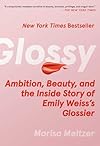
Now that Glossier ship internationally, it didn’t take me long to place an order. I’ve really liked most of the products I’ve tried so far (Balm Dot Com, Cloud Paint, hand cream). I saw this book and thought I’d enjoy it too, as well as understanding a bit more about why people are so eager for Glossier hoodies, water bottles etc. This book is a bit of a mixed bag, shifting its focus from Glossier the brand to the founder, Emily Weiss. Sure, Weiss should play a big role in this book show more being the founder but I felt it zeroed in on the minutiae at times.
The story started with Weiss’ background and her work on the leadup to Glossier’s creation (seen on The Hills, Into the Gloss blog). It’s interesting, but I felt it could have been condensed more without linking back to her privileged upbringing so often. It seems that Weiss was a bit of an oversharer at times in her youth (who isn’t?) but is now more private. This makes getting the ‘inside story’ into Glossier and Weiss all the more difficult as an older and wiser Weiss is more guarded in the few interviews she had with the author. (And why shouldn’t she be?)
The insight into the building of Glossier from product design to marketing and hype was much more fascinating. They really knew their market and how to lean into the ‘no makeup’ makeup look as well as savvy marketing to seem like they were your best friend. As Glossier grew bigger, the scrutiny got closer. As times it seemed like the focus of the book was how Glossier and Weiss screwed up. There didn’t seem to be any leniency for Weiss’ youth and inexperience (although some allegations were 100% valid in my opinion) and the rapid growth of the company. Plus, I feel that looking at some of Glossier’s business practices through a post-pandemic lens makes them seem a bit odder than they were at the time (like staff camps or some items only in store/at a particular store). There wasn’t anything incredibly shocking here in my opinion. In fact, it increased my wishlist items for my next Glossier order.
The last section on the downfall of multiple ‘girl boss’ CEOs felt out of place to me. Sure, they made mistakes but I’m certain other male or older bosses did too over the same period. This made the book feel padded out at this point. Sure, it’s no Bad Blood but that’s because it’s about a company that continues to be successful with reputable products (although the reformulations didn’t get as much page time as I’d have liked). I enjoyed the story about the creating of Glossier, but the opinions over fact at times detracted away from the story.
http://samstillreading.wordpress.com show less
The story started with Weiss’ background and her work on the leadup to Glossier’s creation (seen on The Hills, Into the Gloss blog). It’s interesting, but I felt it could have been condensed more without linking back to her privileged upbringing so often. It seems that Weiss was a bit of an oversharer at times in her youth (who isn’t?) but is now more private. This makes getting the ‘inside story’ into Glossier and Weiss all the more difficult as an older and wiser Weiss is more guarded in the few interviews she had with the author. (And why shouldn’t she be?)
The insight into the building of Glossier from product design to marketing and hype was much more fascinating. They really knew their market and how to lean into the ‘no makeup’ makeup look as well as savvy marketing to seem like they were your best friend. As Glossier grew bigger, the scrutiny got closer. As times it seemed like the focus of the book was how Glossier and Weiss screwed up. There didn’t seem to be any leniency for Weiss’ youth and inexperience (although some allegations were 100% valid in my opinion) and the rapid growth of the company. Plus, I feel that looking at some of Glossier’s business practices through a post-pandemic lens makes them seem a bit odder than they were at the time (like staff camps or some items only in store/at a particular store). There wasn’t anything incredibly shocking here in my opinion. In fact, it increased my wishlist items for my next Glossier order.
The last section on the downfall of multiple ‘girl boss’ CEOs felt out of place to me. Sure, they made mistakes but I’m certain other male or older bosses did too over the same period. This made the book feel padded out at this point. Sure, it’s no Bad Blood but that’s because it’s about a company that continues to be successful with reputable products (although the reformulations didn’t get as much page time as I’d have liked). I enjoyed the story about the creating of Glossier, but the opinions over fact at times detracted away from the story.
http://samstillreading.wordpress.com show less
I think that the Goodreads elementary-school-book-report-style prompt "What I learned from this book" is useful here, because truthfully, I didn't learn anything from this book. It's well written and zippy, but I found myself anticipating Meltzer's next steps: "And now she's going to talk about Liz Phair. Ah, yes, hello, Liz, there you are, nice to see you." Everything--from the chronological arrangement to the subjects (very briefly) addressed to the underlying assumptions and show more arguments--was predictable.
To be fair, Meltzer lays out the scope of her concerns in the preface: it's "a discussion and analysis as viewed through the lens of personal experience." It would have been interesting if she had used the 151 pages of Girl Power as the core of a larger project--maybe with Girl Power as the introduction to an edited collection of personal essays about experiences and engagements with nineties girl/grrrl culture. (It could have been like a really big zine!)
But never mind my wish list. The book would serve as a decent introduction for someone who's not familiar with that era, but for those who remember it--even those who were only on the margins of some of the scenes Meltzer writes about--there's little that's new or thought-provoking here. show less
To be fair, Meltzer lays out the scope of her concerns in the preface: it's "a discussion and analysis as viewed through the lens of personal experience." It would have been interesting if she had used the 151 pages of Girl Power as the core of a larger project--maybe with Girl Power as the introduction to an edited collection of personal essays about experiences and engagements with nineties girl/grrrl culture. (It could have been like a really big zine!)
But never mind my wish list. The book would serve as a decent introduction for someone who's not familiar with that era, but for those who remember it--even those who were only on the margins of some of the scenes Meltzer writes about--there's little that's new or thought-provoking here. show less
Lists
culture (1)
Awards

You May Also Like


Associated Authors
Statistics
- Works
- 5
- Also by
- 2
- Members
- 299
- Popularity
- #78,482
- Rating
- 3.9
- Reviews
- 11
- ISBNs
- 20