
Gary Taubes
Author of Why We Get Fat: And What to Do About It
About the Author
Image credit: Lawrence Lederman
Works by Gary Taubes
Good Calories, Bad Calories: Challenging the Conventional Wisdom on Diet, Weight Control, and Disease (1997) 1,234 copies, 47 reviews
The Case for Keto: Rethinking Weight Control and the Science and Practice of Low-Carb/High-Fat Eating (2020) 158 copies, 2 reviews
Rethinking Diabetes: What Science Reveals About Diet, Insulin, and Successful Treatments (2024) 69 copies, 2 reviews
The Elusive Benefits of Undereating and Exercise: from Why We Get Fat (A Vintage Short) (2017) 11 copies
Surgery in Cyberspace 1 copy
The Electronic Nose 1 copy
The Anti-Matter Mission 1 copy
Conversations in a Cell 1 copy
Silicone in the System 1 copy
Associated Works
Tagged
Common Knowledge
- Birthdate
- 1956-04-30
- Gender
- male
- Education
- Harvard University
Stanford University
Columbia University - Occupations
- journalist
- Organizations
- Discover
- Nationality
- USA
- Birthplace
- Rochester, New York, USA
- Associated Place (for map)
- New York, USA
Members
Reviews
Rethinking diabetes : what science reveals about diet, insulin, and successful treatments by Gary Taubes
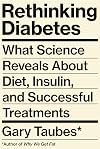
I find diabetes fascinating and this book scratched a big itch for me. On the surface it is a history of doctors and scientists discovering and implementing ways to mitigate diabetes symptoms and side effects. Very interesting to read how these discoveries were made and the different implementations based on the guy in charge. Underneath (but not that hidden) is a blaring reminder to scientists and doctors that they are human and have biases and to KEEP THAT IN MIND before you blindly follow show more well worn guidelines that don’t seem to be helping. show less
Good calories, bad calories : fats, carbs, and the controversial science of diet and health by Gary Taubes
In GC, BC, Taubes proposes that there is no real empirical evidence to support what government health authorities and other “experts” say is truth and that a lot of contradictory evidence has been deliberately ignored. In a nutshell, there are no studies that meet rigorous scientific parameters that prove either side of the carbohydrate/fat hypothesis. That’s right; no studies. The ones we have are flawed, rigged or just plain unscientific (ie The China Study which is an observational show more study done by a non-scientist, so does not meet the requirements). The ones we need are too difficult to control properly and will never be done for that reason and because it doesn’t make financial sense to do them. Who do you think sponsors these studies, altruists? Nope. General Mills. Monsanto. Big Pharma. Coca Cola. Proctor and Gamble. Kraft Food. Mars (manufacturer of M&M, Snickers and other candy bars). How much money do you think those companies would continue to make if it was PROVEN their products make us sick? How much money do you think these companies would continue to make if it was proven diet could eliminate the need for them (statins, blood pressure meds, insulin)? How much more money do you think the researchers would continue to receive if they proved such things?
As I have said before, I am not a scientist, nor do I play one on TV, but I do have scientific curiosity and a bit of knowledge about how the experimentation process should go.
Make an observation
Form hypothesis
Design testing protocols using controls, double-blinds and repetition
Measure results against hypothesis
If evidence/results does support your idea, yay for you, go on with line of inquiry
If evidence/results does not support your idea, yay for you, find out what they do support
Form new hypothesis
See second step
Too bad none of the researchers in today’s upper echelon of health/nutrition “experts” seem to know these basic facts (and they’re certainly not the first - people have been ignoring scientific strictures for decades in pursuit of their own glory). They seem to all either parrot poorly done/totally rigged/nonexistent studies, or they are so blinded by what they WANT to see that they make excuse after excuse about evidence that doesn’t support what they want to see. It’s truly staggering and made me very angry while reading this book. Taubes makes a point NOT to call any of these willfully ignorant/corrupt people scientists because frankly, they’re not.
At the end of this very scientifically dense book Taubes sums up well by saying that there is enough evidence to contradict everything we “know” about saturated fat, sugar, refined carbohydrates and how we get fat to warrant serious investigation, but that absolutely no one will take it on. Why not? No money in it. I’ve said it before and I’ll say it again - there is no money in healthy people. No drug money. No cheap food money. No mono-agriculture money. No shipping money. No saving on government pension money (because if your population never reaches retirement age, you don’t have to pay). No diet advice treadmill of things that don’t work money. No money. It pays to keep your population sick, overweight, deluded, dependent and ultimately dead. It makes me sick to think about, but seriously I think it’s true. Big corps want us sick because it keeps us shelling out the money. Government wants to keep big corps happy so they don’t do anything to stop them. I know it’s fashionable now to blame everything on those two entities, but they control policy and public opinion to such an extent that it’s hard not to draw the conclusion.
I can’t help but liken it to crime investigation. We have jailed saturated fat without trial. The first line of inquiry in any criminal investigation is find out who benefits, but no one dares do so. The cops and prosecutors have turned up exculpatory evidence and buried it so that they could ensure a guilty verdict. The real criminal (refined carbohydrates) has been allowed to go free and kill more people with the full the full blessing of the police, the courts and the law-makers. Private investigators with the same exculpatory evidence are slandered, silenced, beaten up and ridiculed. Cops who try to buck the system are paid off or given the same treatment as the private cops. The press has been suckered or bought. Falsely accused saturated fat is still in jail. The people who benefited from the original crime are still making out like bandits and the victims just keep piling up. What’s to be done? Do your own investigation. Be critical of news reports, bloggers, documentaries and other media sources just spouting the same old conventional wisdom that got us here. I cannot wait for Denise Minger’s upcoming book, currently titled Death by Food Pyramid, because she’s going to school us on how to read reports and study data to suss out what’s truth, what’s assumption and what’s just bad science.
Anyway...who should read this book? Everyone. But not everyone can because it is pretty dry, scientifically dense and lacks a definitive call to action. Maybe his follow-up book Why We Get Fat is a better starting point, but for those who like lots of facts and investigative language, I highly recommend reading it. At least it will get you thinking and that’s the important result.
Read more: http://thebookmarque.blogspot.com/2012/07/good-calories-bad-calories-by-gary.htm... show less
As I have said before, I am not a scientist, nor do I play one on TV, but I do have scientific curiosity and a bit of knowledge about how the experimentation process should go.
Make an observation
Form hypothesis
Design testing protocols using controls, double-blinds and repetition
Measure results against hypothesis
If evidence/results does support your idea, yay for you, go on with line of inquiry
If evidence/results does not support your idea, yay for you, find out what they do support
Form new hypothesis
See second step
Too bad none of the researchers in today’s upper echelon of health/nutrition “experts” seem to know these basic facts (and they’re certainly not the first - people have been ignoring scientific strictures for decades in pursuit of their own glory). They seem to all either parrot poorly done/totally rigged/nonexistent studies, or they are so blinded by what they WANT to see that they make excuse after excuse about evidence that doesn’t support what they want to see. It’s truly staggering and made me very angry while reading this book. Taubes makes a point NOT to call any of these willfully ignorant/corrupt people scientists because frankly, they’re not.
At the end of this very scientifically dense book Taubes sums up well by saying that there is enough evidence to contradict everything we “know” about saturated fat, sugar, refined carbohydrates and how we get fat to warrant serious investigation, but that absolutely no one will take it on. Why not? No money in it. I’ve said it before and I’ll say it again - there is no money in healthy people. No drug money. No cheap food money. No mono-agriculture money. No shipping money. No saving on government pension money (because if your population never reaches retirement age, you don’t have to pay). No diet advice treadmill of things that don’t work money. No money. It pays to keep your population sick, overweight, deluded, dependent and ultimately dead. It makes me sick to think about, but seriously I think it’s true. Big corps want us sick because it keeps us shelling out the money. Government wants to keep big corps happy so they don’t do anything to stop them. I know it’s fashionable now to blame everything on those two entities, but they control policy and public opinion to such an extent that it’s hard not to draw the conclusion.
I can’t help but liken it to crime investigation. We have jailed saturated fat without trial. The first line of inquiry in any criminal investigation is find out who benefits, but no one dares do so. The cops and prosecutors have turned up exculpatory evidence and buried it so that they could ensure a guilty verdict. The real criminal (refined carbohydrates) has been allowed to go free and kill more people with the full the full blessing of the police, the courts and the law-makers. Private investigators with the same exculpatory evidence are slandered, silenced, beaten up and ridiculed. Cops who try to buck the system are paid off or given the same treatment as the private cops. The press has been suckered or bought. Falsely accused saturated fat is still in jail. The people who benefited from the original crime are still making out like bandits and the victims just keep piling up. What’s to be done? Do your own investigation. Be critical of news reports, bloggers, documentaries and other media sources just spouting the same old conventional wisdom that got us here. I cannot wait for Denise Minger’s upcoming book, currently titled Death by Food Pyramid, because she’s going to school us on how to read reports and study data to suss out what’s truth, what’s assumption and what’s just bad science.
Anyway...who should read this book? Everyone. But not everyone can because it is pretty dry, scientifically dense and lacks a definitive call to action. Maybe his follow-up book Why We Get Fat is a better starting point, but for those who like lots of facts and investigative language, I highly recommend reading it. At least it will get you thinking and that’s the important result.
Read more: http://thebookmarque.blogspot.com/2012/07/good-calories-bad-calories-by-gary.htm... show less

A frankly terrifying study of the true causes of all "Western Diseases". Mr. Taubes makes the unpopular yet persuasive argument that sugar might very well be the primary cause of obesity, diabetes, heart disease, gout, Alzheimer's and cancer. He makes the analogy that sugar is to these diseases as cigarettes are to smoking.
We all know sugar is bad for us, but the question is: How much is too much?
We all know sugar is bad for us, but the question is: How much is too much?
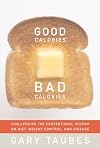
From my Cannonball Read V review...
CANNONBALL!
It seems appropriate that I finished this book over Thanksgiving weekend, given our national propensity towards eating a fair bit more than usual during this time. I’d seen this book on the shelves at the bookstore before, and ignored it because it seemed like another cheesy diet book. After a friend described it as a book that made her actively feel smarter, I picked it up.
Before I get into the book, I want to point out that people can be fat show more for many reasons (as the book will show), and that moreover it is absurd to suggest – as society so often does – that one has to lose weight or become skinny to have value (or to be healthy). Lots of people want to say that fat people are unhealthy because they are fat, but when it comes down to it you really can’t usually tell if someone is healthy simply by looking at them or if you know their height and weight. Moreover, I don’t think anyone owes it to anyone else to be healthy. I think everyone should have access to things that can help them be healthy, but I don’t think anyone owes ME their health. And yes, that includes fat people who some think cost the healthcare system more. First off, they don’t (http://danceswithfat.wordpress.com/2011/11/10/obesity-and-health-care-costs/) but secondly, if we’re going to start requiring fat people to lose weight because they might cost us more in health care, then there are a whole lot of other people (people who drive, people who ride in cars, people who smoke, people who ski and might break a leg, people who play professional football) who apparently need to change their behaviors because we think they might cost us more. Alright. On to the review.
The next time you’re around family discussing weight loss, obesity, or anything really related to diet and nutrition, and someone (usually smug, usually skinny) says “it’s a simple matter of physics: calories in has to equal calories out or you’ll gain or lose weight,” hand him a copy of this book, and tell him to not comment on such things until he’s read the whole thing. In addition to possibly contributing to his education, it’ll have the added benefit of shutting him up, because no one wants to hear from that douchey cousin anyway.
Mr. Taubes’ purpose with this book is to examine as much of the science behind weight gain / loss and the diseases that tend to be associated with it as possible. He’s not so much interested in proving or disproving any one hypothesis; he’s interested in seeing what is out there from the last 100 years and trying to figure out if any of the conventional wisdom we hold regarding weight, nutrition and health stands up to scrutiny. It turns out much of it does not.
There is so much in this book that I can’t cover in this review (especially the discussion on why cholesterol tests may be measuring the wrong thing and ultimately not telling us what we think they are – I need to re-read that section to really understand it), but I wanted to pull out some interesting bits. While looking at some weight studies that have been done, Mr. Taubes pretty quickly dismisses the idea that people are fat because they ‘overeat’ (in fact he repeatedly uses many different studies to fight off this repellant ‘lack of willpower’ argument). The most interesting ones were the studies that had people eating the exact same diet and exerting the same amount of energy (usually these were prison inmates and thus easily tracked) and showing that across the board, some people gained weight, some stayed the same, and some may have lost weight. And among those gaining weight, some would gain two pounds, some would gain 10 or 15. Yes, those are just a few studies, but it does hold up when you think about the people you might know who seem to eat as much as or more than you and yet never gain any significant weight, while you might eat 1,500 calories a day, work out for 30 minutes six times a week, and struggle to fit into a size 16 pants. The question then becomes WHY does this happen?
Another interesting discussion revolved around exercise, and how it may have many health benefits, but that weight loss is not likely among those benefits. I’d read articles about this before; the thinking is that yes, you work out and burn some calories, but the attendant rise in hunger will usually cancel out any weight loss based solely on activity. Let’s say you work out on the elliptical for 30 minutes more than usual and burn and extra 250 calories; just off of the hunger that a workout can produce you might consume that extra 250 with a single Cliff bar on the walk home from the gym. The author is not saying that exercise doesn’t have health benefits; only that those benefits don’t necessarily include weight loss.
It’s so interesting that many of the studies, if properly interpreted, provide very different conclusions than the ones the authors of them – and the policy wonks who reference them – concluded. That then leads to a whole lot of confirmation bias – people looking for support for answers they already have decided are correct and only conducting studies or referencing studies that support the answers they want. So you get one study that claims that fat is bad (but doesn’t actually properly measure that); common sense says well, people who are fat have a lot of fat, so duh, eat less fat to have less fat, and the wheels are set in motion. But what Taubes’ meta-research shows is that it is not fat that makes people fat and keeps people from a lower weight, but simple sugars and carbohydrates.
That’s right – the data (annoyingly) seems to overwhelmingly support the ideas that those obnoxious Atkins / South Beach / no carb diet books promote. Sort of, although not necessarily for the reasons those book site. Taubes’ understanding of the research out there suggests that what matters is not necessarily the amount of energy we consume (via food) but the type we consume that impacts the energy that is available to us, and the consumption of carbohydrates (think flour and potatoes, not the kind found in veggies and fruits) hinders the ability to make use of the energy we already have stored in our body, while also adding to those stores and increasing our fat. The book goes into a lot of detail and is very dense, so it’s hard to synthesize it down to this review (he’s apparently followed this book up with a book targeted more at the average reader, not science readers). But I am going to say that the argument he makes was really convincing to me. There’s so much more to say, but this review is already silly long, so if you’re interested (or screaming NO YOU’RE WRONG while reading this), then pick up the book.
As I said, this is NOT a diet book; however, the epilogue does offer his thoughts on what he thinks his meta-research has shown and what that means for people who want to maintain certain weight levels and stave off some diseases (the section on sugar and diseases is enough for me to seriously contemplate giving up added sugar completely), but he points out that there is so much more research that should be done and IS NOT being done because society assumes it already gets it. It’s sort of like the drunk who drops her keys and then only looks for them under where the streetlight is shining; it’s the easiest place to look, but that doesn’t mean the keys are there, and she’s likely going to miss them if the light is only shining on a small bit of street. We seem so focused on the ‘conventional wisdom’ (and so few of us have really read the studies) but that wisdom seems to have really not worked for so many people, so perhaps it’s time to focus more on what we haven’t yet tested. show less
CANNONBALL!
It seems appropriate that I finished this book over Thanksgiving weekend, given our national propensity towards eating a fair bit more than usual during this time. I’d seen this book on the shelves at the bookstore before, and ignored it because it seemed like another cheesy diet book. After a friend described it as a book that made her actively feel smarter, I picked it up.
Before I get into the book, I want to point out that people can be fat show more for many reasons (as the book will show), and that moreover it is absurd to suggest – as society so often does – that one has to lose weight or become skinny to have value (or to be healthy). Lots of people want to say that fat people are unhealthy because they are fat, but when it comes down to it you really can’t usually tell if someone is healthy simply by looking at them or if you know their height and weight. Moreover, I don’t think anyone owes it to anyone else to be healthy. I think everyone should have access to things that can help them be healthy, but I don’t think anyone owes ME their health. And yes, that includes fat people who some think cost the healthcare system more. First off, they don’t (http://danceswithfat.wordpress.com/2011/11/10/obesity-and-health-care-costs/) but secondly, if we’re going to start requiring fat people to lose weight because they might cost us more in health care, then there are a whole lot of other people (people who drive, people who ride in cars, people who smoke, people who ski and might break a leg, people who play professional football) who apparently need to change their behaviors because we think they might cost us more. Alright. On to the review.
The next time you’re around family discussing weight loss, obesity, or anything really related to diet and nutrition, and someone (usually smug, usually skinny) says “it’s a simple matter of physics: calories in has to equal calories out or you’ll gain or lose weight,” hand him a copy of this book, and tell him to not comment on such things until he’s read the whole thing. In addition to possibly contributing to his education, it’ll have the added benefit of shutting him up, because no one wants to hear from that douchey cousin anyway.
Mr. Taubes’ purpose with this book is to examine as much of the science behind weight gain / loss and the diseases that tend to be associated with it as possible. He’s not so much interested in proving or disproving any one hypothesis; he’s interested in seeing what is out there from the last 100 years and trying to figure out if any of the conventional wisdom we hold regarding weight, nutrition and health stands up to scrutiny. It turns out much of it does not.
There is so much in this book that I can’t cover in this review (especially the discussion on why cholesterol tests may be measuring the wrong thing and ultimately not telling us what we think they are – I need to re-read that section to really understand it), but I wanted to pull out some interesting bits. While looking at some weight studies that have been done, Mr. Taubes pretty quickly dismisses the idea that people are fat because they ‘overeat’ (in fact he repeatedly uses many different studies to fight off this repellant ‘lack of willpower’ argument). The most interesting ones were the studies that had people eating the exact same diet and exerting the same amount of energy (usually these were prison inmates and thus easily tracked) and showing that across the board, some people gained weight, some stayed the same, and some may have lost weight. And among those gaining weight, some would gain two pounds, some would gain 10 or 15. Yes, those are just a few studies, but it does hold up when you think about the people you might know who seem to eat as much as or more than you and yet never gain any significant weight, while you might eat 1,500 calories a day, work out for 30 minutes six times a week, and struggle to fit into a size 16 pants. The question then becomes WHY does this happen?
Another interesting discussion revolved around exercise, and how it may have many health benefits, but that weight loss is not likely among those benefits. I’d read articles about this before; the thinking is that yes, you work out and burn some calories, but the attendant rise in hunger will usually cancel out any weight loss based solely on activity. Let’s say you work out on the elliptical for 30 minutes more than usual and burn and extra 250 calories; just off of the hunger that a workout can produce you might consume that extra 250 with a single Cliff bar on the walk home from the gym. The author is not saying that exercise doesn’t have health benefits; only that those benefits don’t necessarily include weight loss.
It’s so interesting that many of the studies, if properly interpreted, provide very different conclusions than the ones the authors of them – and the policy wonks who reference them – concluded. That then leads to a whole lot of confirmation bias – people looking for support for answers they already have decided are correct and only conducting studies or referencing studies that support the answers they want. So you get one study that claims that fat is bad (but doesn’t actually properly measure that); common sense says well, people who are fat have a lot of fat, so duh, eat less fat to have less fat, and the wheels are set in motion. But what Taubes’ meta-research shows is that it is not fat that makes people fat and keeps people from a lower weight, but simple sugars and carbohydrates.
That’s right – the data (annoyingly) seems to overwhelmingly support the ideas that those obnoxious Atkins / South Beach / no carb diet books promote. Sort of, although not necessarily for the reasons those book site. Taubes’ understanding of the research out there suggests that what matters is not necessarily the amount of energy we consume (via food) but the type we consume that impacts the energy that is available to us, and the consumption of carbohydrates (think flour and potatoes, not the kind found in veggies and fruits) hinders the ability to make use of the energy we already have stored in our body, while also adding to those stores and increasing our fat. The book goes into a lot of detail and is very dense, so it’s hard to synthesize it down to this review (he’s apparently followed this book up with a book targeted more at the average reader, not science readers). But I am going to say that the argument he makes was really convincing to me. There’s so much more to say, but this review is already silly long, so if you’re interested (or screaming NO YOU’RE WRONG while reading this), then pick up the book.
As I said, this is NOT a diet book; however, the epilogue does offer his thoughts on what he thinks his meta-research has shown and what that means for people who want to maintain certain weight levels and stave off some diseases (the section on sugar and diseases is enough for me to seriously contemplate giving up added sugar completely), but he points out that there is so much more research that should be done and IS NOT being done because society assumes it already gets it. It’s sort of like the drunk who drops her keys and then only looks for them under where the streetlight is shining; it’s the easiest place to look, but that doesn’t mean the keys are there, and she’s likely going to miss them if the light is only shining on a small bit of street. We seem so focused on the ‘conventional wisdom’ (and so few of us have really read the studies) but that wisdom seems to have really not worked for so many people, so perhaps it’s time to focus more on what we haven’t yet tested. show less
Lists
Awards


You May Also Like


Associated Authors
Statistics
- Works
- 24
- Also by
- 1
- Members
- 3,601
- Popularity
- #7,033
- Rating
- 4.1
- Reviews
- 130
- ISBNs
- 86
- Languages
- 11
- Favorited
- 2