
Robert H. Lustig
Author of Fat Chance: Beating the Odds Against Sugar, Processed Food, Obesity, and Disease
About the Author
Robert H. Lustig, MD, MSL, is emeritus professor of pediatrics in the Division of Endocrinology and a member of the Institute for Health Policy Studies at the University of California, San Francisco. His books include the New York Times best seller Fat Chance, The Fat Chance Cookbook, and Sugar Has show more 56 Names: A Shopper's Guide. show less
Works by Robert H. Lustig
Fat Chance: Beating the Odds Against Sugar, Processed Food, Obesity, and Disease (2013) 484 copies, 12 reviews
The Hacking of the American Mind: The Science Behind the Corporate Takeover of Our Bodies and Brains (2017) 275 copies, 22 reviews
Metabolical: The Lure and the Lies of Processed Food, Nutrition, and Modern Medicine (2021) 264 copies, 6 reviews
Associated Works
Pure, White, and Deadly: How Sugar Is Killing Us and What We Can Do to Stop It (1972) — Introduction, some editions — 221 copies, 5 reviews
Tagged
Common Knowledge
- Birthdate
- 1957
- Gender
- male
- Occupations
- Endocrinologist
- Nationality
- USA
- Associated Place (for map)
- USA
Members
Reviews
The Hacking of the American Mind: The Science Behind the Corporate Takeover of Our Bodies and Brains by Robert H. Lustig

Lustig is an entertaining writer, which is good, because he has a hobbyhorse—sugar—that he is flogging to death. That said, the science he uses to back up his concerns seems sound, and he does a better job than most pop science authors of explaining complicated phenomena in layman's terms. I do find myself wishing I'd retained more of the psychology and biology I studied back in the day, because it would help me to evaluate his claims.
Lustig's thesis is that corporations have used sugar show more (and social media, although he fleshes this out much more thinly) to addict people to consumerism-driven quick hits of pleasure at the expense of deeper, yet less exciting contentment, essentially sending us all after the next hit of dopamine at the expense of behaviors that increase serotonin and the feelings of the contentment and well-being the latter creates. I'm sympathetic to his argument but wish he'd spent more time developing who is doing this and how they're attempting it. For instance, an explanation of how processed foods producers engineer their products to feed the urge to eat more versus create satiety, how they use ads to drive the desire to consume their products, and how they use big data or loyalty programs to further target their efforts, would have greatly bolstered Lustig's argument.
That said, this is still a fascinating book and it's clear from the acknowledgments that Lustig cares deeply about counteracting the problems he outlines in the book. show less
Lustig's thesis is that corporations have used sugar show more (and social media, although he fleshes this out much more thinly) to addict people to consumerism-driven quick hits of pleasure at the expense of deeper, yet less exciting contentment, essentially sending us all after the next hit of dopamine at the expense of behaviors that increase serotonin and the feelings of the contentment and well-being the latter creates. I'm sympathetic to his argument but wish he'd spent more time developing who is doing this and how they're attempting it. For instance, an explanation of how processed foods producers engineer their products to feed the urge to eat more versus create satiety, how they use ads to drive the desire to consume their products, and how they use big data or loyalty programs to further target their efforts, would have greatly bolstered Lustig's argument.
That said, this is still a fascinating book and it's clear from the acknowledgments that Lustig cares deeply about counteracting the problems he outlines in the book. show less
 This review was written for LibraryThing Early Reviewers.
The Hacking of the American Mind: The Science Behind the Corporate Takeover of Our Bodies and Brains by Robert H. Lustig
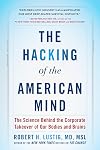
I think this book should be absolutely essential reading for every thinking American who cares about their well-being. It is deep science, but written in an engaging, entertaining fashion, so easier to read that I would have expected.
I have seen criticisms of Lustig's 2nd half of the book, where, after he has laid out the scientific framework of understanding the critically important difference between happiness and pleasure, he launches into an exposé of the toxic industrial storm that show more keeps us sick, miserable, and addicted.
Yes, addicted to the many extremely destructive (but slow and subtle) killers, like sugar, chronic stress, fake food, and other dopamine pipelines that are burning us out and destroying our minds and bodies.
The critics say he is just another conspiracy theorist, but I believe he makes very, very clear he is not. He does not believe that big pharma and corporate gather in secret cabals, plotting the destruction of us all. But the outcome is nearly identical just the same.
But WE have the power to stop them. The government will not do it for us, because they so obviously own the government (again, he lays this out in meticulous detail and vast footnoting).
And the first step it to really, really understand the dilemma. It's a big one, but the solutions are in our hands.
This book may have changed my life. May it enhance yours, too. show less
I have seen criticisms of Lustig's 2nd half of the book, where, after he has laid out the scientific framework of understanding the critically important difference between happiness and pleasure, he launches into an exposé of the toxic industrial storm that show more keeps us sick, miserable, and addicted.
Yes, addicted to the many extremely destructive (but slow and subtle) killers, like sugar, chronic stress, fake food, and other dopamine pipelines that are burning us out and destroying our minds and bodies.
The critics say he is just another conspiracy theorist, but I believe he makes very, very clear he is not. He does not believe that big pharma and corporate gather in secret cabals, plotting the destruction of us all. But the outcome is nearly identical just the same.
But WE have the power to stop them. The government will not do it for us, because they so obviously own the government (again, he lays this out in meticulous detail and vast footnoting).
And the first step it to really, really understand the dilemma. It's a big one, but the solutions are in our hands.
This book may have changed my life. May it enhance yours, too. show less
The hacking of the American mind : inside the sugar-coated plot to confuse pleasure with happiness by Robert H. Lustig
Free LibraryThing Early Reviewer book. Lustig argues that sugar (and some other addictive substances) have been carefully exploited by corporate interests in the interests of material gain. The side effect has been to destroy happiness by distracting people with momentary pleasures, a process with causes in and consequences for brain chemistry. Pleasure (“the slippery slope to tolerance and addiction”) and happiness, he contends, are opposites that have been deliberately conflated show more because pleasure and addiction are profitable. Pleasure rewards are short-term, visceral, available via substances, and often require escalation, while happiness is long-term, calming, based in deeds, and often requires giving of oneself instead of taking.
There’s a lot of interesting brain science in here. Reward is dopamine, and contentment is serotonin, and they can compete with each other. Lustig is obviously fed up with a lot of what’s going on in America (he even mentions the Russian hacking of the 2016 election); he’s a pediatric endocrinologist focusing on obesity and diabetes, and he calls it “one of the unhappiest occupations around” because many of his patients never get better, “most of whom eschew the advice that we recommend and destroy their bodies and their minds in the process.” Because we can’t see hormones the way we can (now) see enlarged hearts or damaged lungs, he thinks, we don’t believe enough in their importance. He really hates refined sugar, which he believes should be understood as an addictive drug, like alcohol. But the book is about more than sugar; it’s also about depression and stress in modern American society generally. I was really fascinated by this claim: because Prozac treated lots of depression that had previously been severe enough to require hospitalization—and because conservative governments kept cutting funds—in-patient psychiatric facilities closed: “there weren’t enough depressed people in the hospitals to keep them open, and nobody cared about the schizophrenics, so they got dumped onto the street ….”
Lustig’s recommendations are mostly individualistic, but not really by choice. “[T]he punch line is that it’s not about personal responsibility, but only you can help yourself, because no one else will.” Still, he touts connecting with other people, giving back to society, taking care of yourself/meditating, and cooking for yourself as ways of improving your serotonin/avoiding dependencies on pleasure rewards. show less
There’s a lot of interesting brain science in here. Reward is dopamine, and contentment is serotonin, and they can compete with each other. Lustig is obviously fed up with a lot of what’s going on in America (he even mentions the Russian hacking of the 2016 election); he’s a pediatric endocrinologist focusing on obesity and diabetes, and he calls it “one of the unhappiest occupations around” because many of his patients never get better, “most of whom eschew the advice that we recommend and destroy their bodies and their minds in the process.” Because we can’t see hormones the way we can (now) see enlarged hearts or damaged lungs, he thinks, we don’t believe enough in their importance. He really hates refined sugar, which he believes should be understood as an addictive drug, like alcohol. But the book is about more than sugar; it’s also about depression and stress in modern American society generally. I was really fascinated by this claim: because Prozac treated lots of depression that had previously been severe enough to require hospitalization—and because conservative governments kept cutting funds—in-patient psychiatric facilities closed: “there weren’t enough depressed people in the hospitals to keep them open, and nobody cared about the schizophrenics, so they got dumped onto the street ….”
Lustig’s recommendations are mostly individualistic, but not really by choice. “[T]he punch line is that it’s not about personal responsibility, but only you can help yourself, because no one else will.” Still, he touts connecting with other people, giving back to society, taking care of yourself/meditating, and cooking for yourself as ways of improving your serotonin/avoiding dependencies on pleasure rewards. show less
This review was written for LibraryThing Early Reviewers.Metabolical: The Lure and the Lies of Processed Food, Nutrition, and Modern Medicine by Robert H. Lustig
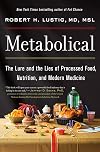
"Metabolical" is a created term a mix between diabolical and metabolic disease. This disease is affecting 88% of the population in the U.S (and I'm sure Canada) with obesity, hypertension, heart disease, fatty liver, diabetes and more. Lustig is an extremely knowledgable pediatric endocrinologist with concerns about diet. This is unusual but shouldn't be! I have read his books before and know his position about sugar, the devil sugar! This books explains from a chemistry point of view, the show more needs for our bodies for REAL FOOD and not processed food. This book should be read by everyone! It is excellent. He puts a big plug in for fibre to keep the intestinal biome healthy and for low amounts of sugar to keep the liver healthy. He explains it all very, very well. A big BOO!!! to processed foods! Lustig does a good job of explaining the differences of the various diets i.e. keto, low carb, low fat, vegan etc.. He does explain the greed of the food industries in cahoots with the government. Like the opioid crisis and the links between Big Pharma and Government there is much corruption between the Food industry and Government links. He also explains the links and possible corruption between Big Food and the Association for Dietitians and Dental Associations. All quite discouraging.
Have you seen the food T.V. ads recently, what is conditioning us to be so unhealthy? Just pick up your Iphone and order a big juicy burger. Don't forget the big gulp of sugar drink and those oh so delicious fries to be delivered to your house.
p.17 if you have metabolic syndrome your risk of death goes up 20 fold. show less
Have you seen the food T.V. ads recently, what is conditioning us to be so unhealthy? Just pick up your Iphone and order a big juicy burger. Don't forget the big gulp of sugar drink and those oh so delicious fries to be delivered to your house.
p.17 if you have metabolic syndrome your risk of death goes up 20 fold. show less
Lists
Awards


You May Also Like


Associated Authors
Statistics
- Works
- 6
- Also by
- 2
- Members
- 1,088
- Popularity
- #23,608
- Rating
- 3.8
- Reviews
- 40
- ISBNs
- 39
- Languages
- 5
