
Tom Shroder
Author of Old Souls: Compelling Evidence from Children Who Remember Past Lives
About the Author
Series
Works by Tom Shroder
Almas ancestrales : en busca de la evidencia científica de la reencarnación (2024) 2 copies, 1 review
Tagged
Common Knowledge
- Legal name
- Shroder, Thomas
- Other names
- Shroder, Tom
- Birthdate
- 1954
- Gender
- male
- Relationships
- Kantor, MacKinlay (grandfather)
- Nationality
- USA
- Birthplace
- New York, New York, USA
- Associated Place (for map)
- New York, USA
Members
Reviews
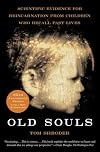
Its an interesting look at reincarnation. Whats nice about this book is that the author is a skeptic, initially, and at the end, is still a skeptic but open to suggestion - this means that you get the past life tale, but you also get the alternate theory. Also, the people in this story are average. There past lives are average. You will not find anybody claiming to be Cleopatra in this book.
The book is straight to the point, does not gloss over the faulty evidence, while at the same time show more manages to capture Dr. Ian Stevenson and the children he documented who claimed to be reincarnated.
I also want to add, this is the first description of India that actually seemed real... Usually, its described either as a place of strange beauty or the worst of the worst, but the India in this book seems like a real place. show less
The book is straight to the point, does not gloss over the faulty evidence, while at the same time show more manages to capture Dr. Ian Stevenson and the children he documented who claimed to be reincarnated.
I also want to add, this is the first description of India that actually seemed real... Usually, its described either as a place of strange beauty or the worst of the worst, but the India in this book seems like a real place. show less

An interesting, yet exasperating book. Journalist Tom Shroder tags along on a few research trips of Dr. Ian Stevenson as he studies accounts of children remembering past lives. I've seen Stevenson's name for years, and bought this paperback years ago, I think in 2000. Stevenson has since passed, in 2007. Along the way, Shroder recounts a bit of Stevenson's life and works, but the focus is on some of the interviews during his research trip in Lebanon (among the Druse, who believe in show more reincarnation) and in India (among the Hindus, who believe in reincarnation).
Now, the whole point of the book, is retelling stories of children who remember past lives. (The subtitle of the book is "The Scientific Evidence for Past Lives," though the tagline on the paperback is "Compelling Evidence From Children Who Remember Past Lives.") If you've ever read those internet posts about children who tell their parents odd things, now imagine you locate the family. Unlike "past-life regressions" or your random weirdo who claims to be Napoleon or Cleopatra, or what have you, these cases seem to be folks coming back from the prior generation, and sometimes from the same family.
The problem with this book is there are just so many problems with these cases. Believers in reincarnation who want to prove it. Families who want some closure or continuation. Pressure, suggestions, faulty memories, selective remembering, etc. You can find holes and problems in every case, and Shroder tells you the problems. But, by the end of the book he seems to be a firm believer. Or firmish. For instance, on pp. 168-169, Shroder offers an entirely plausible skeptical account of how one of the cases may be all bunkum and no reincarnation. It actually makes sense. "Is that what you really think?" he is asked. "No," he says. Well, it made more sense to me. show less
Now, the whole point of the book, is retelling stories of children who remember past lives. (The subtitle of the book is "The Scientific Evidence for Past Lives," though the tagline on the paperback is "Compelling Evidence From Children Who Remember Past Lives.") If you've ever read those internet posts about children who tell their parents odd things, now imagine you locate the family. Unlike "past-life regressions" or your random weirdo who claims to be Napoleon or Cleopatra, or what have you, these cases seem to be folks coming back from the prior generation, and sometimes from the same family.
The problem with this book is there are just so many problems with these cases. Believers in reincarnation who want to prove it. Families who want some closure or continuation. Pressure, suggestions, faulty memories, selective remembering, etc. You can find holes and problems in every case, and Shroder tells you the problems. But, by the end of the book he seems to be a firm believer. Or firmish. For instance, on pp. 168-169, Shroder offers an entirely plausible skeptical account of how one of the cases may be all bunkum and no reincarnation. It actually makes sense. "Is that what you really think?" he is asked. "No," he says. Well, it made more sense to me. show less

I felt the author was right there, through every stage of Clyde Butcher's life. It was the most engaging biography I have yet read.
Clyde is driven to make photos like Ansel Adams, tho he doesn't connect with the same landscape. When he moves to Florida, after a life swinging between prosperity and poverty, he meets someone who introduces him to the few remaining places of everglades unmarred by human artifacts. By now, Clyde has learned the importance of living close to the land, observing show more the daily and seasonal changes of sky, light, and weather. His photos are discovered by those working to restore the local environment and he learns about the importance of the slow river flow and cleansing of pollutants by plants. show less
Clyde is driven to make photos like Ansel Adams, tho he doesn't connect with the same landscape. When he moves to Florida, after a life swinging between prosperity and poverty, he meets someone who introduces him to the few remaining places of everglades unmarred by human artifacts. By now, Clyde has learned the importance of living close to the land, observing show more the daily and seasonal changes of sky, light, and weather. His photos are discovered by those working to restore the local environment and he learns about the importance of the slow river flow and cleansing of pollutants by plants. show less
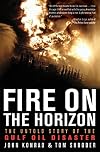
What often seemed forgotten were the eleven men who lost their lives during the explosion and fire on the Deepwater Horizon. In “Fire on the Horizon: The Untold Story of the Gulf Oil Disaster”, authors John Konrad and Tom Shroder make sure their stories, as well as the stories of the survivors, are told.
Konrad, an oil rig captain, worked for Transocean, the owner of the Deepwater Horizon, and knew many of the people who worked on Horizon. His blog, gCaptain.com, was an immediate source show more of information on the blast, as people working on a supply ship near the Horizon who witnessed the explosion sent photos and updates to his blog.
Konrad and Shroder, a former editor and writer at the Washington Post, teamed up to tell this incredible story, which will appeal to anyone who enjoyed Sebastian Junger’s “The Perfect Storm”. (Junger even contributes a blurb for the book.)
While both books put the reader right in the middle of the disasters, “Fire on the Horizon” has the advantage of the first-hand stories of the survivors. The section of the book that deals with the actual explosion is so harrowing, your heart will pound and your pulse will race as you read the minute-by-minute account from the people who survived it.
The writing is so intense, I could almost feel the unbearable heat and the confusion of the people on that rig as they raced to save themselves and their coworkers from this disaster.
Dave Young is one of the most interesting men on the rig. He graduated from the oldest maritime college in the country, SUNY Maritime College. He is “short and tough, supremely self-confident, (and) perfectly represented the scrappy, resourceful, unruly spirit of his college, little known even in its own southeastern Bronx neighborhood.”
Young was the chief mate on the ship, and among his responsibilities was to direct the emergency response and firefighting. He had to convince the captain it was time to abandon ship when all attempts to fight the fire were futile. He and a few others narrowly escaped on a life raft that was caught tethered to the rig, and their account of nearly being overcome by heat and fire is frightening.
The authors balance the technical aspects of oil rig drilling with the humanity of the people who work on them. They begin the book with the launching of the Deepwater Horizon from the place where it was built. We meet the crew in charge of sailing it from Korea in 2001, around the southern tip of Africa, a fifteen thousand mile trip to the Gulf of Mexico, before it even can begin to do the job for which it was designed.
The technical aspects of oil drilling are clearly explained, and there are excellent photos and drawings of the blowout preventer that failed and caused the explosion. The Deepwater Horizon was almost ten years old at the time of the accident, and the age of the rig contributed to accident, as did cuts in the maintenance and human resource budgets from BP and Transocean.
“Fire on the Horizon” is fascinating, explaining to the reader in understandable terms how this disaster happened, and bringing to life the people who worked on the rig. It successfully combines the technical and human aspects of the story, and the minute-by-minute retelling of the disaster itself, from the first-hand account of survivors, is as harrowing a story as you’ll ever read. show less
Konrad, an oil rig captain, worked for Transocean, the owner of the Deepwater Horizon, and knew many of the people who worked on Horizon. His blog, gCaptain.com, was an immediate source show more of information on the blast, as people working on a supply ship near the Horizon who witnessed the explosion sent photos and updates to his blog.
Konrad and Shroder, a former editor and writer at the Washington Post, teamed up to tell this incredible story, which will appeal to anyone who enjoyed Sebastian Junger’s “The Perfect Storm”. (Junger even contributes a blurb for the book.)
While both books put the reader right in the middle of the disasters, “Fire on the Horizon” has the advantage of the first-hand stories of the survivors. The section of the book that deals with the actual explosion is so harrowing, your heart will pound and your pulse will race as you read the minute-by-minute account from the people who survived it.
The writing is so intense, I could almost feel the unbearable heat and the confusion of the people on that rig as they raced to save themselves and their coworkers from this disaster.
Dave Young is one of the most interesting men on the rig. He graduated from the oldest maritime college in the country, SUNY Maritime College. He is “short and tough, supremely self-confident, (and) perfectly represented the scrappy, resourceful, unruly spirit of his college, little known even in its own southeastern Bronx neighborhood.”
Young was the chief mate on the ship, and among his responsibilities was to direct the emergency response and firefighting. He had to convince the captain it was time to abandon ship when all attempts to fight the fire were futile. He and a few others narrowly escaped on a life raft that was caught tethered to the rig, and their account of nearly being overcome by heat and fire is frightening.
The authors balance the technical aspects of oil rig drilling with the humanity of the people who work on them. They begin the book with the launching of the Deepwater Horizon from the place where it was built. We meet the crew in charge of sailing it from Korea in 2001, around the southern tip of Africa, a fifteen thousand mile trip to the Gulf of Mexico, before it even can begin to do the job for which it was designed.
The technical aspects of oil drilling are clearly explained, and there are excellent photos and drawings of the blowout preventer that failed and caused the explosion. The Deepwater Horizon was almost ten years old at the time of the accident, and the age of the rig contributed to accident, as did cuts in the maintenance and human resource budgets from BP and Transocean.
“Fire on the Horizon” is fascinating, explaining to the reader in understandable terms how this disaster happened, and bringing to life the people who worked on the rig. It successfully combines the technical and human aspects of the story, and the minute-by-minute retelling of the disaster itself, from the first-hand account of survivors, is as harrowing a story as you’ll ever read. show less
Lists
You May Also Like


Statistics
- Works
- 11
- Members
- 562
- Popularity
- #44,483
- Rating
- 3.7
- Reviews
- 19
- ISBNs
- 26
- Languages
- 4
- Favorited
- 1