
Richard Vinen
Author of A History in Fragments: Europe in the Twentieth Century
About the Author
Richard Vinen is a professor of history at King's College, London. He is the author of academic works, most recently National Service: Conscription in Britain 1945-1963, which won the Wolfson History Prize, as well as A History in Fragments: Europe in the Twentieth Century, The Unfree French, and show more Thatcher's Britain. show less
Works by Richard Vinen
The Last Titans: How Churchill and de Gaulle Saved Their Nations and Transformed the World (2026) 9 copies, 1 review
The Divided State 2 copies
Tagged
Common Knowledge
- Canonical name
- Vinen, Richard
- Legal name
- Vinen, Richard Charles
- Birthdate
- 1963
- Gender
- male
- Education
- Trinity College, University of Cambridge (BA|1985|Ph.D|1989)
- Occupations
- professor
historian - Organizations
- King's College, University of London
- Awards and honors
- Wolfson History Prize (2015)
Templer Medal (2014)
Walter Laqueur Prize (2012) - Relationships
- Vinen, Frank William (father)
- Nationality
- UK
- Birthplace
- Birmingham, Warwickshire, England, UK
- Places of residence
- London, England, UK
- Associated Place (for map)
- England, UK
Members
Reviews
http://nwhyte.livejournal.com/2077343.html
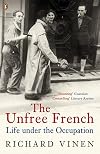
This is a terrifically well-researched and fluently written account of occupied France during the second world war. It is a subject where of which my previous knowledge could probably have fitted on the back of a postcard - collapse in 1940, Pétain and Laval, resistance, D-Day, don't take 'Allo! 'Allo! seriously. I had never considered the impact on France of the continuing imprisonment of the two million - two million! - soldiers captured in 1940, show more plus the hundreds of thousands more subsequently conscripted for forced labour in Germany even as the Nazi regime was collapsing. It was also interesting to learn about the internal ideological manœuvres of the Pétain regime, building a cult of personality as a replacement for actually exercising power and delivering services. And he reports humanely and fairly neutrally on the épuration, the retaliation by both state structures and people taking the law into their own hands, against collaborators after the Liberation.
Vinen also illustrates well a point that I often consider in my professional work - that people rarely know the full picture of what is going on, and definitely don't know the future; in the summer of 1940, it seemed entirely probable that the war might be over in a few months with a German victory; in 1944, we tend to remember Operation Overlord as the successful sweep from Normandy to Belgium that it became, forgetting that to those on the ground, the winner did not seem at all clear, and in any case pockets of Germans were left behind as the invasion swept past.
But much the most interesting parts of the book deal with the effect of the occupation on women, looking especially at those on the margins - those who fell in love with Germans, or became prostitutes, or were successful entrepreneurs in the black market, or found some other nonconformist means of survival in miserable circumstances; and they of course were most likely to be targeted in the épuration. He makes the point that we have very few first-person accounts from these sources; the odd iconic photograph which represents only one story of the many. All of it is fascinating, but some of those accounts are heart-breaking. show less
This is a terrifically well-researched and fluently written account of occupied France during the second world war. It is a subject where of which my previous knowledge could probably have fitted on the back of a postcard - collapse in 1940, Pétain and Laval, resistance, D-Day, don't take 'Allo! 'Allo! seriously. I had never considered the impact on France of the continuing imprisonment of the two million - two million! - soldiers captured in 1940, show more plus the hundreds of thousands more subsequently conscripted for forced labour in Germany even as the Nazi regime was collapsing. It was also interesting to learn about the internal ideological manœuvres of the Pétain regime, building a cult of personality as a replacement for actually exercising power and delivering services. And he reports humanely and fairly neutrally on the épuration, the retaliation by both state structures and people taking the law into their own hands, against collaborators after the Liberation.
Vinen also illustrates well a point that I often consider in my professional work - that people rarely know the full picture of what is going on, and definitely don't know the future; in the summer of 1940, it seemed entirely probable that the war might be over in a few months with a German victory; in 1944, we tend to remember Operation Overlord as the successful sweep from Normandy to Belgium that it became, forgetting that to those on the ground, the winner did not seem at all clear, and in any case pockets of Germans were left behind as the invasion swept past.
But much the most interesting parts of the book deal with the effect of the occupation on women, looking especially at those on the margins - those who fell in love with Germans, or became prostitutes, or were successful entrepreneurs in the black market, or found some other nonconformist means of survival in miserable circumstances; and they of course were most likely to be targeted in the épuration. He makes the point that we have very few first-person accounts from these sources; the odd iconic photograph which represents only one story of the many. All of it is fascinating, but some of those accounts are heart-breaking. show less
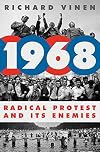
My initial reaction upon actually starting this book (it having been on various TBR lists for awhile), was that I might be wasting my time. To me, the promise was in the subtitle, as I was wondering who in particular Vinen might be referring to in terms of "enemies." It turns out that said enemies were mostly just the authorities of the time, as they attempted to cope with the perceived emergency generated by the "street action" of students and labor unionist. Be that as it may, the chapters show more dealing with the United States, France, Britain and Germany are the real guts of this book, and they're quite good, in terms of providing an overview of what was motivating people to protest, and what they thought they were trying to accomplish. Perhaps the single most telling insight from Vinen is that if often seems that the various protestors had a stronger sense of what they were against, then what they were for, and I think that mentality has lasted to the current day. Less good are some of the thematic chapters, with the one dealing with the transition from protest, to actual violence of the "urban guerilla" variety being the single weakest. Still, I think this wound up being an effective survey, and if you read it in that spirit, I think one will get a lot out of it. show less
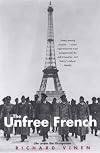
The subtitle here says all: life under the occupation. Vinen details the differences in the wartime experiences of the French in the cities, the countryside and those in Germany, either voluntarily or imprisoned. The relationships between the mostly female French population and the German soldiers and the French POWs with the German women. The different policing authorities and how they managed to work... or didn't. The food rationing, different for men and women, pregnant women, children show more and teenagers - how many young adults lied about their age to get the food that teenagers were provisioned with. The different 'liberation' experiences taking place gradually at different times over the country.
I've read a lot about WWII but I still found new information here. show less
I've read a lot about WWII but I still found new information here. show less
The Last Titans: How Churchill and de Gaulle Saved Their Nations and Transformed the World by Richard Vinen

Nothing in the book decreased my odium for de Gaulle -- his being an opportunistic, odious individual who owed everything to others is glossed over whenever possible. However, I was unaware of how fervent a racist he was: so some good came out of reading it.
Lists
Awards


You May Also Like


Statistics
- Works
- 20
- Members
- 615
- Popularity
- #40,875
- Rating
- 3.7
- Reviews
- 9
- ISBNs
- 46
- Languages
- 4