
Hella Winston
Author of Unchosen: The Hidden Lives of Hasidic Rebels
Works by Hella Winston
Tagged
Common Knowledge
- Canonical name
- Winston, Hella
- Birthdate
- 20th Century
- Gender
- female
- Nationality
- USA
- Places of residence
- New York, New York, USA
- Associated Place (for map)
- New York, USA
Members
Reviews
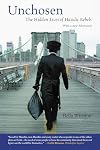
Though the author admits there were "things that I learned and experienced that struck me as both beautiful and compelling" this reader couldn't tell you what any of those might be. That in itself is not a problem since that's not what this book is about.
A little later she says "I also became aware of things about this world that were quite troubling--things that I didn't want to see connected to Judaism or Jewish people in any way." This book is a story of disillusionment.
Was she right to show more be disillusioned? Was she exploring the exceptions or the rule? But also consider, perhaps her illusions were spiritual impediments that needed to be removed.
The normal modern Western way of looking at the world values freedom over serving God. It questions whether there is a God and whether we should serve Him (to use the traditional masculine pronoun--has God told us His pronouns?). What's more, there are rebels against Western liberalism too. An example might be the B.T.s; secular converts to Hasidism.
The author found that even among the faithful there were hidden doubts and secret transgressions and that these were not revealed because of pressures to conform. They would police each other and call out those who strayed, presumably for their own good. And there were serious consequences for those or for the families of those who disobeyed. Are they following the rules because God commanded them to? Or because of social pressures? Or are the social pressures just more immediate reminders of their spiritual commitments?
How are we to judge? Do we impose the point of view of our culture on theirs? Perhaps we should decide from the standpoint of the Ba'al Shem Tov, the founder of Hasidism. He was a rebel himself, rejecting the rigid legalistic culture of his day for an ecstatic continual worship of God. I don't think he would like what has become of his movement. Ecstasy has been replaced with anxiety, communion with isolation.
More generally speaking, this seems to be the fate of most (all?) movements the further you get from their origin, including Christianity, Communism, and even Democracy which is beset with corruption, Gerrymandering, and voter suppression. show less
A little later she says "I also became aware of things about this world that were quite troubling--things that I didn't want to see connected to Judaism or Jewish people in any way." This book is a story of disillusionment.
Was she right to show more be disillusioned? Was she exploring the exceptions or the rule? But also consider, perhaps her illusions were spiritual impediments that needed to be removed.
The normal modern Western way of looking at the world values freedom over serving God. It questions whether there is a God and whether we should serve Him (to use the traditional masculine pronoun--has God told us His pronouns?). What's more, there are rebels against Western liberalism too. An example might be the B.T.s; secular converts to Hasidism.
The author found that even among the faithful there were hidden doubts and secret transgressions and that these were not revealed because of pressures to conform. They would police each other and call out those who strayed, presumably for their own good. And there were serious consequences for those or for the families of those who disobeyed. Are they following the rules because God commanded them to? Or because of social pressures? Or are the social pressures just more immediate reminders of their spiritual commitments?
How are we to judge? Do we impose the point of view of our culture on theirs? Perhaps we should decide from the standpoint of the Ba'al Shem Tov, the founder of Hasidism. He was a rebel himself, rejecting the rigid legalistic culture of his day for an ecstatic continual worship of God. I don't think he would like what has become of his movement. Ecstasy has been replaced with anxiety, communion with isolation.
More generally speaking, this seems to be the fate of most (all?) movements the further you get from their origin, including Christianity, Communism, and even Democracy which is beset with corruption, Gerrymandering, and voter suppression. show less
Unchosen is based on Winston’s in-depth interviews with many Chasidim; those in the community and others who have opted out. It provides sensitive coverage of men and women in turmoil, living restrictive lives within their insular communities. They tried their best to fit in by following the prescribed commandments and social mores expected of their particular Chasidish sects.
But their emotional and intellectual curiosity and innate smarts put them on the path to learning about the larger show more world. They found libraries, discovered tv, the internet and were stunned by all the information out there. They read voraciously and learned about … other people, life choices, religions, cultures which prompted them to take additional steps out of their world into the outside world. They met non-religious Jews, non-Jews and realized how little they knew and wanted / need to know.
Some were fortunate enough to depend on supportive family members or modern extended family to help while they attended college to gain employable skills. Others struggled for years, becoming depressed and resorting to drugs and alcohol. Many are living hellish secret double-lives, half in their Chasidish community and half out, frightened the community will find out the truth and exact punishment on their spouses and children.
Caring individuals and groups have formed to help many of these people deal with the challenging logistics of transitioning out of their communities.
Excellent and touching read! Flows smoothly, describes people, their feelings and stories warmly and humanely, never vilifying anyone. show less
But their emotional and intellectual curiosity and innate smarts put them on the path to learning about the larger show more world. They found libraries, discovered tv, the internet and were stunned by all the information out there. They read voraciously and learned about … other people, life choices, religions, cultures which prompted them to take additional steps out of their world into the outside world. They met non-religious Jews, non-Jews and realized how little they knew and wanted / need to know.
Some were fortunate enough to depend on supportive family members or modern extended family to help while they attended college to gain employable skills. Others struggled for years, becoming depressed and resorting to drugs and alcohol. Many are living hellish secret double-lives, half in their Chasidish community and half out, frightened the community will find out the truth and exact punishment on their spouses and children.
Caring individuals and groups have formed to help many of these people deal with the challenging logistics of transitioning out of their communities.
Excellent and touching read! Flows smoothly, describes people, their feelings and stories warmly and humanely, never vilifying anyone. show less
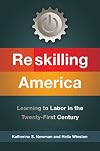
This book makes a persuasive case for the need for more flexibility in how we prepare students for life in adulthood, discussing a number of programs where students learn professional skills rather than being confined to an academic track. Of course, there is a pervasive fear of students' getting shunted into tracks that do not allow them to pursue a full education, but for many students who are motivated toward learning a trade, this different type of education is fulfilling and leads to a show more successful future. The book is at its most interesting when it follows individual schools and students; overall, I enjoyed it. show less
 This review was written for LibraryThing Early Reviewers.
Normally I follow a standard schematic for my reviews - short summary, personal opinion and finally, reader recommendtion and rating. In the case of this book, I'm just going to cut to the chase and give my opinion.
This is an important book. Youth unemployment is at 10% at this time and jobs are going begging for skilled workers. Obviously something is broken and needs to be fixed. Authors Katherine S. Newman and Hella Winston present eminently doable programs and ideas (increased high show more school/vocational interface, apprenticeships, greater community college involvement) that would go far in fixing this problem. Yet the problem isn't that we don't know how to fix it or cannot. It lies more in the idea that vocational education is somehow less worthy than a college degree. And in the frenzied quest to keep everyone 'equal' education seems to forget that part of its job is to help students learn to provide for themselves. This prejudice is wrong and damaging - not everyone is suited to go to college or even wants to. I have seen what a well run apprenticeship will do - several family members have gone through these types of programs and my father was a German Meister Machinist (this credential translated to an engineering job in the US). These programs and the jobs they lead to are sources of pride and prestige in Europe, there is no reason that this would not work in the US other that the notion that a college degree for everyone should be the ideal. The highest endorsement I can give this book is that I wish that the programs Newman and Winston advocate had been implemented when my own children were making career decisions; I would have strongly encouraged them to take advantage of them. It high time our young people were given an honest shot. Do your part - read the book. show less
This is an important book. Youth unemployment is at 10% at this time and jobs are going begging for skilled workers. Obviously something is broken and needs to be fixed. Authors Katherine S. Newman and Hella Winston present eminently doable programs and ideas (increased high show more school/vocational interface, apprenticeships, greater community college involvement) that would go far in fixing this problem. Yet the problem isn't that we don't know how to fix it or cannot. It lies more in the idea that vocational education is somehow less worthy than a college degree. And in the frenzied quest to keep everyone 'equal' education seems to forget that part of its job is to help students learn to provide for themselves. This prejudice is wrong and damaging - not everyone is suited to go to college or even wants to. I have seen what a well run apprenticeship will do - several family members have gone through these types of programs and my father was a German Meister Machinist (this credential translated to an engineering job in the US). These programs and the jobs they lead to are sources of pride and prestige in Europe, there is no reason that this would not work in the US other that the notion that a college degree for everyone should be the ideal. The highest endorsement I can give this book is that I wish that the programs Newman and Winston advocate had been implemented when my own children were making career decisions; I would have strongly encouraged them to take advantage of them. It high time our young people were given an honest shot. Do your part - read the book. show less
This review was written for LibraryThing Early Reviewers.Lists
You May Also Like


Statistics
- Works
- 3
- Members
- 232
- Popularity
- #97,291
- Rating
- 3.6
- Reviews
- 19
- ISBNs
- 9
