
Deborah Feldman
Author of Unorthodox: The Scandalous Rejection of My Hasidic Roots
Works by Deborah Feldman
Associated Works
Me, My Hair, and I: Twenty-seven Women Untangle an Obsession (2015) — Contributor — 151 copies, 35 reviews
Tagged
Common Knowledge
- Birthdate
- 1986
- Gender
- female
- Education
- Sarah Lawrence College
- Occupations
- teacher
writer - Agent
- Patricia van der Leun
Molly Lindley - Nationality
- USA
- Birthplace
- Brooklyn, New York, USA
- Places of residence
- Willamsburg, Brooklyn, New York, USA
Berlin, Germany - Associated Place (for map)
- Brooklyn, New York, USA
Members
Reviews
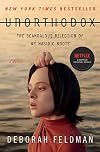
A memoir by the author, this is a beautifully written and clearly expressed description of a young woman growing up in an extremely conservative ultra-orthodox society. So why did I give it only 3.5 stars? Maybe I should omit the stars. The reason is that I watched the Netflix series first. The power of the acting and the made-for-TV storyline is part truth, part fiction. While some of the events described in her hometown of Williamsburg, NY are true, others are altered for the sake of the show more Netflix series and probably to make a smoother story. The problems faced by Deborah Feldman in her memoir are similar, but far more complex than could be portrayed on the screen. What happened after she left the Satmar community is not clear because Ms. Feldman does not describe her present life at all. Perhaps she was being careful because she still felt threatened. I don't know. Compared to the Netflix series, one experiences more acutely the pain and suffering of not being able to fit into her own society, knowing from when she was just a young girl that somehow she would find a way to leave. In the meantime, she is forced to marry someone who has no real emotional attachment to her and we learn the pain of her troubled marriage, problems with having a child and the isolation that she faces having to lie to her husband about reading books, going to classes and other activities that are normally acceptable for women in American culture. The pain, and perhaps the low stars, come, as others have said, because there is no obvious happy ending. I hope that comes in her second book, Exodus. I highly recommend it, but didn't find it as artful as the fictional account in the Netflix series. I think that is unfair of me because her experiences were real, not fiction. That is why I recommend reading the book first. show less
The internet didn't invent the cultural bubbles which surround each of us. I'm talking about those worldviews which only allow in what we want to see and filter out all the rest. Google famously structures our searches in this insular way.
What the internet did was automate insulation and intensify it and make it more obviously problematic. It made the world smaller which meant both more clashes with those who are different from us, and it made us huddle more tightly together to fight that show more difference. And it made us more aware of the bubble phenomenon. That's where we find ourselves today, living in a world that not only has alternative points of view but alternative facts.
This mistitled book tells the story of a particularly exotic bubble--that of the Satmars. I'm assuming you're not a Satmar because, if you were, what are you doing on the forbidden internet?
I picked up this book after seeing the Netflix documentary "One of Us" which is about the lives of 3 Hasids attempting to break away from their community. It is told from the standpoint of those looking to escape. There's little to like about the Hasidic culture that is making their lives miserable. I was not so naive not to realize that by "Hasidic" they meant "Satmar" though they never clarify this.
This book isn't so polarized. At least that's my reading of it. But it's a topic on which people seem to have to take a position. The 2 available are: Satmars are bad so escaping is good, and Satmars are good and escapers are heretics and likely also liars about what they report.
The first position can often be generalized as secular is good, religion is bad. The later as secular is bad and those who choose it are damned. I refuse to take any of these positions. This being a first book by someone who grew up in relative isolation, I have trouble seeing the author as a mastermind scheming to bring down the Satmars. She has a naïveté which makes her a fresh observer. I attribute the problems she is condemned for more to inexperience than to malice.
I don't think this book makes the Satmars look any worse than a lot of other groups of people. Most of them seemed to mean as well as the secular people in our lives and be doing what they think of as their best (even if we would be making different decisions than the ones they made.) If they're at times mean spirited, selfish ignorant or intolerant, so are large swaths of the secular population. E.g. They aren't being cruel by keeping their children ignorant of secular culture, they imagine they're doing them a favor. (Indeed there are many aspect to secular culture that I wish I was ignorant of.)
The book is mostly not about "scandalous rejection". It's mostly about what it felt like to grow up a Satmar but somehow remaining skeptical. Still, what looks like exotic customs and ways of dress from the outside, look normal from the inside and it's we outsiders who look and act peculiarly. When the rejection happens, it's late in the book and it's not an "I hate you--I'm outahere!" kind of thing, but more of a gradual process and finally going too far to ever turn back.
The writing allowed me, who easily loses interest in a book, to finish it in a day and a half. That alone is worth the 4th star. show less
What the internet did was automate insulation and intensify it and make it more obviously problematic. It made the world smaller which meant both more clashes with those who are different from us, and it made us huddle more tightly together to fight that show more difference. And it made us more aware of the bubble phenomenon. That's where we find ourselves today, living in a world that not only has alternative points of view but alternative facts.
This mistitled book tells the story of a particularly exotic bubble--that of the Satmars. I'm assuming you're not a Satmar because, if you were, what are you doing on the forbidden internet?
I picked up this book after seeing the Netflix documentary "One of Us" which is about the lives of 3 Hasids attempting to break away from their community. It is told from the standpoint of those looking to escape. There's little to like about the Hasidic culture that is making their lives miserable. I was not so naive not to realize that by "Hasidic" they meant "Satmar" though they never clarify this.
This book isn't so polarized. At least that's my reading of it. But it's a topic on which people seem to have to take a position. The 2 available are: Satmars are bad so escaping is good, and Satmars are good and escapers are heretics and likely also liars about what they report.
The first position can often be generalized as secular is good, religion is bad. The later as secular is bad and those who choose it are damned. I refuse to take any of these positions. This being a first book by someone who grew up in relative isolation, I have trouble seeing the author as a mastermind scheming to bring down the Satmars. She has a naïveté which makes her a fresh observer. I attribute the problems she is condemned for more to inexperience than to malice.
I don't think this book makes the Satmars look any worse than a lot of other groups of people. Most of them seemed to mean as well as the secular people in our lives and be doing what they think of as their best (even if we would be making different decisions than the ones they made.) If they're at times mean spirited, selfish ignorant or intolerant, so are large swaths of the secular population. E.g. They aren't being cruel by keeping their children ignorant of secular culture, they imagine they're doing them a favor. (Indeed there are many aspect to secular culture that I wish I was ignorant of.)
The book is mostly not about "scandalous rejection". It's mostly about what it felt like to grow up a Satmar but somehow remaining skeptical. Still, what looks like exotic customs and ways of dress from the outside, look normal from the inside and it's we outsiders who look and act peculiarly. When the rejection happens, it's late in the book and it's not an "I hate you--I'm outahere!" kind of thing, but more of a gradual process and finally going too far to ever turn back.
The writing allowed me, who easily loses interest in a book, to finish it in a day and a half. That alone is worth the 4th star. show less
I absolutely loved this book. Not knowing much about Williamsburg's Hasidic sects, despite living in New York City, I came in hoping to learn about the community and why its cult-like oppression drove the author away. This book did all that and more. I loved the way she showed how many things in her early life she did love -- her grandmother's cooking, for instance, made my mouth water every time! -- but how distant she felt from everything. I was righteously horrified by the number of show more crimes covered up by the community solely for the sake of being insular, and I felt like I was right there with the author as she moved further and further from the disturbing ideal of a Hasidic woman: an empty receptacle for babies whose only interests are cooking and gossip.
My only complaint about the book is that we don't learn much about her actual departure. Perhaps this is for legal reasons (I wonder if it occurred recently enough that there are still custody issues in the courts, something not addressed in the book), but I would have liked to see more about how she left, where she went, how she took her son with her when it was earlier implied this would be impossible, even how she reunites with her mother. (Her mother is introduced in the opening chapter but we don't see anything about their reunification at the end of the book, something I would have liked to learn much more about, especially given the revelation about why her mother left the sect herself.)
I learned a lot from this book and I enjoyed the storytelling the whole way along. show less
My only complaint about the book is that we don't learn much about her actual departure. Perhaps this is for legal reasons (I wonder if it occurred recently enough that there are still custody issues in the courts, something not addressed in the book), but I would have liked to see more about how she left, where she went, how she took her son with her when it was earlier implied this would be impossible, even how she reunites with her mother. (Her mother is introduced in the opening chapter but we don't see anything about their reunification at the end of the book, something I would have liked to learn much more about, especially given the revelation about why her mother left the sect herself.)
I learned a lot from this book and I enjoyed the storytelling the whole way along. show less
I swallowed this book in two gulps -- I needed a pause at one point because the quiet, subtle, barely revealed horror of it required some digesting and distance. Deborah Feldman is writing a disguise for those she left behind, trying to tell the truth without hurting anyone too much, which means a good deal of what she went through is veiled, softened with gauze and Vasaline on the lens. So I could read a fair bit without realizing what I was really reading. It built up graduatlly, subtly, show more until it got heavy and fell on me.
What is it like to be born and brought up in a community built entirely on the idea of not being part of the larger world, of being all the same in its difference, united in its rejection, holding itself up and proud because it was once despised and destroyed. And what if you, born into that community, were marked by its members already as not quite belonging, as requiring more than the usual hammering to fit into the mold? Wouldn't that excessive hammering actually cause you to spring out, spill over the mold's edges, maybe squeeze from beneath the hammer alltogether?
That's how Feldman's journy struck me -- she was hammered and pressed and squeezed by what was said to her and about her, by the secrets kept, by silence and denial and "keeping things quiet" even though in the community nothing was ever really private. It was just necessary that certain people didn't know certain things, even if ignorance killed them, even if the gossip drove them mad, even if the silence permitted abuses and torments.
A surprisingly easy book to read, I should say, until those steel jaws of realization snap closed. show less
What is it like to be born and brought up in a community built entirely on the idea of not being part of the larger world, of being all the same in its difference, united in its rejection, holding itself up and proud because it was once despised and destroyed. And what if you, born into that community, were marked by its members already as not quite belonging, as requiring more than the usual hammering to fit into the mold? Wouldn't that excessive hammering actually cause you to spring out, spill over the mold's edges, maybe squeeze from beneath the hammer alltogether?
That's how Feldman's journy struck me -- she was hammered and pressed and squeezed by what was said to her and about her, by the secrets kept, by silence and denial and "keeping things quiet" even though in the community nothing was ever really private. It was just necessary that certain people didn't know certain things, even if ignorance killed them, even if the gossip drove them mad, even if the silence permitted abuses and torments.
A surprisingly easy book to read, I should say, until those steel jaws of realization snap closed. show less
Lists
Awards

You May Also Like


Associated Authors
Statistics
- Works
- 6
- Also by
- 2
- Members
- 1,672
- Popularity
- #15,366
- Rating
- 3.6
- Reviews
- 72
- ISBNs
- 62
- Languages
- 14
- Favorited
- 1
