
Dara Horn
Author of The World to Come
About the Author
Image credit: Photo: Michael Priest
Works by Dara Horn
Associated Works
Significant Objects: 100 Extraordinary Stories about Ordinary Things (2012) — Contributor — 64 copies, 1 review
Have I Got a Story for You: More Than a Century of Fiction from the Forward (2016) — Introduction — 43 copies, 2 reviews
The New Diaspora: The Changing Landscape of American Jewish Fiction (2015) — Contributor — 17 copies
Promised Lands: New Jewish American Fiction on Longing and Belonging (2010) — Contributor — 13 copies
Tagged
Common Knowledge
- Legal name
- Horn, Dara
- Birthdate
- 1977
- Gender
- female
- Education
- Harvard University (PhD - Comparative Literature)
Millburn High School - Awards and honors
- Granta's Best Of Young American Novelists (2007)
- Agent
- Gary Morris
- Nationality
- USA
- Places of residence
- New Jersey, USA
New York, New York, USA - Associated Place (for map)
- USA
Members
Reviews
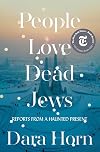
The book is composed of 12 essays where Horn looks into how the society treats Jews - those who died a while ago, be it in the Holocaust, in pogroms or by the decision of a local government, those who died very recently in a terrorist attack and those that are living and breathing now. She brings both her academic knowledge and a personal experience as an American Jew into these essays.
It is really appalling how Jews perished in Holocaust became sort of a blockbuster and a bestseller, show more providing a cautionary tale and the forgiveness to the society as a whole, not asking for a reconning or a punishment, or at least a change of societal norms. The examples of such treatment vary from the Anna Frank museum demanding from a worker to hide his kippah (a traditional skull cap), to a justification offered by a mainstream media of a terrorist attack on Hasidic men in New Jersey, which was essentially a victim blaming, to an acceptance of rockets being fired on Israeli towns. As Horn aptly puts it: "...the wily Jews figured out how to prevent their children from dying in large piles, so it is clearly not a big deal".
For Horn one of the reasons for such a callous treatment of the living Jews is the very high bar of the wrong set by the Holocaust. Meaning, the Holocaust was a tragedy but it not only dwarfs any other attack on Jews, it makes these attacks "not a big deal". The other reason, maybe less stressed, but still clearly articulated is the society's desire to blame other people for all its troubles instead of claiming responsibility for said troubles. And who are best to be blamed if not Jews? After all this is a three-thousand-year tradition.
Disclaimer: the book was published in 2021 and I've added it to my TBR back then. I'm reading it now, 442 days since October 7th 2023 in an attempt to understand why Jewish lives taken in this war do not matter, why portraits of Jewish hostages, women and a baby among them are being torn down in every major city around the world. show less
It is really appalling how Jews perished in Holocaust became sort of a blockbuster and a bestseller, show more providing a cautionary tale and the forgiveness to the society as a whole, not asking for a reconning or a punishment, or at least a change of societal norms. The examples of such treatment vary from the Anna Frank museum demanding from a worker to hide his kippah (a traditional skull cap), to a justification offered by a mainstream media of a terrorist attack on Hasidic men in New Jersey, which was essentially a victim blaming, to an acceptance of rockets being fired on Israeli towns. As Horn aptly puts it: "...the wily Jews figured out how to prevent their children from dying in large piles, so it is clearly not a big deal".
For Horn one of the reasons for such a callous treatment of the living Jews is the very high bar of the wrong set by the Holocaust. Meaning, the Holocaust was a tragedy but it not only dwarfs any other attack on Jews, it makes these attacks "not a big deal". The other reason, maybe less stressed, but still clearly articulated is the society's desire to blame other people for all its troubles instead of claiming responsibility for said troubles. And who are best to be blamed if not Jews? After all this is a three-thousand-year tradition.
Disclaimer: the book was published in 2021 and I've added it to my TBR back then. I'm reading it now, 442 days since October 7th 2023 in an attempt to understand why Jewish lives taken in this war do not matter, why portraits of Jewish hostages, women and a baby among them are being torn down in every major city around the world. show less
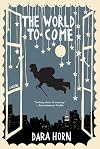
Sometimes a novelist is burdened by a surfeit of rich and poignant characters. It must be hard to decide which of their stories to tell, and tempting to try and tell all of them. Dara Horn succumbs to this temptation and very nearly is overwhelmed by it. If she does not quite succeed, she at least gives us numerous wonderful moments, and plenty to think about.
Ostensibly the protagonist of the novel is Benjamin Ziskind, an aging prodigy (now thirty) who, in a moment of recognition that show more prompts a rash act of liberation, walks out of a Chagall exhibit in New York with a small painting that he realizes used to hang in his recently deceased mother’s house. In his mind he is simply returning stolen property, but this painting’s history is much more. It is tied to a history of misery and despair for Benjamin’s recent ancestors and by association to the long history of suffering of Jewish people everywhere. The painting, we learn, had been given to Benjamin’s maternal grandfather, Boris, by Chagall himself when Chagall was teaching art at an orphanage near Malakhova. These are no ordinary orphans. They are all that remains of families destroyed during the wave of pogroms that swept through Russia in the 1920s. And Boris, whose Jewish name is also Benjamin, is one of the most tragic cases, having been rescued from an open grave in which he was hiding.
We also learn of Chagall’s friend at the orphanage, the writer known as ‘The Hidden One’, or Der Nister. His story is equally tragic. It mirrors that of a whole generation of Russian Jewish intellectuals and artists that was systematically destroyed under Stalin’s regime. Chagall ends up being just about the only one to die a natural death, having fled to Berlin in the 1920s and later further west.
But just as interesting is the story of the twin sister of Benjamin (the first Benjamin I mentioned). She is an artist like their mother had been. And she was present at the age of 12 when her mother “sold” the painting to a Russian museum whose buyer turns out to be none other than the man who was instrumental in her mother’s father’s (the other Benjamin) death.
Tragedy abounds. But not just tragedy. There is also much light and joy and numerous tales inspired by or lifted directly from Der Nister and his literary peers. These Yiddish stories feel both ancient and fresh. And they connect the characters of the surface plot with the larger story of life before birth, that is life with the angels, our preparation for, and our destination in the world to come. Curiously rich storytelling, gently recommended. show less
Ostensibly the protagonist of the novel is Benjamin Ziskind, an aging prodigy (now thirty) who, in a moment of recognition that show more prompts a rash act of liberation, walks out of a Chagall exhibit in New York with a small painting that he realizes used to hang in his recently deceased mother’s house. In his mind he is simply returning stolen property, but this painting’s history is much more. It is tied to a history of misery and despair for Benjamin’s recent ancestors and by association to the long history of suffering of Jewish people everywhere. The painting, we learn, had been given to Benjamin’s maternal grandfather, Boris, by Chagall himself when Chagall was teaching art at an orphanage near Malakhova. These are no ordinary orphans. They are all that remains of families destroyed during the wave of pogroms that swept through Russia in the 1920s. And Boris, whose Jewish name is also Benjamin, is one of the most tragic cases, having been rescued from an open grave in which he was hiding.
We also learn of Chagall’s friend at the orphanage, the writer known as ‘The Hidden One’, or Der Nister. His story is equally tragic. It mirrors that of a whole generation of Russian Jewish intellectuals and artists that was systematically destroyed under Stalin’s regime. Chagall ends up being just about the only one to die a natural death, having fled to Berlin in the 1920s and later further west.
But just as interesting is the story of the twin sister of Benjamin (the first Benjamin I mentioned). She is an artist like their mother had been. And she was present at the age of 12 when her mother “sold” the painting to a Russian museum whose buyer turns out to be none other than the man who was instrumental in her mother’s father’s (the other Benjamin) death.
Tragedy abounds. But not just tragedy. There is also much light and joy and numerous tales inspired by or lifted directly from Der Nister and his literary peers. These Yiddish stories feel both ancient and fresh. And they connect the characters of the surface plot with the larger story of life before birth, that is life with the angels, our preparation for, and our destination in the world to come. Curiously rich storytelling, gently recommended. show less

A story which starts in Russia and ends in USA, runs a century and involves Jewish history, a family history and the stealing of a painting. It should be a captivating read - all the elements are there - including the real story of Chagall and the world in the 20th century. And yet, the story ended up disappointing.
Actually not the story itself - the multiple time lines and the connected stories of the people and the times are captivating. But the writing is so overwritten, so over show more complicated that it feels more like an exercise in style than a real novel. It felt as if Horn wrote a sentence, then realized that she missed to add a few metaphors so she added them. Then she added some more. And when she was done with the metaphors, she kept adding more and more pieces - literary connections and elements.
It all starts when a painting is stolen by a man that is usually not a criminal while being shown in the Museum of Jewish Art. The police is sure that one of the curators is responsible and she decides to find the truth on her own. And the story of loss and death and hope emerges - from the Jewish boy camps in Russia through the camps of the WWII and the world's craziness after that through Chernobyl and the changes of the 90s. A story of a family connected with the story of a painting - a story that makes old painful memories emerge. And all through it are the legends of the Jewish (or so they look like), the question of authorship and possession and the always important question of who owns a story.
It's one of those cases where I wish the author had done less - the story was captivating when I did not have to wade through the language. I suspect that I also missed a lot of references and nods. But even if I had not, I would not have liked the novel much more. And this novel could have been so much satisfying. show less
Actually not the story itself - the multiple time lines and the connected stories of the people and the times are captivating. But the writing is so overwritten, so over show more complicated that it feels more like an exercise in style than a real novel. It felt as if Horn wrote a sentence, then realized that she missed to add a few metaphors so she added them. Then she added some more. And when she was done with the metaphors, she kept adding more and more pieces - literary connections and elements.
It all starts when a painting is stolen by a man that is usually not a criminal while being shown in the Museum of Jewish Art. The police is sure that one of the curators is responsible and she decides to find the truth on her own. And the story of loss and death and hope emerges - from the Jewish boy camps in Russia through the camps of the WWII and the world's craziness after that through Chernobyl and the changes of the 90s. A story of a family connected with the story of a painting - a story that makes old painful memories emerge. And all through it are the legends of the Jewish (or so they look like), the question of authorship and possession and the always important question of who owns a story.
It's one of those cases where I wish the author had done less - the story was captivating when I did not have to wade through the language. I suspect that I also missed a lot of references and nods. But even if I had not, I would not have liked the novel much more. And this novel could have been so much satisfying. show less
Eternal Life Might Sound Good …
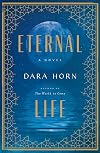
In some ways, our lengthened life spans would seem miraculous or magical to people of the 1st century, when Dara Horn’s main characters Rachel, daughter of a scribe, and Elazar, son of a high priest, were born. So, you might suppose, it is only fitting that we look on the never-ending lives of Rachel and Elazar with not a little touch of envy. Yet, as Horn illustrates, outliving everybody you ever knew and loved not just once or twice but time and time show more again takes its toll. Each passing year becomes more difficult and modern times even make restarting your life, as you must, more challenging. But more important, if you live and love, as Rachel does, you open yourself up to endless heartache. If you choose to distance yourself from your loves and family, as Elazar does to a large degree, your lives can feel empty. So, then, what appears as a blessing, as a wonderful miracle, turns out to be a curse. Of course, if everybody shared eternal life, well, that might be a different story, one, doubtless, fraught with its own plusses and minuses.
Rachel and Elazar are born and live their original lives during the days of the First Jewish-Roman War era (66-73 CE). They meet, fall in love, have sex, and Rachel becomes pregnant. She marries Zakkai, a boy indentured to her scribe father, who himself learns the scribing trade. She has the baby, a boy she names Yochanan. He becomes deathly ill. Elazar, his secret father, proposes a way to save him: take a sacred vow of eternal life. They both do. Yochanan lives. He grows to become a great teacher (he’s a real historical figure) who preserves the oral word of the Torah (redacted later in the written Mishnah) after the destruction of the Temple Mount by Titus and his Roman troops. As a result of their vows, Rachel and Elazar find themselves condemned to eternal life that includes an eternity of memories (like the siege and destruction of Jerusalem) that both must deal with, well, forever.
The novel focuses on the 21st century Rachel, an eighty-four year old, who doesn’t look her age and her meeting up with Elazar. He loves her and for him she is the only woman in the world, regardless of the century. She has conflicted feelings for him, in the extremes, uncontrollable passion and hatred, the latter for things Elazar did in their past. At eighty-four, she is at the end of her lifetime with her latest family. She must leave, but she can’t seem to. Her one great desire, shared, by Elazar, is death. And in her granddaughter, a biochemical researcher, she thinks she might have found the answer to ending her life.
Horn tells the tale succinctly, but some readers may sense a vagueness in how Rachel and Elazar pull off moving from life to life, or living those lives without folks becoming suspicious, especially when they advance in age. It’s a book for those who enjoy fantasy and who are comfortable with magical thinking. show less
In some ways, our lengthened life spans would seem miraculous or magical to people of the 1st century, when Dara Horn’s main characters Rachel, daughter of a scribe, and Elazar, son of a high priest, were born. So, you might suppose, it is only fitting that we look on the never-ending lives of Rachel and Elazar with not a little touch of envy. Yet, as Horn illustrates, outliving everybody you ever knew and loved not just once or twice but time and time show more again takes its toll. Each passing year becomes more difficult and modern times even make restarting your life, as you must, more challenging. But more important, if you live and love, as Rachel does, you open yourself up to endless heartache. If you choose to distance yourself from your loves and family, as Elazar does to a large degree, your lives can feel empty. So, then, what appears as a blessing, as a wonderful miracle, turns out to be a curse. Of course, if everybody shared eternal life, well, that might be a different story, one, doubtless, fraught with its own plusses and minuses.
Rachel and Elazar are born and live their original lives during the days of the First Jewish-Roman War era (66-73 CE). They meet, fall in love, have sex, and Rachel becomes pregnant. She marries Zakkai, a boy indentured to her scribe father, who himself learns the scribing trade. She has the baby, a boy she names Yochanan. He becomes deathly ill. Elazar, his secret father, proposes a way to save him: take a sacred vow of eternal life. They both do. Yochanan lives. He grows to become a great teacher (he’s a real historical figure) who preserves the oral word of the Torah (redacted later in the written Mishnah) after the destruction of the Temple Mount by Titus and his Roman troops. As a result of their vows, Rachel and Elazar find themselves condemned to eternal life that includes an eternity of memories (like the siege and destruction of Jerusalem) that both must deal with, well, forever.
The novel focuses on the 21st century Rachel, an eighty-four year old, who doesn’t look her age and her meeting up with Elazar. He loves her and for him she is the only woman in the world, regardless of the century. She has conflicted feelings for him, in the extremes, uncontrollable passion and hatred, the latter for things Elazar did in their past. At eighty-four, she is at the end of her lifetime with her latest family. She must leave, but she can’t seem to. Her one great desire, shared, by Elazar, is death. And in her granddaughter, a biochemical researcher, she thinks she might have found the answer to ending her life.
Horn tells the tale succinctly, but some readers may sense a vagueness in how Rachel and Elazar pull off moving from life to life, or living those lives without folks becoming suspicious, especially when they advance in age. It’s a book for those who enjoy fantasy and who are comfortable with magical thinking. show less
Lists
Awards


You May Also Like


Associated Authors
Statistics
- Works
- 14
- Also by
- 8
- Members
- 3,456
- Popularity
- #7,356
- Rating
- 3.9
- Reviews
- 190
- ISBNs
- 84
- Languages
- 8
- Favorited
- 8

