
Maggie Anton
Author of Joheved
Series
Works by Maggie Anton
Fifty Shades of Talmud: What the First Rabbis Had to Say About You-Know-What (2016) 28 copies, 1 review
Fifty Shades of Talmud 2 copies
The Choice 1 copy
Associated Works
Tagged
Common Knowledge
- Legal name
- Antonofsky, Margaret
- Birthdate
- cir. 1967
- Gender
- female
- Occupations
- chemist
novelist
Talmudic scholar - Relationships
- Parkhurst, Dave (husband)
- Nationality
- USA
- Places of residence
- Los Angeles, California, USA
- Associated Place (for map)
- California, USA
Members
Reviews
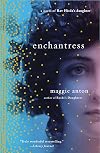
(Full disclosure: I received a free copy of this book for review through Goodreads' First Reads program.)
DNF (did not finish) at 18% / 66 pages.
I took a chance on Enchantress: A Novel of Rav Hisda's Daughter in a Goodreads giveaway; unfortunately, it's just not for me. While Anton does a commendable job of explaining ancient Jewish beliefs, customs, and phrases for the reader, I often found myself lost and confused. I also didn't realize that this is the second book in Anton's Rav Hisda's show more Daughter series, which is slated to be a trilogy. It's hard to say whether reading the books in order would have drastically affected my enjoyment of Enchantress - which, for what it's worth, I think can also be read as a standalone story.
I might have been willing to power through had I found any of the characters even remotely interesting or engaging - but, as it turned out, the only character for whom I could muster up any sort of feelings was Rava, who is a just an all-around shitty human being: sexist, arrogant, presumptuous, entitled, and narcissistic. And that's just in the first 66 pages.
Seeing as he's one half of the book's power couple, this is especially problematic. Rava and Hisdadukh (the titular daughter of Rav Hisda) aren't together at the beginning of the novel, but we know from the book's synopsis that their romance forms the backbone of the story. I cannot think of two people I want to see get together less than Rava and Hisdadukh. Or Rava and any human woman with a pulse.
To cite just one example (which manages to perfectly encapsulate so many of his character flaws): As a kid, Rava studied under Hisdadukh's father Rav Hisda. At one point, Rav Hisda asked his daughter - in front of the class (no pressure there!) - who she'd rather marry: Rava or Rami. She chose them both, to which Rava quipped that he'd be the last husband. That day began Hisdadukh's betrothal to Rami because, you know, kids are notoriously adept at making sound, life-altering decisions.
Fast-forward 10, 15, 20 years; Hisdadukh is a widow, and Rava is trapped in an unhappy marriage to an "unloved, barren wife." (Which, incidentally, excuses his odious behavior. Men are responsible for their successes, while women are to blame for their failures. Got it!) While Hisdadukh is out of town and thus unreachable, Rava approaches Hisdadukh's father to request her hand in marriage. Rav Hisda agrees because, hey, Hisdadukh said she desired to marry Rava all those years ago! When Hisdadukh returns and learns of the arrangement, she demands/begs him to break it off, which offends and angers Rava.
Even though: a) Rava will remain married to his first wife, Choran, who will maintain all the power and prestige of a first wife; b) Hisdadukh's primary use is to be as a baby machine; c) everyone, including Hisdadukh herself, suspects Rava of murdering Rami.
And yet Rava's shocked and insulted that his sneaky little play was rejected by Hisdadukh! (Who, by the beginning of Enchantress, is actively courting him. Talk about your head-scratchers!) Imagine that!
So yeah. Shitty human being. No like.
Granted, these odious attitudes and practices may all be historically accurate, but this knowledge does little to enhance my enjoyment of the book. If anything, it makes me like it even less.
That said, those who have an interest in and working knowledge of the Talmud are likely to have a greater appreciation of Enchantress. That just isn't me.
http://www.easyvegan.info/2014/10/03/enchantress-by-maggie-anton/ show less
DNF (did not finish) at 18% / 66 pages.
I took a chance on Enchantress: A Novel of Rav Hisda's Daughter in a Goodreads giveaway; unfortunately, it's just not for me. While Anton does a commendable job of explaining ancient Jewish beliefs, customs, and phrases for the reader, I often found myself lost and confused. I also didn't realize that this is the second book in Anton's Rav Hisda's show more Daughter series, which is slated to be a trilogy. It's hard to say whether reading the books in order would have drastically affected my enjoyment of Enchantress - which, for what it's worth, I think can also be read as a standalone story.
I might have been willing to power through had I found any of the characters even remotely interesting or engaging - but, as it turned out, the only character for whom I could muster up any sort of feelings was Rava, who is a just an all-around shitty human being: sexist, arrogant, presumptuous, entitled, and narcissistic. And that's just in the first 66 pages.
Seeing as he's one half of the book's power couple, this is especially problematic. Rava and Hisdadukh (the titular daughter of Rav Hisda) aren't together at the beginning of the novel, but we know from the book's synopsis that their romance forms the backbone of the story. I cannot think of two people I want to see get together less than Rava and Hisdadukh. Or Rava and any human woman with a pulse.
To cite just one example (which manages to perfectly encapsulate so many of his character flaws): As a kid, Rava studied under Hisdadukh's father Rav Hisda. At one point, Rav Hisda asked his daughter - in front of the class (no pressure there!) - who she'd rather marry: Rava or Rami. She chose them both, to which Rava quipped that he'd be the last husband. That day began Hisdadukh's betrothal to Rami because, you know, kids are notoriously adept at making sound, life-altering decisions.
Fast-forward 10, 15, 20 years; Hisdadukh is a widow, and Rava is trapped in an unhappy marriage to an "unloved, barren wife." (Which, incidentally, excuses his odious behavior. Men are responsible for their successes, while women are to blame for their failures. Got it!) While Hisdadukh is out of town and thus unreachable, Rava approaches Hisdadukh's father to request her hand in marriage. Rav Hisda agrees because, hey, Hisdadukh said she desired to marry Rava all those years ago! When Hisdadukh returns and learns of the arrangement, she demands/begs him to break it off, which offends and angers Rava.
Even though: a) Rava will remain married to his first wife, Choran, who will maintain all the power and prestige of a first wife; b) Hisdadukh's primary use is to be as a baby machine; c) everyone, including Hisdadukh herself, suspects Rava of murdering Rami.
And yet Rava's shocked and insulted that his sneaky little play was rejected by Hisdadukh! (Who, by the beginning of Enchantress, is actively courting him. Talk about your head-scratchers!) Imagine that!
So yeah. Shitty human being. No like.
Granted, these odious attitudes and practices may all be historically accurate, but this knowledge does little to enhance my enjoyment of the book. If anything, it makes me like it even less.
That said, those who have an interest in and working knowledge of the Talmud are likely to have a greater appreciation of Enchantress. That just isn't me.
http://www.easyvegan.info/2014/10/03/enchantress-by-maggie-anton/ show less
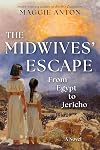
Maggie Anton’s “The Midwives’ Escape: From Egypt to Jericho” is a masterful blend of historical fiction, biblical narrative, and compelling storytelling. Through the eyes of Egyptian midwives Asenet and Shifra, Anton reimagines the Exodus from a fresh perspective, breathing life into the daily struggles, triumphs, and resilience of those who journeyed from slavery to freedom.
Anton’s meticulous research and rich descriptions immerse readers in the realities of ancient life, from the show more dangers of the wilderness to the intricacies of midwifery and survival. The novel is filled with adventure, romance, and profound spiritual questioning, making it both an engaging read and a thought-provoking reflection on faith, identity, and community.
For fans of biblical fiction, “The Midwives’ Escape” stands alongside “The Red Tent” as a beautifully crafted midrashic tale. Anton once again proves herself to be a master storyteller, offering readers an intimate and inclusive vision of what might have truly happened on the road to the Promised Land. A must-read for historical fiction lovers! show less
Anton’s meticulous research and rich descriptions immerse readers in the realities of ancient life, from the show more dangers of the wilderness to the intricacies of midwifery and survival. The novel is filled with adventure, romance, and profound spiritual questioning, making it both an engaging read and a thought-provoking reflection on faith, identity, and community.
For fans of biblical fiction, “The Midwives’ Escape” stands alongside “The Red Tent” as a beautifully crafted midrashic tale. Anton once again proves herself to be a master storyteller, offering readers an intimate and inclusive vision of what might have truly happened on the road to the Promised Land. A must-read for historical fiction lovers! show less
Hisdadukh, daughter of respected rabbi Rav Hisda in late third century Babylonia, is learned, beautiful, passionate, and an aspiring sorceress of great talent. A young widow who has had to give her son over to his father's family to raise, she leaves her home in Sura to apprentice with Em the Healer in Pumbedita. In Em's house, she is living under the same roof with another rabbi, Rava, a firend and rival of her late husband, and a man with whom she shares both deep attraction, and shared show more conflicts and misunderstandings.
This is the starting point from which Hisdadukh and Rava spend the next six decades learning, loving, and growing together, as she becomes mistress of a now-lost tradition of Jewish women's magic, and he studies the Torah, priestly magic, and the secret Torah, and becomes a leading light in the growing tradition of the Talmud and rabbinic law. Set in Babylonia, a.k.a. Persia, or the country we now call Iran, it's a different look at the third and fourth centuries than most of us have learned, east and south of the Roman Empire, in a culture where the dominant religion is neither the Roman or Greek gods, nor Christianity, but Zorastrianism.
Anton does a marvelous job developing this alien culture and forgotten history, as well as the personalities and lives of her characters. Though we inevitably know some better than others, and like some better than others, they all feel real, complex individuals with their own strengths, weaknesses, and inconsistencies. No caricatures or cardboard stock figures here. The important characters and many episodes and uses of magic are drawn from the Talmud, woven together in a beautiful tapestry.
Aramaic words and terminology are used as needed. In most cases, the meaning is reasonably clear from context, but there's a glossary at the back of the book for anything the reader stumbles over.
I found this wholly compelling and fascinating. Highly recommended.
I received a free electronic copy of this book from the publisher via Penguin's First to Read program. show less
This is the starting point from which Hisdadukh and Rava spend the next six decades learning, loving, and growing together, as she becomes mistress of a now-lost tradition of Jewish women's magic, and he studies the Torah, priestly magic, and the secret Torah, and becomes a leading light in the growing tradition of the Talmud and rabbinic law. Set in Babylonia, a.k.a. Persia, or the country we now call Iran, it's a different look at the third and fourth centuries than most of us have learned, east and south of the Roman Empire, in a culture where the dominant religion is neither the Roman or Greek gods, nor Christianity, but Zorastrianism.
Anton does a marvelous job developing this alien culture and forgotten history, as well as the personalities and lives of her characters. Though we inevitably know some better than others, and like some better than others, they all feel real, complex individuals with their own strengths, weaknesses, and inconsistencies. No caricatures or cardboard stock figures here. The important characters and many episodes and uses of magic are drawn from the Talmud, woven together in a beautiful tapestry.
Aramaic words and terminology are used as needed. In most cases, the meaning is reasonably clear from context, but there's a glossary at the back of the book for anything the reader stumbles over.
I found this wholly compelling and fascinating. Highly recommended.
I received a free electronic copy of this book from the publisher via Penguin's First to Read program. show less
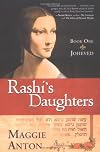
Every author who attempts to write historical fiction runs up against the same problem: you weren't ever there. You have to rely on the historical record to gain an understanding of the time period you want to set your story.
If you are writing about a period of history before extensive record keeping, you have to rely on a few primary sources and unless you are very good at languages, you are going to have to rely on secondary sources, which are only as good as the scholarship of the author show more and the editors.
So what do you do? Get a feel for it and start writing.
It's fiction, not a term paper, or thesis that has been defended or a book that has undergone peer review.
This is fiction. That means that you make stuff up.
There is a lot of stuff made up here. So much so that this Orthodox Jew couldn't keep reading. The life and customs of Orthodox Jews is not a secret, or so esoteric that only a few scholars in the world in every generation can practice them.(I read the first 100 pages and stopped.)
A trip to Aish.com, for example, would give you a clearer understanding of the way Jews of this stripe live. Rashi didn't live so very differently than we do today, minus technology, of course. We still learn how to live Jewish lives from him by his commentary in Jewish texts. I'm assuming that he lived what he taught, explained and argued about for all his adult life. I don't believe that this was just an academic exercise and then he went out to the local pub to unwind.
All that said, this is very good fiction. This is a great story and a great series about Jewish women in the middle ages. Maggie Anton has a gift for writing clear, interesting prose and well structured plots, inhabited by 3D characters. I wish I could write this clearly or plot this well. Kudos!
Just in terms of history, it's historical fiction. Not fictional history. there is a big difference. In terms of Judaism, well, do what Hillel said to the potential convert: go and learn. Because Judaism, it's all in the details. show less
If you are writing about a period of history before extensive record keeping, you have to rely on a few primary sources and unless you are very good at languages, you are going to have to rely on secondary sources, which are only as good as the scholarship of the author show more and the editors.
So what do you do? Get a feel for it and start writing.
It's fiction, not a term paper, or thesis that has been defended or a book that has undergone peer review.
This is fiction. That means that you make stuff up.
There is a lot of stuff made up here. So much so that this Orthodox Jew couldn't keep reading. The life and customs of Orthodox Jews is not a secret, or so esoteric that only a few scholars in the world in every generation can practice them.(I read the first 100 pages and stopped.)
A trip to Aish.com, for example, would give you a clearer understanding of the way Jews of this stripe live. Rashi didn't live so very differently than we do today, minus technology, of course. We still learn how to live Jewish lives from him by his commentary in Jewish texts. I'm assuming that he lived what he taught, explained and argued about for all his adult life. I don't believe that this was just an academic exercise and then he went out to the local pub to unwind.
All that said, this is very good fiction. This is a great story and a great series about Jewish women in the middle ages. Maggie Anton has a gift for writing clear, interesting prose and well structured plots, inhabited by 3D characters. I wish I could write this clearly or plot this well. Kudos!
Just in terms of history, it's historical fiction. Not fictional history. there is a big difference. In terms of Judaism, well, do what Hillel said to the potential convert: go and learn. Because Judaism, it's all in the details. show less
Lists
Jewish Books (3)
Awards


You May Also Like


Associated Authors
Statistics
- Works
- 15
- Also by
- 1
- Members
- 1,504
- Popularity
- #17,082
- Rating
- 3.9
- Reviews
- 83
- ISBNs
- 27
- Languages
- 3
- Favorited
- 5
