
Rachel Kadish
Author of The Weight of Ink
About the Author
Works by Rachel Kadish
Associated Works
The New Diaspora: The Changing Landscape of American Jewish Fiction (2015) — Contributor — 17 copies
Promised Lands: New Jewish American Fiction on Longing and Belonging (2010) — Contributor — 13 copies
Tagged
Common Knowledge
- Birthdate
- 1969
- Gender
- female
- Education
- Princeton University (BA)
New York University (MA ∙ Creative Writing) - Occupations
- teacher (fiction and creative nonfiction)
writer-in-residence (Stanford University, Koret Writer In Residence, 2005) - Organizations
- Harvard University Summer School (teacher)
Boston College (teacher)
Lesley University (teacher, MFA program) - Awards and honors
- Harvard/Radcliffe’s Bunting Institute (fellow ∙ fiction)
National Endowment for the Arts Fellowship
Massachusetts Cultural Council (fellow)
Sami Rohr Prize for Jewish Literature Finalist (2019) - Short biography
- She is married and has two children.
- Nationality
- USA
- Places of residence
- Massachusetts, USA
- Map Location
- USA
Members
Reviews
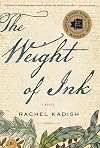
Two stories, centuries apart, are told in this engaging historical romance. The stories are linked by documents created in the seventeenth century, hidden away in a British country house, and ultimately discovered in the twenty-first century. In many ways a book about books, The Weight of Ink surprises with delights that are gradually revealed.
Part of the story's charm is in the variety of its milieus and sensibilities. Following two female protagonists of both centuries—Ester Velasquez show more and Helen Watt, respectively—we also witness the goings-on of a venerable and drafty house of a rabbi in 1660s London, and glimpse the modern life of a young American academic, Aaron Levy, with heartrending troubles of his own. Perhaps most pivotally, we see an English girl’s time volunteering abroad on a kibbutz in Israel in the years after the war of independence. In spite of a gulf of over 300 years, these characters depend on each other each for their own reasons, any of which can provide parallels in the present day.
The images of these different times and places, brought to life at once through painstaking detail and accessible prose, are startlingly clear, even cinematic. Supporting roles, too, are far from dull. Much more than mere foils, even minor characters are fascinating in their own right. The Rabbi and others around Ester are fascinating -- Rivka, a servant and survivor of Polish pogroms, is not simply loyal, but also intrigues with a timeless intellect and will. The men in Ester Velasquez’s and Helen Watts’ lives wholly determine the courses of their universes. Indeed, perhaps too much for comfort, but believable nevertheless.
The book includes explorations into philosophy as Ester corresponds with Spinoza and others. Ester focuses on the pursuit of philosophy, including its relationship with both her mind and heart as can be seen in this passage:
“How wrong she'd been, to believe a mind could reign over anything. For it did not reign even over itself...and despite all the arguments of all the philosophers, Ester now saw that thought proved nothing. Had Descartes, near his own death, come at last to see his folly? The mind was only an apparatus within the mechanism of the body - and it took little more than a fever to jostle a cog, so that the gear of thought could no longer turn. Philosophy could be severed from life. Blood overmastered ink. And every thin breath she drew told her which ruled her.”
There are also interesting historical details of the Spanish Inquisition that led the Jewish toward flight into Holland; this suggested to this reader a certain irony when those same Jews ostracized Spinoza for his heretical pantheistic views. The issue of what it is to be Jewish and to enter interfaith relationships in multiple time periods are integral to each of these stories. Is there merit to keeping within the tribe? Are there, regardless of time, place, or commitment, bridges that those who would willingly enter the Jewish community from the outside can never truly cross? Crucially, what does it mean to choose survival over martyrdom? These questions play out in the characters’ personal lives concurrently with Ester’s philosophical forays into the nature of God.
The author's prose is elegant and she takes her time to slowly build the two different narratives until the suspense in both centuries keeps the reader turning the pages. All of the stories yield mysteries and personal travails that made this a deeply moving novel. show less
Part of the story's charm is in the variety of its milieus and sensibilities. Following two female protagonists of both centuries—Ester Velasquez show more and Helen Watt, respectively—we also witness the goings-on of a venerable and drafty house of a rabbi in 1660s London, and glimpse the modern life of a young American academic, Aaron Levy, with heartrending troubles of his own. Perhaps most pivotally, we see an English girl’s time volunteering abroad on a kibbutz in Israel in the years after the war of independence. In spite of a gulf of over 300 years, these characters depend on each other each for their own reasons, any of which can provide parallels in the present day.
The images of these different times and places, brought to life at once through painstaking detail and accessible prose, are startlingly clear, even cinematic. Supporting roles, too, are far from dull. Much more than mere foils, even minor characters are fascinating in their own right. The Rabbi and others around Ester are fascinating -- Rivka, a servant and survivor of Polish pogroms, is not simply loyal, but also intrigues with a timeless intellect and will. The men in Ester Velasquez’s and Helen Watts’ lives wholly determine the courses of their universes. Indeed, perhaps too much for comfort, but believable nevertheless.
The book includes explorations into philosophy as Ester corresponds with Spinoza and others. Ester focuses on the pursuit of philosophy, including its relationship with both her mind and heart as can be seen in this passage:
“How wrong she'd been, to believe a mind could reign over anything. For it did not reign even over itself...and despite all the arguments of all the philosophers, Ester now saw that thought proved nothing. Had Descartes, near his own death, come at last to see his folly? The mind was only an apparatus within the mechanism of the body - and it took little more than a fever to jostle a cog, so that the gear of thought could no longer turn. Philosophy could be severed from life. Blood overmastered ink. And every thin breath she drew told her which ruled her.”
There are also interesting historical details of the Spanish Inquisition that led the Jewish toward flight into Holland; this suggested to this reader a certain irony when those same Jews ostracized Spinoza for his heretical pantheistic views. The issue of what it is to be Jewish and to enter interfaith relationships in multiple time periods are integral to each of these stories. Is there merit to keeping within the tribe? Are there, regardless of time, place, or commitment, bridges that those who would willingly enter the Jewish community from the outside can never truly cross? Crucially, what does it mean to choose survival over martyrdom? These questions play out in the characters’ personal lives concurrently with Ester’s philosophical forays into the nature of God.
The author's prose is elegant and she takes her time to slowly build the two different narratives until the suspense in both centuries keeps the reader turning the pages. All of the stories yield mysteries and personal travails that made this a deeply moving novel. show less

"The Weight Of Ink" was the fifth book I've read for my 20 for 20 reading challenge (to read twenty books from my TBR pile that are 600 pages/20 hours long or more) and it's the first one where I've felt, "this is a book that was worth every minute I've spent on it."
The book follows two passionately intellectual women, Ester Velasquez and Helen Watt, separated by more than three hundred years but connected by words inked on paper and a need to know what is true.
Ester, orphaned in her teens, show more has been taken into the household of a blind rabbi and has moved with him from Amsterdam to 1660s London where, going against tradition, the rabbi permits her to become his scribe. In doing so, he ignites in her a hunger for the life of the mind which, as a woman, she should have no access to.
In 2000, Helen, sixty-four years old, in failing health and approaching a mandatory retirement that will end her career as a History Professor specialising in Jewish history, is invited by a former student to view a set of seventeenth-century Jewish documents that were discovered during a renovation of his house in Richmond. These papers lead Helen to piece together not just the truth of Ester's life but of her own.
The writing is accessible, beautiful, calm and clear. I quickly found myself being immersed in the worlds of both of these women even though they were equally alien to me. Yet, by the time I was halfway through the book, I felt as if I had shouldered the weight of disappointment and sadness of each of the women.
Ester and Helen are both serious, passionate, strong women who have few good choices available to them.
The pace was slow but doesn't drag. The circumstances are deeply sad without being melodramatic. I admired Rachel Kadish's ability to engage me in the passion for thought that both women share. I was also impressed at her ability to add an I-NEED-to-know-what-happens-next element to both timelines. Most of all I admired the humanity and compassion with which the story was told.
I found the experience was quite intense so I could only listen to a few hours at a time before taking a break. This meant that I spent four weeks with Ester and Helen in my head. I came to value the time I spent with them.
I also enjoyed the time I spent with Aaron Levy, the American grad-student Helen enlists to help her. He's not the kind of man I know well and initially I found him hard to like or even understand. His journey of the mind and spirit echoes that of Ester and Helen. He also has to come to terms with the truth of where his passion lies. I thought this was very well done.
I recommend investing your time in "The Weight Of Ink". If it's available to you, I recommend the audiobook version which is narrated with great skill by Corrie James. show less
The book follows two passionately intellectual women, Ester Velasquez and Helen Watt, separated by more than three hundred years but connected by words inked on paper and a need to know what is true.
Ester, orphaned in her teens, show more has been taken into the household of a blind rabbi and has moved with him from Amsterdam to 1660s London where, going against tradition, the rabbi permits her to become his scribe. In doing so, he ignites in her a hunger for the life of the mind which, as a woman, she should have no access to.
In 2000, Helen, sixty-four years old, in failing health and approaching a mandatory retirement that will end her career as a History Professor specialising in Jewish history, is invited by a former student to view a set of seventeenth-century Jewish documents that were discovered during a renovation of his house in Richmond. These papers lead Helen to piece together not just the truth of Ester's life but of her own.
The writing is accessible, beautiful, calm and clear. I quickly found myself being immersed in the worlds of both of these women even though they were equally alien to me. Yet, by the time I was halfway through the book, I felt as if I had shouldered the weight of disappointment and sadness of each of the women.
Ester and Helen are both serious, passionate, strong women who have few good choices available to them.
The pace was slow but doesn't drag. The circumstances are deeply sad without being melodramatic. I admired Rachel Kadish's ability to engage me in the passion for thought that both women share. I was also impressed at her ability to add an I-NEED-to-know-what-happens-next element to both timelines. Most of all I admired the humanity and compassion with which the story was told.
I found the experience was quite intense so I could only listen to a few hours at a time before taking a break. This meant that I spent four weeks with Ester and Helen in my head. I came to value the time I spent with them.
I also enjoyed the time I spent with Aaron Levy, the American grad-student Helen enlists to help her. He's not the kind of man I know well and initially I found him hard to like or even understand. His journey of the mind and spirit echoes that of Ester and Helen. He also has to come to terms with the truth of where his passion lies. I thought this was very well done.
I recommend investing your time in "The Weight Of Ink". If it's available to you, I recommend the audiobook version which is narrated with great skill by Corrie James. show less
Dual timeline historical fiction set in the UK. The first timeline occurs in the year 2000. British historian, Helen Watt, nearing retirement due to illness, has been notified of a cache of historic documents. She hires American graduate student Aaron Levy. They discover a unique situation – a Jewish woman has scribed for a blind rabbi, a job traditionally performed only by men. The second storyline is set in 17th century London. It follows the life of the scribe, Ester Velasquez. The two show more stories are interwoven, each illuminating the other. Themes include female intellectualism, academic rivalry, friendship, love, guilt, loneliness, and philosophy.
The plot is complex. The settings are described in atmospheric detail, especially 17th century England. The structure is engaging – the historians make a discovery, which is then clarified in the scribe’s story. Each main character deals with similar challenges, so the themes are consistent within the two storylines. It is filled with well-drawn characters and thought-provoking questions. “Do you wonder, ever,” said Ester quietly, “whether our own will alters anything? Or whether we’re determined to be as we are by the very working of the world?”
This book examines the fundamental nature of knowledge, religious belief (or non-belief), and human existence. The pace is deliberate, as a number of building blocks need to be set into place before getting to the heart of the philosophical matters. There are a few surprises toward the end. At almost 600 pages on weighty topics, it requires patience, but I found it well worth reading. show less
The plot is complex. The settings are described in atmospheric detail, especially 17th century England. The structure is engaging – the historians make a discovery, which is then clarified in the scribe’s story. Each main character deals with similar challenges, so the themes are consistent within the two storylines. It is filled with well-drawn characters and thought-provoking questions. “Do you wonder, ever,” said Ester quietly, “whether our own will alters anything? Or whether we’re determined to be as we are by the very working of the world?”
This book examines the fundamental nature of knowledge, religious belief (or non-belief), and human existence. The pace is deliberate, as a number of building blocks need to be set into place before getting to the heart of the philosophical matters. There are a few surprises toward the end. At almost 600 pages on weighty topics, it requires patience, but I found it well worth reading. show less
The book consists of two major plots, both are so breathtakingly interesting it is impossible to stop or to put the book aside. Two heroines move in some strange parallel four hundreds years apart and tell a story, reveal the history of people, history of Jews.
I cannot be objective judging these stories, because at some point of my life I have experienced some measure of it all: the awfulness of being addressed "you, the Jewess", the heated discussion of rabbis and the scorching sun at show more Masada. Dror, Aharon, and even Helen - they all are recognizable among my friends and neighbours. Therefore for me this is not only an enthralling story, it is a personal one. show less
I cannot be objective judging these stories, because at some point of my life I have experienced some measure of it all: the awfulness of being addressed "you, the Jewess", the heated discussion of rabbis and the scorching sun at show more Masada. Dror, Aharon, and even Helen - they all are recognizable among my friends and neighbours. Therefore for me this is not only an enthralling story, it is a personal one. show less
Lists
Autodidacts (1)
Unmarried women (1)
Awards


You May Also Like


Associated Authors
Statistics
- Works
- 4
- Also by
- 4
- Members
- 1,868
- Popularity
- #13,780
- Rating
- 4.0
- Reviews
- 86
- ISBNs
- 32
- Languages
- 6