
Francis French
Author of Falling to Earth: An Apollo 15 Astronaut's Journey to the Moon
Works by Francis French
Falling to Earth: An Apollo 15 Astronaut's Journey to the Moon (2011) — Author — 147 copies, 6 reviews
In the Shadow of the Moon: A Challenging Journey to Tranquility, 1965-1969 (2007) 110 copies, 4 reviews
Apollo Pilot: The Memoir of Astronaut Donn Eisele (Outward Odyssey: A People's History of Spaceflight) (2017) — Editor — 19 copies
Tagged
Common Knowledge
- Other names
- FRENCH, Francis
- Birthdate
- 1970
- Gender
- male
Members
Reviews
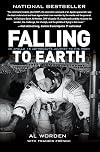
Decades later, I am still angry. Upset at myself and others. It seemed like an insignificant thing at the time, when I was concentrating on flying and science preparations for the mission. But eventually it overwhelmed all the good work that we did and ruined my career.
Al Worden was a poor Michigan farm boy who became the first astronaut to perform a deep-space spacewalk. As command module pilot for Apollo 15, he spent six days orbiting the Moon all alone and performed dozens of science show more experiments during that time. Worden gives us details of the experience of weightlessness, how he feared he would make a fool of himself when he stepped on to that aircraft carrier because he had forgotten how to use his legs. In just two weeks his brain had rewired itself - even days after his return to Earth, he would push off a table with his hand and expect to move around the room. But Worden also tells of another experience few others have had - that of a disgraced astronaut.
Early astronauts were granted several perks - deals for Corvettes, contracts with LIFE and low, low mortgage rates. Business men were falling over themselves to be associated with NASA and the astronauts themselves were keen to supplement their military-grade pay. Flight crews were approached with opportunities to pack small things into their 'personal preference kit' (their luggage so to speak) that could be sold later. Personal objects taken up on flights were all vetted and approved by Deke Slayton, director of flight operations, and he tried to allow the men as much latitude as possible. It was after the Apollo 15 mission that the Senate decided to look into the issue of 'flown objects' becoming available on the collector's market. It wasn't that this crew was the first to try to make a buck off souvenirs, it wasn't that they tried to sneak things on-board their capsule without permission, it was just bad timing. NASA was a boy's club - but the boys at the top knew when to cut their losses - and Worden was sacrificed.
Even then, Worden does not lose himself in his bad fortune - this book is no pity party. He found a corner of aerospace to keep his hand in. He remarried. He ran for Congress. And many years later, he found the grace to raise money for an astronaut scholarship program - which ironically has him working closely with NASA. Falling is an interesting journey told in an engaging manner. I enjoyed it and would recommend it to those interested in spaceflight memoirs. show less
Al Worden was a poor Michigan farm boy who became the first astronaut to perform a deep-space spacewalk. As command module pilot for Apollo 15, he spent six days orbiting the Moon all alone and performed dozens of science show more experiments during that time. Worden gives us details of the experience of weightlessness, how he feared he would make a fool of himself when he stepped on to that aircraft carrier because he had forgotten how to use his legs. In just two weeks his brain had rewired itself - even days after his return to Earth, he would push off a table with his hand and expect to move around the room. But Worden also tells of another experience few others have had - that of a disgraced astronaut.
Early astronauts were granted several perks - deals for Corvettes, contracts with LIFE and low, low mortgage rates. Business men were falling over themselves to be associated with NASA and the astronauts themselves were keen to supplement their military-grade pay. Flight crews were approached with opportunities to pack small things into their 'personal preference kit' (their luggage so to speak) that could be sold later. Personal objects taken up on flights were all vetted and approved by Deke Slayton, director of flight operations, and he tried to allow the men as much latitude as possible. It was after the Apollo 15 mission that the Senate decided to look into the issue of 'flown objects' becoming available on the collector's market. It wasn't that this crew was the first to try to make a buck off souvenirs, it wasn't that they tried to sneak things on-board their capsule without permission, it was just bad timing. NASA was a boy's club - but the boys at the top knew when to cut their losses - and Worden was sacrificed.
Even then, Worden does not lose himself in his bad fortune - this book is no pity party. He found a corner of aerospace to keep his hand in. He remarried. He ran for Congress. And many years later, he found the grace to raise money for an astronaut scholarship program - which ironically has him working closely with NASA. Falling is an interesting journey told in an engaging manner. I enjoyed it and would recommend it to those interested in spaceflight memoirs. show less
https://fromtheheartofeurope.eu/falling-to-earth-an-apollo-15-astronauts-journey...
Another of the astronaut autobiographies which I saw recommended in this blog post in 2020 (via File 770). I enjoyed Michael Collins’ Carrying the Fire so much that I made it my book of 2021. Like Collins, Worden got to circle the Moon while his colleagues went and landed on it; unlike Collins, his career had a hard crash immediately afterwards, as a result of a scandal involving the sale for profit of show more commemorative stamps that the astronauts had brought to the lunar surface and back. Worden stayed loyal to his commander, David Scott, when the whole story broke, but nearing the end of his life clearly felt that he needed to tell his side and clarify Scott’s overall responsibility. (He died at 88 in March 2020; Scott, now 91, is the last remaining Apollo commander.)
On the technological side, Worden’s account tallies with Collins, though it’s less funny; it’s rather delightful though to read of him developing a passion for lunar geology, and manically photographing every possible inch of the moon’s surface while in orbit. Worden’s personal life was more complex, as he and his first wife divorced while he was undergoing his astronaut training, and one also senses that he was politically less astute than Collins – he notes of a dinner that the Apollo 15 team had with President Nixon and Vice-President Agnew that all five of them underwent public disgrace soon afterwards, but there is not much introspection as to how this happened.
The part of the story I found most shocking in fact was the serious health issue endured by the third man on the mission, James Irwin, whose heart underwent serious stress in the final stages of the lunar excursion. Irwin had a heart attack less than two years after their mission, aged only 43, and was the first of the twelve who walked on the moon to die, aged 61 in 1991. NASA failed to communicate Irwin’s health situation clearly to the three astronauts, and Scott, decided that they should keep working, an error as it turned out, but based on incomplete information. Both the stamps scandal and Irwin’s overwork were mistaken decisions made by Scott, but in a framework established by NASA that made these mistakes very easy to make.
(Irwin became an evangelical Christian after he returned from the moon and went on expeditions to find Noah’s Ark on Mount Ararat, asserting that the Book of Genesis was literally true. His grandparents were from Pomeroy, Co Tyrone, and he described himself as the first Irishman on the Moon.)
Space is exciting stuff and although I think Michael Collins’s book is superior, this is still an entertaining read. show less
Another of the astronaut autobiographies which I saw recommended in this blog post in 2020 (via File 770). I enjoyed Michael Collins’ Carrying the Fire so much that I made it my book of 2021. Like Collins, Worden got to circle the Moon while his colleagues went and landed on it; unlike Collins, his career had a hard crash immediately afterwards, as a result of a scandal involving the sale for profit of show more commemorative stamps that the astronauts had brought to the lunar surface and back. Worden stayed loyal to his commander, David Scott, when the whole story broke, but nearing the end of his life clearly felt that he needed to tell his side and clarify Scott’s overall responsibility. (He died at 88 in March 2020; Scott, now 91, is the last remaining Apollo commander.)
On the technological side, Worden’s account tallies with Collins, though it’s less funny; it’s rather delightful though to read of him developing a passion for lunar geology, and manically photographing every possible inch of the moon’s surface while in orbit. Worden’s personal life was more complex, as he and his first wife divorced while he was undergoing his astronaut training, and one also senses that he was politically less astute than Collins – he notes of a dinner that the Apollo 15 team had with President Nixon and Vice-President Agnew that all five of them underwent public disgrace soon afterwards, but there is not much introspection as to how this happened.
The part of the story I found most shocking in fact was the serious health issue endured by the third man on the mission, James Irwin, whose heart underwent serious stress in the final stages of the lunar excursion. Irwin had a heart attack less than two years after their mission, aged only 43, and was the first of the twelve who walked on the moon to die, aged 61 in 1991. NASA failed to communicate Irwin’s health situation clearly to the three astronauts, and Scott, decided that they should keep working, an error as it turned out, but based on incomplete information. Both the stamps scandal and Irwin’s overwork were mistaken decisions made by Scott, but in a framework established by NASA that made these mistakes very easy to make.
(Irwin became an evangelical Christian after he returned from the moon and went on expeditions to find Noah’s Ark on Mount Ararat, asserting that the Book of Genesis was literally true. His grandparents were from Pomeroy, Co Tyrone, and he described himself as the first Irishman on the Moon.)
Space is exciting stuff and although I think Michael Collins’s book is superior, this is still an entertaining read. show less
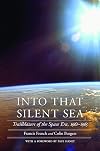
I'm still trying to figure out if the news in the days preceding the release of Into That Silent Sea: Trailblazers of the Space Era, 1961-1965 symbolizes irony or progress.
As the subtitle indicates, the book examines the first efforts by the U.S. and the Soviet Union to put humans into space. One of the areas in which the book excels is reminding us just how hazardous those initial steps were and how they grabbed worldwide attention. The book arrives shortly after the 46th anniversary of show more Yuri Gagarin becoming the first human to travel into space, an anniversary mentioned at best in passing. In addition, the anniversary came amidst the latest exchange of crew members on the International Space Station. At least in America, that event seems to have drawn attention for one reason -- celebrity Martha Stewart planned a meal for the crew because a billionaire buddy of hers is the latest to pay millions to be a space tourist.
Does the latter show how far we have come since Gagarin's flight or reflect that the media and public today are more interested in celebrity news than the persistent dangers, difficulties and achievements of space flight?
Into That Silent Sea is an excellent reminder of just what Gagarin and other trailblazers did and how they became international celebrities in their own right. We seem to have forgotten just how new the frontier of space was. Would merely orbiting the Earth produce harmful and irreversible changes in the human body? Could astronauts or cosmonauts be expected to physically control a spacecraft? What psychological effects would the darkness and isolation of space produce? While the space station allows continued study of the effects of space on humans, questions such as those seem almost naive today. Yet they were important and substantive unknowns during the time period covered by the book.
Not only does Into That Silent Sea remind us of how primitive our beginnings in space were, it does so by focusing on the astronauts and cosmonauts who risked (and some of whom lost) their lives advancing science. Unlike last year's Space Race, which looked at the entire lunar race largely from the perspective of the heads of the programs, Into That Silent Sea delves into the very first steps into space largely from the viewpoint of the astronaut/cosmonaut. (Co-authors Francis French and Colin Burgess are working on a follow-up book covering the programs from 1965 through 1969.) Although there is at times a formulaic feel to the chapter structures, we learn about the personal lives and families, the training and the missions of each of the astronauts and cosmonauts who ventured into space in those first years. Their backgrounds reveal not only what helped make them pioneers, but differences between the U.S. and Soviet programs.
Balance of review at http://prairieprogressive.com/2007/04/24/book-review-into-that-silent-sea/ show less
As the subtitle indicates, the book examines the first efforts by the U.S. and the Soviet Union to put humans into space. One of the areas in which the book excels is reminding us just how hazardous those initial steps were and how they grabbed worldwide attention. The book arrives shortly after the 46th anniversary of show more Yuri Gagarin becoming the first human to travel into space, an anniversary mentioned at best in passing. In addition, the anniversary came amidst the latest exchange of crew members on the International Space Station. At least in America, that event seems to have drawn attention for one reason -- celebrity Martha Stewart planned a meal for the crew because a billionaire buddy of hers is the latest to pay millions to be a space tourist.
Does the latter show how far we have come since Gagarin's flight or reflect that the media and public today are more interested in celebrity news than the persistent dangers, difficulties and achievements of space flight?
Into That Silent Sea is an excellent reminder of just what Gagarin and other trailblazers did and how they became international celebrities in their own right. We seem to have forgotten just how new the frontier of space was. Would merely orbiting the Earth produce harmful and irreversible changes in the human body? Could astronauts or cosmonauts be expected to physically control a spacecraft? What psychological effects would the darkness and isolation of space produce? While the space station allows continued study of the effects of space on humans, questions such as those seem almost naive today. Yet they were important and substantive unknowns during the time period covered by the book.
Not only does Into That Silent Sea remind us of how primitive our beginnings in space were, it does so by focusing on the astronauts and cosmonauts who risked (and some of whom lost) their lives advancing science. Unlike last year's Space Race, which looked at the entire lunar race largely from the perspective of the heads of the programs, Into That Silent Sea delves into the very first steps into space largely from the viewpoint of the astronaut/cosmonaut. (Co-authors Francis French and Colin Burgess are working on a follow-up book covering the programs from 1965 through 1969.) Although there is at times a formulaic feel to the chapter structures, we learn about the personal lives and families, the training and the missions of each of the astronauts and cosmonauts who ventured into space in those first years. Their backgrounds reveal not only what helped make them pioneers, but differences between the U.S. and Soviet programs.
Balance of review at http://prairieprogressive.com/2007/04/24/book-review-into-that-silent-sea/ show less
Into That Silent Sea: Trailblazers of the Space Era, 1961-1965 (Outward Odyssey: A People's History of S) by Francis French
A collective portrait of the American and Soviet space pilots covering the period from Yuri Gagarin's first flight to Alexei Leonov's first space walk, my overall impression is to be more impressed with what the Soviet cosmonauts accomplished as compared to their American counterparts. This is particularly in the case of Gagarin, with his rise from near-indigent peasant existence to fighter pilot to world hero. The crazy chances the Soviet explorers had to take in the name of political show more competition while depending on weak technology also make one shudder on reflection. show less
You May Also Like


Associated Authors
Statistics
- Works
- 4
- Members
- 371
- Popularity
- #64,991
- Rating
- 4.1
- Reviews
- 15
- ISBNs
- 13
- Favorited
- 1