
Laney Salisbury
Author of Provenance: how a con man and a forger rewrote the history of modern art
Works by Laney Salisbury
Provenance: how a con man and a forger rewrote the history of modern art (2009) 663 copies, 27 reviews
The Cruelest Miles: The Heroic Story of Dogs and Men in a Race Against an Epidemic (2003) — Author — 555 copies, 26 reviews
Associated Works
Livros Condensados: Sepultado no Mar | Entre Irmãs | Lema: Não Confiar | Corrida Contra a Morte (2004) — Co-Author — 6 copies
Kirjavaliot: Kanteiden kuningas (The king of torts); Vaaralliset rantaleikit (Beachcomber); Armoton kilpajuoksu (The cruellest miles); Isä jää yksin (Only dad) (2004) — Author — 2 copies
Reader's Digest: De junimoorden; De bruiloft; Steen der wijzen; De ijzige tocht — Author — 1 copy, 1 review
Tagged
Common Knowledge
- Gender
- female
- Education
- Columbia University School of Journalism
- Occupations
- reporter
- Agent
- Susan Rabiner
- Relationships
- Salisbury, Gay (cousin)
- Nationality
- USA
- Places of residence
- Brooklyn, New York, USA
- Associated Place (for map)
- New York, USA
Members
Reviews

Although I know next to nothing about the art world, I found this book pretty interesting. Sometimes I think the magnitude of what John Drewe did escapes me, but the overall impression of a manipulative scumbag was pretty clear. It isn’t the actual forged painting that did the most damage, but the provenance and thus the title of the book. I don’t know if he and the painter really did rewrite the history of art, but they certainly did bilk people out of a lot of money and ruin show more reputations.
In some ways, I’m sympathetic to Drewe. These people were asking for it. Valuing art for its circumstances and pedigree rather than its merits makes it really easy to be taken. Greed blinds us all and Drewe knew it. Pretty much everyone who was taken was a willing victim, ignored contradictory evidence and just wanted to be the next star in their particular firmament. It makes it hard to have sympathy for them; too much ego and too much money. Myatt’s musing about how that money could have been better spent is spot on. The grandiose waste is appalling and it’s delicious irony to know that many of his forgeries are still on display, cherished for their provenance rather than their aesthetic. It’s easy to believe these people got what they deserved.
My sympathy is directed at the archivists and the artists who were lied to, betrayed and taken advantage of. At the beginning of the book the author states that archivists are the lowest rung on the art world ladder; the least appreciated, but the most important in terms of preserving provenance and thus proving a work’s credibility. That credibility is what drives up the perceived value of a work and thus the price at which it can be sold. Drewe knew this, too and found a way infiltrate and corrupt a totally legitimate archive.
Even though he’s a lying asshole, Drewe is a talented lying asshole. A plot this intricate and far-reaching is impressive no matter how damaging. His ability to set up events far, far in advance is mind-boggling. Attention to detail, imagination, foresight and a deep understanding of human nature are only part of it. The kind of confidence Drewe displays is his biggest key to success. People want to believe him. They’re dying to be led, shepherded and mentored by such a luminous figure. His looks, accent, clothes, supposed contacts, job and bits of spouted science are enough to convince people he is what he says he is. Daring. I’d never even dream of pulling off that kind of farce. In some ways I have to admire the bravado, but that kind of soulless existence also gives me pause. Crossing with art at its most essential, as human expression, is the most extreme contradiction I can think of. A soulless human cannot create art, but it can exploit it and even art at its most corrupt is susceptible to its charms. You’d think an already morally bankrupt system would recognize one of its own. As I said, greed blinds people and that’s what this is ultimately a story of. The power of greed. show less
In some ways, I’m sympathetic to Drewe. These people were asking for it. Valuing art for its circumstances and pedigree rather than its merits makes it really easy to be taken. Greed blinds us all and Drewe knew it. Pretty much everyone who was taken was a willing victim, ignored contradictory evidence and just wanted to be the next star in their particular firmament. It makes it hard to have sympathy for them; too much ego and too much money. Myatt’s musing about how that money could have been better spent is spot on. The grandiose waste is appalling and it’s delicious irony to know that many of his forgeries are still on display, cherished for their provenance rather than their aesthetic. It’s easy to believe these people got what they deserved.
My sympathy is directed at the archivists and the artists who were lied to, betrayed and taken advantage of. At the beginning of the book the author states that archivists are the lowest rung on the art world ladder; the least appreciated, but the most important in terms of preserving provenance and thus proving a work’s credibility. That credibility is what drives up the perceived value of a work and thus the price at which it can be sold. Drewe knew this, too and found a way infiltrate and corrupt a totally legitimate archive.
Even though he’s a lying asshole, Drewe is a talented lying asshole. A plot this intricate and far-reaching is impressive no matter how damaging. His ability to set up events far, far in advance is mind-boggling. Attention to detail, imagination, foresight and a deep understanding of human nature are only part of it. The kind of confidence Drewe displays is his biggest key to success. People want to believe him. They’re dying to be led, shepherded and mentored by such a luminous figure. His looks, accent, clothes, supposed contacts, job and bits of spouted science are enough to convince people he is what he says he is. Daring. I’d never even dream of pulling off that kind of farce. In some ways I have to admire the bravado, but that kind of soulless existence also gives me pause. Crossing with art at its most essential, as human expression, is the most extreme contradiction I can think of. A soulless human cannot create art, but it can exploit it and even art at its most corrupt is susceptible to its charms. You’d think an already morally bankrupt system would recognize one of its own. As I said, greed blinds people and that’s what this is ultimately a story of. The power of greed. show less
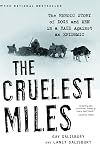
I just finished reading The Cruelest Miles: The Heroic Story of Dogs and Men in a Race Against an Epidemic
by Gay Salisbury and Laney Salisbury. This book was unexpectedly fascinating on many levels. The book is nominally about the carriage of diphtheria antitoxin from the railhead near Fairbanks, Alaska to the coast at Nome, through some of the coldest temperatures that state has experienced, and in unusually fierce blizzards. Nome had already been decimated by the Spanish Flu pandemic in show more 1918, described in The Great Influenza: The Story of the Deadliest Pandemic in History by John M. Barry. The book includes in its bibliography another book about the Arctic I read and enjoyed, Arctic Dreams by Barry Lopez.
The story of the race would have been exciting on its own. The book paints a vivid picture of early 20th Century Alaska, in the throes of the decline after the Klondike and Alaska Gold Rush of approximately 1897-1901. The book also contained descriptions of the history of the Eskimos (Eskimo, contrary to urban legend apparently refers to snowshoes, not "Eaters of Raw Flesh" and is not a derogatory term). Much of that description was surprisingly familiar; I remember it from Mrs. Boyle's Fourth Grade class in academic 1966-7.
The people behind the heroic rescue of Nome take second fiddle in the book to Man's Best Friend. The book subliminally makes the case that man's development, in Alaska at least, would have been impossible without the domestication of the dog from its ancient lupine ancestors. I have always thought that all human development from mere animals to the species we are would not have occurred without domestication of the dog.
Man could really accomplish things if they didn't have to keep a lookout for predators bigger and stronger than them, chief among those wolves. In the Arctic, dogs fulfill the vital function of providing transportation. Having a "doggedly" loyal and intelligent leader made travel over some very hazardous areas possible.
A solid five stars on Goodreads for this. show less
by Gay Salisbury and Laney Salisbury. This book was unexpectedly fascinating on many levels. The book is nominally about the carriage of diphtheria antitoxin from the railhead near Fairbanks, Alaska to the coast at Nome, through some of the coldest temperatures that state has experienced, and in unusually fierce blizzards. Nome had already been decimated by the Spanish Flu pandemic in show more 1918, described in The Great Influenza: The Story of the Deadliest Pandemic in History by John M. Barry. The book includes in its bibliography another book about the Arctic I read and enjoyed, Arctic Dreams by Barry Lopez.
The story of the race would have been exciting on its own. The book paints a vivid picture of early 20th Century Alaska, in the throes of the decline after the Klondike and Alaska Gold Rush of approximately 1897-1901. The book also contained descriptions of the history of the Eskimos (Eskimo, contrary to urban legend apparently refers to snowshoes, not "Eaters of Raw Flesh" and is not a derogatory term). Much of that description was surprisingly familiar; I remember it from Mrs. Boyle's Fourth Grade class in academic 1966-7.
The people behind the heroic rescue of Nome take second fiddle in the book to Man's Best Friend. The book subliminally makes the case that man's development, in Alaska at least, would have been impossible without the domestication of the dog from its ancient lupine ancestors. I have always thought that all human development from mere animals to the species we are would not have occurred without domestication of the dog.
Man could really accomplish things if they didn't have to keep a lookout for predators bigger and stronger than them, chief among those wolves. In the Arctic, dogs fulfill the vital function of providing transportation. Having a "doggedly" loyal and intelligent leader made travel over some very hazardous areas possible.
A solid five stars on Goodreads for this. show less
What an appalling story. It was shocking to read how poorly access to archives was managed, not to mention the absolute amoral, soulless individual that was John Cockett (aka 'John Drewe', amongst many other aliases). The biography was so swamped in detail that the thrust of the story was lost. Skimming was the only way to discover the developments that eventually brought this criminal to justice, such as it was.
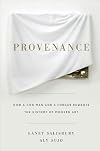
a very well done book that takes you into the world of art. Now, don't get me wrong ~ I know nothing about art (and I mean nothing) nor am I really all that interested in it. BUT, this book has a way of really taking you in and revealing people and personalities ~ and a huge con ~ and that carries you through the story.
It was a quick read but also had a very fast pace. Before you know it, you are learning about the con and the art world and already 1/2 way through the book!!
A huge eye show more opener for just how much fraud there is in paintings (and how scary an investment in them just might be!!!) It was hard to believe just how long they managed to pull the con off!! show less
It was a quick read but also had a very fast pace. Before you know it, you are learning about the con and the art world and already 1/2 way through the book!!
A huge eye show more opener for just how much fraud there is in paintings (and how scary an investment in them just might be!!!) It was hard to believe just how long they managed to pull the con off!! show less
Lists
Awards


You May Also Like


Associated Authors
Statistics
- Works
- 4
- Also by
- 3
- Members
- 1,220
- Popularity
- #21,043
- Rating
- 4.1
- Reviews
- 53
- ISBNs
- 24
- Languages
- 3