
Robert K. Wittman
Author of Priceless: How I Went Undercover to Rescue the World's Stolen Treasures
Works by Robert K. Wittman
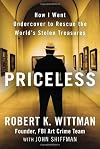
Priceless: How I Went Undercover to Rescue the World's Stolen Treasures (2010) 760 copies, 34 reviews
The Devil's Diary: Alfred Rosenberg and the Stolen Secrets of the Third Reich (2016) 278 copies, 4 reviews
Tagged
Common Knowledge
- Birthdate
- 1955
- Gender
- male
- Education
- Towson University
- Occupations
- FBI agent
- Nationality
- USA
- Birthplace
- Tokyo, Japan
Members
Reviews
I am a sucker for a good memoir of crime and justice, and this is one of the best. In his early 30s, Robert Wittman quit a career as an advertising man for an agricultural newsletter to try a hand at his dream job of being an FBI agent. A few chance accidents, like working the 1988 burglary of Rodin's "The Mask of the Man with the Broken Nose" from a Philadelphia museum, lead to his true calling as an art theft expert.
As Wittman writes, art theft thrills us in ways that more ordinary crime show more (drugs, bank robbery, fraud), does not. Art is immensely, insanely valuable. A Leonard da Vinci painting sold for a cool $450 million last year, and while that is an outlier, anything by an artist that you've heard of is probably worth a few million dollars at least. Museums and private collections are ludicrously poorly secured compared to banks and other hard targets. Yet artwork is the furthest thing from fungible. A piece is only as good as its provenance. A famous stolen artwork is impossible to display and very difficult to sell. They must be ransomed back to the legitimate world.
As such, the best move is the undercover sting, a long con played on a thief looking to sell to Wittman's undercover alter-ego, elite gray-market broker Bob Clay. Wittman moves through his career breezily, describing how he took down a New Mexico dealer in Native American artifacts with eagle feathers (illegal to sell in the US, legal to possess in Europe), a Panamanian diplomat selling ancient Peruvian artifacts, and the hosts of Antiques Roadshow. The standard template involved a delicate game to get the mark to bring the goods to a hotel room, where Wittman would confirm authenticity and then signal SWAT to bust down the door. He was good at it, closing dozens of tricky cases and recovering perhaps $500 million in artwork.
Art and artifact theft is the fourth largest crime by financial value, after drugs, weapons, and financial fraud, but you wouldn't know it from how the FBI handles it. Italy has a 300 officer special detachment, the best in the world. France is in second place, and Europe in general well-organized to combat art theft. The FBI's squad never exceeded eight people, and was dissolved with Wittman's retirement. His last case, the appropriately named Operation Masterpiece to recover the paintings stolen from the Gardner Museum, was almost a fiasco due to bureaucratic turf struggles within the FBI.
If Wittmann fails at anythings, it's his stated goal of removing the glamour from art theft. Too often we think of its perpetrators as a Thomas Crown or Sophie Devereaux, a sophisticated and worldly criminal. In real life, they're mostly dumb thugs and dishonest brokers, with the occasional unscrupulous insider. Art theft is a crime against our common soul, a defacement of the human aesthetic legacy. And yet, as ugly as it is, Wittman can't help but take joy in his job. More than justice, it's about winning a game.
And hey, I'm putting together a crew for a job. Going to need a hacker, hitter, grifter, and thief. You in, or you out? show less
As Wittman writes, art theft thrills us in ways that more ordinary crime show more (drugs, bank robbery, fraud), does not. Art is immensely, insanely valuable. A Leonard da Vinci painting sold for a cool $450 million last year, and while that is an outlier, anything by an artist that you've heard of is probably worth a few million dollars at least. Museums and private collections are ludicrously poorly secured compared to banks and other hard targets. Yet artwork is the furthest thing from fungible. A piece is only as good as its provenance. A famous stolen artwork is impossible to display and very difficult to sell. They must be ransomed back to the legitimate world.
As such, the best move is the undercover sting, a long con played on a thief looking to sell to Wittman's undercover alter-ego, elite gray-market broker Bob Clay. Wittman moves through his career breezily, describing how he took down a New Mexico dealer in Native American artifacts with eagle feathers (illegal to sell in the US, legal to possess in Europe), a Panamanian diplomat selling ancient Peruvian artifacts, and the hosts of Antiques Roadshow. The standard template involved a delicate game to get the mark to bring the goods to a hotel room, where Wittman would confirm authenticity and then signal SWAT to bust down the door. He was good at it, closing dozens of tricky cases and recovering perhaps $500 million in artwork.
Art and artifact theft is the fourth largest crime by financial value, after drugs, weapons, and financial fraud, but you wouldn't know it from how the FBI handles it. Italy has a 300 officer special detachment, the best in the world. France is in second place, and Europe in general well-organized to combat art theft. The FBI's squad never exceeded eight people, and was dissolved with Wittman's retirement. His last case, the appropriately named Operation Masterpiece to recover the paintings stolen from the Gardner Museum, was almost a fiasco due to bureaucratic turf struggles within the FBI.
If Wittmann fails at anythings, it's his stated goal of removing the glamour from art theft. Too often we think of its perpetrators as a Thomas Crown or Sophie Devereaux, a sophisticated and worldly criminal. In real life, they're mostly dumb thugs and dishonest brokers, with the occasional unscrupulous insider. Art theft is a crime against our common soul, a defacement of the human aesthetic legacy. And yet, as ugly as it is, Wittman can't help but take joy in his job. More than justice, it's about winning a game.
And hey, I'm putting together a crew for a job. Going to need a hacker, hitter, grifter, and thief. You in, or you out? show less
Retired FBI agent Robert Wittman's new memoir Priceless: How I Went Undercover to Rescue the World's Stolen Treasures (Crown, 2010), written with journalist John Shiffman, begins and ends, appropriately, with the biggest case Wittman ever worked on: the greatest unsolved art heist in history, by which I mean the blockbuster 1990 thefts from the Isabella Stewart Gardner Museum in Boston. Wittman suggests in the book that he (through underworld contacts) was probably within days or weeks of show more recovering the paintings several years ago, but that bureaucratic infighting and turf battles between various FBI offices and foreign law enforcement agencies blew the deal.
Reading the chapters in which Wittman recounts how this happened was incredibly frustrating, because if Wittman's version is accurate (and frankly he seems to have established some pretty serious credibility over the years), the Gardner art might be back where it belongs (about a half mile from where I sit as I type) and not languishing in some European gangster's storage unit (Wittman has said he believes the paintings are - or at least were fairly recently - probably in Spain or southern France).
While Wittman's account of his role in the unfortunately-fruitless search for the Gardner art comprises a fair chunk of Priceless, there's much more here. As the FBI's only full-time undercover art detective for many years (since his retirement in 2008, another has not been assigned), Wittman played a role in a whole slew of fascinating sting operations to recover stolen art, artifacts and documents from around the world. He recounts international operations to reclaim a Rembrandt self-portrait stolen from the Swedish National Museum, and the successful retrieval of an ancient piece of Peruvian body armor (robbed from a grave). We follow along as he tracks down a janitor who systematically stole more than $2 million worth of artifacts from the Historical Society of Pennsylvania, and discovers a stolen crystal ball on the dresser of a self-proclaimed "witch."
Among the other cases Wittman writes about are the seizure of North Carolina's copy of the Bill of Rights (see my recent review of Lost Rights for more on this), and the takedown of several sleazy Civil War memorabilia dealers. Each chapter is filled with fascinating details about Wittman's methods and techniques, his thoughts about the criminals he was dealing with and his efforts to keep art and cultural crimes on the priorities list of his superiors within the FBI.
Well written and absolutely impossible to put down if you're interested in this sort of thing. Wittman's stinging indictment of American law enforcement policy relating to art theft should be read by every prosecutor and judge (and his critiques should be taken seriously by those within the law enforcement community).
http://philobiblos.blogspot.com/2010/08/book-review-priceless.html show less
Reading the chapters in which Wittman recounts how this happened was incredibly frustrating, because if Wittman's version is accurate (and frankly he seems to have established some pretty serious credibility over the years), the Gardner art might be back where it belongs (about a half mile from where I sit as I type) and not languishing in some European gangster's storage unit (Wittman has said he believes the paintings are - or at least were fairly recently - probably in Spain or southern France).
While Wittman's account of his role in the unfortunately-fruitless search for the Gardner art comprises a fair chunk of Priceless, there's much more here. As the FBI's only full-time undercover art detective for many years (since his retirement in 2008, another has not been assigned), Wittman played a role in a whole slew of fascinating sting operations to recover stolen art, artifacts and documents from around the world. He recounts international operations to reclaim a Rembrandt self-portrait stolen from the Swedish National Museum, and the successful retrieval of an ancient piece of Peruvian body armor (robbed from a grave). We follow along as he tracks down a janitor who systematically stole more than $2 million worth of artifacts from the Historical Society of Pennsylvania, and discovers a stolen crystal ball on the dresser of a self-proclaimed "witch."
Among the other cases Wittman writes about are the seizure of North Carolina's copy of the Bill of Rights (see my recent review of Lost Rights for more on this), and the takedown of several sleazy Civil War memorabilia dealers. Each chapter is filled with fascinating details about Wittman's methods and techniques, his thoughts about the criminals he was dealing with and his efforts to keep art and cultural crimes on the priorities list of his superiors within the FBI.
Well written and absolutely impossible to put down if you're interested in this sort of thing. Wittman's stinging indictment of American law enforcement policy relating to art theft should be read by every prosecutor and judge (and his critiques should be taken seriously by those within the law enforcement community).
http://philobiblos.blogspot.com/2010/08/book-review-priceless.html show less

Robert Wittman’s memoir about his 20-year career as an FBI agent specializing in art and cultural history crimes. He traveled internationally and worked with other countries’ law enforcement agencies to recover stolen art and antiquities, such as Geronimo’s war bonnet, North Carolina’s copy of the Bill of Rights, a Rembrandt self-portrait, a Peruvian golden backflap (from a suit of armor), and more. The book takes each case, examines the history of the stolen property, and details show more the covert work required to recover it. He weaves elements from his personal life into the narrative.
I found this book fascinating. It revolves around two of my personal passions: art and history. It includes intriguing elements such as art heists, fake deals, undercover subterfuge, and an insider’s view of the FBI. I flew through it. One of the most touching scenes in the book is the retrieval of the American Civil War battle flag from one of the first African American regiments to fight for the Union.
Wittman’s account gives a glimpse of the what the FBI is like, from the recognition and accolades when they resolve a high-profile case to the bureaucracy, turf wars, and personality conflicts. Wittman’s story was captivating, especially the details of his undercover work, how he gains the criminals’ confidence, appeals to their greed, and eventually obtains the necessary evidence needed to arrest them and recover the artwork. My only issue with it is the colloquial writing style (lots of discussion of facts and food). Recommended to those interested in art history, the FBI, or true crime. show less
I found this book fascinating. It revolves around two of my personal passions: art and history. It includes intriguing elements such as art heists, fake deals, undercover subterfuge, and an insider’s view of the FBI. I flew through it. One of the most touching scenes in the book is the retrieval of the American Civil War battle flag from one of the first African American regiments to fight for the Union.
Wittman’s account gives a glimpse of the what the FBI is like, from the recognition and accolades when they resolve a high-profile case to the bureaucracy, turf wars, and personality conflicts. Wittman’s story was captivating, especially the details of his undercover work, how he gains the criminals’ confidence, appeals to their greed, and eventually obtains the necessary evidence needed to arrest them and recover the artwork. My only issue with it is the colloquial writing style (lots of discussion of facts and food). Recommended to those interested in art history, the FBI, or true crime. show less
Robert Wittman recovered hundreds of millions of dollars of "priceless" paintings and antiquities. This is his story. It is one of the seedy, murky underbelly of the art world, where lives are lost, where money is exchanged, where, often, those who pilfer the works have little care for what they rob.
One of my top reads this year is The Gardner Heist. Naturally, when I saw this book at the library, I had to read it. I was not disappointed with this suspenseful, well-written story.
Among his show more many accomplishments, Wittman recovered an original copy of the United States Bill of Rights which was stolen from the North Carolina capital building by Union troops during the Civil war.
In addition, his credits include the recovery of a unique self portrait of Rembrandt, valued at 35 million, two Norman Rockwell paintings, the Rodin Mask of the Man with a Broken Nose and many Civil War artifacts. These are but a few of his success stories.
According to Wittman, before he retired, he was very close to obtaining the Veermer and Rembrandt paintings stolen from the Gardner museum in 1990.
Because of egos and bureaucratic nightmares, the deal slipped away.
I highly recommend this book. From the first page to the last, I couldn't put it down! show less
One of my top reads this year is The Gardner Heist. Naturally, when I saw this book at the library, I had to read it. I was not disappointed with this suspenseful, well-written story.
Among his show more many accomplishments, Wittman recovered an original copy of the United States Bill of Rights which was stolen from the North Carolina capital building by Union troops during the Civil war.
In addition, his credits include the recovery of a unique self portrait of Rembrandt, valued at 35 million, two Norman Rockwell paintings, the Rodin Mask of the Man with a Broken Nose and many Civil War artifacts. These are but a few of his success stories.
According to Wittman, before he retired, he was very close to obtaining the Veermer and Rembrandt paintings stolen from the Gardner museum in 1990.
Because of egos and bureaucratic nightmares, the deal slipped away.
I highly recommend this book. From the first page to the last, I couldn't put it down! show less
Lists
Awards

You May Also Like


Associated Authors
Statistics
- Works
- 2
- Members
- 1,038
- Popularity
- #24,806
- Rating
- 3.6
- Reviews
- 38
- ISBNs
- 39
- Languages
- 11