
R. A. Scotti (1945–2010)
Author of Basilica: The Splendor and the Scandal: Building St. Peter's
About the Author
R. A. Scotti, a former journalist for the Providence Journal-Bulletin and Newark Star-Ledger, is the author of five novels. A native Rhode Islander, Scotti grew up hearing stories of 1938, including one of an aunt who returned from work at the phone company in a rowboat and another about her show more grandmother's best friend, who stepped out onto the porch of her house and was never seen again. She summers at Narragansett Pier, Weekapaug, and Jamestown and lives the rest of the year in New York City show less
Works by R. A. Scotti
Basilica: The Splendor and the Scandal: Building St. Peter's (2006) — Author — 776 copies, 15 reviews
Tagged
Common Knowledge
- Canonical name
- Scotti, R. A.
- Legal name
- Scotti, Rita Angelica
- Birthdate
- 1945-12-25
- Date of death
- 2010-02-25
- Gender
- female
- Education
- Loyola University Chicago (BA|1965)
- Occupations
- journalist
author
copywriter - Organizations
- New York Public Library
Newark Star-Ledger
Providence Journal - Relationships
- Evans, Chigounis (husband)
- Short biography
- Rita A. Scotti was born in Providence, Rhode Island on December 25, 1943. She completed her undergraduate degree at Loyola University. As a journalist she worked for the Providence Journal and the Newark Star-Ledger. Her career as an author includes several works of fiction and non-fiction. Sudden Sea is a non-fiction account of the 1938 hurricane that devastated New England. Scotti died in 2010.
- Cause of death
- breast cancer
- Nationality
- USA
- Birthplace
- Providence, Rhode Island, USA
- Places of residence
- New York, New York, USA
Providence, Rhode Island, USA - Place of death
- New York, New York, USA
- Burial location
- Swan Point Cemetery, Providence, Rhode Island, USA
- Associated Place (for map)
- USA
Members
Reviews
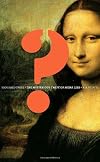
Imagine walking up to the Mona Lisa, removing it from the wall, and carrying it down the corridor for a private viewing. Keep it as long as you like! It seems absurd, doesn’t it? And yet that was possible a century ago. Museum policy permitted photographers to remove art from the Louvre's galleries with no prior request.
Security at the Louvre has improved substantially since then. For that — credit its infamous failure in 1911. A museum visitor, anxious to see Leonardo da Vinci’s Mona show more Lisa, grew impatient one summer morning. The painting was gone and the security guard assumed it was down in the studio. Later, feeling his entire morning was being wasted, the man inquired again. Museum personnel casually asked around and checked the studio. “Anyone have La Gioconda?” Only when met with silence did museum officials begin worrying. And rightly so. The Mona Lisa had been stolen.
Before reading R. A. Scotti’s Vanishing Smile: The Mysterious Theft of Mona Lisa, I knew Leonardo’s masterpiece had been stolen long ago, but had long forgotten any details. That made the story all new to me.
The author describes the last day at the Louvre before the theft, the slow realization that it was missing two days later, the flurry of police activity, and the fury of popular opinion. The theft catapulted the well-known painting into a popular culture icon. Mona Lisa became the most recognizable portrait in the world that summer. It was said that there had never been a line to enter the Louvre before the theft, and yet when the museum reopened a week later, thousands of visitors queued to see the four hooks on the wall where the Mona Lisa had been. I found that both amusing and astounding: Parisians lined up to NOT see the painting.
Scotti follows with chapters on the investigation and the rampant speculations. Theories included wealthy American art collectors, botched conservations, and workers making a labor statement. Young Pablo Picasso was even involved in the case; he was held and questioned for a time. The painting was eventually recovered (you knew that) and given a much more secure home.
This was an enjoyable read. I’ve read about Leonardo and his art many times before, but this book centered much more on crime and detection than art. It reminded me of Matthew Hart’s The Irish Game, a book I read (and reviewed) two years ago about another famous art heist: A Vermeer taken from an Irish country estate in the 1980s.
Find more of my reviews at Mostly NF. show less
Security at the Louvre has improved substantially since then. For that — credit its infamous failure in 1911. A museum visitor, anxious to see Leonardo da Vinci’s Mona show more Lisa, grew impatient one summer morning. The painting was gone and the security guard assumed it was down in the studio. Later, feeling his entire morning was being wasted, the man inquired again. Museum personnel casually asked around and checked the studio. “Anyone have La Gioconda?” Only when met with silence did museum officials begin worrying. And rightly so. The Mona Lisa had been stolen.
Before reading R. A. Scotti’s Vanishing Smile: The Mysterious Theft of Mona Lisa, I knew Leonardo’s masterpiece had been stolen long ago, but had long forgotten any details. That made the story all new to me.
The author describes the last day at the Louvre before the theft, the slow realization that it was missing two days later, the flurry of police activity, and the fury of popular opinion. The theft catapulted the well-known painting into a popular culture icon. Mona Lisa became the most recognizable portrait in the world that summer. It was said that there had never been a line to enter the Louvre before the theft, and yet when the museum reopened a week later, thousands of visitors queued to see the four hooks on the wall where the Mona Lisa had been. I found that both amusing and astounding: Parisians lined up to NOT see the painting.
Scotti follows with chapters on the investigation and the rampant speculations. Theories included wealthy American art collectors, botched conservations, and workers making a labor statement. Young Pablo Picasso was even involved in the case; he was held and questioned for a time. The painting was eventually recovered (you knew that) and given a much more secure home.
This was an enjoyable read. I’ve read about Leonardo and his art many times before, but this book centered much more on crime and detection than art. It reminded me of Matthew Hart’s The Irish Game, a book I read (and reviewed) two years ago about another famous art heist: A Vermeer taken from an Irish country estate in the 1980s.
Find more of my reviews at Mostly NF. show less
Sudden Sea: The Great Hurricane of 1938 by R.A. Scotti recounts the devastating hurricane that hit New England in September 1938. To tell you the truth, I didn't know a thing about this hurricane, so I learned a lot.
The U.S. Weather Service had barely been formed at this time, and relied almost completely on firsthand sightings of storms. This hurricane began forming off the coast of Africa and moseyed across the Atlantic, gathering speed and force. The Weather Service employees in Florida show more put all the available data together, informed the public, and then watched as the
behemoth swerved and missed their state on its way north. The next existing weather bureau was in Washington, D.C. Only one person put all the information together correctly, but he was a new guy, so his conclusions were dismissed. This hurricane was going back out to sea where it would lose steam. No one needed to worry.
What the hurricane did was swing back out to sea and feed off the warm summer water--and that's when it turned into a monster of size, strength and speed. With no warning whatsoever, it hit the western edge of Long Island, causing plenty of damage there, but when it continued on and slammed into eastern Connecticut and Rhode Island--tragedy. Coastlines were completely remodeled. Entire towns were wiped off the face of the earth. An entire way of life was obliterated.
When looking through the photos included in this book, my whispered "Oh, my god!" was totally inadequate. From a beach lined with three-story Victorian beach homes to...pristine sand. New London, Connecticut almost burned to the ground. Dozens of mills were totally demolished and never rebuilt. The power of Mother Nature never ceases to awe me.
Scotti blended the firsthand accounts and all the facts skillfully. I didn't want to put the book down. One of the survivors most of us have heard of: Katharine Hepburn. As she fought her way through the rapidly rising water, she looked back to see her family home float away as if it were taking a leisurely stroll down the street. show less
The U.S. Weather Service had barely been formed at this time, and relied almost completely on firsthand sightings of storms. This hurricane began forming off the coast of Africa and moseyed across the Atlantic, gathering speed and force. The Weather Service employees in Florida show more put all the available data together, informed the public, and then watched as the
behemoth swerved and missed their state on its way north. The next existing weather bureau was in Washington, D.C. Only one person put all the information together correctly, but he was a new guy, so his conclusions were dismissed. This hurricane was going back out to sea where it would lose steam. No one needed to worry.
What the hurricane did was swing back out to sea and feed off the warm summer water--and that's when it turned into a monster of size, strength and speed. With no warning whatsoever, it hit the western edge of Long Island, causing plenty of damage there, but when it continued on and slammed into eastern Connecticut and Rhode Island--tragedy. Coastlines were completely remodeled. Entire towns were wiped off the face of the earth. An entire way of life was obliterated.
When looking through the photos included in this book, my whispered "Oh, my god!" was totally inadequate. From a beach lined with three-story Victorian beach homes to...pristine sand. New London, Connecticut almost burned to the ground. Dozens of mills were totally demolished and never rebuilt. The power of Mother Nature never ceases to awe me.
Scotti blended the firsthand accounts and all the facts skillfully. I didn't want to put the book down. One of the survivors most of us have heard of: Katharine Hepburn. As she fought her way through the rapidly rising water, she looked back to see her family home float away as if it were taking a leisurely stroll down the street. show less
R.A. Scotti's "Basilica: The Splendor and the Scandal: Building St. Peter's" is more than just a biography of one of the world's great architectural wonder's. “Basilica” is a wonderfully readable historical narrative of the mid and late Renaissance in a plot-thick story of warrior-popes, international intrigue, angst-riddled artistes all intersecting, orbiting and colliding at this historical inflection point.
The building itself was constructed under the leadership of thirty different show more popes. Scotti writes, "...the convulsions of history became a backdrop that changed like a series of stage sets. Over the decades of construction, the Church evolved, and the world evolved with it and sometimes because of it."
Pope Julius II placed the first stone over the very spot where Jesus' disciple Peter was buried. She writes, "The enterprise was audacious, but so were the times. Gutenberg had invented the printing press, Columbus had stumbled on a new continent, and the Renaissance was in full bloom."
The list of characters who played central and supporting roles is like a who's who of 15th and 16th Century European stars: Michelangelo, Pope Alexander VI (Rodrigo Borgia), numerous di' Medicis, Bramante, Sangallo (Older AND Younger), Raphael, Martin Luther, Columbus, Pizarro, King Charles V, and the list goes on and on. It’s a Renaissance Festival on the Love Boat.
“Basilica” is not a historical treatise weighed heavily down by obscure footnotes, and archival trivia. It's not intended to be. It's an episodic narrative, providing a behind-the-scenes glimpse at the tortured, anguished, aggressive, pious, unethical and enlightened personalities that drove, and were driven, by the 15th and 16th century Renaissance.
While Florence was the beating heart of the Renaissance, pumping its blood across Europe, Scotti writes “Rome, this city of Caesars and cradle of Christianity, was a hellhole, the imperial relics overgrown, buried, or turned into animal lairs.” This was not unnoticed by the nuovo-Caesar Popes, who thought, as one papal biographer wrote, that the “Vatican should outshine in magnificence the Palatine of the Emperors.” This vision was not such a stretch as, Scotti writes, “The Renaissance papacy became a government more than a religion, led by statesmen and sometimes warriors who could rarely afford to be saints.”
One of the stars of “Basilica” is Pope Julius II – known as the Warrior-Pope. He’d survived and outlasted his Borgia enemies, and took full advantage of his time in papal office. He was a human hurricane, driving away, or over, anything in his path. One contemporary wrote that he was “full of fury and extravagant conceptions.” This hurricane was the driving force of a new St. Peter’s Basilica…if not in it’s modern state, then certainly in its conception.
Scotti writes, “He brought recalcitrant princes to heel, reclaimed papal territories…and ennobled the world with art.” A scholar wrote, “It was through him that Rome became the Classical City of the World…and the Papacy the pioneer of civilization.”
And while the Renaissance recognized an explosion in new thinking, it’s most visible manifestation is its explosion of art. Art became a mechanism for mass communication. Think of it as an ancient twitter – instead of 140 characters – think of 140 pounds of marble…
Julius knew the beauty and power of art, and wanted it to be an integral part of this new monument to God and Christianity (and to a lesser, but still significant extent, to him). Art and architecture were inextricably connected during the Renaissance. And so some of the most famous painters of the time were also key members of the Basilica’s architectural ‘staff’ – namely Raphael and Michelangelo.
The story of the Basilica is not (only) a story of a building. It’s a story of personalities.
If Julius II is one of the leads, then Michelangelo is his co-star. Michelangelo is absolutely a tortured soul…tormented by his talent and his need to create. He comes across as the most pious of almost all other players in this world theater. He seems to have adored, feared, hated and idolized Julius…all at the same time.
Julius asked Michelangelo to sculpt a magnificent tomb, but for numerous reasons neither man could deliver. Michelangelo would ultimately deliver his “Moses” as the centerpiece to Julius’ tomb, but it’s not in the Basilica, and magnificent as it is, it represents only a shadow of what both men originally wanted. Michelangelo would paint the Sistine Chapel (the ceiling and the back wall), but he would also serve as chief architect of St. Peters, 30 years after Julius died.
There’s certainly a “Pillars of Earth” vibe to the tale - but without any of the ‘regular’ people. All of these heroes and villains (and at times it’s impossible to tell the difference…nor does it really matter) are characters on a grand stage.
I thoroughly enjoyed this book for what it is: a crisp narrative of Renaissance Europe, full of bigger-than-life characters, and world-changing events colliding around the creation of a man-made miracle. It’s a miracle of architectural and artistic achievement and a testament to something much bigger and longer lasting than the world events in its orbit.
“Basilica” is extremely well written, and reads as smoothly as good historical novel. Except none of it is fiction. It’s too good to be fiction. This book is a must if you’re planning a trip to Rome or simply interested in a coherent and comprehensive overview of this fascinating period in history. show less
The building itself was constructed under the leadership of thirty different show more popes. Scotti writes, "...the convulsions of history became a backdrop that changed like a series of stage sets. Over the decades of construction, the Church evolved, and the world evolved with it and sometimes because of it."
Pope Julius II placed the first stone over the very spot where Jesus' disciple Peter was buried. She writes, "The enterprise was audacious, but so were the times. Gutenberg had invented the printing press, Columbus had stumbled on a new continent, and the Renaissance was in full bloom."
The list of characters who played central and supporting roles is like a who's who of 15th and 16th Century European stars: Michelangelo, Pope Alexander VI (Rodrigo Borgia), numerous di' Medicis, Bramante, Sangallo (Older AND Younger), Raphael, Martin Luther, Columbus, Pizarro, King Charles V, and the list goes on and on. It’s a Renaissance Festival on the Love Boat.
“Basilica” is not a historical treatise weighed heavily down by obscure footnotes, and archival trivia. It's not intended to be. It's an episodic narrative, providing a behind-the-scenes glimpse at the tortured, anguished, aggressive, pious, unethical and enlightened personalities that drove, and were driven, by the 15th and 16th century Renaissance.
While Florence was the beating heart of the Renaissance, pumping its blood across Europe, Scotti writes “Rome, this city of Caesars and cradle of Christianity, was a hellhole, the imperial relics overgrown, buried, or turned into animal lairs.” This was not unnoticed by the nuovo-Caesar Popes, who thought, as one papal biographer wrote, that the “Vatican should outshine in magnificence the Palatine of the Emperors.” This vision was not such a stretch as, Scotti writes, “The Renaissance papacy became a government more than a religion, led by statesmen and sometimes warriors who could rarely afford to be saints.”
One of the stars of “Basilica” is Pope Julius II – known as the Warrior-Pope. He’d survived and outlasted his Borgia enemies, and took full advantage of his time in papal office. He was a human hurricane, driving away, or over, anything in his path. One contemporary wrote that he was “full of fury and extravagant conceptions.” This hurricane was the driving force of a new St. Peter’s Basilica…if not in it’s modern state, then certainly in its conception.
Scotti writes, “He brought recalcitrant princes to heel, reclaimed papal territories…and ennobled the world with art.” A scholar wrote, “It was through him that Rome became the Classical City of the World…and the Papacy the pioneer of civilization.”
And while the Renaissance recognized an explosion in new thinking, it’s most visible manifestation is its explosion of art. Art became a mechanism for mass communication. Think of it as an ancient twitter – instead of 140 characters – think of 140 pounds of marble…
Julius knew the beauty and power of art, and wanted it to be an integral part of this new monument to God and Christianity (and to a lesser, but still significant extent, to him). Art and architecture were inextricably connected during the Renaissance. And so some of the most famous painters of the time were also key members of the Basilica’s architectural ‘staff’ – namely Raphael and Michelangelo.
The story of the Basilica is not (only) a story of a building. It’s a story of personalities.
If Julius II is one of the leads, then Michelangelo is his co-star. Michelangelo is absolutely a tortured soul…tormented by his talent and his need to create. He comes across as the most pious of almost all other players in this world theater. He seems to have adored, feared, hated and idolized Julius…all at the same time.
Julius asked Michelangelo to sculpt a magnificent tomb, but for numerous reasons neither man could deliver. Michelangelo would ultimately deliver his “Moses” as the centerpiece to Julius’ tomb, but it’s not in the Basilica, and magnificent as it is, it represents only a shadow of what both men originally wanted. Michelangelo would paint the Sistine Chapel (the ceiling and the back wall), but he would also serve as chief architect of St. Peters, 30 years after Julius died.
There’s certainly a “Pillars of Earth” vibe to the tale - but without any of the ‘regular’ people. All of these heroes and villains (and at times it’s impossible to tell the difference…nor does it really matter) are characters on a grand stage.
I thoroughly enjoyed this book for what it is: a crisp narrative of Renaissance Europe, full of bigger-than-life characters, and world-changing events colliding around the creation of a man-made miracle. It’s a miracle of architectural and artistic achievement and a testament to something much bigger and longer lasting than the world events in its orbit.
“Basilica” is extremely well written, and reads as smoothly as good historical novel. Except none of it is fiction. It’s too good to be fiction. This book is a must if you’re planning a trip to Rome or simply interested in a coherent and comprehensive overview of this fascinating period in history. show less

On August 21, 1911, a 400-year-old matron absconded from Paris’s art trove, the Louvre. Born within relative obscurity, she had been transported across various state lines. Often belittled within Florence’s Medici confines, certainly a visitor in the bathroom of France’s François I and later celebrated in Louis XIV’s bedroom, she became a near-forgotten hostage, chained on the museum’s wall for nearly one hundred years before being liberated.
R.A. Scotti breathes life into a show more century-old mystery surrounding the theft of Leonardo da Vinci’s celebrated painting of Lisa Gherardini del Giocondo, La Gioconda, or as commonly called, Mona Lisa. Scotti’s breezy style paints a lively discussion of a theft that aroused worldwide furor, exposed the ineffectiveness of museum security and international policing, and prompted bewildering—and as yet unresolved—theories as to the nature of the crime.
Initially, lack of museum security was blamed, which called for the head of its director. Flummoxed due to lack of any obvious clues to the heist, French authorities initially lassoed la band de Picasso, a group of cultural anarchists led by Pablo Picasso and Guillaume Apollinaire. But that resulted in the two being found guilty of harboring the theft of several Louvre antique statues lifted by a kleptomaniac group-member.
In 1913, the Louvre’s Italian glazier, Vincenzo Peruggia, approached a Florentine art dealer to sell the painting that he had kept hidden for two years. Peruggia underwent a sensational trial, but he was released under celebratory relief that the original painting had been retrieved. The Mona Lisa eventually returned to the Louvre.
In 1914 in Casablanca, a scam artist using the moniker Marqués Eduardo de Valiferno disclosed his version of the theft to Hearst reporter Karl Decker. According to Valiferno, he had duped—and paid handsomely—Peruggia and two other Italians to manufacture the actual burglary. The marqués had employed a master forger to replicate six copies to be sold to collectors on the black market, not caring what happened to the original. A question still remains: What ever happened to these half-dozen forgeries if his version were true?
Eighteen years later, Karl Decker reframed and embellished another heist description through an article published in the June 25, 1932 issue of the Saturday Evening Post. Decker’s story was based primarily on information from Valiferno but was exaggerated to the degree that cast considerable doubt upon any account’s accuracy. His article merely stirred the controversy without confirming who or why the theft had been perpetrated.
Today, the Mona Lisa has become the world’s most secured lady; yet questions about her previous larceny remain unanswered. The La Gioconda story remains as mysterious as her smile continues to baffle art aficionados.
A well documented, global discussion with several illustrations, Scotti’s work includes five pages of notes and a five-page bibliography for eager detectives relishing further investigation. Her slim volume is a must-read for any Leonardo fan. show less
R.A. Scotti breathes life into a show more century-old mystery surrounding the theft of Leonardo da Vinci’s celebrated painting of Lisa Gherardini del Giocondo, La Gioconda, or as commonly called, Mona Lisa. Scotti’s breezy style paints a lively discussion of a theft that aroused worldwide furor, exposed the ineffectiveness of museum security and international policing, and prompted bewildering—and as yet unresolved—theories as to the nature of the crime.
Initially, lack of museum security was blamed, which called for the head of its director. Flummoxed due to lack of any obvious clues to the heist, French authorities initially lassoed la band de Picasso, a group of cultural anarchists led by Pablo Picasso and Guillaume Apollinaire. But that resulted in the two being found guilty of harboring the theft of several Louvre antique statues lifted by a kleptomaniac group-member.
In 1913, the Louvre’s Italian glazier, Vincenzo Peruggia, approached a Florentine art dealer to sell the painting that he had kept hidden for two years. Peruggia underwent a sensational trial, but he was released under celebratory relief that the original painting had been retrieved. The Mona Lisa eventually returned to the Louvre.
In 1914 in Casablanca, a scam artist using the moniker Marqués Eduardo de Valiferno disclosed his version of the theft to Hearst reporter Karl Decker. According to Valiferno, he had duped—and paid handsomely—Peruggia and two other Italians to manufacture the actual burglary. The marqués had employed a master forger to replicate six copies to be sold to collectors on the black market, not caring what happened to the original. A question still remains: What ever happened to these half-dozen forgeries if his version were true?
Eighteen years later, Karl Decker reframed and embellished another heist description through an article published in the June 25, 1932 issue of the Saturday Evening Post. Decker’s story was based primarily on information from Valiferno but was exaggerated to the degree that cast considerable doubt upon any account’s accuracy. His article merely stirred the controversy without confirming who or why the theft had been perpetrated.
Today, the Mona Lisa has become the world’s most secured lady; yet questions about her previous larceny remain unanswered. The La Gioconda story remains as mysterious as her smile continues to baffle art aficionados.
A well documented, global discussion with several illustrations, Scotti’s work includes five pages of notes and a five-page bibliography for eager detectives relishing further investigation. Her slim volume is a must-read for any Leonardo fan. show less
Lists
Awards

You May Also Like


Associated Authors
Statistics
- Works
- 7
- Members
- 1,827
- Popularity
- #14,082
- Rating
- 3.7
- Reviews
- 56
- ISBNs
- 54
- Languages
- 5
- Favorited
- 1