
Alma Fullerton
Author of Walking on Glass
Works by Alma Fullerton
Tagged
Common Knowledge
Members
Reviews
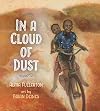
This is a nice enough picture book, I suppose, providing a small window into the world of a group of Tanzanian school children, highlighting how different their lives are from those of Canadian kids. When class is over, a young girl, Anna, stays inside her tiny rural school to complete her homework before she starts her long walk home. Her family’s dwelling lacks electricity and it’s too dark in the evening to do her schoolwork there. Responsibly completing her work means that Anna show more isn’t outside for the arrival of the “bicycle library” pickup truck that delivers bikes to the students. Rather than sulk about missing out, the girl runs alongside her classmates who have been fortunate enough to get bikes, assisting one inexperienced child to stay upright, coaching another around obstacles, and encouraging a third who falls. Anna’s good humour and kindness are rewarded by a classmate, who allows her to ride double with him. Once they reach his house, the boy, recognizing that Anna still has a long walk ahead, offers his bike to her.
An author’s note explains that in many parts of Africa people have no access to motorized transportation, so bikes are vital. This is especially the case in more isolated areas where kids have to walk long distances to and from school. People can’t afford bikes but there are charitable organizations, such as the Village Bicycle Project and Bikes for Humanity, which have opened bicycle libraries. Kids can sign out bikes, just as Canadian kids sign out books at public libraries. Fullerton lists several organizations that lend out bikes, and she provides information, including the web addresses, for those who might like to donate to these “libraries.”
As lovely as Fullerton’s messages are, I found this brief book slightly lacking. For one thing, there really isn’t much of a story here. I also think a young audience would have been better served by having the information contained in the author’s note incorporated into the narrative itself. It would have provided context. The end note is in tiny font and could easily be missed by some readers. Alternatively, a forward in kid-friendly language introducing the idea of “bike libraries” could have been provided.
I also wasn’t crazy about Brian Deines’s fuzzy, muddy-coloured art. Yes, I get that the illustrator wanted to communicate the heat and dust of Tanzania, but the excess of dull orange and muted shades of green and brown did not impress.
As I said: this is a nice enough picture book—I’m always touched by books that feature the very real natural generosity of many children. In the end, however, this is not a text I can wholeheartedly recommend. show less
An author’s note explains that in many parts of Africa people have no access to motorized transportation, so bikes are vital. This is especially the case in more isolated areas where kids have to walk long distances to and from school. People can’t afford bikes but there are charitable organizations, such as the Village Bicycle Project and Bikes for Humanity, which have opened bicycle libraries. Kids can sign out bikes, just as Canadian kids sign out books at public libraries. Fullerton lists several organizations that lend out bikes, and she provides information, including the web addresses, for those who might like to donate to these “libraries.”
As lovely as Fullerton’s messages are, I found this brief book slightly lacking. For one thing, there really isn’t much of a story here. I also think a young audience would have been better served by having the information contained in the author’s note incorporated into the narrative itself. It would have provided context. The end note is in tiny font and could easily be missed by some readers. Alternatively, a forward in kid-friendly language introducing the idea of “bike libraries” could have been provided.
I also wasn’t crazy about Brian Deines’s fuzzy, muddy-coloured art. Yes, I get that the illustrator wanted to communicate the heat and dust of Tanzania, but the excess of dull orange and muted shades of green and brown did not impress.
As I said: this is a nice enough picture book—I’m always touched by books that feature the very real natural generosity of many children. In the end, however, this is not a text I can wholeheartedly recommend. show less
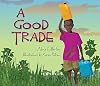
This is a beautifully and carefully told story with noteworthy illustrations. They take the reader to a small yet modern Ugandan village. This book matter-of-factly shows the life of a child in a developing country without being overly obvious or heavy-handed. My only critic was that the final illustration made me double check whether or not Kato was an amputee... the placement of the feet on the page (and the types of shoes that are worn) drew me to the amputee's feet before Kato's (which show more was confusing). show less
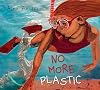
Isley loves the ocean. Everyday, the little girl spends hours contemplating the large body of water from her bedroom window. But one morning, screams ring out from the beach, as walkers found the lifeless body of a whale, washed up on the sand. With courage and determination, Isley will persuade the inhabitants to give up the use of plastic, making the ocean a better place.
With No More Plastic, Alma Fullerton delivers a powerful testimony about the beauty of the ocean and the constant show more dangers ocean creatures face everyday because of human plastic pollution. Not judgmental in any way, the story shares a very strong environmental message, using the voice of a young girl to share it.
No More Plastic is a very unique book that explains to children the danger of pollution. It is an extraordinary story, beautiful and sad , and with a lot of hope, showing how the positive voice of one person can change a community. Alma Fullerton’s illustrations are incredible, some of them using actual plastic waste. show less
With No More Plastic, Alma Fullerton delivers a powerful testimony about the beauty of the ocean and the constant show more dangers ocean creatures face everyday because of human plastic pollution. Not judgmental in any way, the story shares a very strong environmental message, using the voice of a young girl to share it.
No More Plastic is a very unique book that explains to children the danger of pollution. It is an extraordinary story, beautiful and sad , and with a lot of hope, showing how the positive voice of one person can change a community. Alma Fullerton’s illustrations are incredible, some of them using actual plastic waste. show less
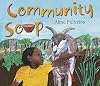
The amazing artwork deserves a more interesting story. Is it Stone Soup? Is it Mary had a Little Lamb? No, not quite either, and not quite something wonderful and new. But if you get a chance to share it with littles, please do. Learning a bit about an orphan school in Kenya can only be good for them.
Lists
Awards


You May Also Like


Associated Authors
Statistics
- Works
- 12
- Members
- 462
- Popularity
- #53,211
- Rating
- 3.9
- Reviews
- 28
- ISBNs
- 34