

Katie Smith Milway
Author of One Hen: How One Small Loan Made a Big Difference
About the Author
Works by Katie Smith Milway
The Good Garden: How One Family Went from Hunger to Having Enough (2010) — Author — 188 copies, 6 reviews
Tagged
Common Knowledge
- Birthdate
- 1960-06-02
- Gender
- female
- Nationality
- Canada
- Associated Place (for map)
- Canada
Members
Reviews
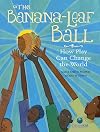
In this heartwarming tale, readers take a trip to the refugee camps of Tanzania to see how play can transform fear, conflict, and distrust into empathy, tolerance, and teamwork.
Expressions in Kirundi, the national language of Burundi, are sprinkled throughout the book, as readers are introduced to young Deo Rukundo and his family, fleeing the illustrated shadows of men with torches who have come to burn down their home. Deo reaches the Lukole refugee camp in northwest Tanzania, where, show more without his parents, he must begin to rebuild his life. The banana-leaf balls his father taught him to make provide some solace until a young rival, Remy, steals the twine he needs. Deo isolates himself until he hears the commotion of a soccer game beginning. Serendipitously, the coach places Deo and Remy on the same side. The miraculous game-winning assist goes from Deo to Remy, and a new friendship begins. Years later, when the camp closes, readers learn that Deo has returned home to become a coach solving conflict through play; they meet his inspiration, Benjamin Nzobonakira, in the backmatter, which contains further information about play-based conflict-resolution initiatives around the world. Adults looking for context to help readers understand how Burundi was thrown into chaos and its current, continued instability will have to look elsewhere.
This outside-looking-in depiction of the power of play to bridge new relationships in Burundi serves as a universal lesson that all readers can draw on. (Picture book. 7-11)
-Kirkus Review show less
Expressions in Kirundi, the national language of Burundi, are sprinkled throughout the book, as readers are introduced to young Deo Rukundo and his family, fleeing the illustrated shadows of men with torches who have come to burn down their home. Deo reaches the Lukole refugee camp in northwest Tanzania, where, show more without his parents, he must begin to rebuild his life. The banana-leaf balls his father taught him to make provide some solace until a young rival, Remy, steals the twine he needs. Deo isolates himself until he hears the commotion of a soccer game beginning. Serendipitously, the coach places Deo and Remy on the same side. The miraculous game-winning assist goes from Deo to Remy, and a new friendship begins. Years later, when the camp closes, readers learn that Deo has returned home to become a coach solving conflict through play; they meet his inspiration, Benjamin Nzobonakira, in the backmatter, which contains further information about play-based conflict-resolution initiatives around the world. Adults looking for context to help readers understand how Burundi was thrown into chaos and its current, continued instability will have to look elsewhere.
This outside-looking-in depiction of the power of play to bridge new relationships in Burundi serves as a universal lesson that all readers can draw on. (Picture book. 7-11)
-Kirkus Review show less

When Deo and his family are forced to flee their farm in Burundi, the young boy becomes separated from the others, and lost in the forest. Eventually, emaciated and exhausted, he makes his way to the Lukole refugee camp in nearby Tanzania. Here he finds shelter of sorts, but also strife, as he becomes the target of a group of bullies, led by the obnoxious Remy. Then one day a stranger with a soccer ball shows up at the camp, and organizes a game. Soon Deo and Remy realize that they have more show more in common than they thought, leading to the beginning of a friendship, and of better things for the whole camp...
Inspired by the real-life story of Benjamin Nzobonankira, a Burundi man whose life experiences are very similar to Deo's, author Katie Smith Milway spins a story of the potentially healing power of sport in The Banana-Leaf Ball: How Play Can Change the World. The man who comes to the camp to organize the soccer game is meant to represent the Right to Play activists who visited Lukole while Nzobonankira was there, and the story as a whole explores the idea of sport and games as a way to teach children to resolve conflict, take care of themselves, and develop both self-respect and respect for others. Included at the rear of the book are notes about Nzobonankira, who became a Right to Play coach as an adult, and a list of organizations worldwide that use sport and games to promote children's welfare.
This is the sixth title I have read from publisher Kids Can Press' Citizen Kid collection, which presents books that educate children about the world around them, and encourage them to be good global citizens, and I hope it will not be the last. I found the story itself engaging, the back matter fascinating, and the artwork from illustrator Shane W. Evans expressive and appealing. Recommended to young soccer lovers, and to picture-book readers looking for stories about refugees and/or the role of sport in making the world a better place. show less
Inspired by the real-life story of Benjamin Nzobonankira, a Burundi man whose life experiences are very similar to Deo's, author Katie Smith Milway spins a story of the potentially healing power of sport in The Banana-Leaf Ball: How Play Can Change the World. The man who comes to the camp to organize the soccer game is meant to represent the Right to Play activists who visited Lukole while Nzobonankira was there, and the story as a whole explores the idea of sport and games as a way to teach children to resolve conflict, take care of themselves, and develop both self-respect and respect for others. Included at the rear of the book are notes about Nzobonankira, who became a Right to Play coach as an adult, and a list of organizations worldwide that use sport and games to promote children's welfare.
This is the sixth title I have read from publisher Kids Can Press' Citizen Kid collection, which presents books that educate children about the world around them, and encourage them to be good global citizens, and I hope it will not be the last. I found the story itself engaging, the back matter fascinating, and the artwork from illustrator Shane W. Evans expressive and appealing. Recommended to young soccer lovers, and to picture-book readers looking for stories about refugees and/or the role of sport in making the world a better place. show less

American author Katie Smith Milway and Canadian illustrator Eugenie Fernandes, who have also collaborated on Cappuccina Goes to Town and Mimi's Village: And How Basic Health Care Transformed It, turn in this picture-book to the subject of microfinance. The story follows Kojo, a young Ashanti boy in Ghana who cannot afford to go to school, after the recent death of his father. When he and his mother are given a micro-loan by the village coop, and there is a little bit left after his mother show more buys a cart for the firewood she sells, Kojo buys one hen. From this small beginning, great things come, as Kojo slowly builds up his flock, sells his surplus eggs, and gains enough money to return to school. From there he studies hard, eventually winning a scholarship, and going on to study agriculture. Eventually, he starts a farm and business of his own, going on to great success, and having a beneficial effect on other impoverished people, and on his country...
I've read a few books now about Heifer International - Jan West Schrock's Give a Goat and Page McBrier's Beatrice's Goat - an organization which seeks to address international poverty by distributing agricultural animals and training, but this is the first picture-book I have read about the microloan movement. Apparently, the story in One Hen: How One Small Loan Made a Big Difference is based upon the experiences of real-life Ghanaian Kwabena Darko, whose story is given in the after matter, along with more information about microfinance organizations, and a glossary. I found the narrative here engaging, and thought that the way in which Milway used the traditional nursery rhyme, This is the House That Jack Built, as a storytelling template, was quite interesting. Great results certainly do come, sometimes, from small beginnings! The accompanying artwork here from Fernandes, done in acrylic paint, is bright and boldly colorful, grabbing and retaining the reader's attention. All in all, this was an informative and engaging tale, one I would recommend to picture-book readers looking for stories about poverty, and about the microfinance movement that is attempting to address that poverty, one microloan at a time. show less
I've read a few books now about Heifer International - Jan West Schrock's Give a Goat and Page McBrier's Beatrice's Goat - an organization which seeks to address international poverty by distributing agricultural animals and training, but this is the first picture-book I have read about the microloan movement. Apparently, the story in One Hen: How One Small Loan Made a Big Difference is based upon the experiences of real-life Ghanaian Kwabena Darko, whose story is given in the after matter, along with more information about microfinance organizations, and a glossary. I found the narrative here engaging, and thought that the way in which Milway used the traditional nursery rhyme, This is the House That Jack Built, as a storytelling template, was quite interesting. Great results certainly do come, sometimes, from small beginnings! The accompanying artwork here from Fernandes, done in acrylic paint, is bright and boldly colorful, grabbing and retaining the reader's attention. All in all, this was an informative and engaging tale, one I would recommend to picture-book readers looking for stories about poverty, and about the microfinance movement that is attempting to address that poverty, one microloan at a time. show less
Picture book for older kids about conflict resolution and life in a refugee camp. Beautifully written and illustrated, with information on organizations from around the world who teach play/ negotiations to kids in the back, including several useful team building activities.
Lists
Awards


You May Also Like


Associated Authors
Statistics
- Works
- 6
- Members
- 1,341
- Popularity
- #19,193
- Rating
- 4.2
- Reviews
- 49
- ISBNs
- 34
- Languages
- 3