
Elizabeth Suneby
Author of Razia's Ray of Hope: One Girl's Dream of an Education
Works by Elizabeth Suneby
Iqbal and His Ingenious Idea: How a Science Project Helps One Family and the Planet (2018) 93 copies, 9 reviews
Say Shalom All Day Long 3 copies
Tagged
Common Knowledge
There is no Common Knowledge data for this author yet. You can help.
Members
Reviews
Iqbal and His Ingenious Idea: How a Science Project Helps One Family and the Planet (CitizenKid) by Elizabeth Suneby
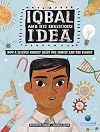
Iqbal and His Ingenious Idea tells the story of a young boy named Iqbal who wants to do a sustainability science project to help a critical problem within his small village in Bangladesh. With descriptive imagery and details, the book emphasizes the details towards imaging the everyday life in Bangladesh regarding monsoon season. Due to monsoons affecting the ability to remain outside, Iqbal becomes concerned towards his mother’s health when his mother has to cook with firewood inside the show more house, therefore releasing smoke and pollutants among the inside air. Iqbal then uses this issue to come up with an idea to do his sustainability project over. By seeing his parents’ health becoming increasingly worse, Iqbal comes up with the ingenious idea to make sustainable smokeless cooking, solar cooking, so his parents will not have inhale the smoke released when cooking. Iqbal considers solar cooking for the fact that it releases no pollutants, no flames, does not consume electricity, does not burn wood, and uses the sun as a power source. Iqbal is then responsible for executing this idea to create a sustainable cooking source. This book is a great read towards young readers as it gives them an idea of climate’s impact on certain communities all over the world. Additionally, this book serves well towards representing South Asian, specifically Bangladesh, culture towards the young readers. This book can be use within history, science, and English content areas as it provides a variety of content topics covered. Towards history, this book can be used to portray the variety of different cultures all over the world. Among science, this book is a great read that represents developing renewable, sustainable resources, climate impacts on the environment, and pollution. Furthermore, among English, this book can be used to evaluate the vivid imagery that this book represents in the reading. I absolutely would love this book for my students at it has a great representation of Bangladesh culture and covers science content topics! show less
Iqbal and His Ingenious Idea: How a Science Project Helps One Family and the Planet (CitizenKid) by Elizabeth Suneby
Not what I expected, and I'm trying to get over that, because I do like that it is set in Bangledesh, science/sustainability related and empowering to children of all backgrounds -- great stuff!
However, I agree with several other reviewers as well: it's not really Iqbal's idea, it's something they research in class. It's not actually a sustainable project for monsoon season, so it doesn't address the main problem that he's hoping to solve (except by winning the fair), and can they afford to show more refill the propane bottles indefinitely? It's odd that mother is spending all day cooking during Ramadan (although I suppose there is a larger meal in the evening so maybe that makes sense, but seems confusing to me). I also am glad that little sister is going to school and is allowed to be the assistant, but he didn't really listen to her ideas, or think of her as capable of doing the project on her own, so that's frustrating. show less
However, I agree with several other reviewers as well: it's not really Iqbal's idea, it's something they research in class. It's not actually a sustainable project for monsoon season, so it doesn't address the main problem that he's hoping to solve (except by winning the fair), and can they afford to show more refill the propane bottles indefinitely? It's odd that mother is spending all day cooking during Ramadan (although I suppose there is a larger meal in the evening so maybe that makes sense, but seems confusing to me). I also am glad that little sister is going to school and is allowed to be the assistant, but he didn't really listen to her ideas, or think of her as capable of doing the project on her own, so that's frustrating. show less
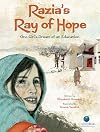
In my opinion this book sent a powerful message. The way Elizabeth Suneby, depicted Razia's character as this strong woman who kept fighting for what she wanted. I felt like I could connect to Razia, fighting for something I wanted but couldn't achieve it at first because I was a woman. The story was told from Razia's perspective so it put an emotional tone on the story overall which I also liked. I really liked this book and I feel like it can relate to many cultures. This book takes place show more in Afghanistan where women aren't allowed to get an education. But, the village Razia lives in decided to build an all girls school. Razia is eager to attend she loves to learn and already knows a lot. Her family is very against her attending this new school. "A woman should be home doing chores," this discouragement didn't stop Razia. She took her future into her own hands and convinced her family otherwise. This story sends a message that if you truly believe in something you shouldn't let others stop you. The story also depicts the message that not everyone is lucky enough to have a proper education. But, Razia was determined to get a better education so she showed her family the benefits this could bring them. When her older brother was sick she was able to read his pill bottle to give him the proper dosage. show less
Response - A beautiful and inspiring book. It is based on the experiences of female students in Afghanistan. The book highlights the plight of female education at the end and provides information about an American-Afghani woman who returned to Afghanistan after 9/11 to educate girls.
Curricular connection - read aloud, unit on human rights and taking action
Curricular connection - read aloud, unit on human rights and taking action
Awards


You May Also Like


Associated Authors
Statistics
- Works
- 6
- Members
- 411
- Popularity
- #59,240
- Rating
- 4.3
- Reviews
- 36
- ISBNs
- 20
- Languages
- 1