
David Julian Smith
Author of If the World Were a Village: A Book about the World’s People
About the Author
Image credit: David Julian Smith; image by Susan Lapides.
Works by David Julian Smith
If America Were a Village: A Book about the People of the United States (2009) 198 copies, 13 reviews
Tagged
Common Knowledge
- Birthdate
- 1944
- Gender
- male
- Education
- Harvard University (AB|1966)
Reed College (MAT|1967) - Occupations
- Grade 7 Teacher
- Nationality
- USA
- Birthplace
- Boston, Massachusetts, USA
- Places of residence
- Vancouver, British Columbia, Canada
- Associated Place (for map)
- USA
Members
Reviews
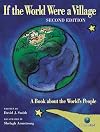
Although I am a bit overwhelmed with and by the seemingly vast amount of information presented, especially the numerical data (and would likely divide the same into smaller, more manageable chunks if reading this book with or to children), David J. Smith's If the World Were a Village is, I believe, one of the best books I have encountered to teach global awareness to children. Exponential numbers, tragedies of epic proportions, the fact that many of the world's people do not have enough food show more to eat, clean water to drink, educational opportunities etc. are often hard for children to comprehend, to grasp (even adults have trouble with this). By imagining the world's population as one hundred people living in one single village, the numbers not only become more manageable and understandable, the world's problems, the discrepancy between rich and poor, the fact that out of a village of 100 people, only 24 always have enough to eat, become much more present and immediate.
Neither gloom-and-doom nor artificially optimistic in its outlook, If the World Were a Village shows both positives and negatives, always striving for balance, making this lushly illustrated, informative picture book a perfect teaching/learning tool for either at-home or in-class use. As an added bonus, the author has also included a detailed list of teaching suggestions, as well as the bibliographical sources for the data utilised, turning If the World Were a Village into an essential and informative resource for both teachers and parents (while some of the teaching suggestions are rather standard, many of them, such as the concept of partnering schools, of fostering sister/brother communities around the world are truly innovative).
Although I would not necessarily call Shelagh Armstrong's boldly colourful illustrations personal favourites, they work very well with David J. Smith's narrative, providing a fitting complement, a wonderful and richly evocative mirror to and of the information presented. Highly recommended for older children interested in world geography, If the World Were a Village would be a perfect teaching/learning tool in both elementary and middle school social studies classes (perhaps even in high school classes, as the information presented would be of interest to and for older students and adults as well). show less
Neither gloom-and-doom nor artificially optimistic in its outlook, If the World Were a Village shows both positives and negatives, always striving for balance, making this lushly illustrated, informative picture book a perfect teaching/learning tool for either at-home or in-class use. As an added bonus, the author has also included a detailed list of teaching suggestions, as well as the bibliographical sources for the data utilised, turning If the World Were a Village into an essential and informative resource for both teachers and parents (while some of the teaching suggestions are rather standard, many of them, such as the concept of partnering schools, of fostering sister/brother communities around the world are truly innovative).
Although I would not necessarily call Shelagh Armstrong's boldly colourful illustrations personal favourites, they work very well with David J. Smith's narrative, providing a fitting complement, a wonderful and richly evocative mirror to and of the information presented. Highly recommended for older children interested in world geography, If the World Were a Village would be a perfect teaching/learning tool in both elementary and middle school social studies classes (perhaps even in high school classes, as the information presented would be of interest to and for older students and adults as well). show less
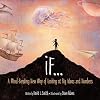
A unique book that shrinks down concepts that are hard to wrap your brain around to a familiar and smaller scale.
This book was helpful to me, even as an adult and I know I would have loved this book as a child. Besides putting large concepts on a smaller scale for comparison, seeing things on a smaller scale also helps us see the significance of everything we have. For example, "If all the water on Earth were represented by 100 glasses...97 of the glasses would be filled with salt water...3 show more of the glasses would contain fresh water. One of the glasses would represent all the fresh water available to us." With colorful and imaginative pictures, these concepts can be seen in a new and easily relateable way. If... explores concepts from the galaxy, to species diversity, to money distribution, energy usages and population dynamics. At the end there is also extra information about activities to build more things to scale. A great book for wondering minds.
This book was received for free in return for an honest review. show less
This book was helpful to me, even as an adult and I know I would have loved this book as a child. Besides putting large concepts on a smaller scale for comparison, seeing things on a smaller scale also helps us see the significance of everything we have. For example, "If all the water on Earth were represented by 100 glasses...97 of the glasses would be filled with salt water...3 show more of the glasses would contain fresh water. One of the glasses would represent all the fresh water available to us." With colorful and imaginative pictures, these concepts can be seen in a new and easily relateable way. If... explores concepts from the galaxy, to species diversity, to money distribution, energy usages and population dynamics. At the end there is also extra information about activities to build more things to scale. A great book for wondering minds.
This book was received for free in return for an honest review. show less

Author David J. Smith and illustrator Shelagh Armstrong, who previously collaborated on If the World Were a Village: A Book about the World's People, join forces again in this similar examination of the United States of America. Imagining the population of the USA (around 306 million at the time of publication) as a village of one hundred people, the author explores everything from demographics to wealth distribution, family structure to health situation. This approach gives young readers an show more idea of the larger picture, when it comes to the population of the United States, simplifying what would otherwise be a very complicated topic...
I enjoyed Smith and Armstrong's first book some years ago, and had always meant to pick up this companion volume, but somehow never managed to get around to it. Having recently been reading other titles in the Citizen Kid collection, I finally managed to track it down, and I'm glad I did. Although probably already a little dated - it was published in 2009 - If America Were a Village: A Book about the People of the United States is still a very valuable book, breaking down statistics in easily understood ways for children. As the author notes in his afterword, 100 is an easily understood number, and will help children to understand the topic. Numbers in the millions begin to feel abstract and unreal, I think, so Smith's approach is definitely helpful, as are the strategies he suggests, for discussing these topics with children. Although I wouldn't say it was a personal favorite, the artwork here, done in acrylic paint, is nevertheless colorful and engaging. All in all, a very worthwhile book, one I would recommend to young readers with an interest in geography and/or statistics. This could be a very useful addition to an upper primary or middle-grade social studies unit. show less
I enjoyed Smith and Armstrong's first book some years ago, and had always meant to pick up this companion volume, but somehow never managed to get around to it. Having recently been reading other titles in the Citizen Kid collection, I finally managed to track it down, and I'm glad I did. Although probably already a little dated - it was published in 2009 - If America Were a Village: A Book about the People of the United States is still a very valuable book, breaking down statistics in easily understood ways for children. As the author notes in his afterword, 100 is an easily understood number, and will help children to understand the topic. Numbers in the millions begin to feel abstract and unreal, I think, so Smith's approach is definitely helpful, as are the strategies he suggests, for discussing these topics with children. Although I wouldn't say it was a personal favorite, the artwork here, done in acrylic paint, is nevertheless colorful and engaging. All in all, a very worthwhile book, one I would recommend to young readers with an interest in geography and/or statistics. This could be a very useful addition to an upper primary or middle-grade social studies unit. show less
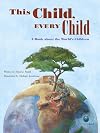
This Child, Every Child consists of twelve sections each highlighting one issue affecting children and their rights (i.e., family structure, access to necessary resources, child labor, child soldiers, etc.). One spread is devoted to each section, which presents the stories of fictional children that represent real-life situations and illustrate the statistics given on each topic. Each section also contains select articles from the United Nations Convention on the Rights of the Child. The show more entire document (in a child friendly version from UNICEF Canada) is included at the end of the book. The final pages of the book also include discussion questions and steps for action that adults can share with children, as well as the sources of information used in the book.
Throughout the book, the author makes connections between the facts and what they mean on a day-to-day basis for children across the globe. For instance, after giving statistics on the percent of the population children make up in various countries, the author explains that "countries with a high percentage of children often have a hard time providing services for all of them. Education, medical care and other resources are expensive, and, therefore, not widely available." Comments like these add humanity to the bare numbers and point out realities to children that they were most likely unaware of formerly (such as the idea that seeing a doctor when sick may not be possible if the required finances are not available).
Likewise, the author notes early on that "children who live in poverty, generally speaking, have shorter life spans than children elsewhere because they do not have adequate food supplies, medical care or access to schools and clean water. Other more fortunate children don’t have to worry about these things." It is also noted that family sizes and structures are affected by monetary resources as some families will have more children who can support the overall family income or will have extended family living all under one roof to save money. In addition, the author notes that less education and other beneficial opportunities for girls means more women in poverty later and that the 220 million children who work full-time for little or no pay are often in hazardous jobs with high risks of accidents. Again, this helps put the numbers in context and explain why the current situations for some children are disastrous. These explanations also help to illustrate economic concepts such as scarcity and wants versus needs. And, they make the concept of money more tangible to children – and show the wide-reaching effects of poverty.
Shelagh Armstrong's gentle illustrations perfectly match the text, but their soft coloring and shading help to disarm images that could be potentially very disconcerting, such as a child sleeping next to a gun in the section on war and its effects on children.
As some of the book is disconcerting, the author notes that "this book may not be comfortable to read, but the topic – the presence or absence of basic human rights in the lives of children – is an important one." Among the uncomfortable topics touched upon are child marriage, kidnapping, and homelessness. This is reason to give parents and educators pause about introducing this book to very young readers. Nevertheless, the book is packed with relevant and timely facts and lessons not only about economic concepts, but also about the worldwide population, cultural differences, and mostly importantly, children's rights in a global society. It is a read not to be missed.
I reviewed this book for EconKids. Read the full review here: http://econkids.rutgers.edu/new-picture-books-in-2011-first-word-q-z/2054-this-c... show less
Throughout the book, the author makes connections between the facts and what they mean on a day-to-day basis for children across the globe. For instance, after giving statistics on the percent of the population children make up in various countries, the author explains that "countries with a high percentage of children often have a hard time providing services for all of them. Education, medical care and other resources are expensive, and, therefore, not widely available." Comments like these add humanity to the bare numbers and point out realities to children that they were most likely unaware of formerly (such as the idea that seeing a doctor when sick may not be possible if the required finances are not available).
Likewise, the author notes early on that "children who live in poverty, generally speaking, have shorter life spans than children elsewhere because they do not have adequate food supplies, medical care or access to schools and clean water. Other more fortunate children don’t have to worry about these things." It is also noted that family sizes and structures are affected by monetary resources as some families will have more children who can support the overall family income or will have extended family living all under one roof to save money. In addition, the author notes that less education and other beneficial opportunities for girls means more women in poverty later and that the 220 million children who work full-time for little or no pay are often in hazardous jobs with high risks of accidents. Again, this helps put the numbers in context and explain why the current situations for some children are disastrous. These explanations also help to illustrate economic concepts such as scarcity and wants versus needs. And, they make the concept of money more tangible to children – and show the wide-reaching effects of poverty.
Shelagh Armstrong's gentle illustrations perfectly match the text, but their soft coloring and shading help to disarm images that could be potentially very disconcerting, such as a child sleeping next to a gun in the section on war and its effects on children.
As some of the book is disconcerting, the author notes that "this book may not be comfortable to read, but the topic – the presence or absence of basic human rights in the lives of children – is an important one." Among the uncomfortable topics touched upon are child marriage, kidnapping, and homelessness. This is reason to give parents and educators pause about introducing this book to very young readers. Nevertheless, the book is packed with relevant and timely facts and lessons not only about economic concepts, but also about the worldwide population, cultural differences, and mostly importantly, children's rights in a global society. It is a read not to be missed.
I reviewed this book for EconKids. Read the full review here: http://econkids.rutgers.edu/new-picture-books-in-2011-first-word-q-z/2054-this-c... show less
Lists
Awards


You May Also Like


Associated Authors
Statistics
- Works
- 5
- Members
- 2,074
- Popularity
- #12,395
- Rating
- 4.1
- Reviews
- 73
- ISBNs
- 49
- Languages
- 8