
Alice Faye Duncan
Author of Memphis, Martin, and the Mountaintop: The Sanitation Strike of 1968
About the Author
Image credit: penguinrandomhouse.com
Works by Alice Faye Duncan
Opal Lee and What It Means to Be Free: The True Story of the Grandmother of Juneteenth (2022) 189 copies, 6 reviews
Opal Lee and What It Means to Be Free Educator's Guide: The True Story of the Grandmother of Juneteenth (2022) 3 copies, 1 review
Tagged
Common Knowledge
- Gender
- female
Members
Reviews
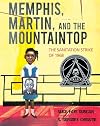
Fifty years on, readers reminisce with a young black girl who recalls how black sanitation workers launched a movement for equal rights and safer working conditions and stayed committed to justice amid tragic loss.
Basing her story on the true accounts of Dr. Almella Starks-Umoja, Duncan creates 9-year-old Lorraine Jackson to tell the full story of the Memphis sanitation strike of 1968. The story begins not with the entrance of Martin Luther King, who would arrive in March, but in January, show more when the tragic deaths of two black garbagemen due to old, malfunctioning equipment added to calls for change. The author’s choice to not focus on the singular efforts of King but on the dedicated efforts of community signals a deeply important lesson for young readers. Strong historical details back up the organizing feat: “In the morning and afternoon, for sixty-five days, sanitation workers marched fourteen blocks through the streets of downtown Memphis.” The narrative is set in vignettes that jump between verse and prose, set against Christie’s bold paintings. Lorraine learns that “Dreamers never quit” after reminiscing on what would be Dr. King’s final lecture, delivered on April 3. The struggle doesn’t end with King’s death but continues with the spotlight cast by Coretta Scott King on the sanitation workers’ demands. “Freedom is never free,” Lorraine notes before closing with the thought that it remains our mission to “Climb up the MOUNTAINTOP!”
Encapsulates the bravery, intrigue, and compassion that defined a generation, presenting a history that everyone should know: required and inspired. (Picture book. 9-12)
-Kirkus Review show less
Basing her story on the true accounts of Dr. Almella Starks-Umoja, Duncan creates 9-year-old Lorraine Jackson to tell the full story of the Memphis sanitation strike of 1968. The story begins not with the entrance of Martin Luther King, who would arrive in March, but in January, show more when the tragic deaths of two black garbagemen due to old, malfunctioning equipment added to calls for change. The author’s choice to not focus on the singular efforts of King but on the dedicated efforts of community signals a deeply important lesson for young readers. Strong historical details back up the organizing feat: “In the morning and afternoon, for sixty-five days, sanitation workers marched fourteen blocks through the streets of downtown Memphis.” The narrative is set in vignettes that jump between verse and prose, set against Christie’s bold paintings. Lorraine learns that “Dreamers never quit” after reminiscing on what would be Dr. King’s final lecture, delivered on April 3. The struggle doesn’t end with King’s death but continues with the spotlight cast by Coretta Scott King on the sanitation workers’ demands. “Freedom is never free,” Lorraine notes before closing with the thought that it remains our mission to “Climb up the MOUNTAINTOP!”
Encapsulates the bravery, intrigue, and compassion that defined a generation, presenting a history that everyone should know: required and inspired. (Picture book. 9-12)
-Kirkus Review show less
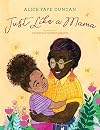
A much-needed title showing a foster parent and child relationship. Carol Olivia Clementine lives with Mama Rose, and tells the reader all the ways that Mama Rose is just like a Mama, while acknowledging that her own parents live far apart and wishing they could live together. We see photos of Carol's family, indicating a respect and love for that relationship. The love of Mama Rose shines in every spread, even when she's scolding or correcting. I LOVED the illustrations, which show such show more life and expression, body language and beautiful details like Carol's baby hairs. I'm seriously in love with the fuchsia color found in every illustration in several ways, including as a highlight in Mama Rose's hair. Gorgeous all over. show less
This book for kids tells a great story, based on a real little girl (re-named Lorraine Jackson for the story), who participated in the Memphis Sanitation Strike.
This strike was the last movement Martin Luther King, Jr. would lead before his untimely and tragic assassination on April 4, 1968.
The strike began over the mistreatment of sewer and sanitation workers in Memphis. At that time, Memphis sanitation workers were mostly black. Their pay was low and they could be fired (usually by white show more supervisors) without warning. In 1968, the average wage of these workers was about $1.70 per hour. In addition to their sanitation work, often including unpaid overtime, many worked other jobs or had to apply for welfare and public housing to keep afloat. The working conditions were appalling.
As Peter Dreier (Distinguished Professor of Politics at Occidental College), explains:
"Forty percent of the workers qualified for welfare to supplement their poverty-level salaries. They had almost no health care benefits, pensions, or vacations. They worked in filthy conditions, and lacked basic amenities like a place to eat and shower. They were required to haul leaky garbage tubs that spilled maggots and debris on them. White supervisors called them 'boy' and arbitrarily sent them home without pay for minor infractions that they overlooked when white workers did the same thing. The workers asked Memphis Mayor Henry Loeb and the city council to improve their working conditions, but they refused to do so."
On February 12 of 1968, 1,300 black sanitation workers walked off their jobs, demanding that the city recognize their union, a pay increase to $2.35 an hour, overtime pay, and merit promotions without regard to race.
Lorraine narrates in this book:
“In the morning and afternoon, for sixty-five days, sanitation workers marched fourteen blocks through the streets of downtown Memphis. . . . My daddy marched in that number. He marched for better pay. He marched for decent treatment. My daddy marched for me."
The author alternates telling the little girl’s story in plain prose, with narration in free verse, both purportedly by Lorraine. She writes:
“I remember Memphis and legions of noblemen.
I remember broken glass and the voice of a fallen King.
Fire, smoke, and ashes ravaged midnight cityscapes.
Black men marched for honor, and I must tell the story.
You must tell the story - so that no one will forget it.”
The city used non-union workers and supervisors to pick up garbage, but even so, thousands of tons of garbage piled up. But it was hard for the striking workers. Lorraine reports: “The phone bill went unpaid. One week we had no lights.” Church donations helped strikers pay their bills.
Dr. Dreier wrote:
"On several occasions, the police attacked the strikes with clubs and mace. They harassed protestors and even arrested strike leaders for jaywalking. On March 5, 117 strikers and supporters were arrested for sitting in at city hall. Six days later, hundreds of students skipped high school to participate in a march led by black ministers. Two students were arrested."
Local ministers invited Martin Luther King, Jr. to come to Memphis to add support and he agreed. Dr. King inspired the protestors and drafted a plan to march in Memphis with the strikers on March 22. Then it snowed, and the march was re-scheduled for March 28. Lorraine’s mama kept her home from school so she could participate.
Six thousand people gathered in downtown Memphis. The police moved into crowds with nightsticks, mace, tear gas, and gunfire. The police arrested 280 people. Sixty were injured. A 16-year-old boy, Larry Payne, was shot to death. The state legislature authorized a 7 p.m. curfew and 4,000 National Guardsmen moved in. The next day, 300 sanitation workers and supporters marched peacefully and silently to City Hall -- escorted by five armored personnel carriers, five jeeps, three large military trucks, and dozens of Guardsmen with bayonets fixed.
Lorraine says:
“Dreamers don’t quit. When challenges arise, dreamers keep on climbing. My daddy was a dreamer. Dr. King was a dreamer too.”
Dr. King came back to Memphis on Wednesday, April 3 to address a rally to pressure city officials to negotiate a compromise solution to the strike. That night, at the Mason Temple -- packed with over 10,000 black workers and residents, ministers, white union members, white liberals, and students -- King delivered what would turn out to be his last speech.
Every bit of that speech is worthy of quoting. Dr. King emphasized the linkage between labor movements and civil rights, and he told the crowd:
"Let us rise up tonight with a greater readiness. Let us stand with a greater determination. And let us move on in these powerful days, these days of challenge to make America what it ought to be. We have an opportunity to make America a better nation."
He even talked about the threats against his life:
"And then I got into Memphis. And some began to . . . talk about the threats that were out. What would happen to me from some of our sick white brothers?
Well, I don't know what will happen now. We've got some difficult days ahead. But it really doesn't matter with me now, because I've been to the mountaintop.
And I don't mind.
Like anybody, I would like to live a long life. Longevity has its place. But I'm not concerned about that now. I just want to do God's will. And He's allowed me to go up to the mountain. And I've looked over. And I've seen the Promised Land. I may not get there with you. But I want you to know tonight, that we, as a people, will get to the promised land!"
The next afternoon, Martin Luther King, Jr. stood out on the balcony of his room at the Lorraine Hotel, joking with a group of friends and fellow organizers who were down in the parking lot, when James Earl Ray, an escaped convict, shot and killed him.
Peter Dreier pointed out:
"As Time magazine noted at the time: 'Ironically, it was the violence of Martin Luther King's death rather than the nonviolence of his methods that ultimately broke the city's resistance' and led to the strike settlement. President Johnson ordered federal troops to Memphis and instructed Undersecretary of Labor James Reynolds to mediate the conflict and settle the strike. . . .”
Lorraine tells us she cried when Dr. King was shot and wrote a poem in her school notebook, which she still had and which is reproduced for us in the book. She concludes:
“So much was won.
So much was lost.
Freedom is never free.”
The author ends the book with a timeline of the 1968 Memphis Sanitation Strike, and notes on sources.
Note: There is also a free lesson plan for download on the author's website.
The illustrator, R. Gregory Christie, has won multiple awards for his work, including the Coretta Scott King Illustrator Honor Award and the NAACP’s Image award. The pictures in this book alternate between realist and impressionistic. He also deftly alters his palette to show changes in mood and tone. As he has stated in an interview, his art is meant to be “a challenge for the viewer to break away from the established fundamental belief that all children’s books must be realistic or cute.”
Evaluation: Many Americans know about the speeches of Martin Luther King, but not much about the conditions that elicited his leadership. This well-told story for ages 9-12 helps redress that omission, and in addition, it has an unforgettable emotional impact. And it made me feel so sad, missing Martin Luther King, Jr. more than ever. But as the author stated:
"Books frequently show Dr. King as a singular force of tenacity and strength. He was courageous. However, as a writer for young readers, I am committed to revealing a Dr. King, who was an effective leader because he marched in accord with an army of determined men, women and children."
It's a great message, and expertly conveyed. show less
This strike was the last movement Martin Luther King, Jr. would lead before his untimely and tragic assassination on April 4, 1968.
The strike began over the mistreatment of sewer and sanitation workers in Memphis. At that time, Memphis sanitation workers were mostly black. Their pay was low and they could be fired (usually by white show more supervisors) without warning. In 1968, the average wage of these workers was about $1.70 per hour. In addition to their sanitation work, often including unpaid overtime, many worked other jobs or had to apply for welfare and public housing to keep afloat. The working conditions were appalling.
As Peter Dreier (Distinguished Professor of Politics at Occidental College), explains:
"Forty percent of the workers qualified for welfare to supplement their poverty-level salaries. They had almost no health care benefits, pensions, or vacations. They worked in filthy conditions, and lacked basic amenities like a place to eat and shower. They were required to haul leaky garbage tubs that spilled maggots and debris on them. White supervisors called them 'boy' and arbitrarily sent them home without pay for minor infractions that they overlooked when white workers did the same thing. The workers asked Memphis Mayor Henry Loeb and the city council to improve their working conditions, but they refused to do so."
On February 12 of 1968, 1,300 black sanitation workers walked off their jobs, demanding that the city recognize their union, a pay increase to $2.35 an hour, overtime pay, and merit promotions without regard to race.
Lorraine narrates in this book:
“In the morning and afternoon, for sixty-five days, sanitation workers marched fourteen blocks through the streets of downtown Memphis. . . . My daddy marched in that number. He marched for better pay. He marched for decent treatment. My daddy marched for me."
The author alternates telling the little girl’s story in plain prose, with narration in free verse, both purportedly by Lorraine. She writes:
“I remember Memphis and legions of noblemen.
I remember broken glass and the voice of a fallen King.
Fire, smoke, and ashes ravaged midnight cityscapes.
Black men marched for honor, and I must tell the story.
You must tell the story - so that no one will forget it.”
The city used non-union workers and supervisors to pick up garbage, but even so, thousands of tons of garbage piled up. But it was hard for the striking workers. Lorraine reports: “The phone bill went unpaid. One week we had no lights.” Church donations helped strikers pay their bills.
Dr. Dreier wrote:
"On several occasions, the police attacked the strikes with clubs and mace. They harassed protestors and even arrested strike leaders for jaywalking. On March 5, 117 strikers and supporters were arrested for sitting in at city hall. Six days later, hundreds of students skipped high school to participate in a march led by black ministers. Two students were arrested."
Local ministers invited Martin Luther King, Jr. to come to Memphis to add support and he agreed. Dr. King inspired the protestors and drafted a plan to march in Memphis with the strikers on March 22. Then it snowed, and the march was re-scheduled for March 28. Lorraine’s mama kept her home from school so she could participate.
Six thousand people gathered in downtown Memphis. The police moved into crowds with nightsticks, mace, tear gas, and gunfire. The police arrested 280 people. Sixty were injured. A 16-year-old boy, Larry Payne, was shot to death. The state legislature authorized a 7 p.m. curfew and 4,000 National Guardsmen moved in. The next day, 300 sanitation workers and supporters marched peacefully and silently to City Hall -- escorted by five armored personnel carriers, five jeeps, three large military trucks, and dozens of Guardsmen with bayonets fixed.
Lorraine says:
“Dreamers don’t quit. When challenges arise, dreamers keep on climbing. My daddy was a dreamer. Dr. King was a dreamer too.”
Dr. King came back to Memphis on Wednesday, April 3 to address a rally to pressure city officials to negotiate a compromise solution to the strike. That night, at the Mason Temple -- packed with over 10,000 black workers and residents, ministers, white union members, white liberals, and students -- King delivered what would turn out to be his last speech.
Every bit of that speech is worthy of quoting. Dr. King emphasized the linkage between labor movements and civil rights, and he told the crowd:
"Let us rise up tonight with a greater readiness. Let us stand with a greater determination. And let us move on in these powerful days, these days of challenge to make America what it ought to be. We have an opportunity to make America a better nation."
He even talked about the threats against his life:
"And then I got into Memphis. And some began to . . . talk about the threats that were out. What would happen to me from some of our sick white brothers?
Well, I don't know what will happen now. We've got some difficult days ahead. But it really doesn't matter with me now, because I've been to the mountaintop.
And I don't mind.
Like anybody, I would like to live a long life. Longevity has its place. But I'm not concerned about that now. I just want to do God's will. And He's allowed me to go up to the mountain. And I've looked over. And I've seen the Promised Land. I may not get there with you. But I want you to know tonight, that we, as a people, will get to the promised land!"
The next afternoon, Martin Luther King, Jr. stood out on the balcony of his room at the Lorraine Hotel, joking with a group of friends and fellow organizers who were down in the parking lot, when James Earl Ray, an escaped convict, shot and killed him.
Peter Dreier pointed out:
"As Time magazine noted at the time: 'Ironically, it was the violence of Martin Luther King's death rather than the nonviolence of his methods that ultimately broke the city's resistance' and led to the strike settlement. President Johnson ordered federal troops to Memphis and instructed Undersecretary of Labor James Reynolds to mediate the conflict and settle the strike. . . .”
Lorraine tells us she cried when Dr. King was shot and wrote a poem in her school notebook, which she still had and which is reproduced for us in the book. She concludes:
“So much was won.
So much was lost.
Freedom is never free.”
The author ends the book with a timeline of the 1968 Memphis Sanitation Strike, and notes on sources.
Note: There is also a free lesson plan for download on the author's website.
The illustrator, R. Gregory Christie, has won multiple awards for his work, including the Coretta Scott King Illustrator Honor Award and the NAACP’s Image award. The pictures in this book alternate between realist and impressionistic. He also deftly alters his palette to show changes in mood and tone. As he has stated in an interview, his art is meant to be “a challenge for the viewer to break away from the established fundamental belief that all children’s books must be realistic or cute.”
Evaluation: Many Americans know about the speeches of Martin Luther King, but not much about the conditions that elicited his leadership. This well-told story for ages 9-12 helps redress that omission, and in addition, it has an unforgettable emotional impact. And it made me feel so sad, missing Martin Luther King, Jr. more than ever. But as the author stated:
"Books frequently show Dr. King as a singular force of tenacity and strength. He was courageous. However, as a writer for young readers, I am committed to revealing a Dr. King, who was an effective leader because he marched in accord with an army of determined men, women and children."
It's a great message, and expertly conveyed. show less
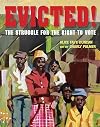
Aseries of interconnected stories about real-life people illuminates the history of Tennessee’s Fayette County Tent City Movement.
The book opens with a preface, an illustrated dramatis personae showing a large cast of characters spanning two generations, a map of Fayette County, and a Prologue to Freedom that introduces the protagonist, James Junior. When a Black man stands trial for murder in 1958, the community is sobered to realize that they cannot serve as jurors because they aren’t show more registered voters. Two farmers lead a voter registration and mobilization drive, and as the movement grows, the community suffers repercussions, from ethnic intimidation to consumer blacklisting to eviction. A landowning Black citizen hosts evicted families in tents, and this “Tent City” makes the national news, drawing support from Black and White civil rights advocates around the country. An intense, prolonged, and often violent struggle ensues, ultimately ushering in the Voting Rights Act of 1965, which legally prohibited race-based voter discrimination. The historical account is told from the perspective of young James Junior (now a 72-year-old grandfather) and is made personal through the testimonies of individuals who were crucial to the movement, those who are remembered by the community, and those who do the remembering. The episodic narrative, which oscillates between lyrical passages and straightforward prose, is sometimes too overloaded with information considering the book’s young audience. Palmer’s painterly, evocative paintings effectively capture the era, are suffused with emotional honesty, and bring reverence to the heavy subject matter.
Not an easy read but an important one. (epilogue, timeline, photographs, resource guide, bibliography, author's note, illustrator's note) (Nonfiction. 9-12)
-Kirkus Review show less
The book opens with a preface, an illustrated dramatis personae showing a large cast of characters spanning two generations, a map of Fayette County, and a Prologue to Freedom that introduces the protagonist, James Junior. When a Black man stands trial for murder in 1958, the community is sobered to realize that they cannot serve as jurors because they aren’t show more registered voters. Two farmers lead a voter registration and mobilization drive, and as the movement grows, the community suffers repercussions, from ethnic intimidation to consumer blacklisting to eviction. A landowning Black citizen hosts evicted families in tents, and this “Tent City” makes the national news, drawing support from Black and White civil rights advocates around the country. An intense, prolonged, and often violent struggle ensues, ultimately ushering in the Voting Rights Act of 1965, which legally prohibited race-based voter discrimination. The historical account is told from the perspective of young James Junior (now a 72-year-old grandfather) and is made personal through the testimonies of individuals who were crucial to the movement, those who are remembered by the community, and those who do the remembering. The episodic narrative, which oscillates between lyrical passages and straightforward prose, is sometimes too overloaded with information considering the book’s young audience. Palmer’s painterly, evocative paintings effectively capture the era, are suffused with emotional honesty, and bring reverence to the heavy subject matter.
Not an easy read but an important one. (epilogue, timeline, photographs, resource guide, bibliography, author's note, illustrator's note) (Nonfiction. 9-12)
-Kirkus Review show less
Lists
Youth: BLM (1)
Awards


You May Also Like


Associated Authors
Statistics
- Works
- 19
- Members
- 951
- Popularity
- #27,066
- Rating
- 4.1
- Reviews
- 49
- ISBNs
- 46