
Mick Farren (1943–2013)
Author of Their Master's War
About the Author
Series
Works by Mick Farren
The DNA Cowboys Trilogy: The Quest of the DNA Cowboys/Synaptic Manhunt/the Neural Atrocity (2002) 49 copies
Elvis Died For Somebody's Sins But Not Mine: A Lifetime's Collected Writing (2013) 13 copies, 1 review
The Hitchhiker's Guide to Elvis: An A-Z of the Elvis Universe by Acclaimed Author Mick Farren (1994) 3 copies
Fun In The Final Days 1 copy
Rolling Stones 76 1 copy
Mona The Carnivorous Circus 1 copy
Rock 'n' Roll Madness 1 copy
Associated Works
Trust In You - Performance Track — some editions — 1 copy
Tagged
Common Knowledge
- Legal name
- Farren, Michael Anthony
- Birthdate
- 1943-09-03
- Date of death
- 2013-07-27
- Gender
- male
- Occupations
- rock musician
Countercultural journalist - Cause of death
- heart attack
- Nationality
- UK
- Birthplace
- Cheltenham, Gloucestershire, England, UK
- Place of death
- London, England, UK
- Associated Place (for map)
- England, UK
Members
Discussions
Shocking cover in Good Show Sir! — bad science fiction and fantasy covers (August 2025)
No Firearms Discharge Within City Limits in Good Show Sir! — bad science fiction and fantasy covers (June 2025)
Reviews

It was a struggle to finish, and it was ABSOLUTELY NOT WORTH READING. There's not enough of a premise here to build a bad novel on, let alone a good one. It doesn't feel like the plot built up to the conclusion or that the conclusion was the inevitable outcome of everything that passed before it.
The characters are not consistent throughout the book, behaving first one way, then another, whatever seemed to suit the author's purpose for the scenes he wanted to set up. In one very early scene show more we learn that spilled nosferatu blood is a powerful draw to other nosferatu to engage in a fighting frenzy to attack the bleeding nosferatu with "tooth and claw," but in scenes later in the book, the shedding of nosferatu blood has no effect whatsoever on the other nosferatu present. It simply wouldn't have served the author's purpose.
There are no character arcs and no real development of any kind for any of the characters, no plot development. Most of the book is comprised of massive information dumps which are not only unnecessary, they stall the plot rather than move it along. The author also seems obsessed with name-dropping, trying to connect his main character, Victor Renquist, with every major historical figure from every culture around the world that he could find a Wikipedia article about.
I read another reader's review that complained about the author's use of big, fancy words, which I had noticed too from the start of the novel. At first I liked it because it helped create a gothic feel to the book. But apparently the author couldn't keep it up, and there are whole chapters written in a different style before we return to the gothic, erudite language. It's too inconsistent to be effective on any level. In fact, the writing changes so drastically at a couple of points in the book that I wonder if the author had a ghost writer (or a couple of ghost writers) to try and salvage this book. Even if that was the case, it obviously didn't work. The author loves the construction "all but," as in "he all but smiled" or "they were all but beside themselves." He not only abuses this phrase by using it constantly, but he misuses it, resulting in awkward constructions, and he overuses it. Farren needs to learn how to self-edit.
There are point-of-view issues in almost every scene. The author constantly flips between a tight, third person point of view to an omniscient one or another character's point of view for a sentence or two, then back again.
The editing is terrible. The book could benefit greatly from the attention of even the lowliest proofreader, though I can understand why TOR Books didn't want to sink any money into this project. Shame on the publisher for taking on so many books by such an obviously incompetent writer!
It is best to think of this book as a spoof of vampire novels in general. As such, it's still a really bad book, but that's the best light you can cast it in, as if the author's intention is to buck the trend to depict vampires as killers with hearts of gold, angst-ridden creatures who hate their own nature, sexy and sensual, both attractive and repulsive, etc. etc. The nosferatu in Farren's books are supposedly asexual because they cannot experience sexual pleasure (just as they can't get drunk or be affected by the drugs that affect humans), yet the female vampires very carefully dress up and apply makeup to greet the male vampire, and there are references to male vampires taking on a female consort (or seven). There may have been potential there to play on the differences between sensual and sexual -- may have -- but it gets lost in the author's misogynistic attitude toward women, his constant objectifying of women, and his insistence on portraying "powerful" women-nosferatu as scheming, petty bitches.
Not worth reading.
~bintarab show less
The characters are not consistent throughout the book, behaving first one way, then another, whatever seemed to suit the author's purpose for the scenes he wanted to set up. In one very early scene show more we learn that spilled nosferatu blood is a powerful draw to other nosferatu to engage in a fighting frenzy to attack the bleeding nosferatu with "tooth and claw," but in scenes later in the book, the shedding of nosferatu blood has no effect whatsoever on the other nosferatu present. It simply wouldn't have served the author's purpose.
There are no character arcs and no real development of any kind for any of the characters, no plot development. Most of the book is comprised of massive information dumps which are not only unnecessary, they stall the plot rather than move it along. The author also seems obsessed with name-dropping, trying to connect his main character, Victor Renquist, with every major historical figure from every culture around the world that he could find a Wikipedia article about.
I read another reader's review that complained about the author's use of big, fancy words, which I had noticed too from the start of the novel. At first I liked it because it helped create a gothic feel to the book. But apparently the author couldn't keep it up, and there are whole chapters written in a different style before we return to the gothic, erudite language. It's too inconsistent to be effective on any level. In fact, the writing changes so drastically at a couple of points in the book that I wonder if the author had a ghost writer (or a couple of ghost writers) to try and salvage this book. Even if that was the case, it obviously didn't work. The author loves the construction "all but," as in "he all but smiled" or "they were all but beside themselves." He not only abuses this phrase by using it constantly, but he misuses it, resulting in awkward constructions, and he overuses it. Farren needs to learn how to self-edit.
There are point-of-view issues in almost every scene. The author constantly flips between a tight, third person point of view to an omniscient one or another character's point of view for a sentence or two, then back again.
The editing is terrible. The book could benefit greatly from the attention of even the lowliest proofreader, though I can understand why TOR Books didn't want to sink any money into this project. Shame on the publisher for taking on so many books by such an obviously incompetent writer!
It is best to think of this book as a spoof of vampire novels in general. As such, it's still a really bad book, but that's the best light you can cast it in, as if the author's intention is to buck the trend to depict vampires as killers with hearts of gold, angst-ridden creatures who hate their own nature, sexy and sensual, both attractive and repulsive, etc. etc. The nosferatu in Farren's books are supposedly asexual because they cannot experience sexual pleasure (just as they can't get drunk or be affected by the drugs that affect humans), yet the female vampires very carefully dress up and apply makeup to greet the male vampire, and there are references to male vampires taking on a female consort (or seven). There may have been potential there to play on the differences between sensual and sexual -- may have -- but it gets lost in the author's misogynistic attitude toward women, his constant objectifying of women, and his insistence on portraying "powerful" women-nosferatu as scheming, petty bitches.
Not worth reading.
~bintarab show less
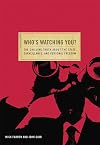
This book looks at the current state of privacy in America, which has been steadily eroded by the threat of terrorism and the climate of fear encouraged by the state. It is not a pretty picture.
The carrying of a national ID card, implanted with an RFID chip that could record a person’s movements, and which may have to be produced on request of any representative of the state, is not some vague possibility; in May 2008, it will become a reality. The average shopper is more than willing to show more give up their personal information to retailer’s databases, some of which are more comprehensive than those held by governments, all in exchange for a discount of a few percent. Have you ever heard of ECHELON? It has certainly heard of you. It is a worldwide electronic monitoring system that aims to check all phone calls, faxes, telexes and emails between Europe, America and the Middle East, supposedly for possible terrorist activity.
If there is such a thing as The Database that contains all information on the average American, it is probably the one held by Atlanta-based ChoicePoint Corporation. They get their information from many different sources, and sell it to many different types of clients. If the information on a person’s report is faulty, and there is a good chance that something on the report is wrong, oh well. ChoicePoint does not consider itself subject to the Fair Credit Reporting Act (FCRA), which gives Americans a chance to fix faulty information. America is not the only country that has sophisticated spy satellites in orbit, able to take very detailed pictures of practically anything. A new industry has emerged around home-based surveillance, like nanny-cam’s that work over the Internet, and systems to monitor and record everything your kids do online.
What can be done? The most that can be done by the average person is to keep any more privacy from disappearing; that which is already gone is gone, it is not coming back. The book contains a list, with web addresses, of American and British groups working on the privacy front.
This book is better than excellent. It is more than a little spooky, it is easy to read, and is highly recommended, even for those who know their way around the worlds of privacy and surveillance. show less
The carrying of a national ID card, implanted with an RFID chip that could record a person’s movements, and which may have to be produced on request of any representative of the state, is not some vague possibility; in May 2008, it will become a reality. The average shopper is more than willing to show more give up their personal information to retailer’s databases, some of which are more comprehensive than those held by governments, all in exchange for a discount of a few percent. Have you ever heard of ECHELON? It has certainly heard of you. It is a worldwide electronic monitoring system that aims to check all phone calls, faxes, telexes and emails between Europe, America and the Middle East, supposedly for possible terrorist activity.
If there is such a thing as The Database that contains all information on the average American, it is probably the one held by Atlanta-based ChoicePoint Corporation. They get their information from many different sources, and sell it to many different types of clients. If the information on a person’s report is faulty, and there is a good chance that something on the report is wrong, oh well. ChoicePoint does not consider itself subject to the Fair Credit Reporting Act (FCRA), which gives Americans a chance to fix faulty information. America is not the only country that has sophisticated spy satellites in orbit, able to take very detailed pictures of practically anything. A new industry has emerged around home-based surveillance, like nanny-cam’s that work over the Internet, and systems to monitor and record everything your kids do online.
What can be done? The most that can be done by the average person is to keep any more privacy from disappearing; that which is already gone is gone, it is not coming back. The book contains a list, with web addresses, of American and British groups working on the privacy front.
This book is better than excellent. It is more than a little spooky, it is easy to read, and is highly recommended, even for those who know their way around the worlds of privacy and surveillance. show less

I am not a very good judge of sci-fi, since I basically only read non-fiction, but I found this space adventure tale engaging; a fun, fast read. I especially appreciated Farren's details on what jumping across space would potentially be like, physically, as well as translating the attitudes of an underclass onto this galactic-scale canvas.
I dipped my two into these waters intrigued after I interview the author about his proto-punk band The Deviants.
I dipped my two into these waters intrigued after I interview the author about his proto-punk band The Deviants.

My reactions to reading this book in 1991. Spoilers follow.
I bought this book because I couldn't resist the title and cover blurb: "Glasnost was dead, and the cold war on Mars was heating up...". I hadn't read any Mick Farren before and didn't know what to expect. The book was competently done. Farren, particularly in his delightfully baroque spacesuits, is obviously trying to do a cyberpunk novel on Mars. He even borrows John Shirley's terminology of ice -- intrusive counter-electronics.). show more Farren knows his science, doesn't overplot, packs lots of plausible description that makes Mars seem like a plausible Old West, and paces well and uses lots of dialogue, some humorous.
But Farren is an essentially derivative writer. Besides Shirley, there is an explicit reference to Stephen King's The Tommyknockers (the malevolent influence of a buried spaceship is used here) and, I think, to King's Misery. The mind parasites mentioned in the last chapter are perhaps based on Colin Wilson's novel of the same name.
At first, I thought Farren's serial killer and his mental entity were merely a convential metaphor for psychosis but, since this is sf, Farren decided to literalize the metaphor. Unfortunately, Farren couldn't resist the evil-that-will-not-die ending.
I liked some of hte book's characters but most of the one's I liked died (I really didn't care if Lech Hammond, journalist, lived.). Farren creates tension in some places, particularly with his KGB. He seems to have a bit of anti-military bias, but it didn't interfere with the story. show less
I bought this book because I couldn't resist the title and cover blurb: "Glasnost was dead, and the cold war on Mars was heating up...". I hadn't read any Mick Farren before and didn't know what to expect. The book was competently done. Farren, particularly in his delightfully baroque spacesuits, is obviously trying to do a cyberpunk novel on Mars. He even borrows John Shirley's terminology of ice -- intrusive counter-electronics.). show more Farren knows his science, doesn't overplot, packs lots of plausible description that makes Mars seem like a plausible Old West, and paces well and uses lots of dialogue, some humorous.
But Farren is an essentially derivative writer. Besides Shirley, there is an explicit reference to Stephen King's The Tommyknockers (the malevolent influence of a buried spaceship is used here) and, I think, to King's Misery. The mind parasites mentioned in the last chapter are perhaps based on Colin Wilson's novel of the same name.
At first, I thought Farren's serial killer and his mental entity were merely a convential metaphor for psychosis but, since this is sf, Farren decided to literalize the metaphor. Unfortunately, Farren couldn't resist the evil-that-will-not-die ending.
I liked some of hte book's characters but most of the one's I liked died (I really didn't care if Lech Hammond, journalist, lived.). Farren creates tension in some places, particularly with his KGB. He seems to have a bit of anti-military bias, but it didn't interfere with the story. show less
Lists
You May Also Like


Associated Authors
Statistics
- Works
- 51
- Also by
- 5
- Members
- 2,373
- Popularity
- #10,817
- Rating
- 3.5
- Reviews
- 15
- ISBNs
- 97
- Languages
- 2
- Favorited
- 3