
Usamaru Furuya
Author of Lychee Light Club
About the Author
Series
Works by Usamaru Furuya
Plastic Girl / プラスチックガール 3 copies
人間失格 2 (2) (ビッグコミックス) 1 copy
At Na-Chan's 1 copy
Jisatsu Circle 1 copy
瑪莉的音樂盒 1 copy
人間失格 3 (3) (ビッグコミックス) 1 copy
Shinju: Una Historia De Amor 1 copy
Um homem em declínio 1 copy
Associated Works
Japan Edge: The Insider's Guide to Japanese Pop Subculture (1999) — Contributor — 56 copies, 1 review
ユリイカ 2019年09月臨時増刊号 総特集=遠藤ミチロウ ―1950-2019― — Contributor — 1 copy
Tagged
Common Knowledge
- Legal name
- 古屋兎丸
- Birthdate
- 1968-01-25
- Gender
- male
- Education
- Tama Art University
- Occupations
- manga artist
- Nationality
- Japan
- Birthplace
- Tokyo, Japan
- Places of residence
- Tokyo, Japan
- Associated Place (for map)
- Tokyo, Japan
Members
Reviews

[Content warnings: this volume includes on-page sex, and there’s a deliberately disturbing sequence in which a children’s manga character is given an enormous penis, has sex, and is then killed and left to be eaten by birds.]
This volume picks up where the previous one left off. Yozo has survived his attempted double suicide with Ageha. The idea of being punished for her death gives him the sense of purpose he craves, but this is snatched from his hands by the police’s decision to set show more him free and deliver him to the hands of one of his family’s former servants. Yozo blames his father and stews in his own bitterness while essentially living trapped in the former servant’s home.
Yozo manages to escape one prison only to end up in another. Having no other place to go, he ends up living with his friend Horiki's editor, Shizuko. She dotes on him, seeing his pretty face and nothing else. Although outwardly things appear to be going well for Yozo - he now has a roof over his head, a job as a children’s manga artist, and somebody willing to fork over money anytime he wants to go out and buy booze - he feels stifled by Shizuko’s love and her young daughter’s wish for him to be her real father.
By the end of the volume, Yozo has finally found something like happiness. Will it last? Ha ha, of course not.
I think I’ve finally accepted that this isn’t so much an adaptation of Osamu Dazai’s No Longer Human as it is Dazai’s plot and Usamaru Furuya’s Yozo. Although I still end up comparing the two works a lot in this review. Sorry.
My interpretation of the original book and Furuya’s interpretation continue to differ wildly. Furuya’s Yozo is less sympathetic than Dazai’s (who, granted, tended to be pretty terrible), more likely to blame his father for his own problems, and more calculating. Rather than just sort of being taken in by Shizuko, he does his best to manipulate her into offering to take him in, making use of both his good looks and his abilities in bed.
Yozo isn’t a likeable guy. He’s prone to self-destructive behavior, doesn’t think things through, and then wallows in bitterness rather than accept the consequences. He was even more disgusting than Book Yozo when it came to life with Shizuko and Shiori. I remember Book Shizuko putting up with more from Yozo than I thought was wise, but I’m pretty sure the undressing scene was entirely invented by Furuya, and it was awful. The inclusion of Dazai’s “Papa is...too good of a person” scene afterward was bizarre, since both Shizuko and Shiori had just witnessed Yozo being very much not a good person.
In some ways, I’d argue that Yozo’s brief period of time with Mama at the bar was probably the best period of his life, even better than his “romance” with Yoshi at the end of the volume - this was vastly different from how I felt while reading the original book, by the way. I think Furuya’s Mama was a more fascinating character than Dazai’s.
Mama was an older woman who, for some bizarre reason, was fond of Yozo but also well aware of his problems. She didn’t expect anything from him, and her happiness certainly didn’t depend on him. There was one scene I particularly liked that I think Furuya invented (I don’t recall it being in the original book). Mama was acting as Yozo’s nude model and asked to see Yozo’s drawing of her. She accused him of being too kind and told him to redo the drawing, this time including her wrinkles. I loved that she not only refused to accept flattery from Yozo, but also that she seemed to genuinely love her own body. Here’s her description of her wrinkles: “These are my growth rings. Each stands for a love and a parting.” I don’t recall having any favorite characters in Dazai’s No Longer Human, but Furuya's Mama was wonderful.
Had Furuya broken free from the constraints of writing an adaptation, I imagine his Yozo could have stayed with Mama long enough to finally gain something resembling emotional maturity. Or maybe she'd have eventually gotten tired of him and tossed him out. At any rate, the story moved on and continued to follow Dazai’s original plot. This was another instance where I felt that Furuya’s changes to the original story were an improvement upon the original. Furuya’s Yozo was younger than Dazai’s Yozo, which meant that his Yozo was also closer in age (only 20) to thecigarette shop girl Yozo fell in love with, Yoshino Asai (18). It was still a terrible idea for her to agree to marry him, considering he was drunk almost every time she saw him, but Furuya’s Yozo and Yoshino worked better for me than Dazai’s.
As happy as he seems to be by the end of the volume, this series is pretty upfront about the fact that things do not end well for Yozo. If I hadn’t already read the book, and if it were just bad things happening to Yozo, I might be tempted to read on. However, I’m going to stop here.Yoshino’s a sweet girl and, despite her terrible taste in guys, doesn’t deserve what happens next. I don’t particularly want to read it, and so I won’t.
I prefer main characters who inspire me to root for them, or who at least interest me. Furuya's Yozo, a loser who hurts and/or drags down most of the people around him, doesn’t appeal to me. That said, I did think this volume was better than the first.
(Original review posted on A Library Girl's Familiar Diversions.) show less
This volume picks up where the previous one left off. Yozo has survived his attempted double suicide with Ageha. The idea of being punished for her death gives him the sense of purpose he craves, but this is snatched from his hands by the police’s decision to set show more him free and deliver him to the hands of one of his family’s former servants. Yozo blames his father and stews in his own bitterness while essentially living trapped in the former servant’s home.
Yozo manages to escape one prison only to end up in another. Having no other place to go, he ends up living with his friend Horiki's editor, Shizuko. She dotes on him, seeing his pretty face and nothing else. Although outwardly things appear to be going well for Yozo - he now has a roof over his head, a job as a children’s manga artist, and somebody willing to fork over money anytime he wants to go out and buy booze - he feels stifled by Shizuko’s love and her young daughter’s wish for him to be her real father.
By the end of the volume, Yozo has finally found something like happiness. Will it last? Ha ha, of course not.
I think I’ve finally accepted that this isn’t so much an adaptation of Osamu Dazai’s No Longer Human as it is Dazai’s plot and Usamaru Furuya’s Yozo. Although I still end up comparing the two works a lot in this review. Sorry.
My interpretation of the original book and Furuya’s interpretation continue to differ wildly. Furuya’s Yozo is less sympathetic than Dazai’s (who, granted, tended to be pretty terrible), more likely to blame his father for his own problems, and more calculating. Rather than just sort of being taken in by Shizuko, he does his best to manipulate her into offering to take him in, making use of both his good looks and his abilities in bed.
Yozo isn’t a likeable guy. He’s prone to self-destructive behavior, doesn’t think things through, and then wallows in bitterness rather than accept the consequences. He was even more disgusting than Book Yozo when it came to life with Shizuko and Shiori. I remember Book Shizuko putting up with more from Yozo than I thought was wise, but I’m pretty sure the undressing scene was entirely invented by Furuya, and it was awful. The inclusion of Dazai’s “Papa is...too good of a person” scene afterward was bizarre, since both Shizuko and Shiori had just witnessed Yozo being very much not a good person.
In some ways, I’d argue that Yozo’s brief period of time with Mama at the bar was probably the best period of his life, even better than his “romance” with Yoshi at the end of the volume - this was vastly different from how I felt while reading the original book, by the way. I think Furuya’s Mama was a more fascinating character than Dazai’s.
Mama was an older woman who, for some bizarre reason, was fond of Yozo but also well aware of his problems. She didn’t expect anything from him, and her happiness certainly didn’t depend on him. There was one scene I particularly liked that I think Furuya invented (I don’t recall it being in the original book). Mama was acting as Yozo’s nude model and asked to see Yozo’s drawing of her. She accused him of being too kind and told him to redo the drawing, this time including her wrinkles. I loved that she not only refused to accept flattery from Yozo, but also that she seemed to genuinely love her own body. Here’s her description of her wrinkles: “These are my growth rings. Each stands for a love and a parting.” I don’t recall having any favorite characters in Dazai’s No Longer Human, but Furuya's Mama was wonderful.
Had Furuya broken free from the constraints of writing an adaptation, I imagine his Yozo could have stayed with Mama long enough to finally gain something resembling emotional maturity. Or maybe she'd have eventually gotten tired of him and tossed him out. At any rate, the story moved on and continued to follow Dazai’s original plot. This was another instance where I felt that Furuya’s changes to the original story were an improvement upon the original. Furuya’s Yozo was younger than Dazai’s Yozo, which meant that his Yozo was also closer in age (only 20) to the
As happy as he seems to be by the end of the volume, this series is pretty upfront about the fact that things do not end well for Yozo. If I hadn’t already read the book, and if it were just bad things happening to Yozo, I might be tempted to read on. However, I’m going to stop here.
I prefer main characters who inspire me to root for them, or who at least interest me. Furuya's Yozo, a loser who hurts and/or drags down most of the people around him, doesn’t appeal to me. That said, I did think this volume was better than the first.
(Original review posted on A Library Girl's Familiar Diversions.) show less

Osamu Dazai's semi-autobiographical novel No Longer Human, originally published in Japan in 1948, has had a least three manga adaptations. Of those, only one is currently available in English--a three-volume series by Usamaru Furuya. I have been interested in Furuya's work ever since I read Lychee Light Club, and so I was very happy when Vertical licensed his No Longer Human manga series. No Longer Human, Volume 3 was first published in Japan in 2011 while the English-language edition was show more released in 2012. The original novel was a fairly dark work. While Furuya has taken some liberties with his version of the story--using himself as a framing character and updating the setting to contemporary Japan, among other changes--the No Longer Human manga is also quite dark. Furuya argues in the afterword that his ending is somewhat more uplifting than Dazai's, but it is still severe. Vertical describes the third volume as "the devastating finale" which is incredibly apt.
Disowned by his family and the survivor of a double suicide, Yozo Oba's life was falling apart. Getting by on his good looks, he lived for a time as a kept man until he ran away from that situation, too. But then he met and fell in love with Yoshino, a young woman working at the cigarette shop that he frequented. Yoshino and Yozo elope and have now been married for a year. For the first time in his life Yozo is genuinely happy. He has a wonderful trusting wife who loves and accepts him for who he is, the only person with whom he can be completely open and honest. He's gainfully employed, his manga for children is popular and selling well and with the extra income from his side job drawing erotic illustrations, he and Yoshino are able to live quite comfortably. Yozo still carries some guilt over his past, something that his supposed friend Horiki never lets him forget, but he's now starting to look forward to his future. And then it all comes crashing down. Yozo's perfect fantasy life is destroyed and he is destroyed along with it.
Having previously read Dazai's orignal novel (several times, actually), I was all too aware the direction that Furuya's No Longer Human was heading. Actually, from the beginning of the manga series alone it is known that Yozo's story is not a happy one. But knowing what's in store does not necessarily make it any easier to witness it happen. There is nothing that the reader can do but to watch the events unfold. Yozo is doomed from the very start. Something happens to this young man, seemingly loved by all, to cause his life to completely shatter. He should be in the prime of his youth but becomes so broken that most assume him to be more than twice his age. The third volume of Furuya's No Longer Human outlines his final and ultimate downfall, the one from which he is never to recover. It's made even more tragic because he has finally experienced true happiness and contentment only to have it torn from his grasp.
Throughout the No Longer Human manga the tremendous disconnect between how Yozo views himself and how others perceive him has been shown. It's one of the driving forces behind the story. Up until the very end people insist that Yozo is a good person, but to him it has all been an act. He holds a pessimistic view of the world and recoils from humanity. What many people would consider to be a source of hope and salvation only guarantees Yozo's undoing. Eventually he becomes a drug addict which only amplifies his fears and anxieties and further damages his precarious state of mind. His increasingly twisted and tormented psyche is reflected quite clearly in Furuya's artwork. No Longer Human is an unrelenting and even terrifying tale. Even at his worst I can still see a little bit of myself in Yozo. It's perhaps because of this that I find the series to be so effectively gut-wrenching. Furuya's adaptation of Dazai's novel is excellent, bringing his own interpretation to the story while staying true to the dark heart of the original.
Experiments in Manga show less
Disowned by his family and the survivor of a double suicide, Yozo Oba's life was falling apart. Getting by on his good looks, he lived for a time as a kept man until he ran away from that situation, too. But then he met and fell in love with Yoshino, a young woman working at the cigarette shop that he frequented. Yoshino and Yozo elope and have now been married for a year. For the first time in his life Yozo is genuinely happy. He has a wonderful trusting wife who loves and accepts him for who he is, the only person with whom he can be completely open and honest. He's gainfully employed, his manga for children is popular and selling well and with the extra income from his side job drawing erotic illustrations, he and Yoshino are able to live quite comfortably. Yozo still carries some guilt over his past, something that his supposed friend Horiki never lets him forget, but he's now starting to look forward to his future. And then it all comes crashing down. Yozo's perfect fantasy life is destroyed and he is destroyed along with it.
Having previously read Dazai's orignal novel (several times, actually), I was all too aware the direction that Furuya's No Longer Human was heading. Actually, from the beginning of the manga series alone it is known that Yozo's story is not a happy one. But knowing what's in store does not necessarily make it any easier to witness it happen. There is nothing that the reader can do but to watch the events unfold. Yozo is doomed from the very start. Something happens to this young man, seemingly loved by all, to cause his life to completely shatter. He should be in the prime of his youth but becomes so broken that most assume him to be more than twice his age. The third volume of Furuya's No Longer Human outlines his final and ultimate downfall, the one from which he is never to recover. It's made even more tragic because he has finally experienced true happiness and contentment only to have it torn from his grasp.
Throughout the No Longer Human manga the tremendous disconnect between how Yozo views himself and how others perceive him has been shown. It's one of the driving forces behind the story. Up until the very end people insist that Yozo is a good person, but to him it has all been an act. He holds a pessimistic view of the world and recoils from humanity. What many people would consider to be a source of hope and salvation only guarantees Yozo's undoing. Eventually he becomes a drug addict which only amplifies his fears and anxieties and further damages his precarious state of mind. His increasingly twisted and tormented psyche is reflected quite clearly in Furuya's artwork. No Longer Human is an unrelenting and even terrifying tale. Even at his worst I can still see a little bit of myself in Yozo. It's perhaps because of this that I find the series to be so effectively gut-wrenching. Furuya's adaptation of Dazai's novel is excellent, bringing his own interpretation to the story while staying true to the dark heart of the original.
Experiments in Manga show less
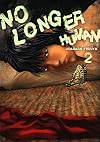
Usamaru Furuya's manga series No Longer Human is an adaptation of Osamu Dazai's 1948 semi-autobiographical novel No Longer Human. Furuya's manga adaptation began serialization in Weekly Comic Bunch in 2009. The second volume of the series was published in Japan in 2010 while the English-language edition was released in 2011 by Vertical. No Longer Human was the second manga by Furuya that was published by Vertical, the first being the one-volume Lychee Light Club. Although Furuya's No Longer show more Human is based on Dazai's novel, he has taken a few liberties with his rendition, one of the most notable changes being that the story is now set in the 2000s instead of the 1920s and '30s. Furuya has also inserted himself into the manga as a framing character. These changes, as well as others, are actually quite effective. It is not at all necessary to have read the original No Longer Human to appreciate Furuya's interpretation of the story.
Yozo Oba attempted a double suicide with a club hostess named Ageha, but only she drowned while he survived. He's come to the realization that although he doesn't want to die, he doesn't want to live, either. Yozo has long since been disowned by his family and the one person for whom he held any sort of honest feelings is now gone. He spends his days directionless and in despair, slowly recovering from a torturous situation partly of his one making. He desperately wants some meaning to his life, but has failed to discover what that might be. At one point he thinks he's found it, only to have it snatched away from him. Yozo was once adored by all and even in his current pitiful state people are drawn to him and dare to care about him. He uses this to his advantage, putting on airs to get what he wants and needs, recognizing all the while how distasteful it is. Yozo uses people and he knows it. To him, life is still an act.
No Longer Human is a dark and troubling manga series. Yozo doesn't treat himself well and treats those around him even worse. He is extremely manipulative and frankly can be a terrible person. And yet at the same time Yozo is a tragic figure; No Longer Human is heart-wrenching. While I don't find his portrayal in the manga to be as sympathetic as it is in the novel, there are still points with which I can empathize. Yozo has a fear of people and their expectations of him that prevents him from being authentic. He's repeatedly told that he is a good, sweet, and kind person, but this is the last thing he wants to hear. Yozo's extraordinarily anxiety-ridden and conflicted over it because he see the life he is living as one big lie. He is very aware of his dishonesty and how he misleads people, but continues to do so because he is so desperate to be liked and accepted. Occasionally he manages to express some feelings of legitimate remorse and genuine caring, but more often than that it is already too late to undo any of the damage done.
No Longer Human, Volume 2 follow Yozo from the depths of despair to the heights of happiness and back again. Those glimmers of hope that Yozo will be able to turn his life around make his failure to do so even more anguished as he lets chance after chance to slip through his fingers. Furuya's artwork in No Longer Human suits the story well, capturing Yozo's internal and emotional turmoil and dragging the readers along for the ride. Furuya provides disconcerting glimpses into Yozo's psyche, visually expressing his suffering through imagery of suffocation (harkening back to his near-drowning) and showing the ugliness he sees in the world. No Longer Human isn't necessarily an easy read and it can be emotionally exhausting, but I find it to be incredibly compelling and difficult to turn away from as well. Yozo may not often be particularly likeable, but as with so many of the other characters in the series I can't help but wish the best for him no matter how doomed he seems.
Experiments in Manga show less
Yozo Oba attempted a double suicide with a club hostess named Ageha, but only she drowned while he survived. He's come to the realization that although he doesn't want to die, he doesn't want to live, either. Yozo has long since been disowned by his family and the one person for whom he held any sort of honest feelings is now gone. He spends his days directionless and in despair, slowly recovering from a torturous situation partly of his one making. He desperately wants some meaning to his life, but has failed to discover what that might be. At one point he thinks he's found it, only to have it snatched away from him. Yozo was once adored by all and even in his current pitiful state people are drawn to him and dare to care about him. He uses this to his advantage, putting on airs to get what he wants and needs, recognizing all the while how distasteful it is. Yozo uses people and he knows it. To him, life is still an act.
No Longer Human is a dark and troubling manga series. Yozo doesn't treat himself well and treats those around him even worse. He is extremely manipulative and frankly can be a terrible person. And yet at the same time Yozo is a tragic figure; No Longer Human is heart-wrenching. While I don't find his portrayal in the manga to be as sympathetic as it is in the novel, there are still points with which I can empathize. Yozo has a fear of people and their expectations of him that prevents him from being authentic. He's repeatedly told that he is a good, sweet, and kind person, but this is the last thing he wants to hear. Yozo's extraordinarily anxiety-ridden and conflicted over it because he see the life he is living as one big lie. He is very aware of his dishonesty and how he misleads people, but continues to do so because he is so desperate to be liked and accepted. Occasionally he manages to express some feelings of legitimate remorse and genuine caring, but more often than that it is already too late to undo any of the damage done.
No Longer Human, Volume 2 follow Yozo from the depths of despair to the heights of happiness and back again. Those glimmers of hope that Yozo will be able to turn his life around make his failure to do so even more anguished as he lets chance after chance to slip through his fingers. Furuya's artwork in No Longer Human suits the story well, capturing Yozo's internal and emotional turmoil and dragging the readers along for the ride. Furuya provides disconcerting glimpses into Yozo's psyche, visually expressing his suffering through imagery of suffocation (harkening back to his near-drowning) and showing the ugliness he sees in the world. No Longer Human isn't necessarily an easy read and it can be emotionally exhausting, but I find it to be incredibly compelling and difficult to turn away from as well. Yozo may not often be particularly likeable, but as with so many of the other characters in the series I can't help but wish the best for him no matter how doomed he seems.
Experiments in Manga show less

While Lychee Light Club is not the first Usamaru Furuya manga to be made available in English it is the first of his works that I have had the opportunity to read. I became interested in the title when Vertical first licensed it but it was the stunning cover that completely sold me, even before I knew what I was really getting myself into. Lychee Light Club, originally published in Japan in 2006, is based on a 1985 Tokyo Grand Guignol play of the same name. Knowing this origination is enough show more to expect the story to be of a dramatic, horrifying, sensational, and probably bloody nature. Apparently, and interestingly enough, Furuya's version of Lychee Light Club has been adapted back into a stage play. Furuya has also written a prequel called Our Light Club. I really hope that Vertical, which published Lychee Light Club in 2011, will be able to license the prequel as well.
In an abandoned factory in the run-down industrial town of Keikoh meets a group of nine junior high students from an all boys school who call themselves the Light Club. They gather in secret to build a living machine fueled by lychee fruit to carry out their plan to abduct beautiful girls. The intensely charismatic and terrifying Zera, who holds the most power and control over the group, is obsessed with obtaining the ideal of eternal youth and beauty. The Light Club intends to literally idolize the captured girls. But after Lychee's completion and eventual success, things quickly fall apart as the Light Club is utterly consumed by paranoia and jealousy. Violence erupts as the boys are turned against one another, incited by Zera's increasingly pronounced mania. Lychee, the machine meant to make the Light Club invincible, instead brings about their downfall.
Lychee Light Club is a dark tale and the art is appropriately dark as well with plenty use of black. At the same time, Furuya's artwork is also disconcertingly beautiful and stylish. Even the very graphic depictions of blood and gore, of which there are plenty, are strangely seductive. It certainly isn't something that everyone will be able to appreciate and Furuya is not at all subtle about it. Another interesting approach used in Lychee Light Club's artwork has to do with the panels shown from Lychee's perspective. When the machine is first initialized, it can only see in strict black and white; only after it has been programmed with the concept "I am human" can it begin to perceive different shades of grey. It is a symbolic and significant change that has serious consequences.
Ultimately, I was enthralled by Lychee Light Club in all its disturbing glory. Granted, it's not a manga that I would recommend to just anyone; but for an audience prepared for uninhibited violence with highly sexually charged connotations, I wouldn't hesitate. The theatrical influence of Lychee Light Club is readily clear. For one, almost the entire story takes place in a single room. In addition to this, the staging of various scenes and the characters' placements in them are reminiscent of a stage production. To some extent because of this, the Light Club seems to out of context with the rest of their world. Instead of rebelling against a specific society, it feels as though the boys are struggling with and fighting against vague concepts. The story is admittedly strange and incredibly perverse, but neither does it claim to be anything else. Lychee Light Club is horrifying, and it should be.
Experiments in Manga show less
In an abandoned factory in the run-down industrial town of Keikoh meets a group of nine junior high students from an all boys school who call themselves the Light Club. They gather in secret to build a living machine fueled by lychee fruit to carry out their plan to abduct beautiful girls. The intensely charismatic and terrifying Zera, who holds the most power and control over the group, is obsessed with obtaining the ideal of eternal youth and beauty. The Light Club intends to literally idolize the captured girls. But after Lychee's completion and eventual success, things quickly fall apart as the Light Club is utterly consumed by paranoia and jealousy. Violence erupts as the boys are turned against one another, incited by Zera's increasingly pronounced mania. Lychee, the machine meant to make the Light Club invincible, instead brings about their downfall.
Lychee Light Club is a dark tale and the art is appropriately dark as well with plenty use of black. At the same time, Furuya's artwork is also disconcertingly beautiful and stylish. Even the very graphic depictions of blood and gore, of which there are plenty, are strangely seductive. It certainly isn't something that everyone will be able to appreciate and Furuya is not at all subtle about it. Another interesting approach used in Lychee Light Club's artwork has to do with the panels shown from Lychee's perspective. When the machine is first initialized, it can only see in strict black and white; only after it has been programmed with the concept "I am human" can it begin to perceive different shades of grey. It is a symbolic and significant change that has serious consequences.
Ultimately, I was enthralled by Lychee Light Club in all its disturbing glory. Granted, it's not a manga that I would recommend to just anyone; but for an audience prepared for uninhibited violence with highly sexually charged connotations, I wouldn't hesitate. The theatrical influence of Lychee Light Club is readily clear. For one, almost the entire story takes place in a single room. In addition to this, the staging of various scenes and the characters' placements in them are reminiscent of a stage production. To some extent because of this, the Light Club seems to out of context with the rest of their world. Instead of rebelling against a specific society, it feels as though the boys are struggling with and fighting against vague concepts. The story is admittedly strange and incredibly perverse, but neither does it claim to be anything else. Lychee Light Club is horrifying, and it should be.
Experiments in Manga show less
You May Also Like


Associated Authors
Statistics
- Works
- 64
- Also by
- 3
- Members
- 860
- Popularity
- #29,750
- Rating
- 3.7
- Reviews
- 19
- ISBNs
- 97
- Languages
- 7
- Favorited
- 5