
José María Arguedas (1911–1969)
Author of Deep Rivers
About the Author
Image credit: José María Arguedas
Series
Works by José María Arguedas
Het groot Meulenhoff Zuid-Amerika leesboek drieentwintig romans, novellen en verhalen (1996) 18 copies
Amor mundo y todos los cuentos 9 copies
Het wonder van Babylon : tien verhalen en fragmenten van José María Arguedas, Isaak Babel, Breyten Breytenbach, Louis- (1986) 8 copies
Todas las sangres II 8 copies
La agonia de Rasuñiti 5 copies
Breve antología didáctica 5 copies
He vivido en vano? Mesa redonda sobre Todas las sangres. 23 de Junio de 1965 (2011) — Contributor — 4 copies
Cuentos olvidados 3 copies
Obras Completas (vol. II) 3 copies
Obras Completas (vol. III) 3 copies
Obras Completas (vol. IV) 3 copies
Obras Completas (vol. I) 3 copies
Obras Completas (vol. V) 3 copies
Cuentos peruanos; antología, primera selección — Contributor — 2 copies
Katatay 2 copies
El río y el mar. Correspondencia entre José María Arguedas y Emilio Adolfo Westphalen (1939-1969) (2011) 2 copies
Runa yupay 2 copies
Cubapaq. A Cuba 2 copies
Cantos y cuentos quechuas / II 2 copies
Tupac Amaru kamaq taytanchisman : haylli-taki; A nuestro padre creador Tupac Amaru; himno-canción 1 copy
Temblar ; El sueño del pongo 1 copy
Arguedas en familia : cartas de José María Arguedas a Arístedes y Nelly Arguedas, a Rosa Pozo Navarro y Yolanda López Pozo (1999) 1 copy
Obras Completas VI 1 copy
Obras Completas VII 1 copy
Obras Completas VIII 1 copy
Obras Completas IX 1 copy
Obras Completas XI 1 copy
Páginas escogidas 1 copy
Cusco 1 copy
En los ríos profundos 1 copy
Katatay / Dicen Que Somos 1 copy
Poesía quechua 1 copy
Perú vivo 1 copy
Antología 1 copy
Pumaccahua 1 copy
Associated Works
Introducción a la literatura hispanoamericana : de la conquista al siglo XX (1997) — Contributor — 23 copies
The Serpent and the Fire: Poetries of the Americas from Origins to Present (2024) — Contributor — 18 copies
Het continent van de eenzaamheid reportages en beschouwingen over Latijns-Amerika (1992) — Contributor — 6 copies
Ollantay [y varios relatos quechuas] — Contributor — 1 copy
Revista Peruana de Cultura. Número 3 — Contributor — 1 copy
Tagged
Common Knowledge
- Canonical name
- Arguedas, José María
- Birthdate
- 1911-01-18
- Date of death
- 1969-12-02
- Gender
- male
- Education
- National University of San Marcos
- Occupations
- novelist
poet
anthropologist
ethnologist - Organizations
- National Agrarian University
National Museum of History, Lima - Cause of death
- suicide
- Nationality
- Peru
- Birthplace
- Andahuaylas, Peru
- Place of death
- Lima, Peru
- Map Location
- Peru
Members
Reviews
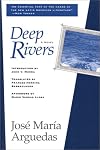
This is a fascinating look into racism and discrimination against the indigenous Quechua-speakers in 1930s Peru (a racism so pervasive it is said to continue to this day). The story centers on the education of Ernesto, a 14-year-old who becomes a boarder in a religious school. In the words of Mario Vargas Llosa, who contributed an excellent afterword, Ernesto is “bewildered by the violence with which at every moment, and in a thousand subtle or devious ways, two races, two cultures, two show more classes clash in the solemn setting of the Andes.” Having accompanied his father from place to place as a boy, Ernesto is now forced to grow up in a single place where the injustices of society are made vivid in a way that he must witness and, more, take sides. Ernesto’s tragedy lies in the fact that he feels deeply drawn to the Quechua characters and society but recognizes that his “position” in society ( by virtue of who his father is and what he does for a living) places him among the whites who routinely reject, mistreat, and oppress the Quechua.
The novel is said to be autobiographical and distinctly has that feel. Arguedas was raised by and among his family’s indigenous, Quechua-speaking servants because his mother died when he was 2 and his father was rarely at home (he travelled constantly for his work as an itinerant lawyer). As a result, Arguedas spoke Quechua before he spoke Spanish. He also chose to write in Spanish heavily influenced by Quechua vocabulary and syntax, making his writing a complicated matter to translate. Much of his work addressed the tension between Hispanic society and the indigenous world. And, befitting the latter, Arguedas emphasizes the natural world as well as inanimate objects, especially the zumbayllu, a top that whistles as it spins; in Ernesto’s words, it is “a new kind of being, an apparition in a hostile world, a tie that bound me to the courtyard I hated, to that vale of sorrow, to the school.” This emphasis helped create an atmosphere that reminds me—to go back many decades—of the feel of a book by Carlos Castaneda, a sort of magical exploration of reality and consciousness.
Deep Rivers ends as Ernesto’s life is about to change. His choice to embrace Quechua culture inevitably means that he will have to live by indigenous values in a Spanish society. That said, Arguedas is not, in my reading anyway, pessimistic. His goal was to value and appreciate indigenous culture, not bemoan its future. I have read dozens of novels wrestling with the confrontation between the traditional and “the other,” the outside, the modern. Deep Rivers is one of only a relatively few books that has conveyed a true “feel” for the indigenous and bicultural peoples, their surroundings, and their worldview. Arguedas recognized that the Quechua culture was changing, that it constantly redefined itself as its sought to balance tradition and modernity. Arguedas understandably rejected the claims that Quechua knowledge and Quechua culture was in any way less valuable than Spanish and Western tradition, knowledge, and culture.
A solid, reliable translation would seem possible only by someone fluent in both (Peruvian) Spanish and Quechua. The quality of the translation is of especial importance because I have a deep sense that this is an important book, a rare view of its subject. Sadly, the novel is often difficult to follow. Conversations in particular can be fluid or so disjointed that there seems to be a publishing error. The challenge diminishes as the book progresses and I was unable to decide whether this is Arguedas’s intentional style—the book is constantly concerned with the tensions and the disconnect between cultures—or a result of the translation. Indeed, Vargas Llosa comments that Arguedas “does not seem to be very much worried by the technical aspects of the novel.” Although I could find no reviews of Deep Rivers that addressed the translation itself, I did find two reviews of Yawar Fiesta by Quechua scholars. Both, for different reasons, raised questions about the reliability of the English version. In the end, for those who are interested, I highly recommend it. Indeed, though I visited Peru many decades after Arguedas wrote, I believe it would have been an enormous help in understanding what I witnessed. I sense better than I can explain that it’s a very important work in Peruvian and, indeed, world literature. (Remarkably, the entire novel (with Vargas Llosa’s afterword as well) is available in an easily readable .pdf form at this website.) show less
The novel is said to be autobiographical and distinctly has that feel. Arguedas was raised by and among his family’s indigenous, Quechua-speaking servants because his mother died when he was 2 and his father was rarely at home (he travelled constantly for his work as an itinerant lawyer). As a result, Arguedas spoke Quechua before he spoke Spanish. He also chose to write in Spanish heavily influenced by Quechua vocabulary and syntax, making his writing a complicated matter to translate. Much of his work addressed the tension between Hispanic society and the indigenous world. And, befitting the latter, Arguedas emphasizes the natural world as well as inanimate objects, especially the zumbayllu, a top that whistles as it spins; in Ernesto’s words, it is “a new kind of being, an apparition in a hostile world, a tie that bound me to the courtyard I hated, to that vale of sorrow, to the school.” This emphasis helped create an atmosphere that reminds me—to go back many decades—of the feel of a book by Carlos Castaneda, a sort of magical exploration of reality and consciousness.
Deep Rivers ends as Ernesto’s life is about to change. His choice to embrace Quechua culture inevitably means that he will have to live by indigenous values in a Spanish society. That said, Arguedas is not, in my reading anyway, pessimistic. His goal was to value and appreciate indigenous culture, not bemoan its future. I have read dozens of novels wrestling with the confrontation between the traditional and “the other,” the outside, the modern. Deep Rivers is one of only a relatively few books that has conveyed a true “feel” for the indigenous and bicultural peoples, their surroundings, and their worldview. Arguedas recognized that the Quechua culture was changing, that it constantly redefined itself as its sought to balance tradition and modernity. Arguedas understandably rejected the claims that Quechua knowledge and Quechua culture was in any way less valuable than Spanish and Western tradition, knowledge, and culture.
A solid, reliable translation would seem possible only by someone fluent in both (Peruvian) Spanish and Quechua. The quality of the translation is of especial importance because I have a deep sense that this is an important book, a rare view of its subject. Sadly, the novel is often difficult to follow. Conversations in particular can be fluid or so disjointed that there seems to be a publishing error. The challenge diminishes as the book progresses and I was unable to decide whether this is Arguedas’s intentional style—the book is constantly concerned with the tensions and the disconnect between cultures—or a result of the translation. Indeed, Vargas Llosa comments that Arguedas “does not seem to be very much worried by the technical aspects of the novel.” Although I could find no reviews of Deep Rivers that addressed the translation itself, I did find two reviews of Yawar Fiesta by Quechua scholars. Both, for different reasons, raised questions about the reliability of the English version. In the end, for those who are interested, I highly recommend it. Indeed, though I visited Peru many decades after Arguedas wrote, I believe it would have been an enormous help in understanding what I witnessed. I sense better than I can explain that it’s a very important work in Peruvian and, indeed, world literature. (Remarkably, the entire novel (with Vargas Llosa’s afterword as well) is available in an easily readable .pdf form at this website.) show less

Kecsua Iskola a határon, talán erőteljesebb szociális érzékenységgel megírva. Az elbeszélő kiskamasz édesapjával érkezik hosszas vándorlás után valami perui mezővárosba, ahol a jó apa* be is passzolja őt egy jezsuita internátusba. Itt aztán főhősünk barátokat és ellenségeket szerez, szövetségi rendszerekbe tagozódik be, és nyilván tanul is valamit, bár erről sok szó nem esik – közben pedig a háttérben a vidék lakóinak, birtokosoknak és show more nincsteleneknek a sorskérdései is konfliktussá állnak össze.
Arguedas könyvének legnagyobb erénye, hogy a legtöbb általam olvasott, őslakosokat a központba állító dél-amerikai szöveggel ellentétben nála a kecsuák nem díszindiánok, akik díszkukoricát morzsolnak a díszfalvakban, miközben időnként eldalolnak egy dísznépdalt vagy eljátszanak egy dísznéprajzi díszbetétet, a háttérben meg ott a paraván a giccses festett Díszandokkal. Nem bábok, akiken keresztül a szerző bemutatja a kontinens zsigeri igazságtalanságát, az egyenlőtlenség struktúráit, hanem igazi, hús-vér emberek. Látszik, Arguedas ismerete róluk mély, mint a címben szereplő folyó, ezért képes sokszínűen ábrázolni Perut: nem feketeként vagy fehérként, hanem olyan államként, ami a különböző kultúrák egymásra rétegződéséből született: részét alkotják indiánok, meszticek, négerek és fehérek, mindegyik a maga sajátos világértelmezésével, része a kereszténység, a gazdagok és a cselédek, és még annyi minden más is. Ez a sokszínűség a szereplők megrajzolásából is kitűnik (különösen az internátust vezető „Atyácska” sikerült emlékezetesre), nem jók vagy rosszak ők, hanem emberek, autonóm célokkal. Tetszetős regény – igaz ugyan, hogy a cselekmény gyakran mintha összekuszálódna, a szereplők kapcsolatai pedig inkább érzékeltetve, mint ábrázolva vannak, de határozott atmoszférát képes teremteni maga körül. Az embernek kedve támad tőle elmélyíteni a kapcsolatát a tengerimalacával – hisz neki is biztos akadnak kecsua gyökerei. Tán mesél róla valamit.
* Nem ironikusan mondva, mert tényleg nagyon jó apa. Az apa-fiú viszony ábrázolása (attól függetlenül, hogy csak az első 30-50 oldalban jelenik meg) amúgy is kifejezett erőssége a regénynek. show less
Arguedas könyvének legnagyobb erénye, hogy a legtöbb általam olvasott, őslakosokat a központba állító dél-amerikai szöveggel ellentétben nála a kecsuák nem díszindiánok, akik díszkukoricát morzsolnak a díszfalvakban, miközben időnként eldalolnak egy dísznépdalt vagy eljátszanak egy dísznéprajzi díszbetétet, a háttérben meg ott a paraván a giccses festett Díszandokkal. Nem bábok, akiken keresztül a szerző bemutatja a kontinens zsigeri igazságtalanságát, az egyenlőtlenség struktúráit, hanem igazi, hús-vér emberek. Látszik, Arguedas ismerete róluk mély, mint a címben szereplő folyó, ezért képes sokszínűen ábrázolni Perut: nem feketeként vagy fehérként, hanem olyan államként, ami a különböző kultúrák egymásra rétegződéséből született: részét alkotják indiánok, meszticek, négerek és fehérek, mindegyik a maga sajátos világértelmezésével, része a kereszténység, a gazdagok és a cselédek, és még annyi minden más is. Ez a sokszínűség a szereplők megrajzolásából is kitűnik (különösen az internátust vezető „Atyácska” sikerült emlékezetesre), nem jók vagy rosszak ők, hanem emberek, autonóm célokkal. Tetszetős regény – igaz ugyan, hogy a cselekmény gyakran mintha összekuszálódna, a szereplők kapcsolatai pedig inkább érzékeltetve, mint ábrázolva vannak, de határozott atmoszférát képes teremteni maga körül. Az embernek kedve támad tőle elmélyíteni a kapcsolatát a tengerimalacával – hisz neki is biztos akadnak kecsua gyökerei. Tán mesél róla valamit.
* Nem ironikusan mondva, mert tényleg nagyon jó apa. Az apa-fiú viszony ábrázolása (attól függetlenül, hogy csak az első 30-50 oldalban jelenik meg) amúgy is kifejezett erőssége a regénynek. show less
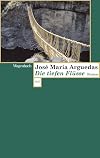
Wer Peru literarisch kennenlernen will,
muss Arguedas lesen:
Sein Meisterwerk "Die tiefen Flüsse"
ist ein interkultureller Bildungsroman,
ebenso indianisch wie westlich geprägt.
Jahrelang ist Ernesto mit seinem Vater, einem mittellosen Anwalt, von einem
Dorf zum nächsten gereist. Dem Kindesalter entwachsen, kommt er schließlich
auf ein katholisches Internat in der Provinzhauptstadt Abancay, hoch oben in
den Anden.
Dort ist zum Beispiel Añuco, der Sohn des verarmten Großgrundbesitzers,
der show more zusammen mit dem Kraftprotz Lleras die jüngeren Schüler malträtiert; Palacitos,
ein scheuer, kaum des Spanischen mächtiger Indio; Gerardo, der Sohn
des Militärkommandeurs; Ántero, der Ernesto mit der Magie eines Kreisels verzaubert,
dessen sphärischer Klang den Schulhof erfüllt und zum letzten Mal
unbeschwerte Kindheit vorgaukelt.
Denn des Nachts wird derselbe Schulhof zu einem düsteren, unheimlichen
Ort, wo sich die schwachsinnige Küchenmagd den älteren Schülern hingibt.
Arguedas zeichnet sie als Vorbotin der Katastrophe, die über Abancay und das
Internat hereinbricht - und in der allein Ernesto einen kühlen Kopf bewahrt. show less
muss Arguedas lesen:
Sein Meisterwerk "Die tiefen Flüsse"
ist ein interkultureller Bildungsroman,
ebenso indianisch wie westlich geprägt.
Jahrelang ist Ernesto mit seinem Vater, einem mittellosen Anwalt, von einem
Dorf zum nächsten gereist. Dem Kindesalter entwachsen, kommt er schließlich
auf ein katholisches Internat in der Provinzhauptstadt Abancay, hoch oben in
den Anden.
Dort ist zum Beispiel Añuco, der Sohn des verarmten Großgrundbesitzers,
der show more zusammen mit dem Kraftprotz Lleras die jüngeren Schüler malträtiert; Palacitos,
ein scheuer, kaum des Spanischen mächtiger Indio; Gerardo, der Sohn
des Militärkommandeurs; Ántero, der Ernesto mit der Magie eines Kreisels verzaubert,
dessen sphärischer Klang den Schulhof erfüllt und zum letzten Mal
unbeschwerte Kindheit vorgaukelt.
Denn des Nachts wird derselbe Schulhof zu einem düsteren, unheimlichen
Ort, wo sich die schwachsinnige Küchenmagd den älteren Schülern hingibt.
Arguedas zeichnet sie als Vorbotin der Katastrophe, die über Abancay und das
Internat hereinbricht - und in der allein Ernesto einen kühlen Kopf bewahrt. show less

High up in the Peruvian Andes, Ernesto travels with his itinerant-lawyer father as he looks for work in the hacienda towns. Ernesto is a mestizo, who in the home of his uncaring stepmother and without the presence of his father, was driven to the care of the Indian servants. Living among them, he learned their ways, their language, their stories, and the myths of their people, and it is them and these stories that he longs for as wanders with his father. On their journeys, he is left by his show more father in a Catholic boarding school in the town of Abancay, with a promise to return at the end of the school year. In the school compound, he is witness to and player in the games, innnocent and not so innocent, that the boys fill their time outside class with. But for this strange, lonely boy, the top is not merely a toy that is carved from wood, it is a magical being, its whipping sound recalls the sound of certain insects, of trumpets resembling the bellows of bulls charging, of the songs of his beloved Indians. He is witness to the loyalties and the violence of the boys, and the school yard is a stage where both are played out in both its innocent and dangerous forms. And beyond the school gate, the abuses of the landowners and merchants of this desolate town become fertile ground for an uprising of the women. The priests themselves are not wholly indifferent, and took sides. Ernesto knows whose side he was on. He is a mute observer, in his heart he wills the Indians of the haciendas to take up arms with the women but he feels their agonizing silence, their crushed souls, their powerlessness to follow the women beyond the mountains to plan their revolution. The town is later visited by the plague which is ravishing the region, and Ernesto is the only one in his school left unscathed at least outwardly, waiting for his father, his salvation.
Ernesto's extraordinary connection to nature sprung from his Indian upbringing. The mountains are high and majestic, the rivers are deep and swift, nature here overwhelms and is rightly considered, Mother. Everything comes from and returns to Her, and in the insecurities that saddle him -- loneliness, adolescent longings, and bewilderment amidst the conflicts around him -- his solace and comfort lie in the memories of his Indians and his deep love for nature, which he tries to conjure through songs of his childhood, the songs of the Quechua. He is young, but the author imbues in him a frightful maturity -- still possessing of childish attributes such as longing for a toy, jealousy over friends, or a lack of hesitation to exchange punches in the yard, but at the same time, having a capacity for reflection and memory and an astuteness that is rooted to something ancestral.
This is a moving story, lyrical and sad, and hauntingly beautiful. It is a meditation on solitude -- the solitude of the misfit and the dispossesed --, on awakening, on nature, and on the poetry of the indigenous peoples. The narrative is punctuated by verses and songs in Quechua, but which have immediate translation on another column in the same page, so there is no interruption in the reading. There is a glossary and the translation of the poetry seems to capture excellently the moods that are portrayed. Deep Rivers is an unforgettable book, and the best I've read so far this year.
Arguedas was an ethnologist, a poet, a folk musicologist, and considered a major indigenista writer. He was committed to giving voice to the Andean Indians through his works, and worked hard for their recognition. This voice mainly refers to attributing identity to the Indians beyond the dehumanizing one assigned to them by the Spanish conquerors. In his works, he explores the themes of the conflict between the forces of "tradition" and "modernity." He published his poetry in Quechua, but invented a language for his novels in which he used native syntax with Spanish vocabulary, which makes translation of his work into other languages extremely difficult. Arguedas was tormented by the dilemma of authentically illuminating the life of the Andean Indians which drove him into depression. He died by his own hand in 1969. Deep Rivers is a semi-autobiographical novel. show less
Ernesto's extraordinary connection to nature sprung from his Indian upbringing. The mountains are high and majestic, the rivers are deep and swift, nature here overwhelms and is rightly considered, Mother. Everything comes from and returns to Her, and in the insecurities that saddle him -- loneliness, adolescent longings, and bewilderment amidst the conflicts around him -- his solace and comfort lie in the memories of his Indians and his deep love for nature, which he tries to conjure through songs of his childhood, the songs of the Quechua. He is young, but the author imbues in him a frightful maturity -- still possessing of childish attributes such as longing for a toy, jealousy over friends, or a lack of hesitation to exchange punches in the yard, but at the same time, having a capacity for reflection and memory and an astuteness that is rooted to something ancestral.
This is a moving story, lyrical and sad, and hauntingly beautiful. It is a meditation on solitude -- the solitude of the misfit and the dispossesed --, on awakening, on nature, and on the poetry of the indigenous peoples. The narrative is punctuated by verses and songs in Quechua, but which have immediate translation on another column in the same page, so there is no interruption in the reading. There is a glossary and the translation of the poetry seems to capture excellently the moods that are portrayed. Deep Rivers is an unforgettable book, and the best I've read so far this year.
Arguedas was an ethnologist, a poet, a folk musicologist, and considered a major indigenista writer. He was committed to giving voice to the Andean Indians through his works, and worked hard for their recognition. This voice mainly refers to attributing identity to the Indians beyond the dehumanizing one assigned to them by the Spanish conquerors. In his works, he explores the themes of the conflict between the forces of "tradition" and "modernity." He published his poetry in Quechua, but invented a language for his novels in which he used native syntax with Spanish vocabulary, which makes translation of his work into other languages extremely difficult. Arguedas was tormented by the dilemma of authentically illuminating the life of the Andean Indians which drove him into depression. He died by his own hand in 1969. Deep Rivers is a semi-autobiographical novel. show less
Lists
My TBR (1)
Awards


You May Also Like


Associated Authors
Statistics
- Works
- 88
- Also by
- 10
- Members
- 1,246
- Popularity
- #20,594
- Rating
- 3.6
- Reviews
- 27
- ISBNs
- 147
- Languages
- 10
- Favorited
- 3

