
Juan Carlos Onetti (1909–1994)
Author of The Shipyard
About the Author
Onetti's subject is the decay and materialism of the modern world, but he presents it in a dense, indirect prose style that creates a world often bordering on nightmare. The narrator of A Brief Life (1950) creates a number of other existences for himself to escape the boredom and limits, symbolized show more by his wife's mastectomy, of his own. Ultimately, the created worlds take over supposed reality. The Shipyard (1961), generally considered his best novel, demonstrates the central character's inability to control his life in an absurd existence. Onetti's characters never cease trying to create meaning, but they flounder helplessly in a world that is beyond their efforts at control. (Bowker Author Biography) show less
Image credit: Courtesy of Serpent's Tail Press
Works by Juan Carlos Onetti
EL ASTILLRO 6 copies
Willkommen, Bob: Gesammelte Erzählungen. Aus dem Spanischen von Jürgen Dormagen, Wilhelm Muster und Gerhard Poppenberg (1999) 4 copies
Colección De Cuentos 2 copies
Hlbočina 2 copies
EL INFIERNO TAN TEMIDO 2 copies
Le Chantier 1 copy
Cuentos de Cabecera 9 1 copy
JUNTA DE CADAVERES 1 copy
ONE El astillero 1 copy
Una tumba sin nombre 1 copy
MEJOR ES MANEARLLO 1 copy
LA CARA DE LA DEGRACIA 1 copy
Cinco novelas cortas: El pozo; Los adioses; La cara de la desgracia; Tan triste como ella; Para una tumba sin nombre (1997) 1 copy
Requiem por Faulkner 1 copy
La Vida Breve 1 copy
Associated Works
A Hammock Beneath the Mangoes: Stories from Latin America (1991) — Contributor — 162 copies, 3 reviews
The Faber Book of Contemporary Latin American Short Stories (1989) — Contributor — 27 copies, 1 review
Die Geschichtenerzähler: Neues und Unbekanntes von Allende bis Zafón (suhrkamp taschenbuch) (2008) — Contributor — 5 copies
Tales of the Magicians: Gabriel García Márquez, Julio Cortázar, Miguel Ángel Asturias, Jorge Luis Borges, Mario Vargas Llosa, Miguel Otero Silva and… (2002) — Contributor — 3 copies
Maestros de la Literatura Universal: Latinoamerica — Contributor — 3 copies
Dragostea (Grisazul). Recopilación de literatura sobre el viaje — Contributor — 1 copy
Juan Carlos Onetti, Juan Rulfo : Grandes Personajes a Fondo — Contributor — 1 copy
Tagged
Common Knowledge
- Birthdate
- 1909-07-01
- Date of death
- 1994-05-30
- Gender
- male
- Occupations
- novelist
short story writer - Awards and honors
- Premio Miguel de Cervantes (1980)
Uruguay National Literature Prize (1963) - Nationality
- Uruguay (birth)
- Birthplace
- Montevideo, Uruguay
- Places of residence
- Buenos Aires, Argentina
Montevideo, Uruguay
Madrid, Spain - Place of death
- Madrid, Spain
- Map Location
- Uruguay
Members
Discussions
Group Read, May 2022: The Shipyard in 1001 Books to read before you die (May 2022)
Reviews
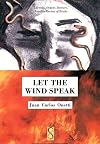
Let the Wind Speak concerns a man of multiple occupations and tortured relationships with other human beings, named Medina. It begins with seemingly unrelated vignettes but then suddenly develops something of a continuous plot about a third of the way in. While this makes the reading slightly easier, mostly it is a vehicle to illustrate Onetti's skepticism about the possibility of finding meaning through human relationships. Every character seems to be in the business of creating their own show more version of truth, walling themselves in, and others out, with their lies and delusions. In fact, it is only the act of creation itself which provides any purpose in Onetti's world.
The story's emotional centre is Santa María, a city created by another Onetti protagonist, Brausen, in a novel published thirty years earlier. Brausen creates Santa María as a fantasy existence for himself as Dr Díaz Grey. Santa María and its environs (in particular Lavanda, the city on the other side of the river) take on a reality far beyond imagination in Onetti's fiction, and form the setting for many of his subsequent novels.
Medina also has this need to create: one major plot line concerns his overwhelming need to paint a portrait a prostitute he meets on the beach. But this creation is not the solution to his existential loneliness. This seems to reflect Onetti's recent (at the time of the novel's composition) exile to Spain from his native Uruguay as a result of his literary activities. Ultimately this disillusionment leads to the destruction of everything Medina cares about.
Let the Wind Speak is not an easy read, and probably not the best Onetti novel to start with. The layering of fantasy and recurrent characters built up over three decades mean that reading Let the Wind Speak in isolation is somewhat baffling. The destruction of this great fantasy only gains significance when its history through Onetti's body of work is considered. In this context, the novel seems almost to function as a dramatic abandonment of Onetti's prior philosophy.
Onetti's writing is poetic, even as he describes the degradation and decay of urban Uruguay, and Helen Lane's translation reads well. However, this is not a novel to read for plot or characterisation. Nonetheless, I'm intrigued enough to want to go back to investigate the origins of Onetti's Santa María and explore his world a little more. show less
The story's emotional centre is Santa María, a city created by another Onetti protagonist, Brausen, in a novel published thirty years earlier. Brausen creates Santa María as a fantasy existence for himself as Dr Díaz Grey. Santa María and its environs (in particular Lavanda, the city on the other side of the river) take on a reality far beyond imagination in Onetti's fiction, and form the setting for many of his subsequent novels.
Medina also has this need to create: one major plot line concerns his overwhelming need to paint a portrait a prostitute he meets on the beach. But this creation is not the solution to his existential loneliness. This seems to reflect Onetti's recent (at the time of the novel's composition) exile to Spain from his native Uruguay as a result of his literary activities. Ultimately this disillusionment leads to the destruction of everything Medina cares about.
Let the Wind Speak is not an easy read, and probably not the best Onetti novel to start with. The layering of fantasy and recurrent characters built up over three decades mean that reading Let the Wind Speak in isolation is somewhat baffling. The destruction of this great fantasy only gains significance when its history through Onetti's body of work is considered. In this context, the novel seems almost to function as a dramatic abandonment of Onetti's prior philosophy.
Onetti's writing is poetic, even as he describes the degradation and decay of urban Uruguay, and Helen Lane's translation reads well. However, this is not a novel to read for plot or characterisation. Nonetheless, I'm intrigued enough to want to go back to investigate the origins of Onetti's Santa María and explore his world a little more. show less

I´m a huge fan of Onetti, and I was thrilled to find a first edition of this short, 100 page novella at one of my local used bookstores the other day. To tell the truth, it is the first “first edition” I´ve ever owned, and I´m glad it´s by Onetti: as I read more of his books, I become more and more convinced that he will become one of my favorite authors. I like brutal, pessimistic, realistic fiction, and I like his style and his choice of protagonists that are stuck in lives that show more are incomprehensible and hardly worth living, drowning themselves in alcohol and despair. This book is the story of one woman, Magdalena (Magda) from the perspective of three men who met and fell in love with her in very different manners. It alternates between Buenos Aires and the fictional town of Santa María, the Macondo of Onetti (but far different than Gabriel García Márquez´s creation), and the interactions between the characters take place mostly in bars. It is a story very small in scope, limited essentially to three moments, three dialogues between different people, and a short epilogue. It is a great compliment to his other works, and I was happy to sit down and read this book in its entirety yesterday.
I was introduced to Juan Carlos Onetti in an odd, backward way. When I was a Peace Corps volunteer in Mongolia, I used to give my mom lists of authors that I was interested in, so that she could order some used books online and send them on to me (the Peace Corps library, while extensive, was pretty much monolingual, and I love to read in Spanish). I got a book called Cuando ya no Importe (Past Caring), which turns out to be the last book that Onetti wrote, a sort of literary epilogue that, without any background knowledge on what I was reading, was a very strange book. It showed me enough to search out more of his work when I came back to the States, and in the past year I´ve tracked down and read a few more of his books. Many of his books take place in Santa María, a made up town on the banks of the Paraná (probably) where a series of washed up protagonists and recurring locals interact with each other in ways that lay bare their anguish and lack of hope for the future. Often they have vague aspirations that are already destined to fail, even in their own eyes, and the plot consists of their struggle to continue on with projects that they know will eventually fall apart and crumble at their feet. I´ve heard him described as South America´s first and greatest existentialist, and based on how much I´ve been loving his books, as well as those of Albert Camus, I think it´s time that I investigate existentialism more fully, so that I can better understand what that means and why I´ve been liking these books so much.
I highly recommend Onetti, and I think at least two of his books, Bodysnatchers and The Shipyard, can be had cheaply on www.abebooks.com. They´re both excellent. He´s an author that I recommend to my friends because he introduces you to a different Latin American reality, a world of washed up men and women, drunks, prostitutes and smugglers, on the banks of one of South America´s biggest and most culturally important rivers. I think that his cycle of books set in Santa María will mean as much to me as an adult as the Macondo cycle of Gabriel García Márquez meant to me as a teenager, and they excite me in the same way: each book shows me a new facet of his world and fleshes out more of the questions that remain in my mind. show less
I was introduced to Juan Carlos Onetti in an odd, backward way. When I was a Peace Corps volunteer in Mongolia, I used to give my mom lists of authors that I was interested in, so that she could order some used books online and send them on to me (the Peace Corps library, while extensive, was pretty much monolingual, and I love to read in Spanish). I got a book called Cuando ya no Importe (Past Caring), which turns out to be the last book that Onetti wrote, a sort of literary epilogue that, without any background knowledge on what I was reading, was a very strange book. It showed me enough to search out more of his work when I came back to the States, and in the past year I´ve tracked down and read a few more of his books. Many of his books take place in Santa María, a made up town on the banks of the Paraná (probably) where a series of washed up protagonists and recurring locals interact with each other in ways that lay bare their anguish and lack of hope for the future. Often they have vague aspirations that are already destined to fail, even in their own eyes, and the plot consists of their struggle to continue on with projects that they know will eventually fall apart and crumble at their feet. I´ve heard him described as South America´s first and greatest existentialist, and based on how much I´ve been loving his books, as well as those of Albert Camus, I think it´s time that I investigate existentialism more fully, so that I can better understand what that means and why I´ve been liking these books so much.
I highly recommend Onetti, and I think at least two of his books, Bodysnatchers and The Shipyard, can be had cheaply on www.abebooks.com. They´re both excellent. He´s an author that I recommend to my friends because he introduces you to a different Latin American reality, a world of washed up men and women, drunks, prostitutes and smugglers, on the banks of one of South America´s biggest and most culturally important rivers. I think that his cycle of books set in Santa María will mean as much to me as an adult as the Macondo cycle of Gabriel García Márquez meant to me as a teenager, and they excite me in the same way: each book shows me a new facet of his world and fleshes out more of the questions that remain in my mind. show less
So, here in Canada a few weeks ago we had this guy called Jian Ghomeshi who was a public radio host and pillar of the liberal Canadian establishment that has been largely gutted over the last decade by the Harper government. He was popular and helping prop up our CBC and for that reason a lot of people had a lot invested in him emotionally. And then the CBC let him go and he put out this weird statement that it was because of his consensual sex practices and that a lot of people might find show more them disturbing but this is Canada and "the state has no place in the bedrooms of the nation" (-Pierre Trudeau). And a lot of people swallowed Jian's "sexual preference is a human right" schtick hook line and sinker, only there was this weird thing where he said he was being persecuted by a "jilted ex" and that seemed a bit defensive for our brave boy but before we could figure out what was up it all came out anyway--he was beating up women and sexually assaulting them, like, a lot of women, like, for years. And two of the many ageless lessons we learned again out of that were:
1) never trust the guy who jumps out in front of allegations to try to gain control of the narrative; and
2) even though we know that rape isn't something that only happens in back alleys, and that misogyny and power and lust for skin colonize our minds in awful ways and none of us ("us" meaning men. I speak here of my poor old reactionary gender with its vicious sense of entitlement and overdetermined sense of self and desperate need to be a hero and be strong and desired) none of us is blameless at least in the sense of skirting lines we didn't mean to skirt or being tempted to skirt lines we thankfully didn't end up skirting, even though all that, guys who get called out on this shit never ever own up that what they did was wrong. Jian--and this detail has sat with me queasily so skip to the next paragraph if you wanna--before he beat up the women would turn his teddy bear to face the wall and say "Big Ears Teddy shouldn't see this." How sick and sad? Their minds are riddled with walls for hiding and mirrors for fracturing and they have exactly as many selves as they need to.
And I mean, fuck Jian, but not to pick on Jian. This week it's Bill Cosby. The other day it was Jimmy Savile, Woody Allen, whoever man. And the thing of it is is that it's always the male abuser's voice that gets heard first and loudest and longest in these things. Cosby's voice drowned out his victims' for 45 years.
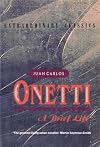
So let us move on to consider Juan Carlos Onetti's A Brief Life. This is an extraordinary book, written with passing craft (especially craft for crafting epigrammatic sentences), that interweaves and smear-blends and shell-games the real and unreal on you in that way that real childhood-streetlight-type readers-for-love I think with few exceptions crave. Onetti was not only brilliant but also a principled intellectual of that mid-twentieth-century Latin American imprisoned-under-the-dictatorship mould. He was our kinda guy. This book is about Brausen, a middle-aged, advertising copywriter who is cracking up in his bad romance and writing a psychosexual film script and pretending he's someone he's not when he visits the prostitute next door. Brausen is a twitchy, loss-of-vigour-fearing, afraid-of-the-body kind of guy. He has a bro who takes him to party with women he finds repugnant and then he goes home to other women he finds repugnant. He reminds me a bit of Alexander Theroux's Eugene Eyestones written by someone with an iota of insight who recognizes that Braustones is a budding psychotic.
I'm sorry, I am, to raise the spectre of magic realism in a review of a South American writer, but this book often has a grimy noirish irrealis thing that is intoxicating and draws you in; as my friend Rick Harsch said in our discussion thread, "sentences sinuous with despair." Like being kind of drunk at night in a place where you don't speak the language and someone you're not sure if you trust is leading you on from bodega to street corner and you don't know why. It opens up into a few glorious set pieces, like when a Dostoevskian bishop appears to give us a spirited sermon on "the weak desperate man," whose desperation is "pure," and the strong, impure desperate man. Basically, the one who gives in and lives in despair versus the one who suffers infinitely more because he cradles a flicker of hope, but there's more to it than that. The weak desperate man reaches out to friends, to Lethery of whatever easeful kind; "the strong one can laugh, can walk in the world without involving others in his desperation, because he knows he must not expect help from men or from his everyday life. He, without knowing it, is separated from his desperation; without realizing it, he awaits the moment when he will be able to look it in the eye and kill it or die." And again: "I applaud the courage of he who accepts each and every one of the laws of a game he did not invent and was not asked if he wants to play." This is the sort of existentialism that we need splashed in our face now and then.
Brausen needs it too, although because he loves and depends on women so abjectly he ill-uses it, mistakes for freedom the freedom to beat a woman to death. And this is the indigestible lump: the whole narrative is controlled by him and he gets extraordinary pseudo-authorial powers to do it and escape not only from punishment (that's just verisimilitude) but even from reality at the end, dancing off into a surreal adventure story in a Madame Pompadour mask with his bros. He speaks with multiple masterful male voices, strong enough even to knit together his obviously troubled psyche for most of the book, and the woman he kills as "Arce," and the woman whose breast is filleted to power the narrative by kicking off his madness as "Brausen," and the woman whose role is masturbatory fantasy for his creepy doctor persona "Díaz Grey" don't get a single real word in edgewise. They are plot points, their suffering is that of the comic-book "girlfriend in the freezer." And I salute Onetti's talent and acknowledge his right to write the book that is within him and not some other book, but that's why I don't love A Brief Life. I think if you're one of those people who has a deep love for Ghomeshi's music (I wouldn't subscribe to "deep love" myself, but I did have a soft spot for Moxy Früvous, his early nineties a capella group) or Manhattan or The Cosby Show, it might be time to let it go too, because, like, those guys kind of lost the right to tell stories. Onetti is writing from a different era and I will not go that far, but I don't think my discomfort with this book is the kind that really needs overcoming. show less
1) never trust the guy who jumps out in front of allegations to try to gain control of the narrative; and
2) even though we know that rape isn't something that only happens in back alleys, and that misogyny and power and lust for skin colonize our minds in awful ways and none of us ("us" meaning men. I speak here of my poor old reactionary gender with its vicious sense of entitlement and overdetermined sense of self and desperate need to be a hero and be strong and desired) none of us is blameless at least in the sense of skirting lines we didn't mean to skirt or being tempted to skirt lines we thankfully didn't end up skirting, even though all that, guys who get called out on this shit never ever own up that what they did was wrong. Jian--and this detail has sat with me queasily so skip to the next paragraph if you wanna--before he beat up the women would turn his teddy bear to face the wall and say "Big Ears Teddy shouldn't see this." How sick and sad? Their minds are riddled with walls for hiding and mirrors for fracturing and they have exactly as many selves as they need to.
And I mean, fuck Jian, but not to pick on Jian. This week it's Bill Cosby. The other day it was Jimmy Savile, Woody Allen, whoever man. And the thing of it is is that it's always the male abuser's voice that gets heard first and loudest and longest in these things. Cosby's voice drowned out his victims' for 45 years.
So let us move on to consider Juan Carlos Onetti's A Brief Life. This is an extraordinary book, written with passing craft (especially craft for crafting epigrammatic sentences), that interweaves and smear-blends and shell-games the real and unreal on you in that way that real childhood-streetlight-type readers-for-love I think with few exceptions crave. Onetti was not only brilliant but also a principled intellectual of that mid-twentieth-century Latin American imprisoned-under-the-dictatorship mould. He was our kinda guy. This book is about Brausen, a middle-aged, advertising copywriter who is cracking up in his bad romance and writing a psychosexual film script and pretending he's someone he's not when he visits the prostitute next door. Brausen is a twitchy, loss-of-vigour-fearing, afraid-of-the-body kind of guy. He has a bro who takes him to party with women he finds repugnant and then he goes home to other women he finds repugnant. He reminds me a bit of Alexander Theroux's Eugene Eyestones written by someone with an iota of insight who recognizes that Braustones is a budding psychotic.
I'm sorry, I am, to raise the spectre of magic realism in a review of a South American writer, but this book often has a grimy noirish irrealis thing that is intoxicating and draws you in; as my friend Rick Harsch said in our discussion thread, "sentences sinuous with despair." Like being kind of drunk at night in a place where you don't speak the language and someone you're not sure if you trust is leading you on from bodega to street corner and you don't know why. It opens up into a few glorious set pieces, like when a Dostoevskian bishop appears to give us a spirited sermon on "the weak desperate man," whose desperation is "pure," and the strong, impure desperate man. Basically, the one who gives in and lives in despair versus the one who suffers infinitely more because he cradles a flicker of hope, but there's more to it than that. The weak desperate man reaches out to friends, to Lethery of whatever easeful kind; "the strong one can laugh, can walk in the world without involving others in his desperation, because he knows he must not expect help from men or from his everyday life. He, without knowing it, is separated from his desperation; without realizing it, he awaits the moment when he will be able to look it in the eye and kill it or die." And again: "I applaud the courage of he who accepts each and every one of the laws of a game he did not invent and was not asked if he wants to play." This is the sort of existentialism that we need splashed in our face now and then.
Brausen needs it too, although because he loves and depends on women so abjectly he ill-uses it, mistakes for freedom the freedom to beat a woman to death. And this is the indigestible lump: the whole narrative is controlled by him and he gets extraordinary pseudo-authorial powers to do it and escape not only from punishment (that's just verisimilitude) but even from reality at the end, dancing off into a surreal adventure story in a Madame Pompadour mask with his bros. He speaks with multiple masterful male voices, strong enough even to knit together his obviously troubled psyche for most of the book, and the woman he kills as "Arce," and the woman whose breast is filleted to power the narrative by kicking off his madness as "Brausen," and the woman whose role is masturbatory fantasy for his creepy doctor persona "Díaz Grey" don't get a single real word in edgewise. They are plot points, their suffering is that of the comic-book "girlfriend in the freezer." And I salute Onetti's talent and acknowledge his right to write the book that is within him and not some other book, but that's why I don't love A Brief Life. I think if you're one of those people who has a deep love for Ghomeshi's music (I wouldn't subscribe to "deep love" myself, but I did have a soft spot for Moxy Früvous, his early nineties a capella group) or Manhattan or The Cosby Show, it might be time to let it go too, because, like, those guys kind of lost the right to tell stories. Onetti is writing from a different era and I will not go that far, but I don't think my discomfort with this book is the kind that really needs overcoming. show less
I think it would be suitable to add a subtitle A Brief Life; and not a Happy One, as Onetti takes his readers deep into existential despair. I came away with the impression that I had read a book that reached deep into the mind of it's author. All the characters of the novel are projections, we know that some of them don't exist because Brausen (the main character in part one of the novel) tells us that he is writing a film script in which Dr Diaz Grey and Elena Sala are the principle show more characters, however in part two of the book Brausen appears to get subsumed into the story of Diaz Grey and Elena and the reader never gets to find out conclusively the identity of the first person narrator. I came to the conclusion that there are two major themes to this novel; one is the act of writing novels and authorial intentions and the other is the disintegration or descent into madness experienced by the protaganist (whoever he is): the only thing I am certain about is that it is a He. If all this sounds confusing then yes it is, but the confusion is expressed in such fine prose that I could live with the uncertainty. It is the sort of book you carry on reading in the hope that all will be revealed in the final pages, but you know deep down that this will not be the case.
The novel starts with the narrator alone in his apartment reflecting on his relationship with his partner Gertrudis, while listening to the sounds coming from the apartment next door. He is Brausen in the first part of the novel and is writing the film script about Dr Diaz Grey and his adventures with the mysterious Elena Sala in the imaginary town of Santa Maria. The narrator is soon projecting himself into the story of the events in his adjoining apartment and invents a character Arce who will form an abusive relationship with La Queca the prostitute living next door. There are therefore three major strands of the story; Brausens relationship with Gertrudis and his difficulties at work which he knows will lead to him being fired, the drama of Arce and La Queca that plays itself through the walls and then in the head of the narrator, and then the story of Diaz Grey, Elena Sala and their search for the English man. Parallels appear in the three story strands, time shifts come and go and the point of view slips from first person to third person and even into second person.
Great novels can start with a great first sentence that resounds throughout the reading of the book and Onetti's first sentence is a corker:
"Crazy World," the woman said once again, as if quoting, as if she were translating.
The idea of a crazy world is central to the story about La Queca, she imagines that she hears voices in her apartment, voices that drive her crazy, those voices are heard by Brausen next door, they are acknowledged by Arce and of course the reader is pretty certain that they are in the head of the narrator.
I, the bridge between Brausen and Arce, needed to be alone, understanding that isolation was essential in order to be born again, that simply being alone, without will or impatience, I would come to exist and recognise myself. Thrown across my bed and hearing La Queca's life with a wall between us, or next to her, horizontal and impassive under the monologues she unleashed and paraded through the room, I kept on waiting - indeed, I thought I had waited all my life without knowing it, and that if I had been conscious of this wait I would have shortened it, perhaps by years - and I preserved also the abandonment, the slightly feminine and shameful sensation that someone was providing for me. I ignored the objects and began to suspect that "they" were the ones mutilating the air of the apartment so as to harm me.
Onetti's characters certainly live in a world that is crazy and real at the same time. Much of the prose is weighed down by the reality of life in a 1950's Latin American country, that is not to say that it is the prose itself that is weighed down, because Onetti continually delights, surprises and entrances us with purple patches that make the reader reflect on thoughts that are original and pertinent. It is a book where the reader could pick any of the short chapters at random, read them in isolation and be bowled over by the excellence of the writing. Juan Carlos Onetti was born in Uruguay in 1909 and [A brief Life] was published in 1950 and translated into English in 1976. My version was translated by Hortense Carpentier in the "Extraordinary Classics" edition and I think the term extraordinary classic is most apt to describe this novel. It perhaps needs more than one reading and I may well come back to it. A strong 4 star read. show less
The novel starts with the narrator alone in his apartment reflecting on his relationship with his partner Gertrudis, while listening to the sounds coming from the apartment next door. He is Brausen in the first part of the novel and is writing the film script about Dr Diaz Grey and his adventures with the mysterious Elena Sala in the imaginary town of Santa Maria. The narrator is soon projecting himself into the story of the events in his adjoining apartment and invents a character Arce who will form an abusive relationship with La Queca the prostitute living next door. There are therefore three major strands of the story; Brausens relationship with Gertrudis and his difficulties at work which he knows will lead to him being fired, the drama of Arce and La Queca that plays itself through the walls and then in the head of the narrator, and then the story of Diaz Grey, Elena Sala and their search for the English man. Parallels appear in the three story strands, time shifts come and go and the point of view slips from first person to third person and even into second person.
Great novels can start with a great first sentence that resounds throughout the reading of the book and Onetti's first sentence is a corker:
"Crazy World," the woman said once again, as if quoting, as if she were translating.
The idea of a crazy world is central to the story about La Queca, she imagines that she hears voices in her apartment, voices that drive her crazy, those voices are heard by Brausen next door, they are acknowledged by Arce and of course the reader is pretty certain that they are in the head of the narrator.
I, the bridge between Brausen and Arce, needed to be alone, understanding that isolation was essential in order to be born again, that simply being alone, without will or impatience, I would come to exist and recognise myself. Thrown across my bed and hearing La Queca's life with a wall between us, or next to her, horizontal and impassive under the monologues she unleashed and paraded through the room, I kept on waiting - indeed, I thought I had waited all my life without knowing it, and that if I had been conscious of this wait I would have shortened it, perhaps by years - and I preserved also the abandonment, the slightly feminine and shameful sensation that someone was providing for me. I ignored the objects and began to suspect that "they" were the ones mutilating the air of the apartment so as to harm me.
Onetti's characters certainly live in a world that is crazy and real at the same time. Much of the prose is weighed down by the reality of life in a 1950's Latin American country, that is not to say that it is the prose itself that is weighed down, because Onetti continually delights, surprises and entrances us with purple patches that make the reader reflect on thoughts that are original and pertinent. It is a book where the reader could pick any of the short chapters at random, read them in isolation and be bowled over by the excellence of the writing. Juan Carlos Onetti was born in Uruguay in 1909 and [A brief Life] was published in 1950 and translated into English in 1976. My version was translated by Hortense Carpentier in the "Extraordinary Classics" edition and I think the term extraordinary classic is most apt to describe this novel. It perhaps needs more than one reading and I may well come back to it. A strong 4 star read. show less
Lists
Awards


You May Also Like


Associated Authors
Statistics
- Works
- 99
- Also by
- 11
- Members
- 2,979
- Popularity
- #8,562
- Rating
- 3.7
- Reviews
- 71
- ISBNs
- 342
- Languages
- 17
- Favorited
- 5